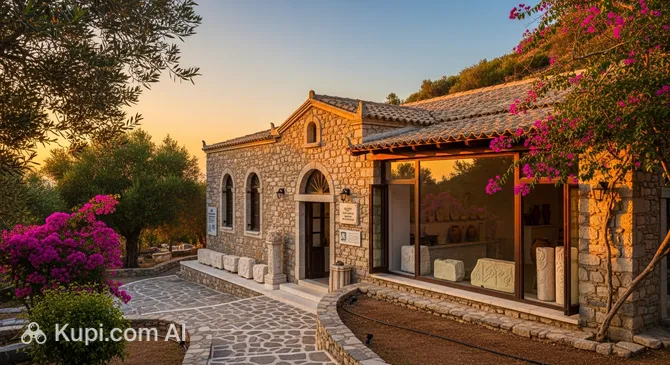
In the heart of the town of Pothia on the island of Kalymnos lies a true treasure trove of ancient heritage — the Archaeological Museum of Kalymnos. Opened in 2005, it quickly became a key cultural center representing the centuries-old history of this region, which all of Greece takes pride in.
Archaeological Museum of Kalymnos. Illustration.
Source: Kupi.com AI
Traveler photos:
The museum's exposition covers an impressive timespan: from Neolithic finds to exquisite artifacts from the Byzantine period. It houses collections of ceramics, coins, jewelry, and rare manuscripts that tell the story of the life and culture of the island's ancient inhabitants.
The main pride and undisputed symbol of the museum is the magnificent bronze female figure, which local fishermen raised from the depths of the sea. This masterpiece of ancient art, miraculously preserved under the water for centuries, draws the attention of tourists and scholars from around the world, making a visit to the museum an unforgettable event.
Contacts
To clarify up-to-date information about special exhibitions or to organize group tours, you can use the contact details provided below:
Visiting the museum is an exciting journey through time, where each hall opens a new chapter in the island's life. You will be able to examine in detail the unique artifacts recovered from the seabed: these items not only testify to the skill of ancient sculptors but also speak of the region's rich maritime history and trade links.
In the exhibition halls, visitors can trace the development of civilization from the simple tools of the Stone Age to the luxurious household items and religious objects of antiquity. Special attention should be paid to the collection of ancient coins and Byzantine icons, which demonstrate the high level of artistic development achieved by local masters. The museum is ideal for thoughtful exploration and is a must-visit for anyone wishing to understand the true character of Kalymnos.
Getting There
There are several ways to reach the island of Kalymnos. The most popular is by sea: regular ferries connect the local port with the Athenian port of Piraeus, as well as with the neighboring islands of the Dodecanese archipelago, such as Kos, Leros, and Patmos. If you prefer air travel, the island has its own airport serving domestic flights.
The Archaeological Museum of Kalymnos itself is located in the heart of the island, in the town of Pothia. Thanks to its central location, it is easily accessible on foot if you are staying in the town. If you are arriving from the port or airport with luggage, it is most convenient to use a local taxi, which will quickly take you to the doors of the cultural center.
Nearest city: Kalymnos
History & Facts
The history of Kalymnos is rooted in antiquity. The first settlements appeared here as early as the Neolithic era, as evidenced by Mycenaean burials. During the Archaic period, the island held the status of an autonomous state, managing to maintain independence from imperial Athens before joining the Macedonian Empire and later coming under the wing of Ptolemy I of Egypt.
Interestingly, the residents of Kalymnos were among the first Greeks to embrace Christianity; tradition holds that the apostles Paul and John visited the island to preach. In the 14th century, the Knights Hospitaller (the Order of Saint John) established their rule here, building Chrysocheria Castle to protect their lands. The period of Ottoman rule was followed by Italian administration in 1912.
The modern chapter of the island's history began in 1947 when Kalymnos officially became part of the Greek state. This multi-layered cultural heritage — from prehistoric times to the transformative events of the 20th century — is carefully preserved within the museum walls, making it a unique witness to the changes in the Eastern Mediterranean.
Time Needed
To leisurely explore all the halls and delve into the details of the exhibits, most visitors need about 1.5 to 2 hours. This time is quite sufficient to admire the famous bronze statues and study the collection of Byzantine icons.
If you are a history enthusiast or enjoy spending time studying rare manuscripts and numismatic collections, plan your visit with a bit of extra time. However, even a brief tour will leave a vivid impression thanks to the high quality of the exposition.
Working Hours
The museum welcomes visitors daily except for Tuesday, which is the official closing day. The institution's working hours are from 08:30 to 15:30.
Please note that the schedule may change depending on the season or public holidays, so it is recommended to check for up-to-date information on the official website or by phone before your visit.
Day
Working hours
Monday
08:30–15:30
Tuesday
Закрыто
Wednesday
08:30–15:30
Thursday
08:30–15:30
Friday
08:30–15:30
Saturday
08:30–15:30
Sunday
08:30–15:30
Nearby
A visit to the museum can be harmoniously complemented by a stroll through the picturesque surroundings of Pothia. Exploring nearby historical ruins and the town's charming streets will help you feel the island's atmosphere more deeply and see how modern life intertwines with ancient heritage.
Near the museum, you will find historical fortresses as well as cozy spots to relax and share your impressions of the artifacts you've seen.