Support

Venetian Castle of Naxos

About

Imagine a living historical monument rising above the azure waters of the Aegean Sea: Naxos Castle (or Kastro) is the heart of Naxos town. This majestic Venetian fortress, built in the 13th century by Duke Marco Sanudo, is not just a fortification but a unique residential quarter that has preserved the atmosphere of a medieval duchy in modern Greece.
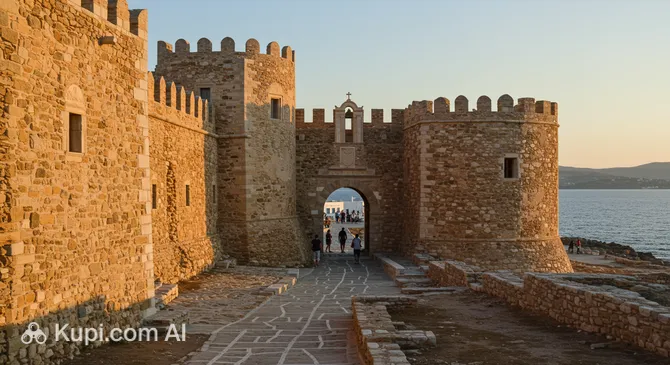
Naxos Castle
Naxos Castle. Иллюстрация. Источник: Kupi.com AI

The castle's architecture is striking: its walls, up to 6 meters high, are built of granite and marble, with many blocks salvaged from ancient structures. Kastro served as an administrative and cultural center, where the outer walls of noble houses simultaneously served a defensive function. Today, it is an open-air museum where descendants of old Venetian families still live among narrow cobbled streets.

Hidden within the perimeter are true treasures: old mansions decorated with coats of arms, Catholic churches, and quiet courtyards with blooming bougainvillea. A special place is held by the castle of the Della Rocca-Barozzi family, where the life of past centuries' aristocracy is recreated with authentic furniture, clothing, and art, making a visit to this site a must for any traveler.

Contacts

To clarify details before your visit, you can refer to the official address of the attraction. Although the castle is an entire residential quarter, the main museum exhibitions have their own access points.

How to contactContact
AddressUnnamed Road, Naxos 843 00, Греция

What to Do

A walk through Naxos Castle is a journey through time. Begin your exploration by wandering the narrow, winding streets of Kastro, where every turn reveals views of whitewashed houses and cozy courtyards. Be sure to stop by the Della Rocca Museum: here you can see the authentic interiors of Venetian nobles, ancient books, clothing, and even peek into the wine cellars with their enormous barrels.

Fans of religious architecture should visit the 17th-century Catholic Cathedral. This magnificent Baroque building houses a unique double-sided Byzantine icon of the Virgin Mary and serves as a burial site for representatives of the island's noble families. Remember that modest clothing is recommended for entering the cathedral.

Don't miss the chance to climb the fortress walls to enjoy panoramic views of the port and the famous Portara gate. After sightseeing, you can relax in one of the small galleries or art cafes located in former mansions. In the evening, the old town is transformed: in the soft glow of lanterns, restaurants offer local cheeses and wines, creating the perfect atmosphere to end your day.

Getting There

Finding Naxos Castle is easy, as it towers majestically over the island's capital. Most travelers arrive here by ferry from Athens (Piraeus port), Santorini, or Mykonos. From the port of Chora, the entrance to the fortress is just a 10–15 minute walk away. If you prefer flying, Naxos Airport receives regular flights from the capital of Greece; the flight takes about 40 minutes.

For those who don't want to walk uphill, buses and taxis run from Chora's main square or the bus station, taking you to the foot of the hill. The distance is no more than 2 kilometers. Renting a scooter or a car is also an excellent option if you plan to explore the surroundings after visiting the castle.

The most picturesque route to the castle lies through the narrow, winding streets of the old town. The climb can be somewhat steep, but the views along the way are worth every minute. Look for the "Kastro" signs that lead from the waterfront directly to the medieval gates.

Ближайший город: Naxos

History & Facts

The history of this site began in 1207 when Marco Sanudo, nephew of the Venetian Doge, captured the Cyclades after the Fourth Crusade. He proclaimed himself Duke of Naxos and turned the city into the capital of the Duchy of the Aegean (Duchy of the Archipelago). To build his residence, Sanudo chose the hill where an ancient acropolis was previously located, using marble and granite from ancient temples for construction.

Interestingly, Naxos Castle was built not just as a fortress, but as a fortified residential city. Powerful walls about 6 meters high and over one and a half meters thick protected the homes of the Venetian nobility. Inside the fortress, a Jesuit school was founded, which remained an important educational center in the region for centuries.

Venetian rule on the island lasted until 1564, when Naxos came under the control of the Ottoman Empire. Nevertheless, Italian influence remained here forever. The de la Roche family (later Della Rocca), vassals of Sanudo, kept their estates, and their descendants still live in some of the mansions inside Kastro, carefully preserving the legacy of their ancestors.

Of particular note is the fact that materials from the Portara—the unfinished 6th-century BC Temple of Apollo—were actively used in the construction of the castle. This gives the castle's architecture a unique eclectic character, where medieval fortifications are closely intertwined with elements of antiquity.

Time Needed

To leisurely explore Naxos Castle, it usually takes about 1.5–2.5 hours. This is plenty of time to wander through the labyrinthine streets, peek into the Catholic Cathedral, and visit the main tower. If you plan to study the museum exhibitions located within the mansions in detail, add about another hour to this time.

Many tourists prefer to combine a visit to the castle with a walk to the Portara (Temple of Apollo), which can take about 3–4 hours in total. It is recommended to plan your visit for the late afternoon so you can finish your walk watching the sunset over the Aegean Sea—it is one of the most impressive sights on the island.

Working Hours

The grounds of the Kastro fortress itself are accessible for walks 24/7, allowing you to enjoy the silence of the medieval streets even late at night or at dawn. However, most museums, galleries, and churches located inside the castle have their own operating schedules, usually closing in the evening hours.

To visit the Della Rocca Museum or the Cathedral, it's best to plan your visit in the morning or before 18:00. Due to potential schedule changes, we recommend that tourists check current information on the official websites of the cultural sites before visiting.

Круглосуточно

Nearby

Exploring the surroundings of the fortress will allow you to dive even deeper into the island's atmosphere and enjoy Naxos's modern hospitality. Just steps away from the ancient walls, you'll find cozy cafes, museums, and architectural monuments.

NameDistance
The Rum Bar0.1 km
Hug Me Naxos0.2 km
Gemma Naxian Bistro0.2 km
Jazz & Blues0.2 km
Taverna Naxos0.2 km
The Ocean Club0.3 km
Portara (Temple of Apollo)0.7 km

Reached the end of the page?

That means the route is fully explored