Support

Qaanaaq Airport

About the Airport

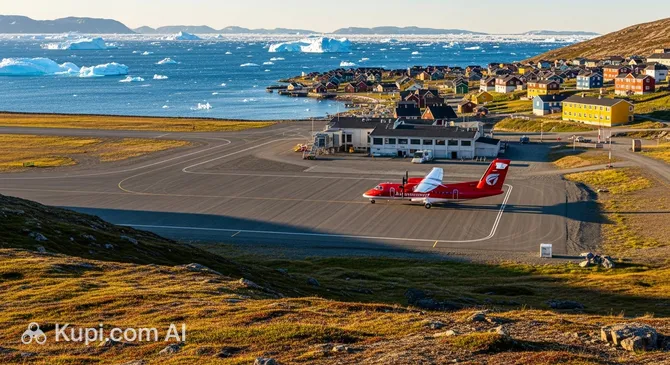
Qaanaaq Airport. Source: Kupi.com Binoculars

Qaanaaq Airport is not merely a transport hub, but a true gateway to one of the most isolated and rugged corners of our planet, where civilization borders on permafrost. Located far beyond the Arctic Circle, this modest airfield welcomes travellers ready to encounter majestic icebergs and the authentic Inuit culture. Landing here is an adventure in itself: the aircraft touches down on a short gravel strip amidst the boundless tundra, and the silence of the Arctic desert is broken only by the hum of propellers and the whistling wind.

AirportQaanaaq Airport
IATANAQ
ICAOBGQQ
CityQaanaaq
TimezoneAmerica/Thule
ScheduleOnline board

Airport Features and Highlights

Qaanaaq Airport plays a key role in the life of the region, providing the only stable link to the outside world for the local community and intrepid tourists.

  • Extreme Location: The airport is located at 77 degrees North latitude, making it one of the northernmost civilian air harbours in the world. Depending on the season, passengers can observe the midnight sun or the mesmerising Northern Lights directly from the airfield.
  • Gravel Runway: The runway here does not have an asphalt surface. The gravel track, only 900 metres long, requires special skill from pilots and allows for the reception of only specialised turboprop aircraft adapted to difficult conditions.
  • Transfer Specifics: There are no standard taxi services or scheduled buses here. Given the short distance to the town, in winter the journey is often made on snowmobiles or even dog sleds, while in summer, transfers are usually organised in advance by guesthouse hosts.
  • Link to Civilization: For the residents of Qaanaaq, this airport is a true "lifeline". Mail, medicine, and fresh produce are delivered through it, and essential helicopter flights to even more remote settlements in the district are operated from here.

Contact Information

  • Official Airport Website: Mittarfeqarfiit (Greenland Airports)
  • Inquiry Service Phone: +299 34 21 40 (Mittarfeqarfiit Head Office). For prompt communication with the airport administration, using email is recommended.
  • Airport Address: P.O. Box 79, 3971 Qaanaaq, Greenland
  • Email: bgqq@airports.gl
  • Airport Social Media: Follow news on the official Mittarfeqarfiit Facebook page.
  • Lost Luggage Information: Baggage issues are handled by the main carrier — Air Greenland. It is recommended to contact staff immediately upon landing.
  • Passenger Support Contacts: For questions regarding flights, tickets, and schedule changes, please contact Air Greenland directly at +299 34 34 34.

How to Get to the Airport

Getting to the Town and Transport Connections

The distance between the airport and the settlement of Qaanaaq is only about 3.5 kilometres. However, given the harsh Arctic conditions and the lack of standard road infrastructure, this short journey requires prior planning. The travel time by vehicle usually takes 10–15 minutes.

It is important to understand that Qaanaaq is a remote settlement, and metropolitan standards do not apply here. There are no paved roads connecting the airport to other towns, so one can only arrive or depart by air or sea (during the short summer season).

Transfers and Taxis

The most reliable and common way to get from the airport to your accommodation is an organised transfer. There are no taxi services in Qaanaaq in the traditional sense (like Uber or city taxis with meters).

  • Hotel Transfer: When booking accommodation (a guesthouse or hotel), it is strongly recommended to order an airport pickup immediately. Hosts usually meet guests in pickup trucks or minibuses.
  • Cost: The transfer price is often included in the accommodation cost or involves a fixed amount that should be agreed upon in advance (approximately 100 to 200 Danish Krone per person).
  • Winter Transport: During the winter period, when roads are covered with snow, transfers may be carried out on snowmobiles or even dog sleds, which in itself becomes an unforgettable experience.

Public Transport

There are no scheduled buses, trains, or metro in Qaanaaq. Public transport is non-existent as a class due to the small size of the settlement and low passenger traffic.

Car Rental and Parking

There are no counters for international car rental companies (Hertz, Avis, etc.) in the terminal. Renting a car without a driver in Qaanaaq is practically impossible and impractical, as the road network is limited to the village itself and the road to the airport.

In front of the terminal building, there is a small dirt area serving as a car park. It is free and used mainly by local residents meeting flights in personal vehicles.

Walking Route

For the most adventurous tourists in summer (from July to August), walking to the town is an option. The road goes downhill towards the sea and offers stunning views of icebergs. However, one should remember the changeable weather and wind. In winter, walking without an escort is dangerous due to extreme cold and the risk of encountering wild animals.

Nearest Airports and Transport Hubs

Qaanaaq is located in significant isolation, but there are other air harbours in the Arctic region providing connections between settlements and countries. When planning complex expeditions, it is useful to know about neighbouring hubs.

The closest to Qaanaaq is Pituffik Airport (formerly known as Thule), located approximately 108 km away. This is a military base with limited civilian access, so using it as a transit point without special permission is difficult.

For connections with the southern part of Greenland, a key role is played by Upernavik Heliport (about 644 km) and Qaarsut Airport (903 km), which often serves as a hub for transfers to smaller aircraft.

From the Canadian Arctic side, the nearest neighbours, separated by straits, are Pond Inlet Airport and the more distant Resolute Bay Airport. There is no direct passenger service between them and Qaanaaq, but they are important for logistics in this sector of the Arctic.

Terminals and Map

Terminal Structure and Navigation Features

Qaanaaq Airport is the embodiment of minimalism and functionality, dictated by the harsh conditions of the Arctic. The entire airport complex consists of one small single-story terminal, which serves both departing and arriving flights. It is impossible to get lost here: all necessary zones are within direct line of sight, literally a few steps from each other.

Passengers should not look for complex diagrams or interactive maps. The building is designed to provide basic comfort and protection from the cold while waiting for a flight. There are no transfers between terminals, as there is only one terminal.

Departure and Arrival Zones

The internal space is organised as simply and rationally as possible. The terminal has no clear division into floors or long corridors characteristic of major hubs.

  • Check-in Zone: Immediately upon entry, there is the Air Greenland check-in counter. Flight registration and baggage drop-off take place here. The procedure is quick and operates on a first-come, first-served basis.
  • Waiting Hall: A small area with seats where passengers await boarding. Given the low passenger traffic, there is usually enough room for everyone. Available amenities include toilets and heating, which is critically important in the polar climate. There are no Duty Free shops, cafes, or VIP lounges here.
  • Arrival Zone: There is no separate baggage claim area with conveyor belts in the traditional sense. Luggage is unloaded from the aircraft manually and brought into the terminal, where passengers simply collect their bags.

Check-in and Security Procedures

Despite the miniature size of the airport, strict aviation security rules apply here, although the processes themselves take much less time than in large cities.

Time Recommendations:

  • It is recommended to arrive at the airport 1 hour before departure. This time is quite sufficient for calmly completing all formalities.
  • Check-in usually closes 30–40 minutes before the flight departure. It is important to remember that planes fly strictly according to schedule here (adjustments are only made for weather), and late passengers will not be waited for.
  • Pre-flight security screening is very quick due to the small number of people, but requirements for carrying liquids and prohibited items are standard.

Boarding and Navigation Features

One of the main features of Qaanaaq Airport is the absence of jet bridges and apron buses. Boarding and disembarking are carried out on foot across the airfield.

The path from the terminal doors to the aircraft is only a few dozen metres. Considering this, passengers are strongly advised to:

  • Dress Warmly: Even if it is warm inside the terminal, the walk to the plane may be accompanied by a piercing icy wind. Keep jackets, hats, and gloves at hand, rather than checking them in with luggage.
  • Listen for Announcements: Information about the start of boarding is announced by voice by airport staff.
  • Be Careful: The apron surface can be slippery, especially in winter, so one should move carefully.

Airport History

The history of Qaanaaq Airport is relatively young, but it marks a crucial milestone in the development of transport accessibility for Greenland's northernmost region. Before its appearance, logistics in this harsh land were incredibly complex and entirely dependent on external infrastructure.

The official opening of the airport took place on September 1, 2001. This event became a turning point for the local community, as it symbolised the attainment of transport independence. Until the early 2000s, civil aviation traffic was carried out exclusively through the American Thule Air Base (now known as Pituffik), located more than 100 kilometres to the south. Travellers were forced to fly into the military airfield, undergo strict controls, and then transfer to a Sikorsky S-61 helicopter to cover the final leg of the journey to the town.

The launch of its own runway allowed for the reception of Dash-7 and later Dash-8 aircraft directly next to the settlement. This not only simplified passenger transport but also radically improved the situation with supplying the town with fresh produce and mail, relieving logistics from the complex helicopter transfer scheme.

Over the years, the airport has not undergone massive expansions—its compact dimensions perfectly match the needs of the region. However, technical maintenance is carried out continuously here. The main efforts of the services are directed at battling the forces of nature: maintaining the stability of the gravel runway under conditions of melting permafrost and ensuring the operation of navigation equipment at extremely low temperatures.

Interesting Facts and Historical Highlights:

  • Engineering Feat: Construction took place in a zone of continuous permafrost. Engineers had to create a massive embankment of rock to insulate the frozen ground from heat and prevent deformation of the strip during the summer period.
  • Northernmost Civilian Port: Qaanaaq holds the status of one of the northernmost airports in the world receiving regular commercial flights. It is located above the 77th parallel, which imposes unique requirements on pilot training.
  • Connection of Generations: Before the advent of planes and helicopters, mail and cargo were delivered here by dog sleds or ships during the short navigation period. The opening of NAQ airport finally moved the region into the era of modern aviation, although dog sleds can still be seen parked near the terminal in winter.

Services and Amenities

Terminal Services and Infrastructure

Passengers departing from or arriving at Qaanaaq Airport must mentally prepare in advance for the fact that this is one of the smallest and most remote airports in the world. The level of service here is dictated by harsh necessity and the extreme conditions of the Arctic, so amenities familiar to major hubs are practically non-existent here.

The terminal is a compact space where the main priority is warmth and protection from the wind. The infrastructure is of an exclusively basic nature, and travellers are advised to be autonomous regarding food and communications.

Restaurants, Cafes, and Shops

There are no catering or retail outlets in the airport building.

  • Food and Drinks: There are no cafes, vending machines, or water coolers here. It is strongly recommended to have a substantial meal in town before leaving and to take a thermos of tea and snacks with you, especially if the flight is delayed due to weather conditions.
  • Shops: There are no Duty Free zones, souvenir stalls, or newsstands. All necessary purchases should be made at the local Pilersuisoq supermarket in the settlement of Qaanaaq itself.

Communication, Wi-Fi, and Electronics

  • Wi-Fi: A public wireless network for passengers is generally absent or works extremely unreliably. It is recommended not to rely on the internet within the terminal.
  • Charging Devices: There are no specialised stands for charging gadgets. In the waiting hall, you may find a few spare power outlets, but their number is limited (usually European standard). It is best to carry a fully charged power bank.

Financial Services

Bank branches, currency exchange points, and ATMs are absent from the airport. All financial infrastructure is concentrated in the town. Since card payments are common in Greenland, but terminals may depend on connectivity, it is critically important for tourists to have a supply of cash Danish Krone (DKK) before arriving at the airport.

Medical Assistance

There is no medical centre or pharmacy in the terminal. Airport staff have first aid kits for providing basic assistance. In case of serious health problems, it is necessary to contact the Qaanaaq town hospital, located a few kilometres from the airfield.

Special Categories of Passengers

Passengers with Children

There are no specialised mother-and-child rooms or play areas in the airport. Given the short waiting time (check-in finishes quickly), this rarely becomes a problem. Parents should ensure they have warm clothes for children, as even the short walk to the aircraft can be very cold.

Passengers with Reduced Mobility

Despite the lack of high-tech equipment, the airport is accessible to citizens with limited mobility thanks to its simple layout.

  • Barrier-Free Environment: The terminal is single-story; there are no steps inside.
  • Boarding: Since jet bridges and ambulifts are absent, ground staff assist with boarding the aircraft. Air Greenland should be notified of the need for assistance at least 48 hours before departure.

Business Services and Lounges

VIP halls, business lounges, or conference rooms are not provided at Qaanaaq Airport. All passengers wait for their flight in the general hall.

Hotels and Accommodation

There are no hotels or sleeping pods on the airport territory itself. Spending the night in the terminal is impossible, as it closes at night after flight operations. The nearest accommodation options are located exclusively in the town of Qaanaaq (3.5 km from the airport).

Travellers can stay at:

  • Hotel Qaanaaq: The main hotel in town, offering comfortable rooms, meals, and airport transfers.
  • Private Guesthouses: Locals often rent rooms to tourists (B&B). This is the best way to experience the Inuit way of life.

Given the limited room stock in the settlement, accommodation must be booked well in advance of the trip, especially during the summer season.

Where to Eat

Dining and Restaurants

Travellers planning to fly from Qaanaaq Airport must take into account a crucial feature of this air harbour: there are absolutely no food service outlets here. The terminal has no restaurants, coffee shops, lounges, or even vending machines with snacks or drinks.

Given the possibility of flight delays due to changeable Arctic weather, passengers are strongly advised to take care of food and water in advance, while still in town. Do not count on buying food after arriving at the airport.

Where to Eat Before Departure

Since it will not be possible to have a snack at the airport, the only option for a full lunch or breakfast remains the settlement of Qaanaaq.

  • Hotel Qaanaaq: This is the main place in town where you can order hot food. The hotel restaurant serves breakfast and lunch. Here you can try dishes made from local products (fish, muskox) or more familiar European cuisine. This is the best option for a substantial meal before heading to the airport.
  • Pilersuisoq Supermarket: The only large store in the settlement. Here you can buy pastries, bread, cheese, deli meats, fruits (subject to delivery availability), chocolate, and drinks. This is the main place to buy provisions for the journey ("quick snack").

Recommendations for Food and Drinks

Due to the lack of service in the terminal, experienced travellers adhere to the following rules:

  • Bring a Thermos: There are no water coolers in the waiting hall. Hot tea or coffee in your own thermos will be a real lifesaver if the flight wait drags on and it is freezing outside.
  • Snacks in Hand Luggage: Be sure to buy chocolate, nuts, biscuits, or sandwiches at the Pilersuisoq store. Prices in Greenland are high (above average European levels), but there will be no alternatives at the airport.
  • Local Delicacies: If you want to take some local cuisine with you, such as dried fish or jerky, purchase them from locals or at the store in town. There are no souvenir or grocery stalls at the airport.

Special Dietary Requirements (Vegetarian, Halal, Gluten-Free)

Finding specialised nutrition (vegan or Halal) in ready-made form in Qaanaaq is extremely difficult due to the specifics of the Inuit diet, which is based on meat and fish. Passengers with strict dietary restrictions should assemble a "lunch box" themselves from simple products purchased at the supermarket. Fish options are generally available and safe for Halal diets.

In-Flight Catering

During the flight, Air Greenland typically offers passengers drinks (coffee, tea, water) and a small treat (biscuit or chocolate). Full hot meals are not provided on short domestic flights.

Traveller Tips

Useful Tips for Travellers at Qaanaaq Airport

Travelling to one of the northernmost towns in the world is a real challenge requiring thorough preparation. Qaanaaq Airport (NAQ) lives by its own rules, dictated by the Arctic climate and remoteness from civilization. To ensure your flight is as comfortable as possible, we have compiled key recommendations.

Arrival Time and Check-in

Although the airport is tiny, being late is not accepted here.

  • Arrive One Hour Early: The recommended arrival time is 60 minutes before departure. This is sufficient to check in luggage and pass through security without rushing.
  • Discipline: The check-in counter closes strictly according to schedule (usually 30–40 minutes before). The plane will not wait for latecomers, as the flight schedule is tight and depends on daylight hours.
  • Documents at Hand: Keep your passport and tickets in an easily accessible pocket. In winter clothing, retrieving them from a backpack in the cold or in a cramped terminal is inconvenient.

Choosing a Seat on the Plane

Flights to Qaanaaq are operated by Dash-8 turboprop aircraft, which fly at a relatively low altitude.

  • Best Views: Definitely try to occupy a window seat. On approach to Qaanaaq, fantastic views of fjords, giant icebergs, and the Greenland Ice Sheet open up. This is a spectacle worth flying for.
  • Noise: If you are sensitive to noise, avoid seats located directly opposite the propellers (rows in the middle of the cabin). It is usually slightly quieter in the tail of the aircraft.

Cabin Baggage and Luggage

Strict limitations apply in the conditions of a small aircraft.

  • Dimensions: Overhead bins for cabin baggage in Dash-8 aircraft are very narrow. A standard cabin-size trolley case may not fit there. It is better to use soft bags or backpacks, which can be placed under the seat if necessary.
  • What to Take in the Cabin: Never check in power banks, lithium batteries, vital medicines, or camera equipment. Also, keep a hat and gloves with you — they will be needed immediately upon exiting the aircraft.
  • Prohibited Items: Rules are standard (liquids up to 100 ml, no sharp objects). Region-specific: you cannot carry fuel for camping stoves or signal flares (for bears) in cabin baggage.

Transfers and Connections

Qaanaaq is the endpoint of the route, and there are no direct flights from Europe or America here. All flights go through hubs (Ilulissat or Kangerlussuaq).

  • Time Buffer: When planning connections, allow a minimum of 2–3 hours, or better yet, a day in the intermediate city. Weather in Greenland is unpredictable, and a delay of a flight from Qaanaaq for several hours or days is a common occurrence.
  • Single Ticket: It is strongly recommended to purchase all flight segments in one booking with Air Greenland. In this case, the airline will provide you with a hotel and meals if a connection is missed.

Customs and Souvenirs

There are no special customs posts on domestic flights, but there are nuances when exporting souvenirs.

  • Bone and Fur Products: If you bought a tupilak (spirit figure) or jewellery made of whale, walrus, or bear bone, ensure the seller has a CITES certificate. Without it, exporting such items outside Greenland is prohibited and risks confiscation and a fine at the international border.
  • Minerals: Exporting small stones is permitted, but rare geological finds may require a permit.

How to Save Time and Money

The Arctic is an expensive region, but a sensible approach will help avoid unnecessary expenses.

  • Transfer: Arrange a transfer with your accommodation host in advance. This is often cheaper and more reliable than looking for a car on the spot.
  • Food to Go: Since there are no cafes or shops at the airport, and prices on the plane (if sales are available) are high, take sandwiches and an empty water bottle (water can be filled in town) with you. This will save you from hunger if the flight is delayed.
  • Luggage Wrapping: There is no plastic wrapping service in the terminal. If you want to protect your backpack from dirt and moisture, take a roll of cling film or a sturdy bin bag and tape with you.

What to Do if a Flight is Delayed

In Qaanaaq, a flight delay due to fog or wind is part of the adventure.

  • Contact with Hotel: Do not check out of the hotel until the last moment or agree with the host about the possibility of returning if the flight is cancelled. There are few places for accommodation in town, and in the event of a mass cancellation, finding a free bed will be difficult.
  • Entertainment: There is no Wi-Fi or entertainment at the airport. Be sure to have a paper book, downloaded films, or music on your phone.
  • Patience: The main advice is to stay calm. Airport staff do everything possible, but arguing with the Arctic weather is useless.

Airports in nearby cities

Reached the end of the page?

That means the route is fully explored