Support

Coban

About

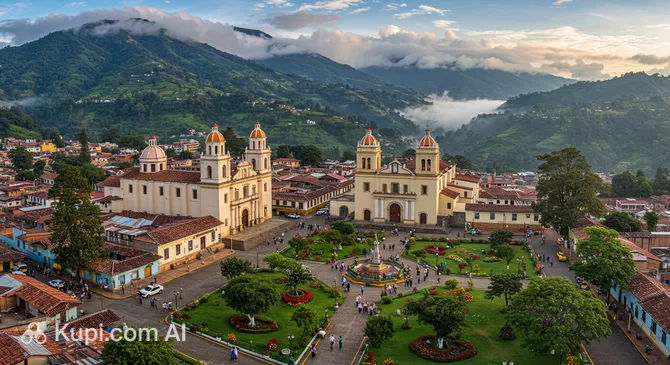
Cobán is the emerald heart of the Alta Verapaz region, nestled comfortably in the central part of the country amidst misty tropical forests and picturesque hills. This city allows you to see Guatemala from a completely different, less touristy, yet incredibly alluring side. Situated at an altitude of about 1,320 meters above sea level, Cobán boasts a pleasant cool climate that persists year-round, making it perfect for long walks.

Coban. Illustration.
Source: Kupi.com AI

With a population of over 228,000, the city is an important administrative and cultural hub where modern life harmoniously coexists with ancient heritage. The rich history of Cobán is reflected in a unique mix of cultures: here, colonial architecture intertwines with the living traditions and customs of the Maya people. The city's atmosphere is permeated with a spirit of adventure and the aroma of famous local coffee, which is considered one of the best in the region.

Travelers are drawn here not only by cultural highlights but also by stunning nature. Cobán is surrounded by unique landscapes: dense forests, rushing rivers, and mysterious caves ready to reveal their secrets to curious explorers. If you are looking for a place to experience genuine hospitality, escape the hustle and bustle of the capital, and enjoy the beauty of untouched nature, this cozy city will be an ideal stop on your itinerary.

Weather Overview

Cobán's climate can be described as mild and humid, creating ideal conditions for the lush tropical vegetation surrounding the city. The temperature regime here is remarkably stable and comfortable: expect moderate warmth throughout the year with average values ranging from 18°C to 23°C. The warmest month is usually May, when the air warms to an average of 23.3°C, while it is freshest in January with an average temperature of about 18.1°C.

A characteristic feature of the region is frequent precipitation, which often falls as the famous local drizzle, "chipi-chipi." During the rainy season, which lasts from May to October, rain occurs almost daily: in July, August, and September, up to 30 rainy days per month are recorded. A drier period falls in February, March, and April, when the number of days with precipitation drops to 14, but the air remains humid nonetheless. Before your trip, we recommend checking the current weather in Cobán to properly prepare for walks among the misty hills.

Average monthly temperature

Average monthly precipitation

Interesting Facts

Beyond the well-known tourist routes, Cobán hides many surprising details and legends that make it a unique destination in the heart of Guatemala. This city can surprise even seasoned travelers with its natural and cultural wealth.

  • City of Eternal Spring. Cobán bears this poetic nickname thanks to its unique microclimate. It is here, among the misty forests of the Biotopo Del Quetzal reserve, that travelers have a rare chance to see the national symbol of the country—the sacred Quetzal bird—in its natural habitat.

  • Orchid Capital. The region is famous for its incredible floral diversity, and Cobán is considered the unofficial center for orchid breeding. The Orquigonia garden features one of the most complete collections of these flowers in the country, and locals regularly hold colorful festivals celebrating their exquisite beauty.

  • German Heritage and Coffee. The city's history is closely intertwined with coffee culture and 19th-century German immigrants. The famous Dieseldorff plantation, which is still active today, was founded here. Local coffee is prized by gourmets worldwide, and the old "fincas" (estates) preserve the atmosphere of past centuries.

  • Sacred Undergrounds. The surroundings of Cobán abound with karst caves, such as Grutas del Rey Marcos. These places don't just attract spelunkers but remain sacred to the indigenous population: traditional Maya ceremonies and rituals for communicating with ancestral spirits are still held here.

How to Get There

When planning a route to the heart of the Alta Verapaz region, it is important to consider the local terrain and transport system. The city itself does not have its own airport, so the journey usually involves a flight to one of the country's major transport hubs followed by a trip along scenic mountain roads. You can find out more about how to get to Cobán by exploring all available transfer options and routes.

The primary air gateway for most tourists is La Aurora International Airport (IATA: GUA). It is located not in Cobán, but in the country's capital, Guatemala City, about 99.5 km away in a straight line. However, given the winding mountain switchbacks, the land journey by taxi or a comfortable tourist shuttle will take about 4–5 hours. This is the country's largest airport, receiving flights from all over the world.

Another popular option, especially if you plan to visit the Tikal ruins, is flying into Mundo Maya International Airport (IATA: FRS). It is located in the city of Flores, approximately 168.7 km from Cobán. The road from here also takes significant time but allows you to enjoy views of tropical forests. For domestic flights, you might consider the small Quetzaltenango Airport (AAZ) in the city of the same name, located 138.4 km from your destination.

For clarity, here is summary information on the main airports:
AirportPassenger trafficDistance
La Aurora International Airport4.7 mln100 km
Quetzaltenango9 022138 km
Santa Elena Airport186 324169 km
Punta Gorda25 000182 km
Puerto Barrios17 140194 km

As for rail transport, regular passenger train service is currently non-existent in Guatemala, and it is impossible to reach Cobán by rail. The primary mode of travel between cities remains the road network. Tourists most often use comfortable shared shuttles or rental cars. For those seeking an authentic experience, there are the famous "chicken buses"—brightly painted former school buses that run between towns.

Main Attractions

Cobán is not just a starting point for regional travels, but a city with its own unique character and interesting sights. Here, nature intertwines with history, and coffee aromas follow you everywhere. Here are several key attractions worth including in your itinerary when visiting this corner of the country.

El Calvario Church (Iglesia del Calvario). This is one of the city's most iconic and recognizable landmarks, perched atop a hill. To reach the church, travelers must climb a picturesque staircase of 137 steps. The ascent is well worth it: the observation deck offers a magnificent panoramic view of the entire city and the surrounding green hills. The site is unique for its cultural atmosphere; you can often witness a fascinating fusion of Catholic traditions and ancient Maya rituals performed by locals at the church entrance, involving the burning of candles and incense.

Las Victorias National Park (Parque Nacional Las Victorias). A true green oasis located right within the city limits. Formerly a coffee farm, this area has been transformed into a massive forest tract covering over 80 hectares, ideal for walking and escaping the urban bustle. There are convenient hiking trails, picnic areas, and a small pond. Tourists value this spot for the chance to immerse themselves in the atmosphere of a dense tropical forest and breathe fresh air without leaving Cobán.

Orquigonia Orchid Reserve. Since the Alta Verapaz region is famous for its flowers, a visit to this garden will be a true revelation. It is not just a nursery but an educational center dedicated to the conservation of rare plant species. A fascinating guided tour along the reserve's paths allows you to see hundreds of orchid species (including micro-orchids), ferns, and bromeliads in their natural habitat. This place will especially appeal to nature lovers, macro photography enthusiasts, and botany fans.

Finca Santa Margarita Coffee Plantation. Visiting here without learning about local coffee would be a missed opportunity. This historical plantation, founded in the 19th century, offers informative tours that reveal the entire production process of the famous beverage: from growing seedlings in shady groves to roasting the beans. The visit is interesting for the chance to taste high-quality coffee right at the production site and learn how the coffee industry shaped the modern face of the city.

Local Cuisine

Cobán's gastronomic scene is a vivid reflection of the cultural richness of the Alta Verapaz region, where ancient Maya traditions have harmoniously intertwined with European influences. Food here is not just a way to satisfy hunger but a true celebration of flavors and aromas that can surprise even seasoned gourmets. A trip through Guatemala would be incomplete without experiencing the unique cuisine of this city.

The absolute "king" of the local table is kak'ik—a thick, spicy turkey soup that is considered part of the country's intangible cultural heritage. This dish is prepared with numerous spices, herbs, and vegetables, and its recipe is carefully passed down through generations. It is usually served with rice and small corn tamales, creating a hearty and warming meal perfectly suited for Cobán's cool climate.

Street food lovers and those looking for light snacks should look out for tamalitos de chipilín. These are small corn dough cakes mixed with the fragrant leaves of the chipilín plant, which give the dish a unique flavor. Also popular are chiles rellenos—peppers stuffed with meat and vegetables in batter. In local markets, you will always find an abundance of fresh tropical fruits and homemade cheeses that perfectly complement your breakfast or afternoon snack.

Beverages hold a special place in the city's culture. Cobán is famous for its magnificent coffee grown on the surrounding slopes. In any cafe in the city, you will be offered a cup of the freshest aromatic brew made from beans from nearby plantations. Don't miss the chance to try hot chocolate prepared according to ancient Maya recipes—thick, rich, and often seasoned with spices. For those wanting a deeper dive, coffee tours are available that reveal the secrets of roasting and preparation.

The best way to get to know culinary traditions is at the city markets or during gastronomic festivals regularly held in Cobán. Here, you can not only try authentic dishes at affordable prices but also chat with locals to learn more about secret ingredients. The city's restaurants also offer a wide selection: from traditional cuisine to modern culinary experiments combining local products with international techniques.

Travel Tips

A journey to the heart of Alta Verapaz promises to be unforgettable but requires proper preparation due to the special microclimate and mountainous terrain. We have gathered a list of important recommendations to help make your stay in Cobán as comfortable, safe, and filled with pleasant experiences as possible.

  1. Clothing and Gear. The most important rule for Cobán is to be ready for the "chipi-chipi" (constant fine drizzle). Be sure to bring a high-quality raincoat, a waterproof windbreaker, and a backpack cover. Shoes should be comfortable, closed-toe, and have non-slip soles, as cobblestone streets and trails can be slippery. Given the cool evenings, don't forget a fleece or sweater.

  2. Transport. It is most convenient and cheapest to move around the city by tuc-tuks (auto-rickshaws). This is the main mode of transport for short trips. It's best to agree on the price with the driver before boarding to avoid misunderstandings. For trips to remote natural attractions, it's more reliable to book organized transfers through your hotel or use shared microbuses ("colectivos") departing from local bus stations.

  3. Finances. The official currency is the quetzal. Although large hotels and supermarkets accept cards, Cobán has a cash culture. In markets, small cafes, and tuc-tuks, payment is cash only. ATMs (cajeros) are available near the central park and in shopping centers. Try to always have small bills on you, as finding change for 100 quetzales can be problematic.

  4. Health and Safety. You cannot drink tap water—buy only bottled water. Pharmacies are common in the city center, but few are open 24/7, so it's best to pack your personal first-aid kit in advance. Cobán is a peaceful city, but follow basic rules: don't walk alone in dark outskirts at night and watch your pockets in crowded areas, especially at the market.

  5. Communication. In tourist areas, staff may speak English, but the main language of communication is Spanish, and many locals speak the Maya Q'eqchi' language. Download an offline translator and maps in advance. Local SIM cards (Tigo or Claro) can be easily purchased in the city center, providing you with stable internet for navigation.

  6. Local Etiquette. Residents of the region are very polite and reserved. It is customary to say hello ("Buenos días", "Buenas tardes") when entering a shop or an elevator. If you visit religious sites, such as El Calvario Church, choose modest clothing and be quiet. Respecting indigenous traditions is the key to a warm welcome.

  7. What to Avoid. Categorically do not photograph local residents (especially children and women in traditional clothing) without their explicit permission. In Maya culture, this is a sensitive issue, and taking photos surreptitiously can cause serious conflict. Always ask "Permiso?" (May I?) and respect a refusal.

  8. Extra Tip. Don't try to "wait out" the rain in your hotel—in Cobán, it can rain for several days straight. Do as the locals do: take an umbrella and enjoy the mystical atmosphere of the misty city. And be sure to buy local cardamom or coffee at the market—they are the best souvenirs from a region famous for growing them.

Cobán is a place where nature dictates its own rhythm, and the sincerity of the locals warms you better than any sun. By following these simple tips, you can avoid minor mishaps and fully immerse yourself in exploring the culture and beauty of Guatemala's "green heart".

Entertainment & Nightlife

Nightlife in Cobán is significantly different from the boisterous parties of Antigua or the capital. You won't find massive metropolitan clubs with laser shows here; instead, the city offers a cozy, intimate atmosphere steeped in local color. Evening entertainment in Cobán primarily revolves around pleasant conversation in small bars, cafes with live music, and restaurants where you can warm up on cool evenings, as the temperature drops noticeably at night.

The epicenter of evening activity is concentrated around Central Park (Parque Central) and its adjacent streets. This is where local youth and tourists gather. As dusk falls and the cathedral lights come on, the area comes to life. The crowd is quite relaxed: there is no dress code in most establishments, but due to the cool climate (remember the "chipi-chipi" drizzle), locals prefer casual style—jeans and warm sweaters. You'll rarely see stylish cocktail dresses here; priority is given to comfort and warmth.

If you are looking for a place with a unique atmosphere, be sure to stop by Xkape Kob'an. This venue is more than just a cafe or bar; it's a true cultural center. Located in a beautiful house with a garden, it offers excellent coffee, craft beer, and traditional drinks like spiced hot chocolate. It often hosts exhibitions by local artists and live music nights, making it an ideal spot for a quiet but interesting evening.

For those looking for a livelier time, the bars in the Avenida del Calvario area are suitable. You can find places like The Abbey—a popular restaurant-bar with a good selection of drinks and steaks, reminiscent of a classic pub. Those who like to dance should check out local disco-bars that come alive closer to the weekend. The musical repertoire varies from Latin American rhythms (salsa, bachata, reggaeton) to international hits from the 80s and 90s.

The gastronomic side of nightlife is represented by street food. Stalls set up around the park and market in the evening, where you can try "shucos" (local hot dogs), tacos, and grilled corn. This is a great and budget-friendly way to grab a bite after visiting a bar. Prices in Cobán are very moderate: dinner with drinks will cost significantly less than in the tourist centers of Guatemala. Main activity winds down quite early: many establishments close by 11:00 PM on weekdays and stay open until 1:00–2:00 AM on weekends.

Safety and Transport. The city center is considered relatively safe for walking in the early evening; however, the streets empty out after 10:00 PM. It is highly recommended to use a taxi for moving around at night. An important detail: the tuc-tucs (auto-rickshaws) popular during the day practically don't operate at night. It's better to save the number of an official radio-taxi service in advance or ask bar staff to call a car for you. Avoid walking alone in unlit outskirts.

Daytime entertainment in Cobán is of a more tranquil nature. There are no large amusement parks, but cultural life is vibrant. It's worth visiting the Prince Maya Museum (Museo El Príncipe Maya), which houses a collection of pre-Columbian artifacts found in the region. You can also visit the bustling city market during the day, which is an attraction in itself, or stroll through the grounds of old coffee estates that often host tastings and tours.

Parks & Museums

Cobán is a city where the boundaries between urban environment and wilderness seem blurred. Here, cultural heritage is not hidden behind thick walls but is organically integrated into the landscape of misty forests and green hills. For tourists, this means that discovering the history and art of the Alta Verapaz region is inextricably linked with outdoor walks and contemplating lush tropical flora.

The main natural treasure within the city limits is rightfully considered Las Victorias National Park (Parque Nacional Las Victorias). These are the true "green lungs" of Cobán, occupying the vast territory of a former coffee farm. The park is ideal for those who want to feel the jungle atmosphere without traveling far from civilization. Kilometers of trails wind through ancient pines and dense undergrowth, creating cool shade even on sunny days. There are barbecue areas and playgrounds, and observant visitors might spot squirrels and exotic birds in the treetops.

The heart of social life is Central Park (Parque Central La Paz). This is not just a square but a unique architectural and park ensemble shaped like a triangle. In the center stands an elegant bandstand (kiosko) where musical performances often take place. The park is surrounded by arcades of historical buildings and serves as the main meeting place for locals. It's an excellent spot to rest on a bench, watch the city's steady pace of life, and try street snacks sold around the perimeter.

Special attention should be given to Vivero Verapaz—a unique garden and orchid nursery located just a few minutes' drive from the center. Since Guatemala is famous for its biodiversity, this place cannot be missed. The garden was founded by German immigrants and today houses one of the most impressive orchid collections in the world, numbering thousands of species. A walk here feels like a visit to a living museum of botany, where you can see the rare "Monja Blanca" (White Nun)—the national flower of the country.

Among cultural institutions, the Prince Maya Museum (Museo El Príncipe Maya) stands out. This is a private collection that opens a door into the region's pre-Columbian past. The exhibition, though small, is very rich: it features ceramics, jade jewelry, tools, and ritual items of the Maya civilization found in the vicinity. The museum is interesting because it allows you to see artifacts created by ancient craftsmen right on these lands and to understand the complex cosmology of the indigenous peoples.

The role of a historical museum in Cobán is effectively fulfilled by old coffee estates, such as at the Dieseldorff plantation. Here, the 19th-century setting and tools are preserved, telling the story of how German immigration and the coffee boom forever changed the city's economy and architecture. Visitors can see historical documents, photographs, and antique equipment for processing beans, immersing themselves in the atmosphere of the colonial era.

Architecturally, the city's landmark is the Cathedral of Santo Domingo (Catedral de Santo Domingo), built in the mid-16th century. The church's snow-white facade, located next to the central park, serves as a beautiful example of colonial style. Inside, peace reigns, and the altar is decorated with elements reflecting the religious syncretism of the region. This is not only an active church but also a historical monument that witnessed the city's founding.

Insider tip: If you want to see Cobán from an unusual perspective, find the small observation point near the old clock tower (Torre del Reloj) next to the municipal building. And for those seeking quiet, we recommend visiting the garden at El Calvario Church at sunset: when the tourists disperse, you can hear birdsong and watch the mist slowly envelop the city below.

Getting Around

The public transport system in Cobán differs significantly from familiar European standards: you won't find a metro, trams, or strict schedules on electronic displays here. Urban mobility relies on road transport, which, despite appearing chaotic, works quite efficiently and allows you to reach any point in the city for very little money.

The most common way for locals to get around is by microbuses, often called "micros" or "urbanos." These small vans run along specific routes connecting the center with the outskirts and neighboring districts. Route numbers or the names of key points (e.g., "Mercado" or "Parque") are usually painted directly on the windshield. Stops are often not marked with signs, so to board a bus, you just need to wave your hand to the driver from the roadside, and to get off—give a loud warning in advance with the phrase "Parada, por favor" (Stop, please).

For tourists, the most convenient and colorful option remains tuc-tucs—three-wheeled auto-rickshaws with a covered cabin. Given Cobán's frequent local drizzle and hilly terrain, they are a true savior from the weather and fatigue. Tuc-tucs are maneuverable and easy to catch on almost any street in the center. This is the ideal choice for short-distance trips, such as from your hotel to a restaurant. However, remember that this type of transport usually does not go beyond the city limits or onto high-speed highways.

The fare payment system is extremely simple and conservative: only cash is accepted. There are no transport cards, validators, passes, or mobile apps for payment in public transport. In microbuses, money is handed to the driver or his assistant (ayudante) upon entering or exiting. The fare within the city is fixed and very low. Tuc-tucs do not have meters, so the price of the trip must be agreed with the driver strictly before boarding. We strongly recommend always having small coins and bills on you, as drivers often don't have change for large banknotes.

Alternatively, you can use the services of a classic taxi. Cars (usually white with checkers) can be found at stands near the central park, the market, or the Plaza Magdalena shopping center. Unlike in major metropolises, global ride-hailing apps and car-sharing in Cobán are unstable: there are few cars in the system, and wait times can be long. It is more reliable either to negotiate with street taxi drivers (be sure to bargain!) or ask hotel staff to call a trusted car for you.

When planning your movement, it's important to consider the transport schedule. Active movement of microbuses and tuc-tucs starts early in the morning, around 5–6 AM, but noticeably dies down after 8:00–9:00 PM. In the late evening, catching a ride on the street becomes difficult, so it's better to pre-order a taxi for night returns to the hotel. Bicycle rentals are practically non-existent in the city due to steep inclines and a lack of bike lanes, so the primary reliance is on motorized transport and walking in the center.

Accommodation

The choice of accommodation in Cobán will pleasantly surprise travelers with its diversity and local flair. Unlike large tourist centers, you won't find high-rise chain hotels made of glass and concrete here. The city's hotel industry focuses on comfort, integration with nature, and a historical atmosphere. The range of options varies from budget hostels and guest houses (posadas) for backpackers to comfortable colonial-style boutique hotels and rural eco-lodges surrounded by misty forests.

When choosing a place to stay, consider your plans and mode of transport:

  • City Center (Zona 1 and 2). Life here hums around Central Park. By staying in this area, you'll be within walking distance of cafes, the market, the cathedral, and transport stops. This is the ideal option for those traveling without a car who want to be in the heart of the action. However, be aware that it can be quite noisy in the morning due to active traffic.
  • Outskirts and Suburbs. If you're looking for peace and communion with nature, choose hotels on the way out of the city toward San Pedro Carchá or on the road to the caves. Here you'll find the best eco-resorts with their own gardens, where you can enjoy birdsong and views of green hills. This is the best choice for tourists with a rental car.

An important nuance when booking in Cobán is checking for hot water. Given the region's cool and humid climate, good hot water pressure and warm blankets in the room become critical comfort factors. Budget places often use electric shower-head heaters ("suicide showers"), which don't always do the job, so it's best to clarify this point beforehand or read recent reviews.

Pricing in the city is very reasonable compared to Antigua or the capital.

  • Budget segment: A hostel bed or a simple room in a guest house will cost about 100–200 quetzales (approx. 13–25 USD).
  • Mid-range: A comfortable hotel room with breakfast and good service will cost between 300 and 600 quetzales (40–80 USD).
  • High-end: Stays in the best eco-lodges or historical estates start from 700 quetzales (90+ USD).

It is recommended to book accommodation in advance, especially if your trip coincides with peak dates: Semana Santa (Holy Week before Easter), the National Folklore Festival in late July, or the Orchid Festival. During these periods, the best options are booked months ahead. Most mid-range and high-end hotels are listed on international booking platforms; however, small family guesthouses often prefer direct communication via messengers or social media and may request cash payment on-site.

Nearby Cities

For those wishing to explore the surroundings, Cobán serves as an excellent starting point for day trips to several interesting nearby locations. The city's convenient location allows for easy travel to neighboring settlements, each possessing its own unique character and natural beauty.

Very close by, essentially bordering Cobán, is San Pedro Carchá. This is a bustling commercial center for the region, where travelers visit for the colorful market and the "Las Islas" municipal balneario with its beautiful waterfalls and natural swimming pools. If you drive a bit further west, you'll reach the picturesque San Cristóbal Verapaz. This small town is famous for its Lake Chichoj (Laguna Chichoj), steeped in Maya legends, and its old church, making it an ideal place for peaceful walks.

For those ready for a slightly longer trip, Salamá is an interesting option. As the capital of the neighboring Baja Verapaz department, this city features a warmer and drier climate. Here you can see magnificent colonial architecture, including the Temple of San Mateo, and enjoy the change in landscape from misty forests to sunny valleys.

CityPopulationDistance
San Pedro Carcha255 0067 km
San Juan Chamelco61 6348 km
Santa Cruz Verapaz35 87812 km
San Cristobal Verapaz80 61316 km
Tactic41 93017 km

These nearby destinations provide an insight into the diverse culture and landscapes of the region, making your journey through Guatemala even more rewarding.

Shopping & Souvenirs

Shopping in the city of Cobán is a fascinating blend of modern comfort and the authentic traditions of the Alta Verapaz region. You won't find endless rows of elite boutiques typical of megacities here, but you will be able to purchase unique items that cannot be found anywhere else in the world. The city is famous for its handicrafts, especially silverwork and textiles, and is also an excellent place to buy gastronomic souvenirs grown on local fertile lands.

The city's commercial life is centered primarily in its central part. The main shopping arteries branch out from Central Park (Parque Central). Strolling through the streets adjacent to the cathedral and the municipal palace, you'll find many small shops, pharmacies, and stalls selling clothing and footwear. This is a lively area where locals do their daily shopping, and where you can find everything you need: from batteries and memory cards to colorful Guatemalan fabrics.

For those who prefer a familiar European shopping format, a large modern shopping complex operates in Cobán—Plaza Magdalena. This is a true center of attraction for locals and tourists alike. Here, in a comfortable indoor setting, shops of famous international and Guatemalan clothing, sporting goods, and electronics brands are gathered. The shopping center also features a large supermarket, a food court with diverse food options, and a cinema, making it a great place for family leisure and shopping on a rainy day.

To feel the true pulse of the city, be sure to visit the Central Market (Mercado Central) or the La Terminal market. These are noisy, vibrant, and chaotic places where stalls overflow with fresh tropical fruits, vegetables, flowers, and spices. This is where you can see women in traditional attire selling homemade products and experience the scents of real Guatemala. The market is the best place to buy fresh cardamom and cacao at very attractive prices.

The choice of souvenirs in Cobán will delight fans of handmade work and gourmets. First and foremost, look for silver jewelry—the region is famous for its artisans who create delicate, high-quality pieces. It's also worth bringing home:

  • Coffee: Cobán is considered one of the best coffee regions in the country. Buy beans directly from local plantations (e.g., Dieseldorff or Santa Margarita).
  • Cardamom: Guatemala is the world's largest exporter of this spice, and it costs very little here.
  • Textiles: Bright woven Maya items (tablecloths, bags, scarves) make excellent gifts.
  • Woodwork: Painted masks and figurines carved by local craftsmen.

Most shops in the city center are open from 8:00–9:00 AM to 6:00–7:00 PM, with many closing for lunch in the middle of the day. Plaza Magdalena stays open longer, usually until 8:00 PM. Regarding payment, credit cards (Visa, Mastercard) are accepted without issues in large stores, supermarkets, and the shopping mall. However, in markets, souvenir stalls, and small street kiosks, cash is king. We recommend always carrying a supply of local currency (quetzales) in small denominations.

The Tax Free system as familiar to Europeans is not widespread in Cobán. It is impossible to arrange a VAT refund in small shops and markets. Theoretically, foreign tourists can request a refund of value-added tax for large purchases upon departure from the country at the international airport, but this procedure is complex and requires careful preservation of all special-format receipts. Therefore, when shopping in Cobán, it's better to focus on the inherently low prices rather than the possibility of a tax refund.
Nearby cities

Reached the end of the page?

That means the route is fully explored