Support

Ramon Villeda Morales International Airport

About the Airport

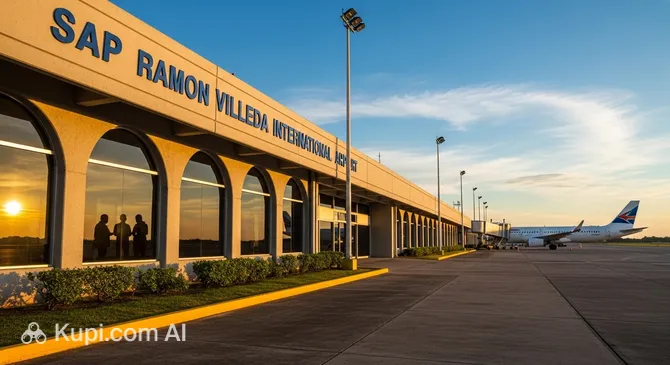
Ramon Villeda Morales International Airport. Source: Kupi.com Binoculars

Ramon Villeda Morales International Airport (IATA: SAP), also known as La Mesa Airport, is the main aerial gateway to Honduras' second-largest city, San Pedro Sula, and the entire northern region of the country. Located in the heart of a dynamically developing industrial zone, it plays a key role in the economic and tourism sectors of Honduras. This airport serves as an important transport hub connecting the country with cities in North and Central America, as well as Europe. Being the busiest airport in the country, it offers travelers convenient access to popular tourist destinations such as the Caribbean beaches of Tela and La Ceiba, as well as the famous Roatán islands.

IATA Code SAP
ICAO Code MHLM
City San Pedro Sula
Distance to center 11-15 km
Status International
Annual passengers approx. 1.27 million (2023)
Popular Airlines American Airlines, United Airlines, Spirit Airlines
Schedule online flight board "Ramon Villeda Morales International Airport"

Ramon Villeda Morales Airport is not just a point on the map, but a vital hub facilitating both passenger and cargo transport. It is equipped with a single concrete runway over 2,800 meters long, capable of accommodating various types of aircraft. Inside the terminal, passengers will find all necessary amenities for a comfortable wait: rest areas, shops, cafes, and currency exchange counters. Transport connections to the city center of San Pedro Sula are provided by taxis and buses, making the journey to and from the airport quick and convenient.

Contact Information

Below you will find contact information for Ramon Villeda Morales International Airport (SAP), which will help you plan your trip and navigate upon arrival.

  • Official Website: Up-to-date information on flights, services, and airport regulations can be found on the management company's website: www.aeropuertosdehonduras.com.
  • Inquiries Phone: +(504) 2668-3260 / 61 / 62 / 63
  • Address: Boulevard a La Lima, La Lima, Cortés, Honduras.
  • Email: For general inquiries, you can contact info@aeropuertosdehonduras.com.
  • Social Media: Official airport accounts can be found on platforms like Facebook by searching for "Aeropuertos de Honduras".
  • Lost & Found: If your luggage has been lost or damaged, you should first contact your airline's representative directly at the airport.
  • Passenger Support Service: For consultations and assistance, you may use the main airport information desk numbers.

How to Get to the Airport

Getting to Ramon Villeda Morales International Airport (SAP) from the city of San Pedro Sula can be done in several ways, suitable for any budget and travel style. The airport is located approximately 11 km southeast of the city center, so the journey usually does not take much time.

Taxi or Private Transfer is the most convenient, fast, and safe option for tourists. The trip from the city center to the airport will take approximately 25-40 minutes depending on traffic conditions. The cost of a trip with an official taxi is usually between 20 to 30 USD. It is highly recommended to use official carriers or book a transfer in advance through your hotel or a verified online service. This guarantees a fixed price and safety, delivering you directly to the terminal entrance.

Car Rental is an excellent choice for those who value independence and plan to explore the surroundings or travel across Honduras. Offices of several international and local rental companies are located within the airport. The cost of renting an economy car starts from approximately 30-40 USD per day, but this may vary depending on the season and vehicle class. Having a rental car gives you complete freedom in planning your schedule.

Public Transport is the most budget-friendly method. You can reach the airport on local buses (known as "colectivos") that run along the main highway passing near the terminal. The fare is extremely low and rarely exceeds 1-2 USD. It is important to note that you will have to walk some distance from the highway stop to the terminal. This option is more suitable for experienced and budget-conscious travelers, as buses can be crowded.

For those arriving at the airport in their own or rented vehicle, parking is available. The territory features zones for both short-term and long-term parking. Prices vary depending on the duration of stay. This is a convenient solution if you are seeing someone off or leaving your car for the duration of your trip.

Terminals and Map

Ramon Villeda Morales International Airport (SAP) has a simple and intuitive structure, making navigation easy even for first-time visitors. The airport consists of one main passenger terminal that serves both international and domestic flights. Thanks to this, travelers do not need to worry about transferring between different buildings.

The terminal layout is quite logical. The ground floor usually houses airline check-in counters and the arrival area. After checking in for a flight, passengers proceed to the second floor, where the security screening and passport control area leading to the departure hall is located. Signs in Spanish and English help you easily orient yourself and find the necessary boarding gate, shops, or cafes.

The Departure Zone is located after passing security control. Here you will find boarding gates, several Duty-Free shops, souvenir stalls, and dining establishments where you can have a snack while waiting for your flight. The Arrival Zone includes the passport control area for international flights, baggage claim belts, and customs inspection. In the general arrival hall, you will find car rental counters, taxi offices, and the meeting point.

Regarding the time required for formalities, it is recommended to arrive at the airport in advance. For international flights, it is advisable to allow at least 2.5-3 hours before departure, especially during peak hours. For domestic flights, 1.5-2 hours is usually sufficient. Check-in and screening procedures generally run in an organized manner, but queues are possible during periods of high traffic.

For comfortable navigation through the airport, simply follow the signs. The compact size of the terminal is its main advantage. All key areas are within walking distance of each other, minimizing the risk of getting lost or missing your flight.

Airport History

Ramon Villeda Morales International Airport (SAP) is not just the main air gateway to San Pedro Sula and the entire northern region of Honduras, but also a facility with a rich history. Its story began in the mid-20th century when the La Mesa military airbase operated on this site. The official opening of the civil terminal took place in 1965, and the airport was named after Ramón Villeda Morales, a president known for his reforms and contribution to infrastructure modernization.

From the very beginning, the airport played a key role in the economic development of the region. As San Pedro Sula transformed into the industrial hub of Honduras, both passenger traffic and cargo volume through SAP grew. The airport became a crucial node for the export of goods, particularly textile products, and quickly gained the status of the busiest in the country, holding it for many decades.

Perhaps the most dramatic and pivotal moment in the airport's history was Hurricane Mitch in 1998. The natural disaster caused colossal damage: the runway, terminal, and entire infrastructure were flooded and severely damaged. The airport was temporarily closed, but its subsequent restoration became a symbol of resilience and rebirth. This experience led to large-scale reconstruction and the implementation of more modern safety standards.

In the 21st century, Ramon Villeda Morales International Airport continued its development. Numerous works were carried out to expand the passenger terminal, modernize navigation equipment, and update the runway. Today, it is a modern airport capable of serving international flights and continues to remain a vital transport artery for all of Honduras, constantly adapting to the growing requirements of global aviation.

Services and Amenities

Ramon Villeda Morales International Airport (SAP) offers passengers all necessary services for a comfortable wait for their flight. Regardless of the purpose of your trip, you will find amenities here that will make your journey more pleasant.

Dining and Shopping. The airport houses several cafes and restaurants where you can have a snack before departure, drink a cup of famous Honduran coffee, or have a full meal. Shops offer a wide range of goods: from souvenirs and local handmade crafts to perfumes and exclusive goods in the Duty Free zone. Essential travel items can also be purchased here.

Comfort and Connectivity. General waiting lounges are provided for passenger relaxation. For those who prefer more privacy and comfort, VIP lounges with additional services are available. Free Wi-Fi is available throughout the terminal, and numerous charging stations for electronic devices will allow you to stay connected at all times.

Financial Services. Inside the airport building, you will find ATMs and currency exchange offices, which is very convenient for tourists arriving in the country. Here you can withdraw cash or exchange money for local currency upon arrival.

Special Services. The airport is equipped for the needs of passengers with reduced mobility: there are ramps and specially equipped restrooms. Families with small children can use the mother and child rooms. In case of necessity, a medical station operates at the airport to provide first aid.

Business and Accommodation. For business travelers, conference rooms may be available for meetings. If you have a long layover or an early flight, several hotels are located in the immediate vicinity of the airport, offering comfortable accommodation and transfers.

Where to Eat

At Ramon Villeda Morales International Airport (SAP), passengers will find several dining options to comfortably pass the time before departure. The main establishments are concentrated in the main terminal, both in the public area before security control (landside) and in the secure departure zone (airside), where the selection is usually wider.

For a quick snack and a cup of aromatic local coffee, visit the Espresso Americano coffee shop, popular in Honduras, or the familiar Dunkin' Donuts. Here you can grab coffee, pastries, or a sandwich. If you are looking for something more substantial, Wendy's operates in the airport food court, offering burgers and other classic fast-food dishes.

Prices at the airport are expectedly higher than in the city of San Pedro Sula. Expect a cup of coffee to cost approximately $3-5 USD, and a full meal at a fast-food restaurant around $10-15 USD. Although the choice of authentic cuisine is limited, in some cafes you can find traditional Honduran baleadas (wheat tortillas with beans, cheese, and other fillings) — a great opportunity to try something local before departure.

Passengers with special dietary needs should be prepared that finding certified vegan, gluten-free, or Halal meals might be challenging. Nevertheless, in most cafes, you can order fresh fruit slices, salads, or ask the staff about the ingredients of dishes to choose a suitable option.

Most dining establishments open early in the morning and operate until the departure of the last evening flights, adjusting to the flight schedule. However, if you have a late or night flight, we recommend checking the opening hours of a specific cafe or restaurant directly at the airport.

Travel Tips

Traveling through Ramon Villeda Morales International Airport, the main air gateway to the city of San Pedro Sula, will be more comfortable if you familiarize yourself with some features in advance. Follow these tips to ensure your stay at the airport goes smoothly and without unnecessary stress.

Arrival at the Airport and Check-in. For international flights, it is recommended to arrive at the airport at least 3 hours before departure, and for domestic flights — 2 hours. This will give you enough time to complete all formalities, especially during peak seasons. To save time, use online check-in if your airline provides such an option. However, be prepared that you may still need to stand in line to drop off luggage.

Passing Control and Hand Luggage. At security control, be ready to present your passport and boarding pass. Standard rules for carrying liquids in hand luggage apply here as well: all containers must be no more than 100 ml in volume and packed in one transparent bag. Check the list of prohibited items on your airline's website in advance. Always keep valuable electronics, documents, and money in your hand luggage.

Seat Selection and Transfers. If you want to enjoy the views during takeoff and landing, choose a window seat. An aisle seat is more convenient if you need to get up during the flight. For passengers with transfers, it is important to clarify whether you need to collect and re-check your luggage. Leave enough time between connecting flights, especially if you have to go through customs and passport control again upon entering Honduras.

Customs Control and Savings. Upon entering the country, you will need to fill out a customs declaration. Keep your passport and return ticket handy, as you may be asked to present them. To save money, bring an empty water bottle that can be filled after passing security control. It is also useful to have a small amount of local currency (Lempiras) for minor expenses, although US dollars are accepted in most places.

In Case of Flight Delay. If your flight is delayed, first contact your airline's counter for information on the new departure time and possible compensation (vouchers for food, drinks, or hotel accommodation for long delays). Explore the services available at the airport: cafes, shops, and rest areas will help pass the waiting time.

Reached the end of the page?

That means the route is fully explored