Support

Reykjavik Airport

Airports in the city

About the Airport

Reykjavik Airport (RKV) is not merely an air gateway, but a cosy starting point for journeys to the most remote and enchanting corners of Iceland. Unlike its large international "sibling" Keflavik, this airport is located right in the heart of the capital. It is from here that flights depart to the glaciers, volcanoes, and fjords that make Iceland the land of fire and ice. This is your ticket to the island's genuine, untouched nature.
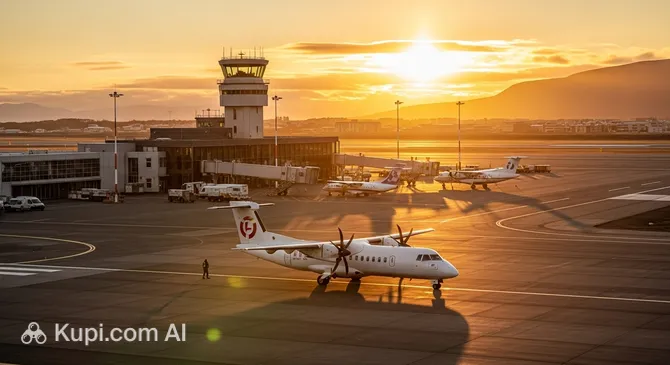
Reykjavik Airport. Source: Kupi.com Binoculars
IATA Code RKV
ICAO Code BIRK
City Reykjavik
Distance to centre ~ 2 km
Status Domestic, with flights to Greenland and the Faroe Islands
Passengers per year About 400,000 (mostly on domestic flights)
Popular Airlines Icelandair, Eagle Air, Norlandair

The main advantage of Reykjavik Airport (RKV) is its unique location. Situated just a couple of kilometres from the city centre, it allows you to save a significant amount of time: there is no need to spend hours on transfers, as is the case with Keflavik International Airport (KEF), which is located 50 km from the capital. This is especially convenient for those planning to immediately set off on a journey across the country.

The airport is a key hub for domestic flights. From here, airlines operate regular flights to cities such as Akureyri in the north, Isafjordur in the Westfjords, and Egilsstadir in the east. For many travellers, this is the fastest and most comfortable way to reach remote regions. Despite its compact size, the airport offers everything necessary: car rental desks, small cafes, and a comfortable waiting area. Important to remember: if you are flying to Iceland from most countries around the world, your plane will land at Keflavik (KEF), while Reykjavik Airport (RKV) will be needed for your further adventures around the island.

Contact Information

For your convenience, we have compiled the main contact information for the domestic Reykjavik Airport (RKV).

  • Official Website: You will find the most complete and up-to-date information on flights, services, and rules on the official website of the airport operator, Isavia: www.isavia.is/en/reykjavik-airport.
  • Help Desk Phone: For general questions and enquiries, you can call the operator Isavia at: +354 424 4000.
  • Airport Address: The airport is located within the city limits at: Þorragata 10, 101 Reykjavík, Iceland.
  • Email: To contact airport representatives, it is recommended to use the contact form on the official website, as a direct email for general questions is not published.
  • Social Media: You can follow news from the operator Isavia on their official social media accounts to stay informed about the latest updates.
  • Lost Luggage Information: If you encounter a problem with lost or damaged luggage, you should contact your airline directly. Airport services do not handle the search for personal items left on board or lost during transport.
  • Passenger Support Contacts: For assistance directly at the airport, please approach the information desks in the terminal. Telephone support is provided via the general help desk number.

How to Get to the Airport

Reykjavik Airport (RKV) possesses a unique advantage — it is located practically in the very centre of the city, making the journey to it fast and convenient. It is important to remember that this airport mainly serves domestic flights within Iceland, while most international travellers arrive at Keflavik International Airport (KEF). Thanks to its location, getting to Reykjavik Airport can be done in several simple ways.

Public Transport is the most economical option. The city bus network Strætó has several routes that pass in the immediate vicinity of the airport. A bus ride from the city centre will take about 15–20 minutes, including a short walk to the terminal. We recommend checking the current schedule and route numbers on the official Strætó website in advance. There are no trains or metro in Reykjavik.

Taxi or Private Transfer is the fastest and most comfortable method. A taxi ride from the central part of Reykjavik to the airport will take just 5–10 minutes depending on traffic conditions. Although this is a more expensive option compared to the bus, due to the short distance, the total cost remains quite reasonable. This is an excellent choice if you have a lot of luggage or are rushing for a flight.

Car Rental is a popular choice for travellers planning to explore the surroundings after their flight. Offices of many rental companies are located at the airport and nearby, where you can both pick up and drop off a car. Driving a personal or rented car is very simple thanks to the airport's central location. There is paid parking on the premises, offering options for both short-term and long-term stays.

Terminals and Map

Reykjavik Airport (RKV) is a small and compact airport serving predominantly domestic flights within Iceland, as well as flights to Greenland and the Faroe Islands. It is important not to confuse it with the country's main international airport, Keflavik (KEF), which is located approximately 50 km from the capital. The structure of RKV is extremely simple and clear, making it very convenient for travellers.

Reykjavik Airport has two main terminals. They are separate buildings not connected by walkways, and each serves specific airlines. The choice of terminal depends on which airline you are flying with:

  • Main Terminal serves flights for Icelandair (domestic routes) and Norlandair. Planes depart from here to most cities in Iceland, as well as to Greenland and the Faroe Islands. This is the larger of the two terminals.
  • Second Terminal is used by the airline Eagle Air (Flugfélagið Ernir), which operates flights to several domestic destinations and organises private charters.

The airport layout is very simple, and navigation causes no difficulties. Since the terminals are small, standalone buildings, it is practically impossible to get lost. Departure and arrival zones are clearly marked. The main thing is to check with your carrier in advance which terminal your flight operates from, so you can arrive at the right place immediately. Moving between terminals on foot is not very convenient, although possible — you will have to go outside to do so.

Thanks to the small size of the airport and lower passenger flow compared to international hubs, all pre-flight formalities proceed very quickly. Check-in and security control usually take no more than 20-30 minutes. Nevertheless, it is recommended to arrive at the airport approximately 45-60 minutes before departure to drop off luggage and proceed to boarding without rushing.

Airport History

The history of Reykjavik Airport (RKV) is closely tied to the events of the 20th century and the development of Iceland as a whole. Its emergence was dictated not by civil but by military needs: the first runway was built by the British military in 1940 during World War II. After the war ended, in 1946, the airport was officially handed over to Icelandic authorities and for a time became the country's main international gateway, marking the beginning of the era of Icelandic civil aviation.

With the development of the larger airport in Keflavik, which took over international flights, Reykjavik Airport was repurposed and became a key hub for domestic airlines. It plays a vital role in the country's transport system, ensuring the capital's connection with remote cities and fjords where land access can be difficult, especially in winter. Besides domestic flights, flights to Greenland and the Faroe Islands are operated from here.

The airport acquired its modern look in the early 2000s when new terminals were built for Air Iceland Connect and Eagle Air. One of the most interesting facts in the airport's history is the long-standing debate about its future. Located practically in the city centre, it occupies valuable land, which generates disputes about possibly moving the airport outside the capital to free up territory for urban development. However, its convenient location and critical importance for domestic transport, including medical aviation, make this issue extremely complex and still unresolved.

Services and Amenities

Reykjavik Airport (RKV) is primarily a hub for domestic flights, serving routes within Iceland and to nearby islands. Consequently, the range of services here is compact and oriented towards passengers who do not spend much time in the terminal. It is important not to confuse it with the country's main international airport, Keflavik (KEF), where the infrastructure is significantly more extensive.

For passenger convenience, Reykjavik Airport has all the essentials. There is a cafe-bistro where you can have a snack, drink coffee, or purchase light refreshments for the journey. Shopping opportunities are limited to a small shop with necessities, souvenirs, and press. Free Wi-Fi is available throughout the terminal, and charging points for electronic devices are available in the waiting areas, though their number may be limited.

Regarding other services, the airport has ATMs for cash withdrawal, but there are no full-service bank branches or currency exchange points here. For travellers with small children, mother and baby rooms equipped with changing tables are available. Passengers with reduced mobility are provided assistance during boarding and disembarking, but this service must be requested in advance through the airline. The airport building is adapted for free movement in wheelchairs.

Specialised amenities such as VIP lounges, business centres, or conference rooms are absent at Reykjavik Airport. There are no hotels directly on the terminal grounds either. However, thanks to the airport's location practically in the city centre, numerous hotels and apartments are within a few minutes' drive by taxi or public transport. Medical assistance is limited to a first aid station; in emergencies, city services are called.

Where to Eat

Reykjavik Airport (RKV) is a compact airport serving predominantly domestic flights, so the choice of establishments here is oriented towards a quick and convenient snack. Do not expect a variety of restaurants here as in the main international airport, Keflavik. All dining options are concentrated in one terminal and are easily accessible for both departing and arriving passengers.

The main place to eat is a cosy cafe-bistro located in the public area before security control. This is an excellent option for both a light snack and a more substantial lunch. The menu usually features:

  • For a quick snack: fresh pastries, sandwiches, salads, yoghurts.
  • For a full lunch: there is often a soup of the day or one or two simple hot dishes.
  • Beverages: a large selection of coffee, tea, juices, and soft drinks.

Despite the modest selection, you can find something with local flair here. Look out for the traditional Icelandic yoghurt skyr or local chocolate. Regarding special dietary needs, vegetarians can usually find sandwiches with cheese and vegetables. However, choices for vegans or people with gluten intolerance may be limited to packaged snacks, so it is recommended to study product ingredients carefully. Specialised Halal dishes are generally unavailable.

The cafe is located in the main hall of the terminal, so it is impossible to miss. The establishment's opening hours are directly linked to the flight schedule — it opens for the first morning flights and operates until the departure of the last evening flight. Prices correspond to the general level in Iceland, meaning they are quite high. It is a convenient, though not the most budget-friendly place to refresh yourself before a flight.

Tips for Travellers

Arrival time at the airport. Reykjavik Airport (RKV) is a compact hub serving mainly domestic flights, as well as flights to Greenland and the Faroe Islands. Thanks to the small size of the terminal, processes here move quickly. For domestic departures, it is usually sufficient to arrive 45–60 minutes before departure. If you have an international flight (for example, to Kulusuk or Nuuk), it is better to arrive 1.5 hours early to pass passport control calmly.

Check-in and Security. We recommend completing online check-in in advance to avoid queues at the counters, which can occur during morning peak hours. Security screening here takes place in a calm environment, but requirements are standard. Keep your documents and boarding pass handy to speed up the process.

Choosing a seat on the plane. Flights over Iceland are a true sightseeing adventure. Be sure to try to choose a seat by the window (Window seat). In good weather, you will see glaciers, lava fields, volcanoes, and the rugged coastline immediately after takeoff. On the small aircraft used here, an excellent view opens up from almost any row.

Hand luggage. Please note that small turboprop aircraft are often used on domestic flights. Overhead bins for hand luggage in them may be smaller than standard. If your bag does not fit, you may be asked to hand it over to the luggage compartment right at the gangway (Valet Bag procedure), and it will be returned to you immediately after landing. Standard rules for carrying liquids (up to 100 ml) apply here as well.

Transfers and Transit. This is the most important point for tourists: do not confuse this airport with Keflavik International Airport (KEF). They are located 50 km apart. If you have a single ticket with a transfer from an international flight to a domestic one, you will have to collect your luggage in Keflavik yourself, travel to Reykjavik (bus or taxi takes about 45–60 minutes), and check in again. Allow at least 3–4 hours for such a connection.

Customs Regulations. Iceland strictly protects its ecosystem. The import of raw meat and unpasteurised dairy products is strictly prohibited. Pay special attention to fishing gear and horse riding clothing: they must be disinfected and have a veterinary service certificate, otherwise you will have to pay for disinfection upon arrival.

Saving time and money. Bring an empty water bottle with you. In Iceland, tap water is among the purest and tastiest in the world. You can fill your bottle for free in restrooms or drinking fountains after security screening without overpaying in the cafe. Also, since the airport is located practically in the city centre, you can get to it by a regular city bus or even on foot from nearby hotels, which is much cheaper than a taxi.

In case of flight delay. The weather in Iceland is changeable and often forces adjustments to the schedule, especially in winter. Strong winds can cause delays. Be sure to download the airline's app to receive notifications. In case of a long wait, passenger rights are protected by European regulations: you can count on vouchers for food and drinks.

Airports in nearby cities

Reached the end of the page?

That means the route is fully explored