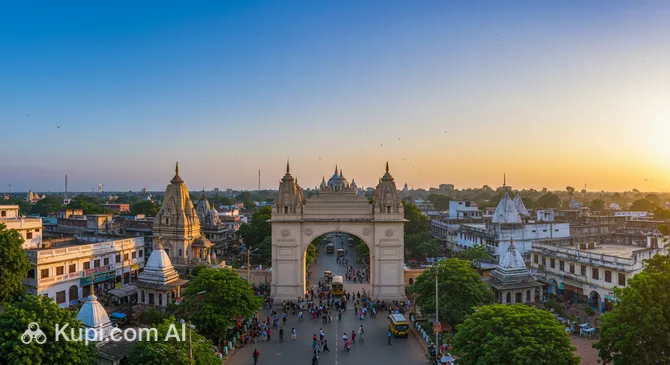
Bardhaman (also known as Barddhaman or Burdwan) is a vibrant administrative and cultural center in the Indian state of West Bengal. Located on the picturesque northern bank of the Damodar River, this city harmoniously combines the energy of a major transport hub with the tranquility of a traditional agricultural region. India knows this land as the "Granary of Bengal," as Bardhaman is the state's key agrarian core, surrounded by endless rice fields.
Bardhaman. Illustration.
Source: Kupi.com AI
The city has a rich historical past with roots stretching back to ancient times. Modern-day Bardhaman, with a population of about 314,000, is a dynamically developing educational hub where British-era colonial architecture stands alongside modern schools and government institutions. There is no metropolitan pretension here; instead, there is an abundance of practical energy and the hospitality of an industrial-agricultural center.
The city's geographical location makes it a vital link in the region's transport system, connecting Kolkata with the rest of the country. Tourists are drawn here not only by the opportunity to see authentic Bengali life but also to experience the unique heritage of the local Maharajas. We invite you to visit Bardhaman to feel the rhythm of real provincial India, where history and modernity are intertwined against a backdrop of green plains.
Weather Overview
Bardhaman is located in a tropical climate zone characterized by distinct seasonal changes. Summer in the city can be quite hot: in April and May, temperatures often rise to +36...+40°C, and sometimes reach an extreme +44°C. During this time, humidity increases before the start of the monsoon season.
Rainfall in the region is most intense from June to September. During this period, local climate features manifest in frequent tropical downpours, which bring long-awaited coolness but can make moving around the city more difficult. The average temperature during the monsoon months stays around +29°C. Winter in Bardhaman, lasting from November to February, is considered the most pleasant time to visit: days are sunny and dry, with average temperatures ranging from a comfortable +18...+22°C.
When planning your trip, expect a very hot summer with occasional thunderstorms in the pre-monsoon period and a mild, dry winter with cool nights. The best time to visit the city is from October to March, when the weather allows for comfortable sightseeing and walking around the area without exhausting heat.
Average monthly temperature
Average monthly precipitation
Interesting Facts
The name Bardhaman has ancient roots: the city is believed to be named after Vardhamana Mahavira, the 24th Jain Tirthankara, who visited the region back in the 6th century BCE.
The city holds the honorary title of the "Granary of Bengal" because the district is the state's absolute leader in rice production, thanks to the fertile soils of the Damodar River valley.
In 2017, the massive Bardhaman district was divided into two parts, and the city became the administrative center of Purba Bardhaman (East Bardhaman).
The history of this land is incredibly deep: at various times, the region was ruled by the great Mauryan, Kushan, and Gupta dynasties, leaving a mark on the cultural code of the local people.
Today, it is the fifth-largest city in West Bengal, actively developing not only as an agricultural hub but also as a major educational center for the region.
How to Get There
Bardhaman is one of the most important transport hubs in West Bengal, making it easily accessible for travelers. The city is located on a major railway line and is connected by high-quality roads to key centers in Eastern India. You can find more details about all travel options on our website.
The nearest major international air hub is Netaji Subhash Chandra Bose International Airport (CCU) in Kolkata. The journey from there to Bardhaman by car or taxi takes 2 to 3 hours via the NH19 highway, though travel time may increase during peak hours due to metropolitan traffic.
The railway is the most convenient and fastest way to reach the city. Trains from Kolkata depart regularly, with travel times ranging from 1.5 to 2.5 hours. Bardhaman Railway Station is always busy, serving as a stop for both suburban local trains and long-distance trains heading to northern and western states.
Station
Passenger traffic
Distance
Durgapur railway station
7
63 km
Howrah railway station
21
87 km
Jashore Junction railway station
5
138 km
Rajshahi Railway Station
3
148 km
Dhanbad Junction railway station
8
159 km
Bardhaman is also easy to reach by regional buses or private vehicles. The modern four-lane highway ensures a comfortable trip, and along the way, you can observe the picturesque rural landscapes of Bengal. Within the city, auto-rickshaws and taxis stationed at the station are the most convenient ways to get around.
Main Attractions
The main attractions of Bardhaman reflect its status as an important religious and administrative center. One of the most revered shrines is the Sarvamangala Temple. This place attracts pilgrims with its ancient energy; it is believed that the temple's deity has protected the city and its residents for many centuries. The temple's architecture is a classic example of Bengali temple design.
For those seeking tranquility within the city limits, the Kalpataru Children's Park is an excellent choice. This green space is a popular spot for family recreation, offering a break from the hustle and bustle of the central streets. Although the city is oriented toward the agricultural sector, such islands of nature are carefully maintained, turning them into centers of attraction for locals and visitors alike.
History and architecture enthusiasts will find it interesting to see the Hawa Mahal. Although smaller in scale than its namesake in Jaipur, this building serves as an important reminder of the period of the Maharajas of Bardhaman. The city also retains traces of colonial influence, noticeable in the appearance of administrative buildings and the layout of central squares, making a walk through its streets a true historical exploration.
Local Cuisine
The cuisine of Bardhaman is a true hymn to Bengali traditions. The foundation of the diet here is rice, grown just outside the city limits, and fresh river fish caught in the waters of the Damodar. Be sure to try various types of curries prepared with mustard oil—it gives local dishes a characteristic pungent aroma. To experience local hospitality, you can visit the Gol Table restaurant, which serves traditional dishes in a quiet setting.
Sweets hold a special place in the city's gastronomy. Bardhaman is famous for its mishti doi—a delicate sweet yogurt—as well as unique desserts like sitabhog and mihidana. These treats are so famous that they are often brought from here as gifts. If you are looking for a hearty lunch, Hotel RJ offers a wide selection of both Bengali and pan-Indian dishes.
The food culture in the city is diverse, ranging from cozy family cafes to busy street stalls near the station. You can always find fresh fruits and vegetables at the Bardhaman markets. Among beverages, traditional tea (cha), served in small clay cups, remains the most popular. Thanks to the region's Jain heritage, the city also features an excellent selection of vegetarian dishes prepared with great skill.
Travel Tips
A visit to Bardhaman will give you an unforgettable experience of immersing yourself in the authentic Indian countryside. To ensure your trip goes smoothly and comfortably, we have prepared some practical tips.
Clothing and Essentials: Choose lightweight cotton clothing, as the climate here is predominantly hot and humid. During the winter period (December–January), it can be cool in the mornings, so a light sweater will come in handy. When visiting temples like Sarvamangala, observe the dress code: shoulders and knees should be covered.
Transport: It is most convenient to get around the city by auto-rickshaws. Always agree on the price in advance. For trips to Kolkata, use local trains—it is the fastest and cheapest way.
Finances: The official currency is the Indian Rupee (INR). Cards are accepted in large stores and hotels, but for markets, rickshaws, and small cafes, be sure to have a supply of cash. ATMs are located primarily in the city center.
Health and Safety: Drink only bottled water and avoid ice in street drinks. In the summer months, be sure to use sunscreen and insect repellent. Bardhaman is generally safe, but it is better not to walk alone in outlying areas at night.
Communication: The main language is Bengali, and Hindi is also widely understood. English is common among young people and hotel staff. Knowing a few phrases in Bengali (for example, "nomoshkar" — hello) will help you win over the locals.
Local Etiquette: Always remove your shoes when entering homes or temples. Bengalis are very friendly and appreciate politeness. Don't hesitate to smile and say thank you.
What to Avoid: Try not to photograph people without their permission, especially during religious ceremonies. Avoid eating unwashed fruit purchased at the market.
Specific Tip: Be sure to try the sitabhog sweets at the local stalls near the station—this is a culinary pride of Bardhaman that you won't find in such quality anywhere else.
By following these simple recommendations, you can fully focus on exploring this amazing "rice land" and get the most enjoyment out of your journey!
Entertainment & Nightlife
Nightlife in Bardhaman is generally quiet, as the city is primarily an administrative and agricultural center. You won't find the noisy, dawn-to-dusk discos typical of megacities here, but there are several pleasant establishments in the city center. For example, Saluja Bar and Restaurant offers a cozy atmosphere where you can spend an evening over dinner and drinks. Such places are popular with locals and business travelers.
Another interesting option for evening relaxation is the ADDA Restaurant and Bar. The name "Adda" in Bengali culture signifies an informal conversation, and the establishment fully lives up to its name. Groups of friends gather here for long chats. The crowd in such places is usually polite, and prices are moderate. Most bars and restaurants close around 11 PM, so plan your leisure time accordingly.
During the day, entertainment shifts toward city parks and festivals. Colorful street fairs held during Bengali holidays periodically take place in Bardhaman. If you are looking for larger-scale cultural events or nightclubs, many residents prefer taking short trips to Kolkata, which is only about an hour and a half away by train. For nighttime travel within the city itself, it is best to use taxi services or auto-rickshaws that can be summoned via apps.
Parks & Museums
The parks and cultural sites of Bardhaman allow you to touch the region's history and spend time outdoors. The city's landmark is the Curzon Gate—a majestic structure erected in honor of Lord Curzon's visit in 1904. These gates serve as the main entrance to the historic part of the city and provide a wonderful backdrop for photos, reminding visitors of the British colonial heritage.
Not far from the gate lies another historical monument, Bijay Toran. A walk between these architectural monuments allows you to feel the atmosphere of old Bardhaman. The urban landscape is complemented by the banks of the Damodar River, which serve as natural green zones for walks and picnics, especially popular during the cool winter months.
For curious travelers and families with children, the Bardhaman Science Centre is a great destination. This modern museum presents the laws of physics and biology in an interactive format. The center plays an important educational role in the region, and a visit there will be an interesting addition to touring the city's historical sites, offering a glimpse into a modern, knowledge-seeking India.
Getting Around
The transport system in Bardhaman is ideally suited for a city of its size, making travel fast and affordable. The backbone of urban transport consists of auto-rickshaws and cycle-rickshaws, which skillfully maneuver through the narrow streets of the center. This is the most authentic and inexpensive way to get from one point of the city to another, especially for trips from the station to a hotel or market.
Bus services in the city connect it with surrounding districts and neighboring towns in the state. The central bus station is always full of life, with regular state and private bus departures. Roads like the NH19 highway are kept in good condition, making intercity bus travel quite comfortable for tourists.
The railway plays a key role in the life of Bardhaman. Thanks to its status as a major hub, trains are the most popular mode of transport here, not only for long-distance travel but also for daily commutes to Kolkata. Taxi-hailing services also operate within the city. When using rickshaws, it is recommended to agree on the fare in advance if they are not equipped with a meter, to avoid any misunderstandings.
Accommodation
Accommodation options in Bardhaman primarily cater to business travelers, transit passengers, and students. The mid-range and budget segments predominate here. Most hotels and guesthouses are concentrated near the railway station and along major transport arteries, which is convenient for those making a stopover.
One well-known place to stay is Hotel RJ, which offers a standard set of services for a comfortable stay. There are also many small "lodges" and budget apartments in the city, which are in demand among people visiting local administrative offices or universities on business. There are virtually no luxury resorts in Bardhaman, as the tourism infrastructure is still developing.
When planning your trip, it is recommended to book accommodation in advance, especially if your visit coincides with major religious festivals or exam periods at local universities, when demand for rooms spikes. Payment at most mid-range hotels can be made by card, but it is better to have cash in Rupees for smaller guesthouses.
Nearby Cities
Bardhaman serves as an excellent starting point for exploring the surroundings and getting acquainted with the rural life of West Bengal. The region around the city is rich with small settlements, each possessing its own unique character and traditions.
Just 18 kilometers away is Rasulpur, which can be easily reached by suburban train or auto-rickshaw for a short stroll. Other points of interest for travelers include Bara Belun and Galsi, located about 22 kilometers from the center. These trips will allow you to see endless rice fields and traditional Bengali villages that have changed little over recent decades.
For those missing the big city atmosphere, Kolkata—the cultural capital of India—is always available just a couple of hours away. Exploring the outlying districts of Bardhaman will give you a deeper understanding of the state's culture, far from the well-trodden tourist paths. We recommend setting aside a day for such trips to fully enjoy the peaceful rhythm of the Bengali countryside.
Shopping & Souvenirs
Shopping in Bardhaman is primarily about discovering the vibrant world of traditional bazaars and markets. Most commercial activity is concentrated around the railway station and on the city's central streets. Here you can buy the freshest produce, spices, and high-quality textiles. Local markets are famous for their cotton and traditional Bengali clothing, which is known for its lightness and bright colors.
For those who prefer a modern shopping format, there are shopping centers in the city. Barddhaman Arcade is a popular spot where you can find both local brands and everyday goods in comfortable conditions. It is also worth visiting the Trends store, which offers a wide selection of modern-style clothing at affordable prices.
As souvenirs from Bardhaman, visitors most often bring back the famous local sweets sitabhog and mihidana, which have become true gastronomic symbols of the city. Shops usually operate from 10 AM to 8 or 9 PM, though many market stalls may close for a lunch break. Payment in major centers is accepted by card, but you will definitely need cash in Rupees for the traditional bazaars.