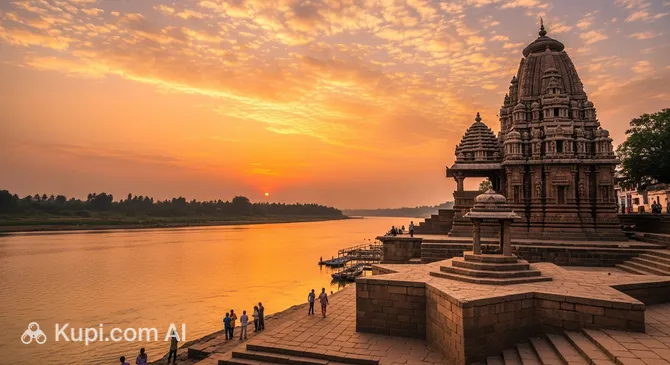
Bhadravati is a dynamic industrial hub located in the state of Karnataka in southwestern India. The city stretches along the banks of the picturesque Bhadra River, which not only gives the city its name but is also a vital element of the local landscape. With a population of over 200,000, this city represents a unique blend of industrial power and the charm of a South Indian provincial town.
Formerly known as Benkipattana, which translates to "city of fire," Bhadravati is rightfully considered the industrial heart of the region. It earned its reputation through the development of steel and paper production. By diving into the history of Bhadravati, one can learn how its proximity to iron ore deposits and a hydroelectric power station transformed it from a small settlement into a major economic asset for the state.
Bhadravati. Illustration.
Source: Kupi.com AI
While the city is primarily production-oriented, it attracts attention with its layout and the atmosphere of a hardworking community. Tourists will find it interesting to see the Bhadra River and observe the life of a modern Indian industrial center that maintains a high literacy rate among its population. We invite you to discover this "city of fire" to see India from its business and creative side.
Weather Overview
Bhadravati is characterized by a typical tropical climate with distinct seasons. Due to its location in central Karnataka at an altitude of about 580 meters, it can get quite hot during the summer months (March to May), when temperatures can reach 35–40°C. In contrast, winter in the city is very mild and pleasant: in December and January, the average temperature stays around 23°C, making this period the most comfortable for a visit.
The monsoons play a special role in the city's life. From June to October, the region is covered by heavy rains brought by the Bhadra River and the proximity of the Baba Budan Hills. In July, the wettest month, it rains almost daily, bringing coolness but creating certain challenges for travel. If you want to know more about the current weather in Bhadravati, we recommend checking the latest reports before your trip.
It is worth considering that the city's industrial status can affect air quality, especially during the dry season. In the hot months, dust levels rise, so travelers with sensitive health should choose to visit after the rainy season when the nature around the city is refreshed and the air becomes noticeably cleaner.
Average monthly temperature
Average monthly precipitation
Interesting Facts
The city's name is derived from the Bhadra River, but it was previously called "Benkipura," which literally means "city of fire" due to the abundance of industrial furnaces.
Bhadravati is one of the few cities in the region designed as a modern industrial hub with its own developed infrastructure for workers.
The literacy rate in the city is traditionally higher than the Indian average, reflecting its status as a center for skilled labor.
The city is surrounded by five different taluks (administrative units), making it an important transport and trade crossroads in the Shimoga district.
Nearly a third of the city's population lives in densely built residential areas that emerged during the rapid growth of the steel and paper industries.
How to Get There
The accessibility of Bhadravati is largely due to its industrial status, making it an important hub in the state of Karnataka. Most travelers arrive from the state capital, Bengaluru, which is approximately 255 kilometers away. You can reach the city by comfortable buses or trains; the journey takes between 5 to 7 hours depending on the chosen service and traffic conditions.
The city does not have its own airport. The nearest major international aviation hub is located in Bengaluru, though Mangaluru Airport is another option to consider. If you are planning your trip in advance, we recommend checking detailed information on how to get to Bhadravati to choose the most convenient connection.
Rail travel is one of the most reliable ways to get around. The Bhadravati railway station belongs to the South Western Railway and regularly receives trains from major cities in the region. It is particularly convenient to travel here from Shivamogga, with the commuter train ride taking no more than 45 minutes.
Station
Passenger traffic
Distance
Bhadravati railway station
1
2 km
Mangaluru Junction railway station
6
139 km
Shree Siddharoodha Swamiji - Hubballi Junction railway station
10
179 km
Mysore Junction railway station
8
196 km
Kannur Railway Station
7
220 km
Main Attractions
Bhadravati is not a typical tourist destination with an abundance of ancient monuments, as the city's main focus is on industrial development. The primary "attraction" and the economic heart of the city is the Visvesvaraya Iron and Steel Plant (VISL). Although access to the production facilities is restricted for casual visitors, the scale of this industrial giant is impressive even from a distance, serving as a reminder of the city's importance to the entire country.
The majestic Bhadra River serves as a natural center of attraction. Its embankments and bridges are favorite spots for locals to take walks. Here, you can feel the calm rhythm of life away from the factory noise and enjoy views of the water, which has nourished the city's enterprises and surrounding farmlands for decades.
For those seeking more traditional architectural sites, the administrative buildings and market squares in the city center are worth noting. The atmosphere of an old industrial settlement with its clear planning creates a distinct urban landscape. Bhadravati often serves as a convenient starting point for trips to the natural beauties of the nearby Baba Budan Hills, offering travelers an authentic look into the life of modern working India.
Local Cuisine
The culinary scene in Bhadravati is a true celebration of traditional Karnataka cuisine. The local diet is based on rice, ragi (finger millet), and pulses. Be sure to try Ragi Mudde—nutritious millet flour balls served with fragrant sambar or spicy meat curry. Another favorite is Bisi Bele Bath, a spicy rice dish with lentils and vegetables that is considered a signature dish of the region.
Small canteens and street stalls are very popular in the city, where factory workers and residents have breakfast with traditional Idli (steamed rice cakes) and Dosa (crispy crepes) served with coconut chutney. The food culture here is simple and functional, but the food is always fresh and generously seasoned with local spices.
Among drinks, South Indian filter coffee (Kaapi) is the undisputed leader. It is prepared with hot frothed milk and served in traditional steel tumblers. This aromatic beverage is perfect for a brisk start to the day. In the evening, stalls selling fresh juices and masala chai open in the city center, creating a cozy atmosphere for relaxation.
Travel Tips
A trip to Bhadravati will allow you to see the industrial side of India, and to ensure your visit goes smoothly, we have prepared a few practical tips.
Clothing and Climate: Choose light cotton clothing, as it can get quite hot here. During the monsoon season (June–October), be sure to bring a sturdy umbrella or raincoat. For visiting temples or administrative buildings, clothing should cover your shoulders and knees.
Transport: For getting around the city, auto-rickshaws are the most convenient option. Always negotiate the price before boarding. If you plan to go to Shivamogga, use the local buses—they run frequently and are inexpensive.
Finances: Cash (Indian Rupees) is the predominant form of payment. ATMs are available in the center and near banks, but cards are only accepted in large stores or hotels. Keep a supply of small bills for rickshaws and markets.
Health: Drink only bottled water and avoid ice in street drinks. Due to the city's industrial nature, the air can be dusty, so allergy sufferers should carry necessary medications.
Communication: The main language is Kannada, but many factory employees and young people understand English. A few phrases in the local language ("Namaskara" — hello) will bring a smile and earn the favor of the residents.
Etiquette: As elsewhere in South India, a greeting with folded palms (Namaste/Namaskara) is a sign of respect. Remove your shoes when entering homes and temples.
What to Avoid: It is not recommended to walk alone on the outskirts or in slum areas after dark. Also, avoid photographing industrial sites up close if you see prohibitive signs.
Extra Tip: Try the local filter coffee specifically at the small stalls near the river—it is the most authentic culinary experience in the city.
May your discovery of this "city of fire" be interesting and comfortable!
Entertainment & Nightlife
Since Bhadravati is primarily an industrial city, the nightlife here is relatively low-key and geared toward quiet relaxation after a day's work. You won't find loud nightclubs or bars with dress codes. Most evening activity is concentrated in local markets and small cafes in the city center, where families and workers gather to socialize.
Movie buffs should visit the local cinemas, which are the main source of entertainment for the residents. They screen both the latest Bollywood hits and Kannada-language films. This is an excellent way to immerse yourself in the local culture and see how the people of Karnataka spend their leisure time. Daytime entertainment includes strolls along the riverbank or visiting the sports grounds near the factories, which often serve as centers of community life.
If you are looking for a more intense cultural program or nightlife venues, locals recommend heading to neighboring Shivamogga, located just 20 kilometers away. Nevertheless, Bhadravati offers a safe and quiet atmosphere for those who appreciate authenticity and want to see the real life of an Indian industrial city without any filters.
Parks & Museums
Since Bhadravati developed as an industrial center, there are almost no classical museums or major galleries in the city. Cultural life here is closely intertwined with industrial history, and the main "open-air exhibits" are the factory buildings themselves, reflecting 20th-century architecture. Nevertheless, for those seeking tranquility, the city offers several pleasant natural areas.
The municipal park zones along the Bhadra River serve as the main recreation spots for residents. Although they are not huge, they are the best places in town to enjoy the cool breeze from the water and the shade of the trees. Greenery here is mainly concentrated in the planned residential quarters for factory employees, where you can find well-maintained gardens and alleys.
If you want to visit large-scale national parks or museums with historical artifacts, it is recommended to head to neighboring Shivamogga or the Baba Budan Hills. However, in Bhadravati itself, you can experience the unique aesthetic of "green industrialism," where industrial sites sit side-by-side with lush tropical vegetation, creating an unusual contrast.
Getting Around
The public transport system in Bhadravati is simple and efficient, fully meeting the needs of an industrial city. Internal transportation is based on government buses run by KSRTC, which connect the center with the outskirts and industrial zones. The routes are conveniently laid out, but keep in mind that during peak hours—morning and evening when factory shifts change—buses can become very crowded.
Auto-rickshaws are a popular alternative to buses and can be found on every corner. They are the fastest way to reach any point in the city, but it is wise to agree on the fare beforehand as meters are rarely used. For travel between regional cities, the railway is actively used, and Bhadravati station is an important stop for commuter trains.
Bus tickets are purchased from the conductor inside the vehicle, and cash is accepted. Overall, thanks to the city's clear layout, it is quite easy to navigate. If you decide to explore the surroundings, you can rent a motorcycle or use a taxi, which offers more freedom, especially during the monsoon season when public transport schedules may change slightly due to rain.
Accommodation
The choice of accommodation in Bhadravati is somewhat specific: most options are geared not toward tourists, but toward professionals visiting for business at the steel and paper plants. The market is dominated by guesthouses, budget hotels, and lodges that offer basic amenities at affordable prices—usually ranging from 500 to 2,000 Indian Rupees per night.
The most convenient areas to stay are the city center and the neighborhoods adjacent to the Bhadra River. Here, you will find accommodation with better access to shops and local transport. If you are looking for a higher level of service or modern hotel chains, it is worth considering options in neighboring Shivamogga, where the choice of tourist infrastructure is significantly broader.
For a short visit, it is better to book a room in advance, especially if your trip coincides with business forums or major festivals in Karnataka. International and Indian online platforms remain popular booking methods, though small guesthouses still practice cash payment upon arrival.
Nearby Cities
Bhadravati serves as a convenient starting point for exploring the central part of Karnataka, offering travelers access to interesting natural and cultural sites. Just 19 kilometers away is Shivamogga (Shimoga)—a major administrative center known for its vibrant markets and proximity to the famous Jog Falls.
For those who prefer shorter trips, the small town of Tarikere, located 17 kilometers to the southeast, is an excellent choice. It is often used as a gateway to the Baba Budan Hills, home to coffee plantations and shrines. Additionally, within a 10–15 minute drive, you can visit the settlements of Donabaggatta and Singanamane to see the rural lifestyle of the region.
Exploring the surroundings will help you better understand the multifaceted nature of India: from the industrial power of Bhadravati to the fertile lands and majestic forests of the Western Ghats, which begin quite close to the city. Each of these destinations is easily accessible by local bus or taxi.
Shopping & Souvenirs
Shopping in Bhadravati primarily involves visiting the bustling local markets in the city center. You won't find massive shopping malls with global brands here, but you can fully immerse yourself in the atmosphere of Indian trade. The main shopping streets are concentrated around the railway station and the riverbanks, selling everything from fresh vegetables and spices to clothing and everyday goods.
As souvenirs from this region, it is worth bringing back products that Karnataka is famous for: sandalwood oil, wood carvings, and aromatic spices. Thanks to the city's industrial profile, you can also find high-quality metalware and textiles targeted at the local population in the markets. Prices here are usually lower than in major tourist cities, but the ability to bargain is welcomed.
Shops typically operate from morning until late evening with a short lunch break during the hottest time of day. Payment in most outlets is made in cash, although larger shops in the center are beginning to accept digital payments. If you require extensive shopping or modern boutiques, it is best to set aside a day for a trip to neighboring Shivamogga.