Support

Arupadai Veedu Murugan Temple

About

The Arupadaividu Murugan Temple is a revered Hindu shrine located in Chennai, in southern India. This temple holds immense significance for believers as it is dedicated to Lord Murugan, one of the most venerated deities in the region. It is considered one of the six main shrines known as "Arupadaividu" (meaning the "six battle camps" of Lord Murugan) and plays a key role in the religious tradition of Tamil Hinduism.
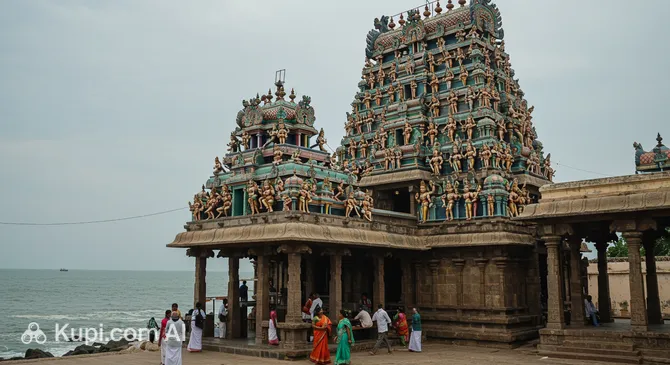
Arupadai Veedu Murugan Temple. Illustration.
Source: Kupi.com AI

Traveler photos:

The architectural appearance of the temple is designed in a characteristic classical South Indian style. The building is adorned with many colorful sculptures depicting deities and mythological scenes. Special attention is drawn to the gopuram—a tall gateway tower with a richly decorated facade that rises above the main sanctuary and is a signature feature of many South Indian temples.

The Arupadaividu Murugan Temple is not only an important pilgrimage site for Hindus but also attracts tourists from all over the world interested in the region's culture, architecture, and history. A visit to the temple provides an opportunity to experience ancient traditions, see impressive examples of temple architecture, and feel the special spiritual atmosphere that prevails in this holy place.

Contacts

For the most up-to-date information on the opening hours of the Arupadaividu Murugan Temple, scheduled ceremonies, or to confirm contact details, we recommend checking the official tourism resources of Chennai or inquiring locally. Generally, the temple is easily accessible by public transport or taxi within the city.

How to contactContact
Address1, Thirumurugan St, Kalakshetra Colony, Besant Nagar, Chennai, Tamil Nadu 600090, India
Phone number+91 44 4505 0203

What to Do

Visitors to the Arupadaividu Murugan Temple can immerse themselves in its spiritual life by participating in or observing the daily rituals and ceremonies held in honor of Lord Murugan. Of particular interest are the traditional Hindu rites that allow for a deeper understanding of local beliefs. Throughout the year, colorful festivals take place here, the most significant of which are dedicated to Murugan. On such days, the temple is filled with many pilgrims, creating a unique atmosphere of celebration and spiritual unity.

Beyond religious practices, the temple offers rich opportunities for cultural enrichment. Guests can explore the temple structures in detail, admiring their unique architecture and numerous sculptures that vividly reflect the rich cultural heritage of South India. It is also an excellent place to learn about traditional arts: here, you can discover more about temple music, dance, and painting, which are integral parts of the local culture. Thus, a visit to the temple becomes not just a pilgrimage but an exciting journey into the world of Indian art and traditions.

Getting There

The Arupadaividu Murugan Temple is conveniently located within Chennai city limits, making it easily accessible for both pilgrims and tourists eager to visit this iconic site. Given its urban location, you can reach the sanctuary in several ways, choosing the most comfortable option for yourself.

One of the simplest options is to take a taxi or the popular Indian auto-rickshaw, which will take you directly to the temple entrance without any hassle. Additionally, numerous city buses serve the temple area. If you are arriving from other parts of Chennai or from the airport, it is worth noting that there are major transport hubs nearby, significantly simplifying logistics.

For those who prefer public transport, there are city bus stops and suburban train stations near the Arupadaividu Murugan Temple, allowing for easy route planning. If you want to not only reach the destination but also learn more about the temple's history and significance, you might consider hiring local guides who often offer accompaniment.

Nearest city: Chennai

History & Facts

The Arupadaividu Murugan Temple is inextricably linked to the ancient religious traditions of South India. The concept of "Arupadaividu" itself holds deep meaning, signifying the six sacred abodes, each preserving the memory of the life and great deeds of Lord Murugan. According to legend, these are the places where the deity performed his feats and where he has been worshipped since time immemorial, giving each of these temples unique significance for believers.

Historically, these temples, including the Arupadaividu Murugan Temple in Chennai, played a key role in the spiritual and cultural development of the Tamil Nadu region. They were not merely places of worship but true centers of attraction for pilgrims and venues for large-scale, vibrant religious festivals. These sanctuaries served as strongholds of Hinduism, helping to preserve and pass down ancient traditions through generations.

Centuries of worshipping Lord Murugan in these places are reflected in the architecture and numerous artifacts. The unique architectural features of the "Arupadaividu" temples, along with ancient inscriptions found on their walls, serve as silent witnesses to the deep faith and generous support these shrines received from various rulers and dynasties over the centuries. This underscores their enduring importance in the cultural and religious landscape of India.

Time Needed

To fully enjoy a visit to the Arupadaividu Murugan Temple and see its main sights, most visitors typically need 1 to 2 hours. This amount of time allows you to take a leisurely stroll through the temple complex, carefully examine its unique architecture, colorful gopurams, and sculptural compositions.

During this time, you can soak in the spiritual atmosphere of this sacred place, observe the temple's daily life, and perhaps catch rituals or ceremonies if they are taking place during your visit. This period is generally sufficient for a basic introduction to the temple and for gaining vivid impressions of the visit.

If you plan a deeper immersion, such as participating in lengthy services or studying every aspect of temple life in detail, you might need more time. However, for a standard tourist visit focused on sightseeing and cultural introduction, 1-2 hours is an optimal choice.

Working Hours

Exact information regarding the opening hours of the Arupadaividu Murugan Temple in Chennai may vary, so it is highly recommended to check the current schedule before visiting. Generally, Hindu temples in India are open to visitors daily but may have specific hours for prayers (pujas) and breaks during the day, especially around noon. Temples are typically open early in the morning and in the evening.

To get the latest information on opening hours, potential schedule changes due to holidays or special ceremonies, and whether advance booking is necessary (which is usually not required for a standard visit but may be relevant for special rituals), it is best to consult the temple's official website, if available, or check with local tourist information centers in Chennai. The temple is generally open for visits year-round, though it can be particularly crowded during major festivals.

7:00 – 11:00, 5:00 – 20:30

Nearby

Visiting the Arupadaividu Murugan Temple will undoubtedly be a highlight of your trip; however, exploring its surroundings can significantly enrich your experience. Nearby attractions often reveal new facets of local culture, history, or natural beauty, complementing the overall impression of your visit.

The city of Chennai, where the Arupadaividu Murugan Temple is located, and its surrounding areas offer many other interesting sites. By taking the time to explore them, you can gain a fuller understanding of this corner of India and take home even more unforgettable memories. Below is a list of some nearby attractions.

NameDistance
Thiruvalluvar Nagar Beach1.7 km
Guindy National Park3.7 km
Guindy Children's Park3.8 km
Pumpkin Tales5.2 km
Phoenix Marketcity5.5 km
Trampoline Park, Grand Square Mall5.6 km
Pasumpon Muthuramalinga Thevar Statue5.6 km

Have you reached the end of the page?

So the route has been studied inside and out