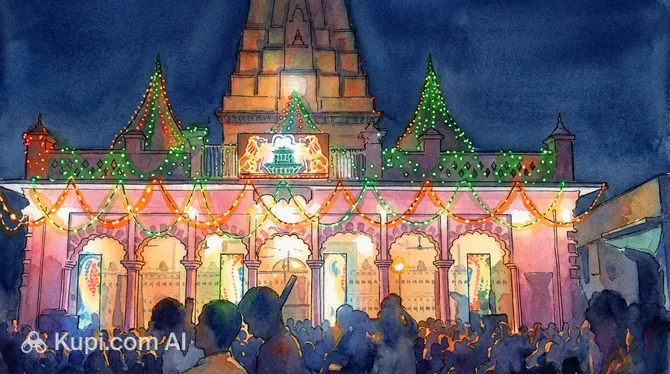
Deodha is a charming corner of authentic India, located in the state of Bihar. The town is a quiet settlement where time seems to slow down and daily life flows to the rhythm of centuries-old traditions. It is an ideal destination for travelers seeking to escape the noise of megacities and immerse themselves in the peaceful atmosphere of the rural countryside.
Geographically, the town is located in the eastern part of the country, surrounded by picturesque agricultural lands. The population of Deodha is just over 11,000 people, which helps maintain an atmosphere of a close-knit community and genuine hospitality. If you are interested in the rich past of this region, you will find that the local way of life has remained virtually unchanged for many decades, carefully preserving the cultural codes of their ancestors.
Deodha. Illustration.
Source: Kupi.com AI
Although Deodha is not a mainstream tourist center, it attracts visitors with its authenticity. Here, you can endlessly observe farmers working in the fields, visit modest but revered local shrines, and enjoy the simplicity of everyday life. We invite you to visit this town to see India without embellishment—real, deep, and incredibly peaceful.
Weather Overview
The climate in Deodha has a distinctly tropical monsoon character. Summer arrives in April and lasts until June, bringing significant heat: air temperatures often rise to 40°C. If you decide to visit the town during this period, be prepared for the scorching sun and dry air. To learn more about current conditions, check the weather in the city section.
Expect a warm and humid summer with abundant monsoon rains from July to September, followed by a mild and dry winter. The winter months (November – February) are considered the most comfortable for tourists: average temperatures range between 16-25°C, which is ideal for long walks and exploring local attractions under a clear sky.
Average monthly temperature
Average monthly precipitation
Interesting Facts
Deodha is a place full of hidden charm and interesting features. Here are a few facts to help you get to know this town better:
An Island of Silence: Despite India's high population density, Deodha maintains the status of a quiet provincial town with a population of just over 11,000, making it a perfect example of the peaceful rural life of Bihar state.
Agricultural Traditions: Agriculture forms the basis of the town's economy, and locals still use many traditional farming methods passed down through generations.
Spiritual Neighborhood: The town is located in close proximity to important pilgrimage routes of eastern India, which fills its atmosphere with a special sense of calm and reverence.
Authentic Lifestyle: Deodha is considered one of those rare places where the influence of globalization is minimal, allowing tourists to see the real, unvarnished culture of the region.
How to Get There
A journey to Deodha will require some planning, as the town is located away from major highways. However, this makes arriving here even more rewarding. The main transport hub connecting it to the outside world is the neighboring city of Deoghar, from where Deodha can be easily reached by local bus, taxi, or auto-rickshaw. To plan your route in advance, we recommend studying detailed information on how to get to the region.
The nearest major airports are in Dumka (about 200 km away) and Ranchi. These hubs receive flights from Delhi, Kolkata, and other megacities. After landing, travelers usually transfer to a train or rent a car with a driver for a comfortable transfer to their destination.
Railway communication is the most popular way to travel in this region. The nearest significant station is located in Deoghar, which serves regular trains from various parts of India. From the station to the center of Deodha, a taxi ride takes very little time, allowing you to immediately immerse yourself in the atmosphere of provincial comfort.
Main Attractions
Despite the absence of world-famous sights, Deodha enchants with its pristine beauty and sincerity. The town's main assets are its rural landscapes and traditional farms. A stroll through the outskirts will allow you to see the real life of the Indian hinterland, where cultivating the land is still a sacred ritual and nature dictates its own rules.
In the town itself and its immediate surroundings, there are several small but very atmospheric local temples. These shrines are centers of the community's spiritual life; they always smell of incense, and the walls are decorated with bright offerings. Visiting such places provides a rare opportunity to observe religious rites away from tourist crowds, in an atmosphere of deep personal devotion.
In addition, Deodha serves as an excellent base for visiting the famous pilgrimage center—the Baidyanath Temple in neighboring Deoghar. Many travelers choose the quiet of Deodha for relaxation, taking day trips to the great shrines of Shiva. Don't forget to also check out the local market, which is a living attraction in itself, bursting with the colors of local fabrics and the aromas of spices.
Local Cuisine
The culinary traditions of Deodha are inextricably linked to the gastronomy of the states of Bihar and Jharkhand. Simple but hearty vegetarian dishes form the basis of the local diet. Be sure to try litti chokha—baked wheat balls served with mashed vegetables and aromatic spices. This dish is a true symbol of the region and is prepared here with special care.
The town's gastronomic scene is mainly represented by small tea shops and family-run eateries. It is customary to dine on the same food as the hosts: fresh dal (lentil soup), fragrant rice, and hot roti flatbreads. A characteristic feature of the local cuisine is the moderate but expressive use of spices, which emphasize the taste of natural products rather than overpowering it.
Sweet lovers should look out for the famous peda—a milk fudge often brought from nearby holy sites. Among drinks, classic masala chai and refreshing lassi remain the favorites. Trying street food at local markets will not only fill you up but also provide the most authentic taste experience that the Indian countryside has to offer.
Travel Tips
A trip to Deodha will be an unforgettable experience if you use our practical recommendations for organizing your journey.
Clothing and Essentials: Choose light clothing made from natural fabrics (cotton, linen), as it can be very hot in the region. When visiting temples, be sure to bring clothes that cover your shoulders and knees. Don't forget comfortable shoes for walking on unpaved roads and insect repellent.
Transport: Within the town, it is best to get around by auto-rickshaws. For trips to neighboring cities, it is most convenient to hire a taxi or use buses departing from Deoghar.
Finances: Be sure to carry a supply of cash in Rupees in small denominations. ATMs are extremely rare in Deodha, and bank cards are only accepted in very large hotels in neighboring cities.
Health: Drink only bottled water and avoid ice in drinks. It is recommended to have a basic first-aid kit and hand sanitizers with you.
Communication: The main language is Hindi; English is not widely spoken. Learn a few basic phrases—this will greatly endear you to the locals.
Local Etiquette: Indians highly value politeness. Greet people by putting your palms together in a "Namaste" gesture. Always ask for permission before taking photos of local residents or their homes.
What to Avoid: Do not point at people or sacred objects with your finger or foot—this is considered rude. Also, it is best not to show public displays of affection (kissing, hugging).
Specific Tip: Visit the town between October and March. This is when the most comfortable weather sets in, allowing you to enjoy walks without the exhausting heat.
Deodha awaits those who are ready to open their hearts to the sincere and simple beauty of the real India!
Entertainment & Nightlife
Entertainment in Deodha is of a quiet and traditional nature. You won't find noisy nightclubs or neon bar signs here. Instead, the town offers a unique "slow travel" experience. Evenings here are traditionally spent in leisurely conversations with family or neighbors, and the only musical accompaniment is often the sounds of nature or folk songs drifting from open windows.
For those looking for more vibrant impressions, it's worth timing your visit to coincide with regional festivals such as Shravana Mela. During such periods, the atmosphere in the area is transformed: the streets fill with pilgrims, ritual music plays, and locals put on improvised theatrical performances. This is the best time to see the region's living folk art in all its diversity.
Daytime leisure in Deodha is primarily about connecting with nature. Popular "entertainment" here includes walks to the banks of local water bodies or gazing at the starry sky, which seems incredibly bright away from urban smog. This place is created for those who value peace, quiet, and the opportunity to look inward while enjoying the simple joys of life.
Parks & Museums
In Deodha, you won't find classic European parks with manicured lawns, but the town offers something more—pristine natural landscapes. The entire area around the settlement is a vast green zone where rice fields alternate with groves. Walking along the paths between villages replaces park visits for locals and tourists alike, allowing them to breathe fresh air and enjoy the natural beauty of the environment.
As for museums, the role of "guardian of history" in Deodha is fulfilled by local shrines and the homes of village elders. There are no official galleries here, but every old temple is an open-air museum where you can study religious paintings and ancient architectural forms. For organized museum exhibitions, travelers usually head to the nearest large cities, such as Deoghar or Patna, where rich collections of artifacts from eastern India are gathered.
Getting Around
The transport system in Deodha is as simple as possible and oriented towards the needs of the local population. The main means of travel around the town and between neighboring villages are auto-rickshaws. This is an inexpensive and maneuverable form of transport, ideal for narrow streets. You should always agree on the price of the trip in advance, as meters are very rare here.
For longer distances, local buses are used, connecting Deodha with major transport hubs like Deoghar. Buses run quite frequently, but be prepared for them to be crowded. This is a great way to feel the local flavor, though it requires some endurance from the traveler.
Many residents prefer to get around by bicycle or on foot, which we also recommend for tourists when exploring the central areas. Renting a car with a driver can be done through guesthouses or in neighboring large cities—this will be the most comfortable option for those planning to study the surroundings in detail. Note that during the monsoon season, transport schedules may change, so always check information with local residents.
Accommodation
The choice of accommodation directly in Deodha is quite limited due to its status as a small rural settlement. You are unlikely to find chain hotels here; however, the town can offer authentic guesthouses and rustic-style homestays. Such accommodation allows you to get as close as possible to the local way of life and feel true Indian hospitality.
For those who prefer a more familiar level of comfort and a wider range of services, the best solution is to stay in neighboring Deoghar. A wide range of options is available there, from budget inns for pilgrims to modern mid-range hotels. The distance between the towns is small, making it easy to reach Deodha for day trips.
Given the region's popularity among pilgrims, especially during religious holidays, we strongly recommend booking accommodation in advance. Prices for accommodation here remain among the most affordable in the country, but during peak season, vacancies in decent guesthouses disappear very quickly.
Nearby Cities
Thanks to its location, Deodha serves as an excellent starting point for exploring the colorful surroundings of the Bihar state. Small settlements are located very nearby, each with its own unique character, offering a deeper look into the life of the region.
Just a few kilometers away is Nayanagar, known for its picturesque views, and a bit further is Singhia—a larger settlement with a busy market square. It is also worth noting the town of Rusera, which can be quickly reached to explore local architecture and shops.
City
Population
Distance
Nayanagar
10 278
5 km
Singhia
31 760
7 km
Rusera
31 155
10 km
Rampur Rajwa
9 531
10 km
Chak That
9 787
11 km
We recommend not limiting yourself to Deodha alone and setting aside time for short trips to neighboring towns. This will allow you to see the full diversity of rural India, meet different communities, and find truly unique souvenirs in local shops.
Shopping & Souvenirs
Shopping in Deodha is a fascinating immersion into the world of traditional markets and stalls. There are no huge shopping malls here, but instead, local bazaars where real life happens are in abundance. The main goods are fresh vegetables, heaps of aromatic spices, and products from local artisans who create their wares right before your eyes.
Special attention should be paid to textiles and cotton products. In Deodha, you can purchase handmade fabrics with traditional prints characteristic of Bihar. Tourists also often buy simple but very charming souvenirs made of wood and bamboo, which serve as an excellent reminder of a trip to the Indian hinterland.
Shops and stalls usually operate from early morning until sunset with a small break during the hottest part of the day. Payment is made exclusively in cash in the local currency (Indian Rupees), so it is worth taking care of change in advance. Bargaining in the markets is not only appropriate but also an important part of communication, allowing you to get closer to the local culture.