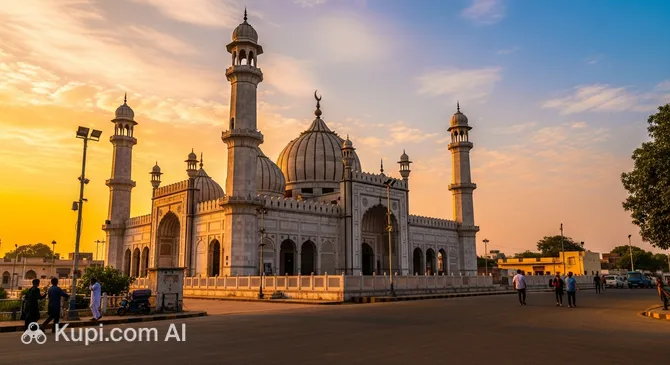
Malerkotla is an amazing city in the state of Punjab that has preserved the unique atmosphere of old India. Unlike many other cities in the region, it stands out for its rich history as a former princely state, founded in the 15th century by settlers from Afghanistan. Today, it is an administrative center with a population of about 374,000 people, where traditions of the past are closely interwoven with the rhythm of modern provincial life.
Geographically, the city is located on the fertile plains of East Punjab. Its appearance is defined by bustling markets, narrow streets of old quarters, and an abundance of mosques, making it a unique cultural enclave in the region. Malerkotla. Illustration.
Source: Kupi.com AI
For those interested in the past, Malerkotla's history unfolds through ancient gates and the residences of former rulers from the Sherwani clan, who ruled here for centuries.
Although Malerkotla is not a typical tourist hub with polished attractions, it draws travelers with its authenticity and reputation as an island of peace and religious tolerance. Visiting this city is an opportunity to see the real life of Punjab, devoid of the bustle of megacities, and to touch the heritage of Sufi saints.
Weather Overview
The climate in Malerkotla is of the subtropical monsoon type, typical for the entire northern region. The weather here is clearly divided into three seasons. Summer (from April to June) can be extremely hot: the thermometer in May and June often rises to the 40–45°C mark. During this time, the air is often dry and dusty, so it is better to plan walks for early morning.
From July to September, monsoons arrive in the city, bringing long-awaited coolness but also heavy rainfall. July is the wettest month, with up to 228 mm of precipitation. Winter (from November to February) in Malerkotla is mild and pleasant for travel: the average temperature in January is about 12°C, although it can get as cold as 6-7°C at night. It's worth checking the current city's climate before your trip to choose the right wardrobe.
The optimal time for a visit is considered to be the months from October to March, when sunny and dry weather sets in with comfortable temperatures in the range of 20–28°C. Autumn and spring months are ideal for exploring historical sights and walking through local markets without the exhausting heat.
Average monthly temperature
Average monthly precipitation
Interesting Facts
The city was founded in 1454 by Sheikh Sadruddin-i-Jahan, who arrived from Afghan Khorasan and was a disciple of a famous Sufi saint.
Malerkotla is the only city in East Punjab where the Muslim population is the majority (about 70%), which creates a unique cultural flavor here.
Until 1947, the city remained the capital of an independent princely state ruled by the Pashtun Sherwani and Lodi dynasty.
The city is home to the mausoleum of Baba Haider Sheikh, founded about five centuries ago and still an important pilgrimage site today.
During British rule, the princely state of Malerkotla was under the jurisdiction of the Jalandhar Commissionary, maintaining significant autonomy.
How to Get There
The easiest way to reach Malerkotla is by land transport, as the city is conveniently integrated into Punjab's road and rail network. Despite the lack of its own airport, its proximity to major transport hubs makes a trip to this historical center quite comfortable for independent travelers. Detailed information on routes can be found in the how to get to Malerkotla section.
The nearest international aviation hub is Chandigarh International Airport (IXC), located about 70 km from the city. Many tourists also use Indira Gandhi International Airport in Delhi (DEL), from where the drive by car takes about 5-6 hours. From Chandigarh, you can reach the city by taxi or bus in 2-3 hours, depending on traffic on the NH-44 highway.
Railway communication is the most popular and budget-friendly way to travel. Malerkotla railway station is connected by direct routes to key cities in India. Trains from Delhi take about 5-7 hours, while from neighboring Ludhiana or Chandigarh, you can get there in just a couple of hours. This is an excellent option for those wanting to avoid highway traffic jams.
Station
Passenger traffic
Distance
Ludhiana Junction railway station
8
43 km
Bathinda railway station
7
97 km
Kalka railway station
8
107 km
Shimla railway station
5
138 km
Amritsar railway station
10
157 km
Main Attractions
The main attractions of Malerkotla are centered around its spiritual and historical heritage. One of the most significant sites is the Jama Masjid of Malerkotla — a majestic religious structure that serves as a focal point for the local community and impresses with its architecture. The city's mosques reflect its deep Islamic roots and status as a unique cultural center in Punjab.
Equally important for pilgrims and tourists is the mausoleum of the Sufi saint Baba Haider Sheikh. The city's founder, who lived over 500 years ago, is still revered by locals, and his tomb is considered a sacred place that grants peace of mind. This site allows for a better understanding of the spiritual foundation upon which Malerkotla's identity was built.
History buffs should pay attention to Qila Mubarak — the residence of the former rulers of the princely state. Although time has left its mark on the building, it still holds the grandeur of a bygone era. A walk past ancient fortifications and through historical market squares will help you feel the atmosphere of an old Afghan enclave in the heart of India.
Local Cuisine
The gastronomic scene in Malerkotla is a vibrant blend of classic Punjabi traditions and Muslim cultural influences. A key feature of the local cuisine is the abundance of halal dishes. You should definitely try the juicy kebabs and aromatic biryani prepared according to old recipes. Traditional Punjabi flavor is represented by hits such as Butter Chicken and hearty Dal (lentil soup), which are best accompanied by fresh tandoori-baked naan or roti.
For a quick and tasty snack, locals often choose ND Burger Hub, where modern fast-food trends meet Indian flavors. If you want to taste meat dishes that have become city legends, head to Jeeru Rehmani Chicken Point. Street food also deserves attention: you can always find fresh sweets in the city's markets, such as golden jalebis or delicate gulab jamun.
As for drinks, no day in Malerkotla is complete without a cup of hot masala chai with milk and spices. In hot weather, a cool lassi — a traditional yogurt drink, served here especially thick and nourishing — is a perfect savior. The food culture in the city is centered around markets and small family establishments where food is prepared with soul and at very affordable prices.
Travel Tips
When planning a trip to Malerkotla, consider a few practical nuances that will make your visit to this colorful corner of Punjab as comfortable and pleasant as possible.
Clothing and Dress Code: Given the conservative nature of the city and the presence of many religious sites, choose modest clothing that covers shoulders and knees. In summer, take light clothes made of natural fabrics, and in winter (December-January), you will need a warm jacket or sweater, as it gets chilly in the evenings.
Transport: The primary mode of transportation is auto-rickshaws. Agree on the price before the ride starts. Apps like Uber or Ola work inconsistently here, so rely on local taxis.
Finances: Always carry cash in Indian Rupees (INR). Cards are only accepted in large stores or hotels. ATMs are available in the center, but they may not always accept foreign cards.
Health: Drink exclusively bottled water. Pharmacies can be found in the main bazaar and near government hospitals.
Communication: The main languages are Punjabi and Urdu. English is understood by hotel staff and young people, but for market interactions, it's useful to know a few phrases in Hindi.
Local Etiquette: Be sure to remove your shoes when entering mosques or homes. A traditional greeting of "Namaste" or "Salaam" is always met with a smile.
Safety: Malerkotla is a peaceful city, but avoid walking in unlit outskirts at night. Keep an eye on your personal belongings in crowded market areas.
By following these simple rules, you will be able to fully enjoy the hospitality and unique atmosphere of this historical city.
Entertainment & Nightlife
Entertainment in Malerkotla is predominantly traditional and quiet. The city lives at a measured pace, so do not expect to find noisy nightclubs or bars here. The evening life of locals is often centered around family gatherings or visiting religious centers. However, lovers of atmospheric walks will appreciate the evening markets, where life is in full swing until late, and the air is filled with the aromas of spices and street food.
For those looking for more modern leisure formats, a popular spot is ND Burger Hub, where you can grab a bite in a relaxed setting. Also noteworthy is Jeeru Rehmani Chicken Point — a local establishment famous for its cuisine and popular among city dwellers. During the day, you can explore the historical Serhandi Gate, which is an important landmark and evidence of the city's former fortifications.
If you crave more active entertainment, such as modern cinemas or large shopping complexes, it is worth heading to neighboring Ludhiana, located just an hour away. Malerkotla remains a place for those who appreciate provincial quiet, authentic gastronomic discoveries, and the opportunity to see the everyday life of Punjab without embellishment.
Parks & Museums
Green spaces and cultural sites in Malerkotla reflect its status as an important historical and administrative center. Although the city lacks large parks comparable in scale to those in megacities, residents and visitors appreciate the cozy green spaces near administrative buildings and central blocks. These small oases serve as a place to rest from the market bustle.
The role of open-air museums in the city is fulfilled by its historical monuments. One such object is the Serhandi Gate. This majestic gate is not just an architectural element but a symbol of the city's former defensive significance, allowing tourists to visualize the boundaries of the ancient princely state.
For those seeking more extensive natural areas, the city's surroundings present picturesque agricultural landscapes of Punjab. Walks along suburban roads allow you to see the endless fields that are the "lungs" of this region. Cultural enrichment here comes through visiting active historical mosques and Sufi shrines, which hold more history within their walls than any classical museum.
Getting Around
The public transport system in Malerkotla is typical of small and densely populated cities in Punjab. The backbone of internal movement consists of auto-rickshaws and cycle-rickshaws. This is the fastest and most affordable way to get anywhere in the city, especially through the narrow streets of the old quarters. It's worth negotiating the price with the rickshaw driver in advance, as meters are practically not used here.
For travel between the state's cities, residents actively use buses. The bus network connects Malerkotla with Ludhiana, Sangrur, and Chandigarh. Buses run frequently, but keep in mind that during peak hours (7 to 10 AM and 5 to 8 PM), roads in the city center are heavily congested, and travel time can increase significantly.
An alternative to public transport is Indian Railways, which are convenient for long-distance travel. There is no metro or tram in the city itself, and due to chaotic traffic and narrow roads, it is not recommended for tourists to rent a car for travel within Malerkotla. It is much more comfortable and safer to use the services of taxis or rickshaws, who are perfectly oriented in the local geography.
Accommodation
Accommodation options in Malerkotla are primarily geared toward transit travelers and business people. You won't find luxury five-star hotels or chain resorts here, but the city offers a decent selection of budget guesthouses and local lodges. The cost of living is very affordable and usually ranges from 500 to 2000 Indian Rupees per night.
The most convenient area to stay is the city center, especially the blocks adjacent to the railway station and the main bazaar. This location allows for quick access to major historical sites like the Serhandi Gate and ensures you always have a choice of places to eat, such as Jeeru Rehmani Chicken Point.
For those planning to stay in the city longer, renting private apartments is a popular option. Since the tourist flow here is small, it is recommended to book accommodation in advance through online services, though finding a free room upon arrival at local guesthouses is usually not difficult. When choosing a place to stay, look for the availability of air conditioning, which is especially important during the hot summer months.
Nearby Cities
Malerkotla serves as a convenient starting point for exploring the central part of Punjab, offering travelers the chance to see the region's diversity just an hour's drive from the city. The surrounding area is rich in both industrial hubs and quiet historical settlements.
Just 13 kilometers away is the small town of Malaudh, and slightly further is Dhuri, an important railway junction in the region. For those interested in local life and rural architecture, interesting destinations include Tibba and Sekha. The town of Raikot also deserves attention; a trip there won't take much time and will allow you to dive deeper into the atmosphere of provincial India.
City
Population
Distance
Malaudh
9 485
13 km
Dhuri
65 215
17 km
Tibba
11 692
18 km
Sekha
9 218
29 km
Raikot
28 734
31 km
For more grand impressions, you can head to Ludhiana — the largest industrial center of the state, or to Chandigarh, famous for its modern layout and gardens. Exploring these destinations will help you form a complete picture of Punjab's contrasts.
Shopping & Souvenirs
Shopping in Malerkotla is, above all, an immersion into the atmosphere of traditional oriental bazaars. The city does not have large modern shopping centers with global brands, but it is famous for its colorful markets. The city's Main Bazaar is a place where you can find everything from aromatic spices and fresh produce to quality fabrics and household goods.
Special attention should be paid to local textiles. Malerkotla is known for its artisans, and here you can profitably purchase fabric cuts for traditional Indian clothing. As souvenirs, tourists often take home local sweets, considered some of the best in the region, as well as handmade items reflecting the city's Islamic heritage.
Shopping outlets are usually concentrated around historical landmarks, such as the Serhandi Gate. Shops open around 9-10 AM and work until late in the evening. Payment in most stalls is made in cash (Indian Rupees), so it's worth taking care of currency exchange in advance, as international cards are only accepted in very rare establishments like ND Burger Hub.