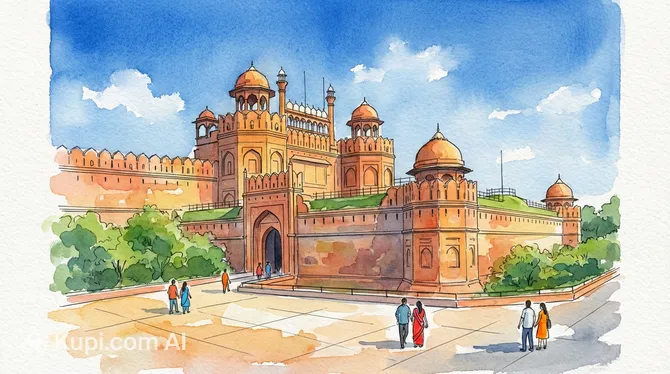
Mokama is a vibrant industrial and agricultural hub in the state of Bihar, situated in India on the southern bank of the majestic Ganges River. Located approximately 90 kilometers east of Patna, the city serves as a vital link between the northern and southern regions of the state. It is home to over 200,000 people, and the atmosphere is steeped in the spirit of provincial India, with its vast agricultural lands and bustling transport arteries.
Mokama. Illustration.
Source: Kupi.com AI
The city is widely known as one of the country's largest pulse production centers, specifically lentils. A significant part of Mokama's history is inextricably linked to its development as a major transport hub during the British period, when the local port and railway station ensured the seamless flow of goods across the Ganges. Today, it attracts those who wish to experience the authentic life of the Indian hinterland, far from the well-trodden tourist paths.
A unique feature of the city is its proximity to the "Diara" and "Tal" zones—fertile lands that change their appearance annually depending on the river's floods. While Mokama is not considered a classic tourist destination, its industrial heritage and status as an important religious site make it a worthy stop while traveling through Bihar.
Weather Overview
Mokama is located in a subtropical climate zone typical of the Ganges Valley. The weather here is clearly divided into three seasons: hot summer, the monsoon period, and a mild, pleasant winter. To plan the ideal time for a visit, it is useful to check the current climate of the city.
Summer in this region can be extreme: in April and May, temperatures often reach +40...+45°C. From June to September, the rainy season arrives, bringing long-awaited coolness but also significant humidity. July and August see the highest amount of rainfall (up to 295 mm per month), which often leads to the flooding of surrounding water bodies.
The best time to visit is from November to March. During this period, the weather is dry and clear, with average temperatures ranging from +16°C to +25°C. Winter nights can be quite cool (around +10°C), so a light jacket or sweater will come in handy for your trip.
Average monthly temperature
Average monthly precipitation
Interesting Facts
Lentil Capital: Mokama holds the prestigious second place in all of India for lentil production, supplying this essential staple to many regions of the country.
Papal Recognition: The local Shrine of Our Lady of Divine Grace is only the second church in North India to be honored with Minor Basilica status, making it a key spiritual center for the region.
Colonial Heritage: During the British Raj, Mokama Ghat was one of the most important transport hubs in Eastern India, featuring its own steamer colony and massive warehouses.
Railway Hub: The city is located on the strategic Kolkata–New Delhi main line, which historically predetermined its development as a major transit center.
Natural Rhythms: The surrounding Mokama Tal lands are unique wetlands that completely change their landscape and ecological system depending on the seasonal flooding of the Ganges.
How to Get There
The transport accessibility of Mokama is due to its strategic position on the key railway routes of India. The city is an important transit point, making it easy to reach from the country's largest metropolises. The best way to plan your route can be found by looking into how to get to Mokama.
The nearest major air hub is Jay Prakash Narayan International Airport in Patna (PAT), located about 90 kilometers away. From there, you can reach the city by taxi, bus, or train, which takes between 2 to 3 hours depending on traffic conditions.
The majority of travelers arrive via Mokama Junction railway station. It is located on the main line connecting Kolkata and New Delhi. Trains from Patna run very frequently, and the journey by express takes about an hour and a half to two hours. This is the most reliable and fastest way to travel, given potential traffic jams on the highways.
National Highway NH31 also passes through the city, providing bus connections to neighboring cities in Bihar. However, it is worth noting that during the monsoon season, road travel can be difficult due to flooding in low-lying areas, making the train the preferred option.
Main Attractions
The main attractions of Mokama are historical and spiritual in nature. One of the most significant landmarks is the Shrine of Our Lady of Divine Grace. In 2024, this church was granted the honorary status of Minor Basilica by Pope Francis, becoming an important pilgrimage site not only for Catholics but for representatives of other faiths seeking comfort and grace.
For fans of industrial aesthetics and history, the Mokama Ghat area is of great interest. Once a powerful river port during the British era, remains of old warehouses and colonial buildings can still be seen here. This place holds the memory of times when thousands of tons of cargo were ferried across the Ganges daily, connecting eastern India with the central regions.
The natural gem of the area is the Mokama Tal region. These are vast wetlands on an alluvial plain that boast unique biodiversity. Eco-tourists can find interesting landscapes here, especially during periods when the land is not flooded by monsoons, observing local flora and fauna in their natural habitat.
Local Cuisine
The gastronomy of Mokama is the quintessence of Bihari cuisine, where simple, hearty, and aromatic dishes play the leading role. Given the city's status as the lentil capital, it is definitely worth trying various versions of dal (thick legume soup) with spices and fresh rice. This is the staple of the local diet, which features a special flavor here thanks to the freshness of local produce.
A signature dish of the region is litti chokha—baked balls made of wheat and chickpea flour, served with a savory mash of eggplant or potatoes. The use of sattu (roasted chickpea flour) is also popular, used to prepare both nutritious drinks and fillings for flatbreads. For dessert, look for traditional Bihari sweets like thekua—deep-fried cookies made with sugar or jaggery.
Food culture in the city is centered around street markets and small "dhabas" (roadside cafes) where food is prepared in front of customers. Among drinks, traditional spicy masala tea and refreshing lassi lead the way. Alcohol is not common in this region and is restricted by law, so the emphasis is on natural non-alcoholic beverages.
Travel Tips
A trip to Mokama is an opportunity to see India from the inside, and a few practical tips will help make your journey comfortable and safe.
Clothing and Dress Code: Choose light cotton clothing, as the climate here is quite hot. When visiting the Basilica and other religious sites, be sure to cover your shoulders and knees to show respect for local traditions.
Local Transport: The most convenient way to get around is by auto-rickshaws. Always carry small cash in rupees for the fare.
Finances: Cash is the dominant form of payment in the city. ATMs are few and do not always accept international cards, so it is better to withdraw the necessary amount in Patna beforehand.
Health: Drink only bottled water and avoid ice in drinks. Basic medications can be found in pharmacies near the station, but it is better to bring specific medicines with you.
Communication: The primary language is Hindi; English is not widely spoken. It is recommended to learn a few basic phrases or have an offline translator.
Safety: Mokama is a peaceful city, but avoid walking alone at night in poorly lit areas. Daytime is ideal for all types of activities.
Food Hygiene: Try to choose cafes that are popular with locals, where there is high food turnover, and always wash your hands before eating.
Specific Tip: Keep an eye on the seasonality. During the monsoon period (July-August), many low-lying areas can be flooded, which will limit access to the "Tal" natural zones.
May your introduction to this important hub of Bihar be filled with interesting discoveries and kind encounters!
Entertainment & Nightlife
The entertainment scene in Mokama reflects its status as a working industrial city. Traditional nightlife with clubs and bars is virtually non-existent, as the town lives at a quiet provincial pace. The main spots for evening leisure for locals are tea stalls and small street cafes near the railway station, where life hums until late evening.
For modern entertainment, such as cinemas or large shopping malls, travelers usually head to Patna, which is a couple of hours away. Within Mokama itself, cultural life centers around religious festivals and holidays held at the local Basilica or on the banks of the Ganges, which turn into bright and noisy gathering spots during celebrations.
During the day, you can stroll through local markets to feel the color of daily Indian life or have a picnic in the recreational areas by the river. Travelers should keep in mind that the city is oriented towards work and transit, so the best "entertainment" here is observing the authentic way of life and interacting with the hospitable locals in an informal setting.
Parks & Museums
In Mokama itself, there are no large state museums or landscaped parks in the European sense. The role of the main public space for walking is played by the embankments of the Ganges River and the grounds around the local Basilica. This is where residents and visitors find peace and the opportunity to enjoy the fresh air.
For those who appreciate wildlife, the Mokama Tal region will be a real discovery. Although it is not a park with paths and benches, these wetlands represent a unique ecosystem. During the dry season, you can observe migratory birds and study the flora of the floodplain meadows. This place is ideal for those seeking solitude and wanting to see a landscape shaped by the great river over thousands of years.
The absence of formal cultural institutions is compensated by the living history in the streets: the old buildings of the railway colony and the architecture of the temples tell the city's past better than any exhibition. To visit full-fledged museums with archaeological finds, travelers are recommended to set aside a day for a trip to Patna, which houses the state's richest collections.
Getting Around
The transport system in Mokama is simple and adapted to the needs of a small but busy city. The main means of getting around the city streets are auto-rickshaws and cycle-rickshaws. This is the most affordable and fastest way to get from the station to residential neighborhoods or shrines. The cost of a trip for short distances is usually 10-20 rupees, but the price should be agreed upon in advance.
The city is quite compact, so many central areas are easy to explore on foot. There are few public buses within the city; they are more often used for connections to suburban villages and other towns in the Patna district. For long-distance travel across the state, locals and tourists definitely choose trains, as the city's railway hub provides connections to almost all directions.
Taxis and ride-hailing services (such as Uber or Ola) are virtually non-existent in Mokama itself; it is better to book them from Patna for transfers. Car rental is not very popular here due to heavy traffic and local driving habits, so the nimble auto-rickshaw remains the most convenient and colorful option for a tourist.
Accommodation
The hotel sector in Mokama is primarily geared toward transit passengers and professionals visiting local enterprises on business. You won't find luxury five-star international hotels here, but you can stay in budget guest houses or lodges located mainly around the railway station.
The cost of staying in such establishments is usually low, ranging from 500 to 1,500 rupees per night. Conditions are basic: a clean bed, a fan, and minimal amenities. For more comfortable accommodation, travelers sometimes choose hotels in Patna and visit Mokama for a day trip or pilgrimage.
If you plan to visit during major religious festivals or pilgrimage seasons to the Minor Basilica, it is recommended to book accommodation in advance, as the number of rooms in quality lodges is limited. Payment is most often made in cash, although larger establishments are beginning to accept local electronic payments.
Nearby Cities
Mokama serves as a convenient starting point for exploring the surroundings and small settlements of Bihar, each of which possesses its own rural charm. The region around the city is permeated with the spirit of a traditional agrarian lifestyle, making day trips to neighboring spots an interesting experience for ethnographic tourism.
Nearby are towns such as Barahpur and Ghoswari, which can be reached quickly by auto-rickshaw or suburban train. It is also worth visiting Simaria, located on the other bank of the Ganges—this place is known for its religious baths and festivals. For those who miss the city noise and museums, Patna, the state capital, is an hour and a half away by train.
City
Population
Distance
Barahpur
9 364
5 km
Ghoswari
10 590
5 km
Hathidah Buzurg
11 057
8 km
Maranchi
18 767
9 km
Simaria
25 017
10 km
Traveling through these places allows you to see the "real" India without embellishment: vast fields, noisy village bazaars, and ancient traditions carefully preserved by the locals. Exploring the immediate surroundings will add depth to your visit to this region.
Shopping & Souvenirs
Shopping in Mokama primarily involves visiting colorful local markets where life bustles from early morning. There are no shiny shopping malls here, but there is an abundance of daily essentials and products from local farmers. The main commercial activity is concentrated around the central square and the railway station.
The most important purchase to make in this city is local lentils—they are considered among the best in India in terms of quality. In the markets, you can also find high-quality spices, traditional fabrics, and clothing characteristic of the people of Bihar. This is a great opportunity to buy authentic souvenirs, such as handmade items from local artisans that rarely make it to the shelves of large cities.
Shops usually operate from early morning until 8-9 PM, with a small break during the hottest time of the day. Payment almost everywhere is made in cash (rupees), so it is worth making sure you have small change beforehand. A visit to the local bazaar will give you not only purchases but also unforgettable impressions from interacting with vendors and immersing yourself in the atmosphere of Indian trade.