Support

Gaya Airport

About the Airport

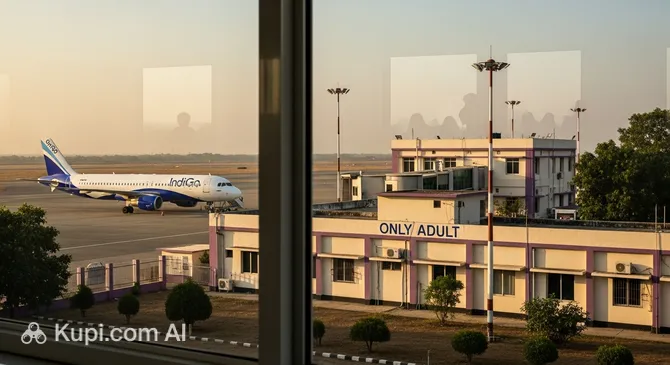
Gaya Airport. Source: Kupi.com Binoculars

Gaya Airport, also known as Bodhgaya Airport, is not just a transport hub but a true gateway to one of the most sacred corners of the world. Located in the state of Bihar, it serves as the main arrival point for thousands of pilgrims and tourists seeking to visit Bodhgaya—the place where, according to tradition, Siddhartha Gautama attained enlightenment and became the Buddha. As the second busiest airport in the state, it plays a key role in international tourism, especially for travellers from Southeast Asian countries. Its atmosphere is permeated with tranquillity and the anticipation of spiritual discoveries, making it unique from the very first minutes of your stay.

IATA Code GAY
ICAO Code VEGY
City Gaya
Distance to centre approx. 7 km
Status International
Annual Passengers over 329,000 (2024-2025)
Popular Airlines IndiGo, Air India, Thai Airways.
Schedule online board "Gaya Airport"

Features and Advantages of the Airport

The main advantage of Gaya Airport is its strategic location just 5 km from the Bodhgaya temple complex, making it the ideal starting point for pilgrimage. The airport is primarily oriented towards serving international tourists, so comfortable conditions have been created here for travellers. The terminal is capable of handling 250 arriving and 250 departing passengers simultaneously, ensuring rapid completion of formalities.

The air gateway connects the region via direct flights not only with major cities in India, such as Delhi and Kolkata, but also with international destinations, including Bangkok (Thailand), Yangon (Myanmar), and Paro (Bhutan). This is a seasonal airport, with activity increasing during the peak pilgrimage season. For passenger convenience, the terminal building features shops, currency exchange points, and cafes where one can relax while waiting for a flight.

Contact Information

To obtain the most accurate and up-to-date information about Gaya Airport (GAY), it is recommended to use official communication channels. Below are the main contact details that may be useful for travellers.

  • Official Website: As a rule, the freshest information regarding flight schedules, services, and regulations can be found on the official airport website, managed by the Airports Authority of India (AAI). Visit www.aai.aero/en/airports/gaya.
  • Helpline Number: For immediate queries, you can call the number: +91-631-2210129.
  • Airport Address: Gaya Airport, Gaya, Bihar - 823004, India.
  • Email: For official enquiries, you can use the Airport Director's email: apd_gaya@aai.aero.
  • Social Media: Gaya Airport may not have its own active social media pages. It is recommended to follow news on the official accounts of the Airports Authority of India.
  • Lost Baggage Information: If your luggage has been lost or damaged, first contact your airline's representative at the airport. For general questions regarding items left in the terminal, you can contact the administration.
  • Passenger Support Contacts: For general support and consultations, use the main airport helpline number.

How to Get to the Airport

Reaching Gaya Airport (GAY), which serves as the main air gateway to the sacred city of Gaya and nearby Bodh Gaya, can be done in several ways. The choice of transport depends on your budget, time, and comfort preferences. The airport is located approximately 5 km from the city, making the journey there quick and convenient.

Public Transport and Auto-Rickshaws

The most economical way to get to the airport is public transport. Local buses run between the airport, Gaya city centre, and Bodh Gaya. This is a good option for budget travellers, but one should be prepared for buses potentially being overcrowded. A more flexible and authentic alternative is auto-rickshaws—the most popular mode of transport in this part of India. A trip by auto-rickshaw will take about 20-30 minutes from the city centre. It is extremely important to agree on the fare with the driver before the trip begins to avoid misunderstandings.

Taxis and Private Transfers

For maximum convenience, it is best to use taxi services. Pre-paid taxi counters operate at the airport and in the city, where you can pay for the trip at a fixed rate. This is a reliable method that eliminates the need to bargain. You can also use mobile ride-hailing apps like Ola or Uber, though their availability can be inconsistent. Many hotels offer private transfer services for their guests, which is the most comfortable, albeit more expensive, option.

Car Rental and Parking

Self-drive car rental is not very common among tourists in this region. A much more popular and practical solution is renting a car with a driver. This allows you to avoid the stress of navigating local roads and focus on your journey. If you still decide to drive your own or a rented vehicle, Gaya Airport provides parking facilities for both short-term and long-term stays.

Travel Time and Recommendations

On average, the trip from Gaya city centre to the airport takes 20-30 minutes, and from Bodh Gaya, it takes about 30-40 minutes. Please consider that during peak hours or religious festivals, travel time may increase significantly. It is recommended to leave in advance to avoid missing your flight. For solo travellers and couples, an auto-rickshaw is an excellent compromise between price and convenience, while families and travellers with heavy luggage are better off choosing a taxi or private transfer.

Terminals and Map

Gaya Airport (GAY), also known as Bodhgaya Airport, is a compact and functional aviation hub playing a key role in serving pilgrims and tourists heading to sacred Buddhist sites. Its structure is simple and intuitive, making navigation easy even for first-time visitors.

A key feature of the airport is its single integrated terminal, which serves both domestic and international flights. Thanks to this, passengers do not need to worry about transferring between different buildings. All infrastructure—from check-in counters to departure zones—is located under one roof. The terminal layout is linear: upon entry, you find yourself in a general hall where check-in counters are located. After checking in and dropping off luggage, international passengers proceed to passport control, and then, along with domestic passengers, to security screening.

Arrival and departure zones are clearly separated. The departure lounge is a common space with several boarding gates. The arrival zone includes immigration control counters for international passengers and baggage reclaim belts. Due to the compact size of the terminal, the path from the aircraft steps to the city exit usually does not take much time.

The time required to complete all formalities depends heavily on the season. Gaya Airport experiences peak loads from October to March, when a large number of charter flights with pilgrims from all over Asia arrive. During this period, queues for check-in, passport control, and security can be significant. It is recommended to arrive at the airport at least 3 hours before an international flight and 2 hours before a domestic one. In the low season, procedures are completed much faster.

Airport History

The history of Gaya Airport (GAY), also known as Bodhgaya Airport, is inextricably linked to its transformation into an international gateway for Buddhist pilgrims from around the world. A key moment in its development was the year 2002, when the airport received international status. This decision was made to facilitate travel for thousands of believers arriving annually in Bodhgaya—the sacred place where, according to tradition, Siddhartha Gautama attained enlightenment and became the Buddha.

After receiving international status, the airport went through several stages of modernisation. Work was carried out to expand and strengthen the runway, allowing for the accommodation of larger aircraft, such as the Airbus A320 and Boeing 737, which operate flights from Southeast Asian countries. Additionally, a new and modern terminal was built, capable of serving the growing passenger traffic, with customs and immigration control zones, significantly increasing the level of comfort for arriving tourists.

The main feature and an interesting fact from the airport's history is its distinctly seasonal character. The main peak of its operations falls within the period from October to March, coinciding with the pilgrimage season. During these months, the airport receives numerous scheduled and charter flights from Thailand, Myanmar, Vietnam, Sri Lanka, and Bhutan. Thus, Gaya Airport has become not just a transport facility, but a vital link in the infrastructure of spiritual tourism in India, connecting a shrine of global significance with millions of believers.

Services and Amenities

Gaya Airport (GAY), being an important gateway for pilgrims and tourists arriving in Bodh Gaya, provides all necessary services for a comfortable wait before a flight. Although it is a small airport, conditions have been created here to ensure passengers feel at ease.

The terminal has several cafes and eateries where you can have tea, coffee, and a snack. For those wishing to buy something as a keepsake, there are souvenir shops with local handicrafts and bookstores. There is also a small duty-free shop. For a more comfortable rest, passengers can use the lounges, including a VIP lounge; access conditions for which are best checked with airline representatives.

Passengers have access to free Wi-Fi, although connecting may require an Indian phone number to receive an SMS with a code. Charging points for electronic devices are provided in the waiting areas. Currency exchange counters and ATMs operate within the airport building, which is very convenient for foreign tourists.

The airport is equipped to assist various categories of travellers. For passengers with small children, there are mother and child rooms. A medical centre operates around the clock on the terminal premises, ready to provide first aid. Passengers with reduced mobility are provided with movement assistance and wheelchairs; it is recommended to notify your airline in advance of the need for such a service.

There are no hotels within the airport territory itself, but in the immediate vicinity, in the city of Bodh Gaya, there are many hotels to suit any taste and budget. They can be reached in 10–15 minutes by taxi. Specialised business centres and conference halls are not provided at Gaya Airport, as it primarily serves tourist traffic.

Where to Eat

Gaya Airport (GAY) is a relatively small airport, primarily serving pilgrims heading to Bodh Gaya. Dining options here are limited but quite capable of satisfying the basic needs of travellers before departure. All infrastructure is located within the single terminal building.

Dining outlets are mainly represented by small cafes and snack bars. Typically, one or two establishments are located in the public zone (landside), before security control, and a few more kiosks or small cafes are in the secure departure zone (airside). The selection in the public zone may be slightly wider, so if you have time, it is better to have a snack before checking in for your flight.

The menu usually includes standard snacks for India: pastries, sandwiches, samosas, and pakoras. This is a great opportunity to try authentic local snacks. For a more substantial meal, you can find simple dishes such as rice with curry or set meals (thalis). Beverages such as tea, coffee, juices, and bottled water are always available. Alcoholic beverages are likely not sold.

Since vegetarianism is widespread in the region, finding vegetarian dishes will not be difficult—they form the basis of the menu. However, more specific requests, such as vegan, gluten-free, or Halal meals, might be challenging to fulfill. It is recommended to clarify the ingredients with the staff. Prices at the airport are moderate, but noticeably higher than in the city.

For a quick snack before boarding, the cafes in the departure zone are suitable, where you can grab a sandwich or pastry. If you are counting on a full lunch, it is better to use establishments in the public zone and arrive at the airport with time to spare. The operating hours of food outlets, especially in the secure zone, are usually tied to the flight schedule and may be limited at night.

Travel Tips

To ensure your journey through Gaya Airport (GAY) goes as smoothly as possible, it is worth considering a few tips. This airport serves many pilgrims and tourists heading to the shrines of India, so it can be crowded during peak seasons. Plan to arrive at the airport at least 2.5-3 hours before an international flight and 1.5-2 hours before a domestic one. An important feature of many Indian airports: to enter the terminal building, you may be required to show a printout of your ticket or its electronic version on a mobile device.

The check-in and security control process is generally standard but may take longer than expected. To save time, complete online check-in if your airline provides this option. When passing through security, be prepared to remove all electronics from your hand luggage. Remember that power banks (portable chargers) can be carried only in hand luggage, while lighters and matches are generally confiscated.

Standard rules for carrying liquids in hand luggage apply here as well: all containers must be no more than 100 ml in volume and packed in a single transparent bag. When entering the country, customs control usually proceeds quickly. If you have no goods to declare, use the "Green Channel". If you are carrying something valuable or in large quantities, you should go through the "Red Channel".

If you have a connecting flight, check with your airline in advance whether you will need to collect your luggage and check in again in Gaya. Leave a sufficient time margin between flights. In case of flight delays, monitor information on the departure boards and in your airline's app. Gaya Airport is not very large, so the range of cafes and shops is limited. We recommend having a book, a charged power bank, and a light snack with you in case of a long wait.

To save money, try not to buy souvenirs and food inside the airport itself—prices here are significantly higher. It is better to order a taxi at the official pre-paid taxi counter in the arrival hall to avoid inflated prices from private drivers. As for choosing a seat on the plane, it's simple: a window seat will allow you to enjoy the views during takeoff and landing, while an aisle seat will give you more legroom and the freedom to stand up without disturbing your neighbours.

Reached the end of the page?

That means the route is fully explored