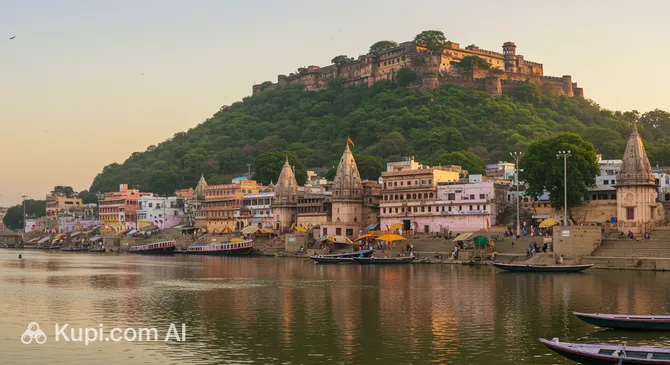
Located on the picturesque banks of the sacred Ganges in the state of India, Munger is a fascinating blend of ancient history and bustling modern commerce. This city in the state of Bihar has maintained its status as an important political and cultural center for centuries, serving as a strategic hub during both the Mughal era and British rule. Today, it is home to approximately 213,000 people, and the atmosphere is steeped in centuries of heritage that harmoniously coexists with the daily rhythm of a major trade center.
Munger. Illustration.
Source: Kupi.com AI
The city's geographical position in the lowlands by the river defines its unique character and economic importance as one of the region's main grain hubs. Tourists are drawn here not only by the opportunity to touch Munger's history but also by its spiritual significance, as these lands are inextricably linked with the names of great teachers from the past. The city is famous for its majestic fort and ancient temples, which make it a prominent point on the map of Eastern India.
A visit to Munger is an invitation to experience real, non-touristic India, where traditions are alive in every alley and the majestic river sets the pace for all urban life. Whether exploring the ruins of ancient fortifications or observing rituals on the banks of the Ganges, this city promises a deep immersion into the cultural code of the Bihar region.
Weather Overview
The climate in Munger is typical for the eastern part of the country and is largely determined by its proximity to the great Ganges River. The city is influenced by seasonal monsoons, which makes the weather in the city quite diverse throughout the year. Summers here can be hot, especially in April and May, when daytime temperatures can rise to 35–38°C, and humidity increases noticeably.
The winter months, from December to February, are considered the most comfortable for traveling. During this period, the average temperature stays around 16–20°C, days are sunny and dry, and nights bring a pleasant coolness. The rainy season begins in July and lasts until September; during this time, heavy rainfall occurs, which nourishes the surrounding lands but can create difficulties for active walking and outdoor sightseeing.
When planning a visit, it is worth considering that the city's riverside location contributes to high humidity, especially in the mornings. Spring and autumn offer mild warmth with temperatures around 25–27°C, which is ideal for leisurely exploring the ancient fort and walking along the Ganges embankments.
Average monthly temperature
Average monthly precipitation
Interesting Facts
Munger is a city with deep roots and a surprising heritage that can impress even the most experienced traveler with several interesting facts:
Ancient Origins: The city was founded as early as the 4th century AD by the Gupta dynasty, making it one of the oldest settlements in the state of Bihar.
Epic Past: According to legend, Munger once served as the capital of the ancient kingdom of Anga, which is mentioned in the great Indian epics "Mahabharata" and "Ramayana".
Spiritual Crossroads: These lands are inextricably linked with the founders of two world religions. It is believed that it was here that Mahavira (the founder of Jainism) achieved enlightenment, and Gautama Buddha delivered one of his first sermons.
Grand Fort: Within the famous fort lies the unique tomb of the Muslim saint Shah Mushka Nafa, dating back to 1497, which serves as a place of worship for representatives of various faiths.
How to Get There
The transport accessibility of Munger is ensured by its favorable position in the eastern part of the country and a developed road network. A journey here often begins from the region's major transport hubs. For example, from Patna, the state capital, the drive takes about 3–4 hours, while the journey from Kolkata takes between 7 and 9 hours. To better plan your route, it's worth exploring all the options for how to get to the city in advance.
For those who prefer air travel, the nearest major airports are located in Patna and Kolkata. From there, you can reach Munger by train or taxi. There are no specialized passenger airports in the city itself, so logistics usually rely on ground transport.
The railway remains the most popular and convenient way to reach the city. The main transport gateway is Jamalpur station, located just 8 km from the central district. Trains pass through it, connecting Munger with key cities in northern and eastern India. There is also a Munger station within the city itself, providing local connections.
In addition to ground routes, there is a ferry service across the Ganges in Munger. This is not only a practical way to cross to the other side but also an opportunity for a short river trip, allowing you to admire the city's panorama from the water.
Main Attractions
The main symbol and heart of the city is undoubtedly the majestic Munger Fort. This colossal architectural ensemble, covering an area of about 222 acres, is considered one of the largest historical monuments in India. Within its massive walls lie not only defensive bastions and moats but also a whole array of cultural treasures: from ancient temples and mosques to museum exhibits telling the stories of changing eras and dynasties.
For those seeking spiritual peace, a visit to Kashtarni Ghat is a must. Located on the banks of the sacred river, this ghat attracts pilgrims and travelers with its atmosphere of tranquility, especially at sunrise and sunset when the waters of the Ganges are tinted in golden hues. Here, one can fully experience the sacred significance of the river for the local people.
Among the religious shrines, Bari Durga Ma Temple deserves special attention as an important pilgrimage center. It is also worth mentioning the Sitakund complex located southeast of the city. This center is known for its thermal springs and is shrouded in legends, making it a popular spot for religious tourism and short excursions from the city center.
Local Cuisine
The cuisine of Munger is a flavorful journey through the traditions of Bihar with a noticeable influence from neighboring Bengal, whose community has lived here for over a century and a half. The main emphasis is on simplicity and authenticity. The diet is based on rice dishes, various types of dal (lentil soups), and spicy vegetable curries made with the freshest products from the local market.
Be sure to try the local street food, which in Munger has a unique character. Traditional Indian snacks and meat dishes are popular, and locals often visit Bholu Meat Bhandar for them. The city's gastronomic scene is mainly represented by small family restaurants and cozy cafes, such as The Mungerian's, where you can taste both classic Indian specialties and modern variations of local dishes.
Since Munger is a major trade hub, the quality of products here is always high. The city is famous for its grains and spices, which give local dishes a unique flavor. For a drink, try traditional masala tea or refreshing fruit juices, which are particularly popular during the hot months.
Travel Tips
A trip to Munger will be an unforgettable experience if you consider a few practical nuances of life in this authentic Indian city in advance.
Clothing and Dress Code: Choose light clothing made from natural fabrics. When visiting places such as the Bari Durga Ma Temple, be sure to cover your shoulders and knees, showing respect for local traditions.
Transport: The main way to get around is by auto-rickshaw. For long-distance trips, it's better to call an official taxi through your hotel in advance.
Finances: Always carry a supply of cash in Indian Rupees (INR). Bank cards are not accepted in small shops, markets, and by rickshaws.
Health: Use only bottled water and avoid ice in drinks at street cafes. Pharmacies can be found in the city's central districts.
Connectivity: It's best to buy a local SIM card upon arrival at Patna airport or in major communication shops in the center of Munger. Wi-Fi is available in most mid-range hotels.
Local Etiquette: Always remove your shoes when entering homes and temples. The traditional greeting "Namaste" is always received warmly.
What to Avoid: It is not recommended to plan a visit during the monsoon season (July–September) due to high humidity and possible flooding of the Ganges.
Safety: In the evenings, it is better to stick to central well-lit areas and the territory around the fort.
Following these simple rules will help you focus on the beauty and history of this ancient city, making your journey comfortable and safe.
Entertainment & Nightlife
Evening leisure in Munger differs significantly from that of typical metropolises. There are no bright neon signs of nightclubs or loud discos here, as the city is oriented toward traditional family values and a religious way of life. Most evening activity is concentrated around the Munger Fort area and on the embankments, where locals gather for leisurely walks and socializing in the fresh air.
The main entertainment for visitors often involves attending temple ceremonies or participating in vibrant festivals. For instance, the Bari Durga Ma Temple becomes the epicenter of cultural life during holidays, attracting thousands of people. For those who prefer gastronomic experiences, places like The Mungerian's are open, offering a cozy evening in the company of friends.
Daytime entertainment in the city includes visiting historical locations and relaxing by the water. Kashtarni Ghat remains a popular spot for contemplating nature and observing river life. If you find yourself wanting more modern forms of recreation, such as large cinemas or shopping malls, locals recommend heading to nearby Patna, which is just a few hours' drive away.
Parks & Museums
The main cultural and historical space of the city is the territory of Munger Fort. This place is unique because the fort itself is an open-air museum. Inside its fortifications is an official museum housing artifacts that reflect the region's rich history and the evolution of local traditions. The exhibitions are open to the public during the day, and entry is usually free for everyone.
The natural areas of Munger are closely linked to the Ganges River. The best places for fresh-air walks are the surroundings of Kashtarni Ghat and the embankments inside the fort. While the city doesn't have large-scale landscape amusement parks, the abundance of greenery around historical monuments and the proximity to the great river create excellent conditions for peaceful relaxation and nature watching.
For those interested in religious culture, visiting the grounds of temple complexes such as Bari Durga Ma Temple can also be seen as a cultural walk. These places are often surrounded by well-kept courtyards where you can feel the atmosphere of Munger's spiritual heritage and take a break from the city noise in the shade of ancient structures.
Getting Around
Public transport in Munger perfectly reflects the rhythm of life in a medium-sized Indian city. The primary means of transportation here are auto-rickshaws, which ply all the main streets. This is the fastest and most affordable way to get from one part of the city to another, although rickshaws can be crowded during rush hours. It's best to agree on the fare with the driver in advance.
For more comfortable trips, you can use taxi services. These are especially convenient if you need to get to the Jamalpur railway station or visit distant attractions such as the Sitakund springs. In the city center, cycle-rickshaws are also popular, suitable for short trips through narrow shopping streets where car traffic is difficult.
An important feature of Munger is its river transport. Ferries and boats across the Ganges connect the city with the opposite bank, providing an important logistical link for locals. If you plan to use the railway, remember that the main flow of long-distance trains passes through Jamalpur, which is easily reached by taxi or suburban transport in 15–20 minutes.
Accommodation
Choosing accommodation in Munger has its own peculiarities, as the local hotel industry is primarily focused on business people and pilgrims. You are unlikely to find luxury five-star international chain hotels here; however, the city offers a decent selection of guesthouses and mid-range hotels providing basic comfort and hospitality.
The most convenient area for staying is the central part of the city, located in close proximity to Munger Fort. By staying here, you will be within walking distance of the main historical monuments and popular walking spots like Kashtarni Ghat. Accommodation options near the Jamalpur railway station are also popular, which is convenient for transit travelers.
Accommodation prices in Munger remain very affordable. It is recommended to book rooms in advance, especially if your trip coincides with major religious festivals such as Durga Puja, when thousands of believers flock to the Bari Durga Ma Temple and hotel vacancies fill up quickly.
Nearby Cities
Munger serves as an excellent starting point for exploring eastern Bihar, offering travelers the chance to discover neighboring towns and shrines. Just a few kilometers away is Jamalpur, known for its major railway heritage and the picturesque hills surrounding the city. This destination is perfect for a short trip to swap the city's hustle and bustle for a calmer atmosphere.
For a longer journey, a trip to Patna, the state capital, is an excellent choice. Despite the 180 km distance, this city is worth visiting for its museums, modern shopping centers, and rich history. Also within reach are small but colorful settlements such as Phulmalik, Sahibpur Kamal, and Chauki, each of which preserves a piece of the region's rural charm.
City
Population
Distance
Jamalpur
105 221
6 km
Phulmalik
10 356
6 km
Sahibpur Kamal
25 128
10 km
Chauki
11 002
11 km
Sibkund
9 141
11 km
Don't forget to stop by Sibkund, home to the famous thermal springs that attract pilgrims from all around. Exploring the surroundings of Munger will allow you to see the multifaceted life of India beyond the main tourist routes and discover the hidden gems of the Bihar state.
Shopping & Souvenirs
Shopping in Munger is first and foremost an immersion into the atmosphere of traditional Indian bazaars. The city does not have giant Western-style shopping and entertainment centers, but that is exactly what makes shopping here special. Most trade is concentrated on the busy streets in the central part of the city, where the stalls of local craftsmen stand alongside food rows.
As a major agricultural hub, Munger is famous for the quality of its spices, grains, and local products. At the markets near Munger Fort, you can find an excellent selection of traditional goods. Look for items made by local artisans: textiles, simple but authentic jewelry, and decorative objects that will make wonderful souvenirs capturing the spirit of Bihar.
Traditional markets are perfect for everyday purchases and finding local delicacies. Remember that most small shops and bazaars only accept cash in rupees, so it is worth taking care of change in advance. Shops usually operate from morning until late evening, closing for a short break during the hottest part of the day.