Support

Nabadwip

About

Nabadwip is not just a point on the map of West Bengal, but a true spiritual magnet attracting travelers from all over the world. The city is snugly located at the picturesque confluence of the sacred rivers Ganges and Jalangi, which gives it a special atmosphere of tranquility. It is here, in the heart of such a colorful country as India, that one can experience the amazing harmony of centuries-old traditions and a vibrant street rhythm.

The name of the city translates from Bengali as "nine islands," and every piece of this land is shrouded in ancient myths. With a population of about 125,000, Nabadwip remains intimate enough to maintain its cozy feel, yet acts as a dynamic pilgrimage center. The unique history of Nabadwip is inextricably linked with the name of the saint Chaitanya Mahaprabhu, whose life and teachings turned this city into one of the largest centers of Gaudiya Vaishnavism.

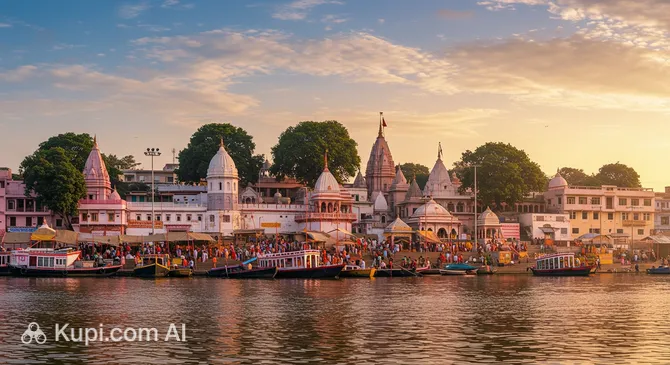
Nabadwip. Illustration.
Source: Kupi.com AI

Travelers here will find not only majestic temples and meditative silence but also the bright colors of everyday life. Ancient shrines sit alongside busy bazaars and cozy tea stalls where you can sample authentic Bengali cuisine. Visiting Nabadwip is an excellent opportunity to immerse yourself in the deep culture of the region and find inspiration in its spiritual heritage.

Weather Overview

When planning a trip to this sacred city, it is important to consider the seasonal characteristics of the local climate. The most comfortable time for a visit is considered winter: from December to February, a pleasant, mild atmosphere prevails here. In January, the average temperature is about 18°C, and nights can be quite fresh, with the air cooling down to 12°C. This is the driest period of the year, ideal for long walks through temples and embankments.

From March, the heat begins to build, peaking in April and May, when daytime temperatures often exceed 34–35°C. Following the heat comes the monsoon season: from June to September, the number of rainy days increases sharply (up to 29 days in July), bringing high humidity and heavy rainfall. To know what to expect from the sky on specific dates, detailed weather in Nabadwip can help.

Expect a hot summer with frequent tropical downpours during the monsoon season and dry, moderately cool winters, which are considered the best season for tourism.

Average monthly temperature

Average monthly precipitation

Interesting Facts

In addition to majestic temples and sacred rivers, Nabadwip holds many amazing stories and cultural features that reveal themselves only to the most curious travelers. Here are a few facts that offer a new perspective on this city:

  • Geography as a Spiritual Path. The city's name literally translates as "nine islands." Historically, this area indeed consisted of nine islands, each of which, in local tradition, symbolizes a certain stage of spiritual devotional service (bhakti). For example, the island of Antardwip (where modern Mayapur is located) is associated with self-surrender, while Simantadwip is associated with hearing sacred scriptures.

  • Birthplace of the "Golden Avatar." Nabadwip is world-famous as the birthplace of Shri Chaitanya Mahaprabhu, who lived in the 15th–16th centuries. Followers consider him a combined incarnation of the divine couple Radha and Krishna. The saint's life in this city is surrounded by many legends of miracles that are still passed down by word of mouth by locals.

  • Unique Iconography and Amulets. In local temples, one can find rare altars dedicated to the Pancha-Tattva—the five aspects of divine truth, which is a hallmark of Bengali Vaishnavism. Additionally, pilgrims often seek a special protective amulet here—the Narasindha Kavachi, which, according to belief, protects the owner from negative influences and brings good luck.

  • A Festival with a Half-Millennium History. The annual Gaura Purnima festival, marking the appearance day of Chaitanya, has been held here for over 500 years. During these days, India shows all its colorfulness: the city fills with thousands of pilgrims, the streets drown in the scent of incense, and music and dancing do not stop for a minute, recreating the atmosphere of medieval Bengal.

How to Get There

When planning a trip to this spiritual center of West Bengal, it is worth thinking through the logistics in advance. Nabadwip is located away from major metropolises, so a trip here often becomes a small adventure. You can find out more about how to get to Nabadwip by considering all available options, but most often tourists combine a flight with land transport.

There is no airport in the city of Nabadwip itself, but this is not an issue thanks to its proximity to the state capital. The main hub for travelers is Netaji Subhash Chandra Bose Airport (IATA: CCU), located in the city of Kolkata. This is a major international airport with a high passenger flow, receiving flights from all over the world. It is located about 83 km from the city. A trip by taxi or private transfer from here will take about 2 hours 30 minutes, depending on traffic.

Another option for domestic flights is Kazi Nazrul Islam Airport (IATA: RDP) in the city of Durgapur. It is located slightly further away, at a distance of 117 km from Nabadwip. Travel time by car is approximately 3 hours 20 minutes. This is a regional airport that might be convenient if you are flying from specific cities in India.

For clarity, here is summary information on the main airports located relatively close to the region:

AirportPassenger trafficDistance
Netaji Subhas Chandra Bose Airport21.2 mln83 km
Jessore Airport175 59685 km
Rajshahi Airport350 000117 km
Kazi Nazrul Islam513 488117 km
Deoghar Airport281 442205 km

Railway connection is perhaps the most popular and budget-friendly way to reach the city, allowing you to immerse yourself in the local flavor. Although our list does not have detailed station data, it is worth knowing that Nabadwip is served by its own railway station, "Nabadwip Dham." Trains run regularly here from Kolkata (from Howrah and Sealdah stations). A train trip is a great opportunity to see the picturesque landscapes of Bengal and reach the city center quickly and inexpensively.

Main Attractions

Nabadwip is rightfully considered a city of temples, where every stone breathes history and spirituality. Travelers are greeted here by an amazing mix of ancient architecture, sacred traditions, and a lively pilgrimage atmosphere. A walk through the local attractions is not just an excursion, but an immersion into the deep culture of Bengal that cannot be felt in noisy metropolises.

One of the main jewels of the city is the Sonar Gauranga Temple. This place attracts thousands of people thanks to its unique shrine—a statue of Shri Chaitanya Mahaprabhu cast in pure gold. It is believed that this image captures the saint's appearance with remarkable accuracy, and the atmosphere inside the temple is filled with solemnity and peace. Visiting this site allows you to touch the roots of the Vaishnava tradition and see a rare example of religious art.

For those seeking mystical experiences, Pora Ma-tala is a must-visit. This is not an ordinary temple, but an ancient altar located in the shadow of a giant sacred banyan tree. The tree's massive intertwined roots create a natural sanctuary where locals worship the Divine Mother. A special, almost primal energy reigns here, and the sight of the ancient tree decorated with flowers and ribbons leaves an indelible impression.

Another important point on the city map is the Sri Chaitanya Saraswat Math. This temple complex is known for its beautiful architecture and well-kept gardens. It serves as an international center where you can meet pilgrims from all over the world who have come to India in search of spiritual truth. Colorful services and festivals regularly take place here, allowing tourists to see living traditions and hear mesmerizing kirtans—traditional devotional songs.

Local Cuisine

A gastronomic journey through Nabadwip is impossible to imagine without experiencing traditional Bengali cuisine, which is elevated to an art form here. The basis of the local diet, as in the entire region, is rice and dal—a thick and filling lentil soup. These are always served with various vegetable curries, generously seasoned with spices that give the dishes a unique aroma and savory spiciness. Since India is famous for its vegetarian traditions, it is here that you can appreciate the rich flavors of meat-free dishes.

Special attention should be paid to local sweets, which are considered among the best in the country. The city's signature is rasgulla, which are delicate balls made of cottage cheese soaked in sweet sugar syrup. Another must-try dessert is mishti doi, a thick sweet yogurt that is fermented and served in clay pots according to ancient tradition. These treats can be found both in specialized confectioneries and at small stalls in local markets.

Street food in Nabadwip is an adventure for foodies in itself. While walking through the busy streets, it's worth trying crispy samosas, fried pakoras, and filling kathi rolls with vegetable stuffing. It is best to end your meal with a cup of traditional hot masala tea with spices and milk or fresh tropical fruit juice, which is very refreshing on a hot day.

The food culture here is closely intertwined with the spiritual life of the city. During numerous religious holidays and festivals, prasad—sanctified vegetarian food—is often distributed on the streets. This creates an atmosphere of universal unity where tourists can share a meal with locals. For a more conventional lunch or dinner, travelers usually choose small family restaurants where the food is prepared with a home-cooked feel and soul.

Travel Tips

Preparing for a trip to Nabadwip requires attention to detail, as it is not just a tourist town but a sacred place of pilgrimage with a specific way of life. To ensure your trip is comfortable and leaves only warm memories, we have gathered several important practical recommendations to help you adapt quickly to the local atmosphere.

  1. Clothing and Dress Code. Given the hot and humid climate of Bengal, choose loose clothing made of natural fabrics like cotton or linen. Since Nabadwip is a religious center, a modest appearance is mandatory for visiting temples: shoulders and knees must be covered for both men and women. Bring comfortable shoes that are easy to take off (like sandals or flip-flops), as you will frequently have to remove them when entering any shrine.

  2. Moving Around the City. Nabadwip features narrow streets, so renting a car is often impractical. The most popular and convenient transport options are cycle rickshaws and electric tuk-tuks known as "totos," which will take you anywhere for a nominal fee. To cross the Ganges to neighboring islands and temples (such as Mayapur), wooden boats are actively used—this is not just transport, but a scenic journey.

  3. Money and Payment. The local currency is the Indian Rupee. While there are ATMs in the city, they may not always work or have cash, so it is better to withdraw money in advance in large cities or at the airport. Credit cards are not accepted everywhere, especially in small shops and budget guesthouses, so always have a supply of small cash notes for paying for transport, donations, and market purchases.

  4. Hygiene and Health. Drink only bottled water and check the integrity of the cap when purchasing; avoid ice in drinks from street vendors. Be sure to bring insect repellent: mosquitoes can be active, especially in the evening and during the rainy season. There are pharmacies in the city, but it is better to bring specific medications with you. Overall, the city is safe, but you should keep a close eye on your personal belongings in crowded pilgrimage areas.

  5. Language and Connectivity. The primary language is Bengali, but many locals understand Hindi, and you can communicate in basic English in tourist zones and temples. Wi-Fi is usually available in hotels, but its speed may be unstable. It is better to purchase a SIM card immediately upon arrival at the airport, as getting a local SIM in a small town can take longer due to bureaucratic procedures.

  6. Rules of Etiquette. It is customary to greet locals and monks with folded palms (the "Namaste" gesture) or the phrase "Hare Krishna," which is considered a polite norm here. In temples, never sit with your feet pointed towards the altar or sacred images—this is considered deeply disrespectful. Also remember to take food and pass money or gifts exclusively with your right hand.

  7. Restrictions and Prohibitions. Nabadwip is a sacred city for Vaishnavas, so it is strongly discouraged to use alcohol and tobacco in public places. Most establishments adhere to strict vegetarianism, so you should not look for meat dishes near temples or ask locals about them, as this may offend their feelings. Also, avoid public displays of affection (hugging and kissing).

  8. The Magic of Dawn. Life in Nabadwip starts very early. Try to wake up before sunrise at least once to hear the morning prayers and ringing bells, and to see the city without the bustle. This is the best time for meditation, peaceful walks along the river, and watching the mist dissipate over the waters of the sacred Ganges.

By following these simple tips, you can avoid everyday inconveniences and fully focus on the amazing energy of Nabadwip. May your journey be filled with spiritual discoveries, interesting encounters, and inner peace!

Entertainment & Nightlife

Развлечения и ночная жизнь:

It is important to set the right tone from the start: Nabadwip is a sacred temple city, so classic "nightlife" with noisy discos, nightclubs, and cocktail bars is absent here. In this corner of West Bengal, the concept of evening leisure has a completely different, spiritual, and cultural meaning. When darkness falls, the city does not fall asleep but transforms: thousands of oil lamps are lit, and instead of modern music bass, the air is filled with the sounds of mridanga (drums) and karatals (cymbals).

The temple complexes and embankments become the main "centers of attraction" in the evening. The atmosphere here is hypnotic and peaceful. The crowd is a diverse mix of pilgrims, monks in saffron robes, and tourists seeking peace. The dress code in such places is appropriate: modest clothing covering shoulders and knees is mandatory. Alcohol is extremely difficult to find in the city, and drinking it in public places, especially near temples, is considered a strict taboo and a sign of disrespect toward the traditions of India.

Instead of bars, travelers gather at evening ceremonies and on busy shopping streets. Here are a few locations where life bustles after sunset:

  • Ganga Ghats. People come here to watch the sunset and observe the evening puja (worship service). This is the best place for meditative walks under the stars and interacting with locals. It is cool and safe here in the evening, and the sight of lights reflecting in the dark waters of the sacred river is enchanting.

  • Boro Bazar. As twilight descends, the city's main trading rows come alive. This is a kind of alternative to night malls: here you can buy souvenirs and fabrics and try street food until late. The noise, bustle, and aromas of spices create the unique flavor of a Bengali evening.

  • Sri Chaitanya Math. In the evening (usually until 8:00–9:00 PM), the most beautiful kirtans—collective chanting—take place here. Even if you are not religious, it is worth stopping by for the powerful energy and the chance to see hundreds of people singing and dancing in unison.

For food lovers, "nightlife" centers around street stalls and sweets. Local "cafes" are open-air counters serving hot masala tea in clay cups and fresh sweets until late evening. This is a great way to socialize: it is here that you can find out the latest city news and discuss philosophy with local residents.

Practical tips for evening walks:

The city is safe for tourists, but lighting on the outskirts can be dim, so carry a flashlight. Life in Nabadwip winds down quite early by big-city standards: most temples and establishments close by 9:00–10:00 PM. To move around after dark, it is best to use electric rickshaws ("totos"), which are easy to catch on main streets; a ride across town will cost on average 20–50 rupees.

As for daytime entertainment, it is educational in nature. There are no conventional amusement parks in the city, but the role of museums is played by ancient libraries at temples and architectural monuments telling the story of the rich heritage of the Bengal Renaissance. Theatrical performances can often be seen right on the streets during religious holidays, when scenes from ancient epics are enacted.

Parks & Museums

Although Nabadwip is primarily known as a city of temples and pilgrimage, there are places where you can take a break from the bustle and touch the history of the region. The city's green zones are inextricably linked to its spiritual life—these are peaceful gardens at ashrams and picturesque embankments, while local museums store unique artifacts of the Bengal Renaissance.

Parks and Natural Areas

In the heart of the city, the Ganga Ghats serve as the main walking areas. These are not just slopes to the water, but real public spaces where locals and tourists meet sunrises and sunsets. A walk along the river provides coolness even on a hot day, and the view of the slow-flowing waters of the sacred river and the boats transporting pilgrims creates an atmosphere of deep peace. The view of the opposite bank, where the domes of Mayapur's temples are nestled in greenery, is especially picturesque.

For wildlife lovers, the Purbasthali Bird Sanctuary, located just 8–10 km from Nabadwip, will be a real discovery. This place, also known as Chupi Lake, is an oxbow of the Ganges (a horseshoe-shaped lake). In winter, thousands of migratory birds flock here, turning the reservoir into a paradise for ornithologists and photographers. You can rent a boat here and enjoy the silence among the dense greenery and lotuses, providing a great contrast to the city's busy streets.

Museums and Cultural Centers

The city's cultural heritage is carefully preserved in small but significant collections. One of the key points is the Museum at the Sri Chaitanya Saraswat Math. This temple complex is an architectural landmark in itself, and its museum exhibition tells the story of the lives of great Vaishnava saints and the history of the mission. Here you can see personal belongings of spiritual teachers, ancient manuscripts, and photographs that help to deeply understand the philosophy that attracts truth-seekers to India from all over the world.

For those interested in secular history and archaeology, the Nabadwip Puratatva Parishad (Nabadwip Archaeological Council) is of interest. This institution is dedicated to preserving the historical heritage of the region. Although it is not a museum in the usual Western sense with interactive screens, it houses rare finds, ancient sculptures, and documents testifying to Nabadwip's rich past as the capital of the Sena dynasty and an educational center of ancient Bengal.

Insider Tip

If you have time, take a ferry across the river to the Mayapur area. There you will find the unique Sri Chaitanya Mahaprabhu Museum, where the stages of the saint's life are recreated in detail using dioramas and exhibits. And for quiet meditation within Nabadwip itself, find the Samaj Bari garden—a hidden gem where ancient buildings are surrounded by a remarkable silence broken only by birdsong.
Getting Around

The public transport system in Nabadwip differs significantly from the standards of major cities. You won't find a metro, trams, or large bus terminals within the residential quarters here. The city lives at its own steady pace, and the transport network is fully adapted to the narrow, winding streets and its geographical location by the river. Moving around here is not just a way to get from point A to point B, but a full immersion into the local flavor.

The main and most popular means of transport are electric rickshaws, which locals affectionately call "totos." These compact three-wheeled vehicles are practically silent and maneuverable, making them ideal for high-density areas. They operate in two modes: as shared taxis (with fixed routes and picking up passengers) and as private taxis (where you rent the whole vehicle). Classic cycle rickshaws are less common but are still used for short distances, especially in the old part of the city.

Given the city's location on the banks of the Ganges, water transport plays an important role. Wooden motorboats and small ferries regularly ply between the shores, connecting Nabadwip with neighboring Mayapur and other settlements. Crossing the river is the fastest way to reach the large temple complexes on the other bank, bypassing roundabout roads. Boats depart as they fill up, which usually happens very quickly, especially in the morning and evening hours.

The fare payment system here is as simple and conservative as possible: cash only. No transport cards, validators, or mobile apps for paying fares on public transport are provided. Prices are very democratic: a ride in a shared "toto" can cost from 10 to 20 rupees, and a boat crossing is about 5–10 rupees. If you take a rickshaw individually, the cost will be higher and should be agreed upon in advance.

Usual taxi services like Uber or Ola practically do not function or work very inconsistently within Nabadwip itself. Car sharing is also non-existent. If you need a car for a comfortable trip around the area, you can order one through your hotel reception or at local travel bureaus. Bicycle rentals are not very popular due to chaotic traffic, but some guesthouses may provide a bike upon request.

Practical tips for tourists:

Always carry small bills and coins—rickshaw drivers often don't have change for large banknotes. When boarding a "toto" or cycle rickshaw, be sure to clarify the price before starting the trip to avoid misunderstandings at the end (prices may be initially inflated for foreigners, so polite bargaining is appropriate). Transport starts running early in the morning (around 5:00 AM), aligning with the temple service schedule, but after 9:00 PM, finding a free vehicle on the street becomes more difficult.

Accommodation

The hospitality infrastructure in Nabadwip fully reflects its status as a sacred city: you won't find five-star chain hotels or ultra-modern lofts here. The housing stock primarily consists of budget hotels, cozy guesthouses, and dharamshalas (traditional pilgrims' guesthouses). Travelers should expect modest but heartfelt service, where the main advantage is the atmosphere of peace and proximity to the shrines.

Location is a key factor when choosing a place to stay. Experienced tourists recommend staying closer to the Ganga Ghats or in the central temple area. This will allow you to watch the sunrise by the river and reach morning prayer sites on foot while enjoying the flavor of the awakening city. Another popular option is the Nabadwip Dham railway station area, which is convenient for logistics if you plan frequent trips, though it can be noisier.

The price range in the city can be described as budget and mid-range. Luxury apartments are a rarity here.

  • Budget Segment: Simple rooms in lodges or ashrams, often without air conditioning but with a fan. This is the most authentic way to immerse yourself in the life of the city.
  • Middle Class: Private hotels offering AC rooms, hot water, and Wi-Fi. This is the most comfortable option for the international tourist.

Booking Tip: Nabadwip lives by the calendar of religious holidays. If your trip coincides with the Gaura Purnima festival (usually February or March) or Ras Yatra, it is necessary to book accommodation 2–3 months in advance. During these days, the city's population doubles due to pilgrims, and finding a free room upon arrival is practically impossible.

Regarding booking methods, India is rapidly digitizing, and many mid-range hotels are already listed on major international online platforms. However, for staying in small guesthouses or ashrams, direct phone booking or searching on the spot (during the low season) often works more effectively. Note that many budget places only accept cash.

Nearby Cities

For those who want to explore the surrounding area, Nabadwip serves as an excellent starting point for day trips to several interesting nearby locations:

Just 14 km away is Krishnanagar—the administrative center of Nadia district. This city is famous throughout Bengal for its unique sweets (sarpuria and sarbhaja) and the Ghurni neighborhood, where local craftsmen create amazingly realistic clay dolls. Architecture lovers will be interested in seeing the Rajbari Royal Palace, which preserves the history of local rulers.

Slightly further is Shantipur, which is famous for its centuries-old traditions of hand-weaving. It is here that the famous fine cotton sarees known as "tant" are produced, which are valued throughout the country. Additionally, it is an ancient cultural center with many temples, closely connected to Vaishnava history.

Also noteworthy is Kalna (Ambika Kalna), often called the "city of temples." People come here to see magnificent examples of terracotta architecture, including the impressive complex of 108 Shiva temples built in two concentric circles, which is a rare architectural phenomenon.

CityPopulationDistance
Belpukur13 01110 km
Krishnanagar153 06214 km
Muragacha13 24915 km
Shantipur151 77719 km
Badkulla18 05120 km

These nearby destinations allow you to get a sense of the diverse culture and landscapes of the region.

Shopping & Souvenirs

Shopping in Nabadwip is a fascinating journey through ancient bazaars where, instead of the glossy windows of shopping centers, you will find cozy craftsmen's stalls and the scent of incense. Since the city is an important pilgrimage center, trade here focuses on traditional goods, religious items, and unique handmade products that will serve as a great reminder of your trip to India.

Special attention should be paid to textiles. The Nadia region, where the city is located, is famous for its centuries-old weaving traditions. Here you can profitably purchase the famous Bengali tant sarees—light cotton fabrics with elegant patterns that are perfect for a hot climate. Local shops offer a huge selection of colors and patterns at prices significantly lower than in large metropolises or tourist boutiques.

Another important category of purchases is religious items and souvenirs, which are known here for their high quality. Tourists and pilgrims most often look for:

  • Tulasi products. The sacred basil tree (Tulasi) is used to create prayer beads (japa-mala) and neck beads. In Nabadwip, hereditary craftsmen carve wonderfully smooth and durable beads.

  • Metalware. Stalls are full of copper and brass products: from elegant ritual dishes to highly detailed deity figurines.

  • Shankhas (shells). Traditional sea shells used in ceremonies as a musical instrument are sold here in a large assortment. One can often find shells with exquisite carvings.

The epicenter of the city's commercial life is Boro Bazar. This is a noisy, colorful market where you can find literally everything: from clothing and jewelry to rare spices and local sweets. A walk through its narrow aisles will not only allow you to make purchases but also immerse you in the vibrant atmosphere of the Bengali province.

When planning a shopping trip, keep in mind that most stalls only accept cash in rupees. Bank cards may only be useful in a few large fabric stores. Additionally, moderate bargaining is appropriate at the market: a polite conversation with the seller often helps to lower the price slightly.

Nearby cities

Reached the end of the page?

That means the route is fully explored