Support

Ooty

About

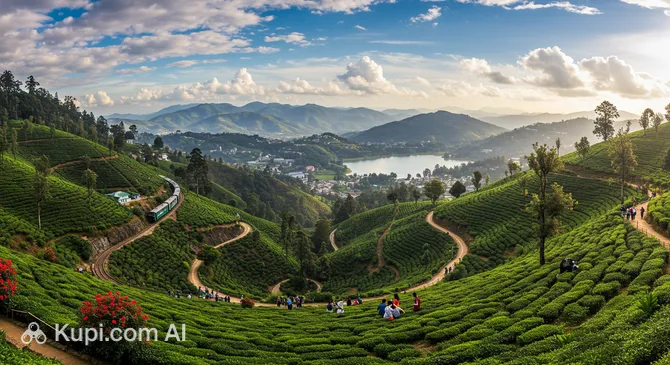
Ooty, often referred to as the "Queen of Hill Stations," is a charming town nestled amidst the picturesque Blue Mountains (Nilgiris) in the state of Tamil Nadu, South India. This popular mountain resort attracts travelers with its preserved colonial architecture, refreshingly cool climate, and endless emerald tea plantations covering the hillsides.

Thanks to its high-altitude location (about 2,240 meters above sea level), Ooty offers guests a pleasant coolness year-round, serving as an ideal escape from the heat of the Indian plains. The town's population is approximately 88,430 people, which helps maintain its calm and leisurely atmosphere.
Ooty. Illustration.
Source: Kupi.com AI

Among the many attractions of Ooty, the famous Nilgiri Mountain Railway stands out. It is a UNESCO World Heritage site that offers an unforgettable journey on a charming "toy train" through tunnels and across bridges. The magnificent Botanical Garden is also a must-visit, housing a vast collection of plants across its extensive grounds, as is the scenic Ooty Lake, perfect for leisurely boat rides. Of course, the region's hallmark is its tea plantations, where you can not only admire the views but also learn about the tea production process.

Ooty is a place where time seems to slow down, allowing you to fully enjoy the beauty of nature, the purest mountain air, and the unique colonial charm. We invite you to discover this amazing corner of India, which will bring you peace and inspiration.

You can find more interesting facts on the Ooty history page
Weather Overview

The climate in Ooty is generally mild and pleasant throughout the year, making it a popular mountain resort. Air temperatures typically range from 13-18°C in the cooler months to 24-29°C during warmer periods. The warmest month is April, with an average temperature of about 23.5°C, while the coolest is January (about 19.3°C). Rainfall is most likely from May to October, with July and August being the wettest months in terms of rainy days. Winter months, such as January and February, are characterized by minimal precipitation. In general, expect a moderately warm summer with frequent rain and cool, relatively dry winters. For more detailed information, see the Ooty climate.

Average monthly temperature

Average monthly precipitation

Interesting Facts

In addition to its famous tea plantations and colonial architecture, Ooty hides many amazing stories and little-known details that make it even more attractive to curious travelers. Here are just a few of them:

Doddabetta Peak. Illustration.
Source: Kupi.com AI

Traveler photos:

  • The Birthplace of Snooker: Many sports historians believe that the popular billiard game of snooker was invented right here in Ooty. According to legend, this happened in 1875 at the Ootacamund Club, thanks to British officers who were bored on duty.

  • The Ancient Toda Tribe: The surroundings of Ooty and the Nilgiri Hills are the ancestral home of the Toda tribe—a unique ethnic group with a distinctive culture, language, and traditions. Their characteristic barrel-shaped huts, called "munds," and their special relationship with buffalo still attract the attention of researchers and tourists.

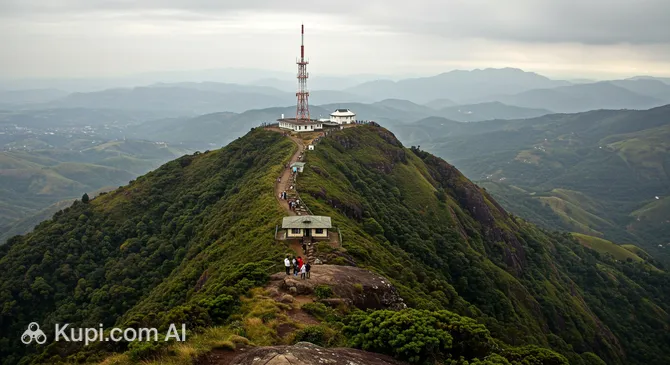
  • The Highest Peak in South India (in the Nilgiris): Located near Ooty is Doddabetta Peak. It is the highest point of the Nilgiri mountain range (2,637 meters above sea level) and one of the highest peaks in South India, offering breathtaking panoramas.

  • A Unique Rack Railway: While the Nilgiri Mountain Railway is an attraction in its own right and a UNESCO World Heritage site, not everyone knows that for a significant part of its route, it uses the rare Abt rack and pinion system. It is one of the few operational railways of this type in the world, allowing the train to overcome steep mountain slopes.

How to Get There

Ooty, nestled on the peaks of the Nilgiri Mountains, does not have its own airport, so a trip here always involves a journey along scenic roads. The nearest air gateways are located in neighboring cities at the foot of the mountains. To plan your route as conveniently as possible, you can learn more about how to get to Ooty by exploring various transport options.

The most convenient option for most travelers is Coimbatore International Airport (CJB). There is no airport in the city of Ooty itself, but this transport hub in Coimbatore is only 56.7 km away. The journey from here by taxi or bus will take approximately 1 hour and 45 minutes, though you should allow more time for navigating the winding mountain switchbacks.

Another available option is Calicut International Airport (CCJ), located in the city of Kozhikode. It is about 86 km from Ooty. The journey from this airport will take about 2.5 hours by car. It is also worth mentioning the major Cochin International Airport (COK) in the city of Kochi (142.7 km), which handles many international flights and may be convenient for transit passengers.

For clarity, here is a summary of the main airports:

AirportPassenger trafficDistance
Coimbatore International Airport3.3 mln57 km
Calicut International Airport3.7 mln86 km
Kannur International Airport1.3 mln137 km
Cochin International Airport11.2 mln143 km
Salem130 132155 km

In addition to air travel, rail links play an important role. The nearest major junction is Coimbatore, from where you can reach the town of Mettupalayam. This is the starting point for the famous Nilgiri narrow-gauge railway (the "toy train"), a UNESCO World Heritage site, which takes tourists directly to the center of Ooty, offering unforgettable views along the way.

Ooty is also connected by a network of roads to major cities in South India. Regular state and private buses run from Bengaluru, Mysore, and Coimbatore, crossing scenic passes and tea plantations.

Main Attractions

Ooty, the "Queen of Hill Stations," offers its guests many interesting places to visit. Among them, several attractions stand out that should not be missed during a trip to this charming town:

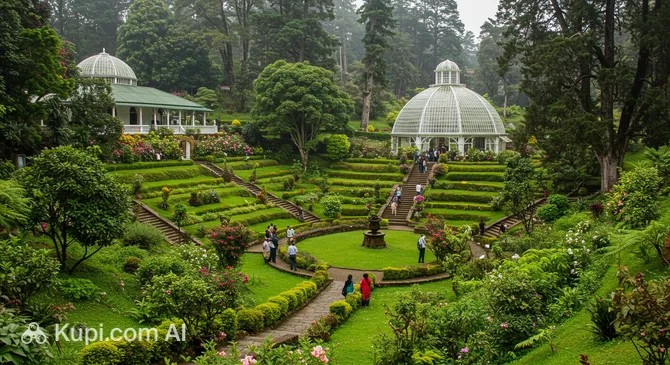
One of the gems of Ooty is the Government Botanical Garden. Established in the mid-19th century, it spans a vast area of 22 hectares and is a true oasis of tranquility. It houses an impressive collection of thousands of plant species, including exotic trees, vibrant flowers, shrubs, and ferns. Special attention should be given to the fossilized tree, estimated to be 20 million years old, as well as the annual May Flower Show, which attracts many visitors. It is an ideal place for leisurely walks, photo sessions, and exploring the region's floral diversity.

Government Botanical Garden. Illustration.
Source: Kupi.com AI

Traveler photos:

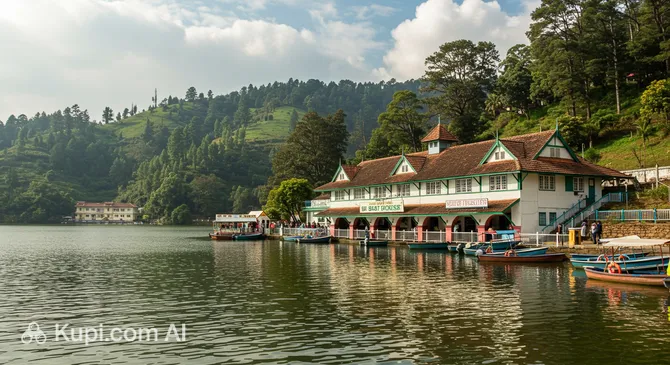
No less popular is the picturesque Ooty Lake, where the Ooty Boat House is located. This artificial lake, created in 1824, is surrounded by eucalyptus groves and hills, creating a peaceful atmosphere. Tourists can rent various boats—from rowboats to catamarans—and enjoy a water excursion. For families with children, there is a small amusement park and a mini-train nearby, making it an excellent choice for outdoor recreation.

Ooty Boat House. Illustration.
Source: Kupi.com AI

Traveler photos:

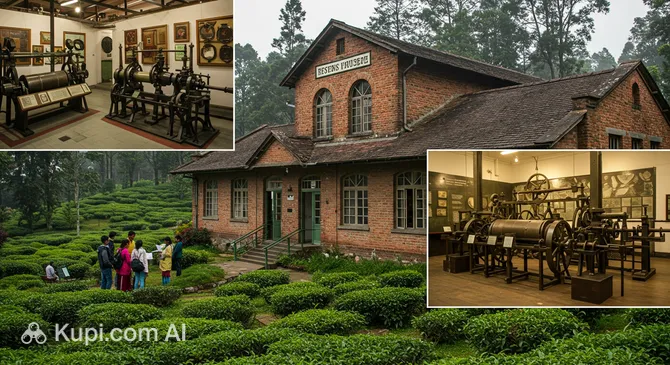
A visit to Ooty would be incomplete without experiencing its tea culture. To do so, visit the Tea Factory and Tea Museum. Here you can see the entire production process of the famous Nilgiri tea, from harvesting fresh leaves to processing and packaging, and learn many interesting facts about the history of tea in the region. Naturally, the tour ends with a tasting and the opportunity to buy the freshest tea directly from the factory.

Tea Factory and Tea Museum. Illustration.
Source: Kupi.com AI

Traveler photos:

History and architecture enthusiasts should visit St. Stephen's Church. It is one of the oldest churches in the Nilgiri Hills, built in 1829. Designed in the Gothic style, it impresses with its elegant stained glass windows, intricate wood carvings, and overall atmosphere of serenity. An interesting fact: some of the building materials, specifically the timber, were brought from Tipu Sultan's palace, adding to the site's historical significance.

St. Stephen's Church. Illustration.
Source: Kupi.com AI

Traveler photos:

For those craving breathtaking panoramic views, a trip to Doddabetta Peak is a must. As the highest point in the Nilgiri Mountains (2,637 meters above sea level), it offers truly unforgettable views of the surrounding valleys, tea plantations, and hills. There is an observation deck at the top with a telescope that, on a clear day, allows you to see even the distant plains. This place will give you a sense of space and the grandeur of South Indian nature.

Doddabetta Peak. Illustration.
Source: Kupi.com AI

Traveler photos:

Local Cuisine

The gastronomic scene of Ooty is a delightful blend of traditional South Indian flavors, colonial heritage, and the freshness of local produce grown in the Nilgiri Mountains. Travelers can expect a variety of dishes to satisfy any palate. The foundation of local cuisine consists of classic South Indian dishes such as dosa (crispy crepes made from rice and lentil flour), idli (steamed rice cakes), and vada (savory lentil donuts), served with aromatic sambar (lentil soup with vegetables) and various types of chutney.

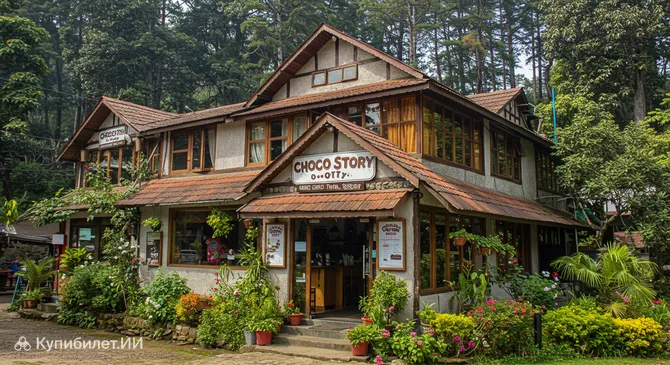
Local delicacies hold a special place in Ooty’s gastronomy. Be sure to try the famous "Ooty Varkey"—crispy, slightly sweet biscuits that are the perfect accompaniment to tea. The town is also famous for its homemade chocolate, which can be found in many small shops; you can even visit the specialized Ooty Chocolate Museum to learn more about its production and, of course, enjoy a tasting. We must not forget Nilgiri tea—the region's hallmark. A visit to one of the numerous tea plantations or the Tea Factory and Tea Museum will allow you not only to enjoy a freshly brewed cup but also to witness the process of its creation.

Ooty Chocolate Museum

Among beverages, in addition to tea, traditional South Indian filter coffee ("kaapi") is incredibly popular in Ooty, known for its rich flavor and aroma. Freshly squeezed juices from local fruits are also offered everywhere. Alcoholic beverages are represented by a standard selection of beer and spirits in licensed restaurants and bars, but the emphasis in the local drinking culture is precisely on tea and coffee.

The food culture in Ooty is diverse. You can find both authentic local eateries serving inexpensive and tasty South Indian food, and higher-end restaurants offering Indian, Chinese, and Continental cuisine. For example, Kailash Parbat is known for its vegetarian dishes, while cozy cafes like Le Café allow you to enjoy a cup of coffee with pastries. Street food is also present, offering quick and flavorful snacks. Many tourists and locals prefer to dine at hotel restaurants or independent establishments scattered throughout the city, especially in the Charing Cross area.

Overall, a gastronomic trip to Ooty promises to be rich and memorable. The freshness of local ingredients, unique specialties like chocolate and "Ooty Varkey," and, of course, the aromatic Nilgiri tea, make this hill station an attractive destination for foodies and anyone wanting to experience the rich culinary culture of South India.

Travel Tips

Planning a trip to charming Ooty, the jewel of the Nilgiri Mountains? To ensure your journey goes smoothly and leaves only pleasant impressions, we have prepared some practical tips. They will help you better prepare for the unique features of this amazing corner of India.

  1. Clothing and Essentials by Season:

    The climate in Ooty is cool year-round, especially in the mornings and evenings. Bring layered clothing: light items for daytime walks, as well as warm sweaters, fleeces, or a light jacket for the evening. Comfortable shoes are a must for walking on hilly terrain and tea plantations. Don't forget a raincoat or umbrella, especially if you're traveling during the monsoon season (June to September). The sun is strong in the mountains, so sunscreen and a hat will be useful. For electrical appliances, you will need an adapter (Type D and M sockets are used in India).

  2. Getting Around Town:

    The main form of transport for short trips around Ooty is auto-rickshaws—always agree on the price before the trip starts. Local buses are a budget option, but they can be crowded. Taxis are also available; you can use local operators or hire a car with a driver for trips to the surrounding areas. Car rental is possible, but keep in mind the left-hand traffic and winding mountain roads—this can be challenging for inexperienced drivers. The famous "toy train" (Nilgiri Mountain Railway) is more of an attraction than daily transport, but it's definitely worth a ride.

  3. Financial Matters:

    The local currency is the Indian Rupee (INR). You can exchange currency at banks or authorized exchange offices; the rate at the airport is usually less favorable. Bank cards (mainly Visa and Mastercard) are accepted in large hotels, restaurants, and some shops, but always carry cash with you for markets, auto-rickshaws, and small establishments. ATMs are available in town, but it's better to use those located at bank branches. Tipping in India is welcomed but not strictly mandatory: in restaurants, it's usually 5-10% of the bill if service is not included. Small amounts can be given to porters and drivers.

  4. Health and Safety:

    There are pharmacies in Ooty where you can buy basic medications. For serious medical help, state and private clinics are available; it is strongly recommended to have travel insurance. Drink only bottled water. Ooty is considered a fairly safe town, but take standard precautions: keep an eye on your belongings, avoid deserted areas after dark, and do not display expensive jewelry. Be cautious when choosing street food, opting for well-established spots.

  5. Language and Connectivity:

    The main language in the state of Tamil Nadu is Tamil. Hindi is also common. In tourist areas (hotels, restaurants, popular attractions), many people speak English. Learning a few phrases in Tamil, such as "Vanakkam" (Hello) and "Nandri" (Thank you), is always appreciated by locals. A local SIM card (e.g., Airtel, Jio) can be purchased upon arrival in India by presenting your passport and a photo. Wi-Fi is available in most hotels and many cafes, but speeds can vary.

  6. Local Etiquette:

    A slight nod or the traditional "Namaste"/"Vanakkam" is common when greeting. When visiting temples and other religious sites, dress modestly (shoulders and knees should be covered) and be prepared to remove your shoes before entering. Always ask permission before taking photos of people. In India, the left hand is traditionally considered "unclean," so try to use your right hand for eating, passing money, or important items. Public displays of affection are not customary.

  7. What to Avoid:

    Try not to criticize local customs, traditions, or religion. Avoid excessive consumption of alcohol in public places. Do not feed wild animals, especially monkeys, which can be persistent and even aggressive.

  8. Special Tip for Ooty:

    Ooty is famous for its homemade chocolate—be sure to try it at local confectioneries and buy some as a tasty souvenir. Also, if you plan to ride the famous Nilgiri Mountain Railway "toy train," book your tickets in advance, especially during peak tourist season, as they are in high demand.

We hope these tips help you enjoy every minute of your stay in beautiful Ooty. We wish you an unforgettable journey full of vivid discoveries and positive emotions!

Entertainment & Nightlife

Ooty, being a charming mountain resort, offers its guests quiet and cozy evenings rather than a vibrant nightlife in the traditional sense. You won't find noisy nightclubs or districts that stay open until dawn here. Instead, evening entertainment in Ooty centers around pleasant dinners in restaurants, leisurely strolls, and enjoying the cool mountain air.

The main centers of evening activity are the areas around Commercial Road and Charing Cross, where most shops and dining establishments are concentrated. Here you can find a variety of restaurants offering local South Indian, North Indian, Chinese, and Continental cuisines. Some hotels also have their own bars where you can enjoy a drink in a more secluded setting. There are virtually no concert venues with regular performances or night markets in Ooty; the evening life here is more intimate.

The atmosphere in Ooty in the evening is predominantly relaxed and family-oriented. The dress code in most establishments is casual; no special preparation is required. Most restaurants and shops close relatively early, usually by 10:00 PM – 11:00 PM. Therefore, if you are planning a late dinner, it is better to check the opening hours of your chosen place in advance. The crowd consists mainly of tourists and locals enjoying a peaceful vacation.

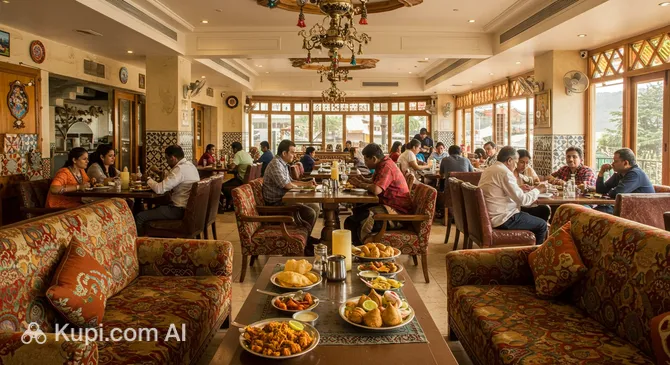
Among the places where you can spend a pleasant evening are restaurants offering a diverse menu. For example, Kailash Parbat is known for its vegetarian dishes and cozy atmosphere. Another popular spot is Le Café, where you can enjoy not only the food but also a pleasant environment for conversation. Many establishments offer both traditional Indian dishes and more familiar European options.

Kailash Parbat. Illustration.
Source: Kupi.com AI

Traveler photos:

To get around the city in the evening, you can use auto-rickshaws (don't forget to agree on the fare in advance) or taxis. It may be more difficult to find transport in the later hours, so it makes sense to arrange a ride with a driver beforehand or use taxi services ordered through your hotel. Average prices in Ooty restaurants are quite affordable, allowing you to enjoy dinner without significant expense.

Regarding safety, Ooty is considered a fairly quiet and safe town. However, as in any tourist destination, basic precautions should be taken: keep an eye on your personal belongings and avoid walking alone in poorly lit or deserted areas late at night. You can call a taxi through the hotel reception or by using local taxi services.

During the day, Ooty offers many leisure options: from visiting the famous Government Botanical Garden and Ooty Boat House to learning about culture at the Government Museum or taking an educational tour of the Ooty Chocolate Museum. These daytime activities perfectly complement the quiet and cozy evenings in this beautiful mountain corner of India.

Parks & Museums

Ooty is not just about picturesque tea plantations and colonial architecture; it is also a town rich in green zones for peaceful relaxation and interesting museums that preserve its history and culture. Everyone will find a spot to their liking here, whether it’s a lush garden or a fascinating exhibition.

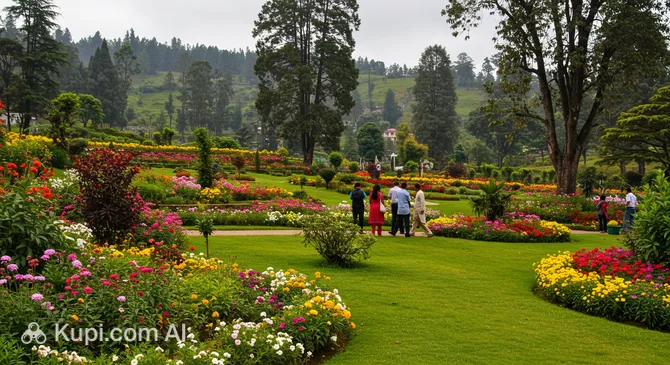
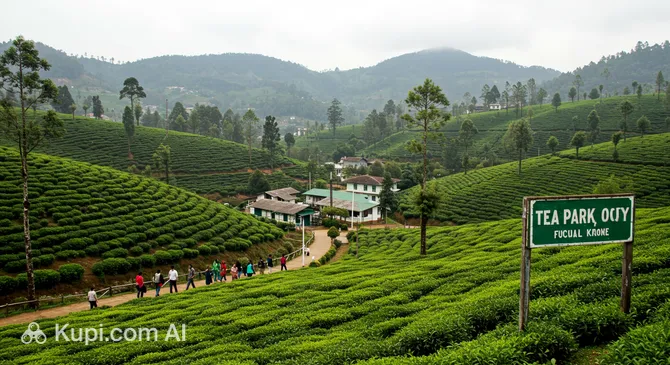
Among the green oases of Ooty, the famous Government Botanical Garden, already mentioned as one of the main attractions, holds a special place. Its extensive collection of plants and well-kept terraces attract visitors year-round. However, you shouldn't overlook other beautiful parks. For instance, the Karnataka Siri Horticulture Garden will delight rose lovers with its magnificent rose garden, as well as skillful topiary figures and neat flower beds. It's a great place for leisurely strolls and colorful photos. Another interesting spot is the Tea Park, where you can not only enjoy views of tea bushes but also learn more about the tea-growing process in an interactive way, making it attractive for family visits.

Karnataka Siri Horticulture Garden. Illustration.
Source: Kupi.com AI

Traveler photos:

Tea Park. Illustration.
Source: Kupi.com AI

Traveler photos:

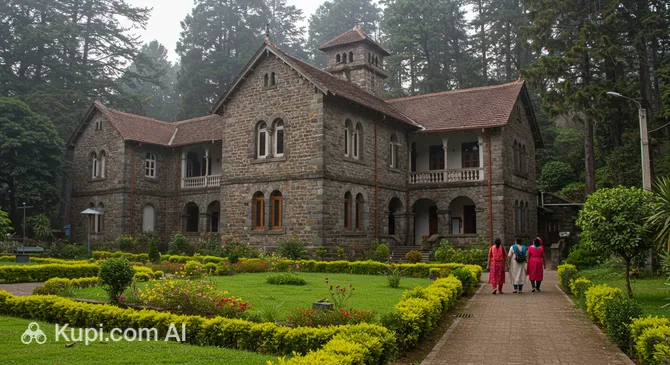
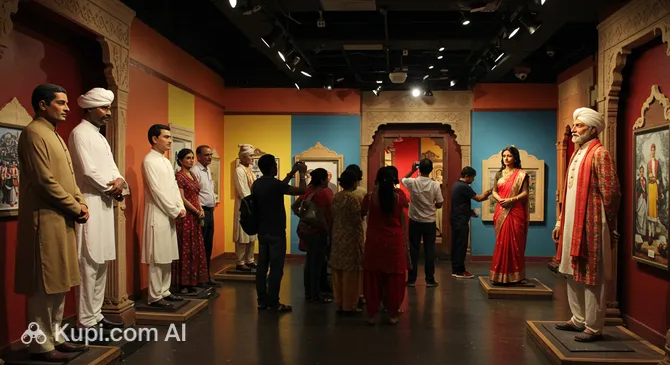
The cultural life of Ooty is equally diverse. To gain a deeper understanding of the region's history and heritage, it is worth visiting the Government Museum. Housed in a colonial-era building, it stores artifacts related to the history of the Nilgiris district, the culture of local tribes, as well as exhibits dedicated to the ecology and development of the region. This is an excellent place for those who want to learn more about the past and present of the "Queen of Hill Stations." For fans of unusual exhibits, a visit to Wax World Museum (Wax Planet) will be interesting, where wax figures of famous Indian personalities—from freedom fighters to Bollywood stars—are on display. It's an entertaining place that both adults and children will enjoy.

Government Museum. Illustration.
Source: Kupi.com AI

Traveler photos:

Wax Planet. Illustration.
Source: Kupi.com AI

Traveler photos:

Don't forget unique spots like the Ooty Chocolate Museum and the Tea Factory and Tea Museum, which, in addition to their primary themes, also offer informative museum displays dedicated to the history and production of these famous Ooty products.

The historical and architectural heritage of the town also deserves attention. The majestic St. Stephen's Church, one of the oldest in the Nilgiris, is a prime example of Gothic architecture and an important historical monument. For those interested in local religious traditions, a visit to the Elk Hill Murugan Temple is worthwhile. This colorful Hindu temple dedicated to Lord Murugan is located on a hill, offering beautiful views of the surroundings. The temple attracts pilgrims and tourists with its vibrant architecture and peaceful atmosphere.

Insider Tip: To fully enjoy the tranquility of the parks, try to visit them early in the morning when there are fewer visitors. A museum visit can be successfully combined with a walk through nearby streets to discover charming corners of Ooty's colonial buildings.

Getting Around

Getting around Ooty and its picturesque surroundings can be done in several ways, each with its own characteristics. Being a town in the mountains, it offers tourists both traditional types of public transport and unique travel opportunities.

The main form of public transport in Ooty is the bus. There are both state-run and private bus routes connecting different parts of the city, as well as Ooty with neighboring towns. This is the most economical way to get around. Tickets are usually purchased directly from the conductor on the bus for cash. Buses run quite frequently throughout the day, but their numbers may decrease in the evening.

For shorter trips around the city, auto-rickshaws (tuk-tuks) are widely used. This is a convenient way to get to a specific point, especially if you are traveling in a small group. It is important to remember that the fare for an auto-rickshaw should be agreed upon with the driver in advance, before starting the journey, as meters are not always used. Taxis are also available and can be hired for more comfortable trips or for long-distance travel and sightseeing in the areas surrounding Ooty. As with auto-rickshaws, it is best to agree on the price beforehand.

One of the main highlights of Ooty's transport system and a popular attraction at the same time is the Nilgiri Mountain Railway. This historic train, a UNESCO World Heritage site, offers an unforgettable journey through tea plantations and eucalyptus forests. Tickets for the train are in high demand, so it is recommended to book them well in advance, especially during the tourist season, through the official Indian Railways website or at station ticket offices.

The payment system for public transport in Ooty is primarily based on cash. There are currently no specialized tourist transit cards or widely used mobile payment apps for fares. Have small bills ready for buses and auto-rickshaws. Nilgiri train tickets can be bought online or at the station. Public transport usually starts operating early in the morning and finishes by evening; the Nilgiri train runs on a fixed schedule.

As an alternative to public transport, the center of Ooty is quite easy to explore on foot, enjoying the cool climate and beautiful views. For more independent travel, you might consider renting a scooter or bicycle if such services are available. This will allow you to explore the surroundings at your own pace. Car-sharing services in Ooty are not yet widely available.

Accommodation

In Ooty, travelers will find a wide range of accommodation options to suit various preferences and budgets. The town offers everything from budget guesthouses and hostels for thrifty tourists to comfortable mid-range hotels, cozy resorts with great views, as well as apartments and villas for those who prefer more space and privacy.

Many tourists prefer to stay in the central part of Ooty, which provides easy access to the main attractions, shops, and restaurants. Also popular are hotels and cottages located on the hillsides surrounding the town—they often offer breathtaking panoramic views and a more peaceful atmosphere. Proximity to places like the Ooty Boat House or the Government Botanical Garden can be an important factor when choosing accommodation.

Sunshine Grand Ooty. Illustration.
Source: Kupi.com AI

Traveler photos:

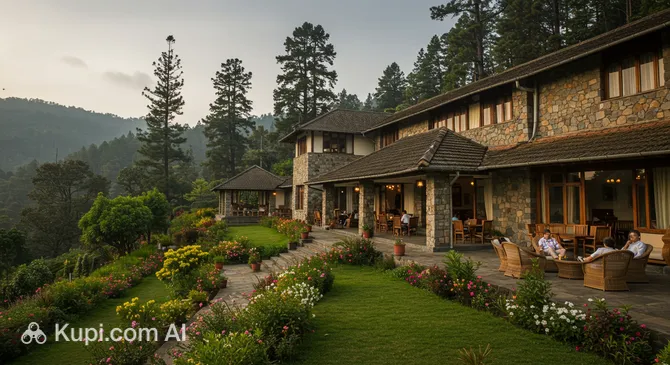
Among the variety of options, there are well-established hotels. For example, popular places to stay include the Sunshine Grand Ooty resort, which offers comfortable rooms and good service, as well as Beverly Villa, known for its hospitality and scenic location.

When planning a trip to Ooty, especially during the peak tourist season (usually April to June and September to November), it is strongly recommended to book accommodation in advance. This will help you secure the best choice and prices. The price range varies from very affordable options to luxury offerings. It is convenient to book accommodation through popular online booking platforms or directly on hotel websites. Some small guesthouses may accept bookings by phone.

Nearby Cities

For those who want to explore the surrounding area, Ooty serves as an excellent starting point for day trips to several interesting nearby locations:

Mettupalayam, located at the foot of the Nilgiri Mountains, often serves as the starting point for the famous mountain railway and attracts nature lovers and water sports enthusiasts due to its proximity to the Bhavani River. It is also an important transport hub connecting the plains with the hill stations, and home to a popular amusement park.

Charming Coonoor, the second-largest hill station in the Nilgiris, is famous for its picturesque tea plantations, the Sim's Park botanical garden, and panoramic views such as "Dolphin's Nose." It is a wonderful place for a quiet getaway and enjoying nature, offering a more secluded atmosphere compared to Ooty.

Gudalur, situated at the junction of three states, attracts visitors with its unique ecosystem, proximity to Mudumalai National Park and Wayanad Sanctuary, and spice plantations. This town is a gateway to the wild, offering opportunities for safaris and animal watching in their natural habitat.

The picturesque Ketti Valley, one of the largest in the region, offers breathtaking scenery and a calm atmosphere, ideal for relaxing walks and photo shoots. Here you can enjoy views of the surrounding hills and traditional villages, and see the famous Lawrence School.

Kotagiri, the oldest and third-largest hill station in the Nilgiris, is known for its trekking routes, waterfalls like Elk Falls, and the Kodanad View Point. It offers a less commercialized experience compared to Ooty, attracting those who appreciate peace and untouched nature.

CityPopulationDistance
Ketti32 3845 km
Nanjanad18 8897 km
Tummanatti13 2757 km
Adigaratti21 1239 km
Nilgiri19 47910 km

These nearby destinations provide insight into the region's diverse culture and landscapes, complementing the impressions from visiting Ooty itself and its surroundings.

Shopping & Souvenirs

Shopping in Ooty is about immersing yourself in the world of local products and unique souvenirs, rather than chasing international brands. The town is famous for its aromatic tea, homemade chocolate, essential oils—especially eucalyptus oil—as well as handicrafts and warm woolen items. Here you will find many small shops and stalls offering authentic goods.

The main shopping arteries of Ooty are Commercial Road and Main Bazaar. Commercial Road is lined with shops offering a variety of goods, from clothing to souvenirs and local delicacies. Main Bazaar is a more traditional Indian market with a lively atmosphere, where you can find fresh produce, spices, tea, and affordable everyday items.

There are no large modern shopping centers in the traditional sense in Ooty. Shopping here is more about exploring individual stores, family-run shops, and markets, each offering something of its own. The atmosphere is more intimate and conducive to unhurried browsing.

The Tibetan Market, located near the Botanical Garden, deserves special attention. Here you can find a wide selection of woolen products—sweaters, shawls, hats, gloves—as well as various souvenirs and jewelry. It's a popular spot among tourists, and bargaining is common here.

Tea Factory and Tea Museum. Illustration.
Source: Kupi.com AI

Traveler photos:

A must-bring from Ooty is the famous Nilgiri tea. It can be purchased at numerous tea plantations, specialized shops, or even at the Tea Factory and Tea Museum, where you can buy fresh tea and learn about its production. Another popular souvenir is homemade chocolate, sold in many confectioneries. We recommend stopping by the Ooty Chocolate Museum, where you can taste and buy different varieties of this treat. Eucalyptus oil and other aromatic oils, spices, leather goods, and unique embroidered items from the local Toda tribe are also popular.

Ooty Chocolate Museum

Most shops in Ooty are open from approximately 10:00 AM to 8:00 PM; some small stalls might close a bit earlier or later. It's better to shop at the markets in the morning. As for payment, cash is widely accepted everywhere, especially in small shops and markets. In larger and more tourist-oriented stores, you can pay by bank card. The UPI mobile payment system is also popular in India.

Tax Free refunds for tourists in Ooty on commonly purchased goods (tea, chocolate, souvenirs) are generally not common. In large jewelry or brand stores (if available), it's worth inquiring individually, but for most purchases in Ooty, this option is unlikely.

Nearby cities

Reached the end of the page?

That means the route is fully explored