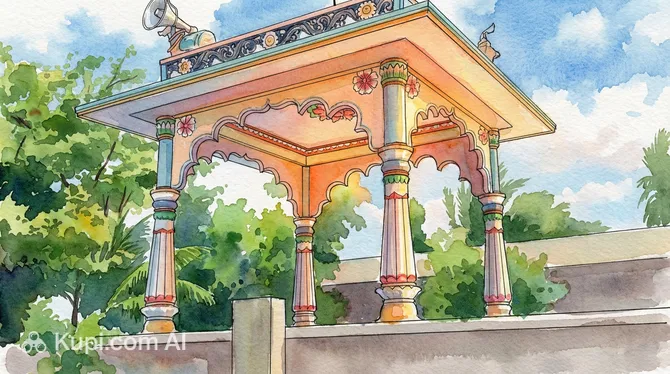
Salotgi is a small and quiet settlement located in the state of Karnataka across the vast expanses of India. The town is a classic example of the region's provincial life, where time seems to slow its pace and the daily routine is inextricably linked to agriculture and age-old traditions. With a population of just over 14,000, it is an ideal destination for those seeking solitude and wanting to see the authentic, non-touristic side of the country.
Salotgi. Illustration.
Source: Kupi.com AI
Geographically, Salotgi is situated in the southern part of the Indian subcontinent, which defines its unique rhythm and cultural landscape. The main pride and spiritual center of the town are connected to the rich history of Salotgi, which dates back to the era of the ancient Rashtrakuta dynasty. It was during this period that a unique temple dedicated simultaneously to Shiva and Vishnu was erected here, highlighting the deep religious heritage of this modest settlement.
Visiting Salotgi is an opportunity to escape the noise of metropolises and immerse yourself in an atmosphere of sincere hospitality. There is no typical tourist polish here, but there is genuine authenticity expressed in ancient sanctuaries and peaceful rural landscapes. We invite you to discover this quiet corner of India, where every stone holds the memory of the great dynasties of the past.
Weather Overview
Salotgi is characterized by a typical tropical climate of South India, where the year is clearly divided into a hot dry season and a monsoon period. Spring arrives very early here: as early as March, the thermometer begins to rise rapidly, reaching a peak in April and May, when the average maximum is around 39°C. During this time, true heat reigns in the town, and travelers are advised to plan walks for the early morning or evening.
From June to September, the region is under the influence of the monsoons. During this period, heavy rains arrive, bringing long-awaited coolness but significantly increasing humidity. July and June are considered the rainiest months — rainfall can exceed 200–600 mm, which transforms the surrounding nature, making it incredibly green. You can check the more detailed weather in Salotgi on our special page.
The most comfortable time for a visit is during the winter period — from November to February. At this time, Salotgi enjoys mild and dry weather with an average temperature of around 24-26°C. Nights can be pleasantly cool (around 18-20°C), making this season ideal for exploring ancient temples and long walks in the surrounding areas without exhausting heat.
Average monthly temperature
Average monthly precipitation
Interesting Facts
Religious Syncretism: Records remain in Salotgi of a temple that served as a common place of worship for both followers of Shiva and adherents of Vishnu in ancient times, which was a significant symbol of unity.
Link to the Rashtrakuta Dynasty: The town played an important role during the reign of the Rashtrakuta dynasty, one of the most powerful empires in medieval India, which controlled a significant part of the subcontinent.
Typical Authenticity: With a population of about 14,000, Salotgi is considered a benchmark for a traditional rural settlement in the state of Karnataka, having preserved the lifestyle of past decades.
Agricultural Heart: Life in the town is entirely dependent on nature's cycles, and the majority of the population is engaged in traditional farming, making it an interesting site for agro-tourism.
How to Get There
Reaching the small settlement of Salotgi is a task for a true explorer, as the town is located away from India's main tourist corridors. A journey here will require a combination of several modes of transport, starting from a flight to major regional hubs and ending with a local bus or taxi ride through the scenic roads of Karnataka. More detailed logistical information can be found in the how to get to Salotgi section.
The nearest major international air hub is the airport in the city of Hyderabad (IATA: HYD), located approximately 200–300 kilometers away. From there, you can transfer to domestic flights to closer regional airports or use the services of private carriers. Hyderabad Airport offers an excellent level of comfort and many transport options to railway and bus stations.
Railway connections in this region are well-developed, but the nearest stations are in neighboring, larger cities. It is recommended to plan your route through stations in settlements such as Bijapur or Solapur, which are connected by regular trains to many parts of the country. From the station to Salotgi itself, it is most convenient to take a scheduled bus or use the services of local rickshaws.
Station
Passenger traffic
Distance
Kalaburagi Junction railway station
6
88 km
Bidar railway station
3
181 km
Chattrapati Shahu Maharaj Terminus
5
196 km
Belagavi railway station
4
215 km
Shree Siddharoodha Swamiji - Hubballi Junction railway station
10
218 km
For those who prefer traveling by car, national highways and local roads lead to the town. While the quality of the road surface can vary, it is a great way to see rural India. Remember that signs in rural areas are often duplicated in the Kannada language, so using offline maps will be very helpful.
Main Attractions
The main gem and historical center of Salotgi is the ancient temple from the Rashtrakuta dynasty era. This unique structure is interesting because it was historically intended for worshippers of two great deities at once — Shiva and Vishnu. This syncretism makes the site an important point for researchers of religious architecture and ancient Indian history, allowing visitors to touch a heritage that is over a thousand years old.
In addition to historical monuments, Salotgi attracts visitors with its atmosphere of a traditional Indian village. A walk through the local streets allows you to see the daily life of Karnataka residents without any embellishment. The agricultural lands surrounding the settlement create a picturesque backdrop, especially during blooming periods when the green fields contrast with the bright clothing of the locals.
In the vicinity of the town, you can find small Hindu shrines that, while not world-famous, are living centers of local culture. Local festivals and rituals are often held here, and participating in them offers a traveler a unique experience of immersion into an authentic environment. This is a place for those who value silence and the opportunity to be alone with history far from popular tourist routes.
Local Cuisine
The cuisine of Salotgi is a vibrant reflection of the gastronomic traditions of North Karnataka. The basis of the diet here consists of dishes based on rice and various types of legumes. Be sure to try the local sambar — a thick vegetable stew with spices, and traditional flatbreads like roti or dosa, which are served with various types of hot and spicy chutneys.
Street food in the town is represented by small stalls preparing fresh idli (steamed rice cakes) and vada. The local gastro scene is devoid of pretension: residents prefer to eat in small home-style eateries where the food is always fresh and prepared according to family recipes. A special character is given to the dishes by the use of local spices, which make the flavor rich and truly authentic.
Among drinks, the most popular in Salotgi is hot masala chai (tea with milk and spices), which locals drink throughout the day. In hot weather, a cool lassi — a traditional yogurt drink — or freshly squeezed tropical fruit juices are excellent rescues. Visiting local markets will allow you not only to see the variety of ingredients but also to feel the true spirit of an Indian meal.
Travel Tips
A trip to Salotgi is a step outside the bounds of usual routes, requiring a certain amount of preparation. These tips will help you make your journey comfortable and filled only with pleasant impressions.
Clothing and essentials: Choose light clothing made from natural fabrics, as it can be very hot here. When visiting temples, be sure to cover your shoulders and knees — this is a sign of respect for local traditions. Don't forget comfortable shoes and sunglasses.
Transport: The main way to get around is via rickshaws and buses. For trips to remote places, it's better to hire a taxi driver for the entire day. Be prepared for roads to be dusty.
Finance: Cards are practically not accepted in Salotgi, so always carry a sufficient supply of cash rupees with you. It's better to exchange currency in advance in a large city or at the airport.
Health: Drink only bottled water and use insect repellent. There are pharmacies in town, but it's better to bring specific medications with you.
Communication: The main language is Kannada; English is not understood by everyone. Learn a few basic phrases or use a translator with offline capabilities. It's better to get a local SIM card at the airport upon arrival.
Local etiquette: When entering a temple or a private house, always remove your shoes. It is customary to greet people with the traditional "Namaste" gesture.
What to avoid: You should not take photos of people without their permission or show strong emotions in sacred places. Avoid consuming unwashed fruit and street food if you are not sure of its freshness.
Connectivity: Wi-Fi is rare in guesthouses, so mobile internet will be your primary communication channel.
May your introduction to Salotgi be a discovery of the real India, and may the hospitality of the locals make this trip unforgettable!
Entertainment & Nightlife
Entertainment in Salotgi is primarily traditional and quiet in nature. You won't find noisy nightclubs or neon bar signs here; the town's life quietens down at dusk, giving way to cozy family evenings. The main source of vivid impressions for residents and guests are the local festivals and religious holidays, which transform the streets into colorful processions with music and dancing.
During the day, leisure activities are mostly centered around walks in the surrounding areas and interacting with locals, who are always happy to share the history of their land. For nature lovers, Salotgi offers a peaceful retreat amidst agricultural landscapes, where you can observe traditional farming methods. It is an ideal place for meditation, reading, or thoughtful contemplation of village life.
Regarding safety, Salotgi is a very calm place where everyone knows each other. Night walks here are safe, though you should consider the lack of extensive street lighting. If you crave more active evening entertainment, you should head to larger neighboring cities, but remember that the main charm of Salotgi lies precisely in the opportunity to take a break from the hustle and bustle and enjoy the silence of the Indian province.
Parks & Museums
In Salotgi itself, classic parks with alleys and fountains are absent; however, the town is surrounded by endless agricultural lands that create a natural green zone. Walks on the outskirts of the settlement allow you to enjoy natural tranquility and see the types of trees and plants traditional to this region. This is a place where nature itself serves as a space for relaxation.
There are also no museums in the traditional sense in Salotgi, but its role is brilliantly performed by the ancient temple. This structure is itself an open-air museum, where the walls and architectural details tell the story of the Rashtrakuta dynasty and ancient religious traditions. For those who value history, every element of the temple complex becomes a valuable exhibit.
The town's cultural heritage is stored not in display cases, but in living traditions and architectural monuments. If you are looking for more modern galleries or local history museums, you should head to the larger administrative centers of the state, but for an introduction to India's authentic past, Salotgi provides plenty of material in its original form.
Getting Around
The transport system in Salotgi is simple and oriented toward local needs. The main means of travel around the town and to neighboring villages are buses run by state and private carriers. They follow a schedule that is best checked locally with residents, as online schedules for such small points may be non-existent.
Within the settlement itself, auto-rickshaws remain the most popular and convenient form of transport. They are a quick and inexpensive way to get from one part of town to another or to the nearest bus station. It is always worth agreeing on the fare in advance, as meters are rarely used in rural areas. Motor rickshaws and bicycles are also popular and ideal for the narrow streets.
For longer trips outside the district, it is best to use taxi services, which can be ordered in neighboring large cities. It is practically impossible to rent a car in Salotgi itself, so tourists are recommended to plan their movements in advance, relying on bus services or hiring a driver with a car for the whole day from a regional center.
Accommodation
Accommodation options directly in Salotgi are quite limited due to its small size and lack of mass tourism. Travelers should expect simple and cozy guesthouses or a "homestay" format, where you can stay in a local family's house. This provides a unique opportunity not only to find a place to sleep but also to get closer to the daily life and traditions of Karnataka residents.
If you are used to a higher level of service and standard hotel amenities, it is recommended to look for accommodation in nearby cities, such as Bijapur. There is a wider choice there: from budget inns to quite comfortable middle-class hotels. From Bijapur, Salotgi can be easily reached by taxi or bus during the day.
When planning your trip, especially if it coincides with local holidays or festivals, it is worth booking accommodation in advance through available online services or by phone. Prices in this region remain very affordable, making Salotgi an accessible destination for budget travelers. Always confirm the availability of basic amenities such as air conditioning or mosquito nets, especially during the hot season.
Nearby Cities
The town of Salotgi serves as an excellent starting point for exploring the heartland of Karnataka, where an ancient temple or a picturesque village may be hidden around every bend in the road. Traveling through the surrounding areas allows for a deeper understanding of the region's culture and the chance to see monuments not spoiled by mass tourism.
Just a few kilometers away is the town of Indi, which is the administrative center of the district and offers more developed infrastructure. Also of interest are the small settlements of Tamba and Almel, where you can observe the traditional way of life and the architecture of rural houses. These destinations are ideal for short day trips.
City
Population
Distance
Indi
41 556
9 km
Tamba
11 258
15 km
Almel
19 120
21 km
Atharga
11 365
22 km
Horti
10 113
25 km
We strongly recommend not limiting yourself to Salotgi alone but embarking on a small journey along the local roads. Exploring nearby towns and villages will give you many unexpected discoveries and allow you to feel the true rhythm of life in South India.
Shopping & Souvenirs
Shopping in Salotgi is primarily about visiting local street markets where life is in full swing. There are no large shopping malls here, but you will find many shops offering essential goods and products from local artisans. The town is not famous for brands, but it is known for its atmosphere of traditional Indian trade, where every shopping trip turns into a small adventure.
The main items to bring back from this trip are local spices and textiles. Karnataka is famous for the quality of its spices, and in Salotgi's markets, they can be bought in their freshest form. Also, pay attention to handmade items from local craftsmen — simple but authentic ceramics or woven goods will be a great reminder of a visit to the Indian countryside.
Shops in the town usually operate from early morning until sunset, with a short break during the hottest time of the day. Payments are made predominantly in cash in the local currency (Indian Rupees), as card terminals in small shops are extremely rare. Bargaining at markets is welcomed and is part of the local culture of communication, so do not hesitate to discuss the price with a smile.