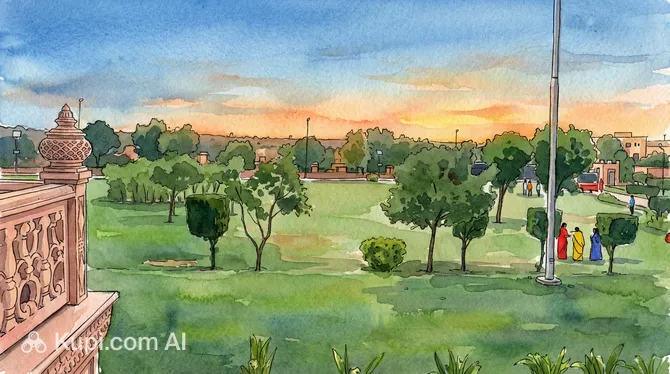
Sardarshahr is an amazing corner of India, located in the heart of the Thar Desert in the state of Rajasthan. Founded in 1832 by the King of Bikaner, Ratan Singh, the city was named after his son, Sardar Singh. It is a place where the spirit of old Rajasthan harmoniously intertwines with the slow pace of modern life, creating an atmosphere of authenticity and comfort.
Sardarshahr. Illustration.
Source: Kupi.com AI
The history of Sardarshahr is inextricably linked with the prosperity of trade routes, which allowed local merchants to build magnificent mansions here known as havelis. Although the city is not a mass tourist destination, it attracts connoisseurs of unique architecture and those looking for the "real" unfiltered India. The city's population is about 382,000 people, making it an important cultural and administrative center of the Churu region.
Sardarshahr is famous for its havelis, decorated with exquisite fresco paintings, and its unique Clock Tower, which is considered one of the architectural gems of Asia. A visit to this city is an invitation to explore the hidden treasures of the desert, get acquainted with traditional crafts, and immerse yourself in the rich cultural heritage of Rajasthan.
Weather Overview
Sardarshahr is located in an arid desert climate zone, which dictates its own rules for travelers. The weather in the city is characterized by significant seasonal temperature fluctuations. Summer here can be extremely hot: in May and June, the thermometer often crosses the +40°C mark, and dry winds from the Thar Desert can bring dust storms.
The winter period, lasting from November to February, is considered the most comfortable time to visit. During these months, the average daytime temperature is about +15°C...+25°C, but nights in the desert can be quite cool, with temperatures dropping to +7°C...+10°C. There is little precipitation in Sardarshahr, with most of it falling during the monsoon period in July and August, which brings temporary relief from the heat.
When planning your trip, expect a warm and sunny summer with minimal humidity, as well as mild, dry winters. If your visit is planned for the winter months, be sure to bring warm clothes for evening walks, and in summer, do not forget about sun protection and an adequate supply of water.
Average monthly temperature
Average monthly precipitation
Interesting Facts
Unique road junction: Sardarshahr's Clock Tower is the only one in Asia with roads passing underneath it, leading in all four cardinal directions.
A royal gift: The city was founded in 1832 by Maharaja Ratan Singh specifically for his son Sardar Singh, on the site of a small village called Alwana.
Architectural rivalry: In the 19th century, the city's wealthy merchants competed with each other to build the most luxurious mansions (havelis), decorating them with frescoes depicting not only gods but also the first trains and airplanes, which were wonders at the time.
Center for rare crafts: Sardarshahr is still famous for its wood and silver carving masters, whose products are valued far beyond the borders of the state of Rajasthan.
Trading past: During its heyday, the city was a key hub for caravans crossing the Thar Desert, making it one of the richest settlements in the Bikaner princely state.
How to Get There
Sardarshahr is located in the northeastern part of the state of Rajasthan, in the heart of the Thar Desert. Despite its distance from major metropolises, the city's transport accessibility allows it to be included in a route through the region's historical sites. The main ways to get here are by rail or bus from the state's major cities.
The nearest large international airport is located in Jaipur, at a distance of about 250 kilometers. The journey from the airport to Sardarshahr by taxi or bus will take approximately 4–5 hours. You can also consider flying to Bikaner, which is closer but receives fewer regular flights.
The Sardarshahr (SRDR) railway station connects the city with key hubs in Rajasthan. Direct trains run to Churu and other neighboring cities, making rail travel the most authentic and convenient way to travel for a budget tourist.
Station
Passenger traffic
Distance
Bikaner Junction railway station
7
124 km
Bathinda railway station
7
202 km
Kishangarh railway station
3
208 km
Jaipur Junction railway station
12
211 km
Jaipur Junction railway station
12
211 km
A network of private and government buses is also well-developed within the region. The quality of the roads leading to the city can vary, so when planning a car trip, it is worth allowing extra time for possible delays due to the nature of the desert landscape.
Main Attractions
The main treasure of Sardarshahr is rightfully considered its historical havelis — traditional mansions that resemble open-air art galleries. These buildings are famous for their unique fresco paintings and finest wood carvings. Walking through the narrow streets of the old city, you will see vivid scenes from the Indian epics "Ramayana" and "Mahabharata" on the walls of the houses, as well as depictions of local legends preserved through the centuries.
In the heart of the city stands the majestic Clock Tower. This unique architectural structure is notable for the fact that streets leading in all four directions pass beneath it, making it practically one of a kind in all of Asia. The tower serves not only as a landmark but also as a bright symbol of the craftsmanship of past builders.
Among the religious attractions, the Shri Ichha Puran Balaji Mandir temple dedicated to the god Hanuman stands out. This pilgrimage site attracts believers with its special energy and beautiful design. It is also worth visiting the ShantiPit sanctuary, which offers a sense of peace and tranquility amidst the desert landscape. For lovers of fortifications, the small old fort will be of interest; today it houses government offices, but it still retains the grandeur of a bygone era.
Local Cuisine
The gastronomy of Sardarshahr is the quintessence of Rajasthani flavors. Local cuisine was formed in desert conditions, so dishes that can be stored for a long time and contain a large amount of spices predominate here. Be sure to try traditional spicy curries served with hot roti or naan flatbreads. Legumes, such as dal, form the basis of the daily diet and are prepared here with special skill.
The city is widely known for its sweets, which are considered some of the best in the region. Local desserts based on milk, flour, and sugar with added cardamom and saffron are a great way to end any meal. Street food in Sardarshahr is an adventure in itself: on every corner, you can find stalls with fragrant snacks such as samosas and pakoras, which locals love to grab on the go.
The food culture here is simple and democratic. The main places to eat are small family restaurants (dhabas) and street food stalls in the central bazars. Tourists are advised to choose establishments with high turnover, where the food is always fresh. Despite the simplicity of the setting, the taste of Sardarshahr's authentic dishes will leave a vivid impression, and spicy masala tea will become your faithful companion during walks around the city.
Travel Tips
Visiting Sardarshahr will be an unforgettable adventure if you take into account a few practical nuances of life in the desert region of Rajasthan in advance.
Clothing and Season: The best time to visit is from October to March. Choose clothing made from natural light fabrics, but don't forget a warm sweater for cool evenings. When visiting temples and havelis, adhere to a modest dress code (covered shoulders and knees).
Getting Around: Use auto-rickshaws for trips around the city, but always negotiate the price before starting the trip. For long-distance outings, it is more convenient to hire a car with a driver.
Finances: The Indian Rupee (INR) is the currency used in Sardarshahr. Cards are rarely accepted, so always carry a sufficient supply of cash. There are ATMs in the city, but they may work intermittently.
Health: Drink only bottled water and use it even for brushing your teeth. Sunscreen and a head covering are mandatory even in winter months.
Language and Communication: The main language is Hindi and the local Marwari dialect. English is understood in hotels and some shops, but a few phrases in Hindi ("Namaste" — greeting, "Dhanyavad" — thank you) will significantly simplify contact with locals.
Etiquette: Be sure to remove your shoes when entering homes and temples. Do not use your left hand for passing money or food, as this is considered impolite.
What to Avoid: You should not take photos of people without their consent, especially women and religious ceremonies. Also, avoid walking through markets at peak times if you don't like crowds.
Connectivity: Wi-Fi is available in most hotels, but for stable internet, it is better to purchase a local SIM card at one of the specialized stores in the center.
Following these simple rules will help you enjoy the hospitality of Sardarshahr and make your trip as comfortable and safe as possible.
Entertainment & Nightlife
Sardarshahr is a quiet and traditional city, so you should not look for noisy nightclubs or neon discos here. The city's evening life is centered around cozy tea stalls and small local restaurants where residents gather for leisurely conversations. The main entertainment for a tourist is a walk through the lively evening bazars, when the daytime heat subsides and the city is filled with a special local color.
Daytime leisure in Sardarshahr is focused on cultural enrichment. It is an ideal place for those who love to study historical architecture and the traditional way of life in Rajasthan. You can spend hours examining the details of the havelis' finishes or watching local craftsmen at work. For more modern entertainment, such as cinemas or large shopping centers, travelers usually head to neighboring cities like Churu or Jaipur.
For safe evening walks, it is best to choose central, well-lit streets and areas around the main temples. If you need to return to your hotel late at night, it is recommended to arrange a ride with an auto-rickshaw driver in advance or ask the staff at your establishment to call a taxi. Despite the lack of a vibrant night scene, Sardarshahr charms with its quiet magic and the opportunity to see Indian life as it truly is.
Parks & Museums
In Sardarshahr, you won't find classic museums with ticket offices and audio guides, but the city itself is often called an open-air museum. The main historical and cultural value is represented by the ancient havelis. These mansions, once owned by wealthy merchants, today serve as living monuments of Shekhawati architecture, where unique paintings telling about the life, faith, and dreams of people from past centuries are preserved on the walls.
There are few park areas in the conventional sense in the city, due to the dry climate of the Thar Desert. However, green oases can be found on the grounds of large temples, such as Shri Ichha Puran Balaji Mandir. These places serve residents and visitors as spaces for relaxation and meditation, where they can take shelter from the midday heat under the shade of trees.
For those who want to dive deeper into the history of the region, the best solution would be to hire a local guide. City experts will take you to the most interesting havelis, which are not always easy to find on your own, and tell stories hidden behind the faded paint of the frescoes. This format of walking replaces a visit to any museum, allowing you to touch history in its very heart.
Getting Around
Public transport in Sardarshahr is mainly represented by auto-rickshaws and local buses. Nimble rickshaws are the most popular and convenient way to travel short distances through narrow city streets. The price of the trip should be negotiated with the driver in advance, as meters are practically not used here. This is a great opportunity to feel the rhythm of an Indian city and quickly reach any attraction.
Local buses connect Sardarshahr with surrounding villages and administrative centers. Schedules can be flexible, and the trips themselves can be quite colorful due to the large number of passengers. For travelers who prefer comfort, an alternative could be renting a car with a driver for the whole day, which is especially convenient when planning trips outside the city to remote havelis.
An important part of the transport system is the railway station. It provides reliable connections with other cities in the state of Rajasthan. In the city itself, there are no metros or trams, and major traffic jams can occur in the area of the central bazar during morning and evening hours. Walking is also possible in the historical center, but you should remember the arid climate and plan routes to avoid being in the sun during peak heat hours.
Accommodation
The hotel industry in Sardarshahr is primarily oriented toward pilgrims and business travelers, so budget guesthouses and mid-range hotels predominate here. You won't find luxury five-star chain hotels here, but local establishments offer basic comfort and sincere Rajasthani hospitality at very attractive prices.
The most convenient option for tourists is to stay in the central part of the city, within walking distance of the Clock Tower and the main markets. This will allow you to fully immerse yourself in the city's atmosphere and easily reach the main havelis. Many guesthouses are located in historic buildings, which adds a special flavor to the trip.
When planning a trip to Sardarshahr, it is recommended to book accommodation in advance, especially if your visit coincides with major religious festivals or holidays, when demand for rooms rises sharply. Most hotels can be found on popular Indian booking services, and payment is most often made in cash upon arrival, although modern mid-range hotels already accept cards and electronic payments.
Nearby Cities
Sardarshahr is an excellent starting point for exploring the lesser-known but charming corners of Rajasthan. The city's surroundings are steeped in history and offer travelers the opportunity to see magnificent architectural monuments without the tourist crowds.
Just 45 kilometers away is Rajaldesar, known for its weaving traditions and ancient temples. If you want to see even more magnificent frescoes, head to Mandawa — this city is called an "open-air gallery" due to the huge number of well-preserved havelis. It is also worth paying attention to Sujangarh, which attracts visitors with its religious significance and proximity to nature reserves.
City
Population
Distance
Rajaldesar
44 385
45 km
Parihara
13 848
56 km
Taranagar
32 640
59 km
Mandawa
23 335
77 km
Sujangarh
101 528
82 km
Exploring these nearby towns will allow you to gain a deeper understanding of the culture and traditions of the Shekhawati region. Most trips can be made within a single day by taxi or local bus, returning in the evening to the cozy atmosphere of Sardarshahr.
Shopping & Souvenirs
Shopping in Sardarshahr is an immersion into the atmosphere of a traditional oriental bazar. The city is famous for its artisans, and you can find truly unique items here. One of the main features of local trade is silverware and fine wood carving. Masters have honed their art for centuries, so the souvenirs bought here are distinguished by high quality and authenticity.
The city's central bazars are the perfect place to find Rajasthani textiles. Hand-embroidered fabrics, bright sarees, and handmade leather goods will be a wonderful reminder of your trip. Prices in Sardarshahr will pleasantly surprise travelers, as they are significantly lower than in popular tourist centers like Jaipur or Udaipur, and the absence of persistent touts makes the process of choosing goods more peaceful.
Don't forget to stop by local shops for the sweets that the city is so proud of. They make an excellent gift for loved ones. Shops and stalls are usually open from morning until late evening with a short break during the hottest time of the day. Payment in most outlets is accepted in cash only, so you should take care of having small bills in advance. Bargaining in the markets is encouraged and is an integral part of the local culture of communication.