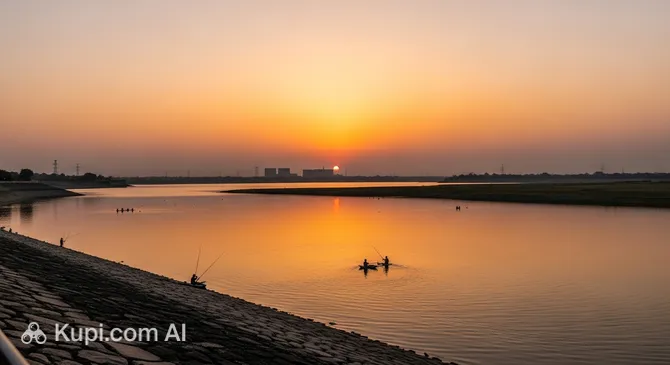
Welcome to Singrauli — a unique industrial center that proudly bears the title of the "Energy Capital" of India. Located on the northeastern edge of the state of Madhya Pradesh, this city is an impressive blend of modern industrial power and the untouched natural beauty of its surrounding forests. Although the city is focused on coal mining and power generation, it possesses a special character that reveals itself to the curious traveler.
Geographically, Singrauli is situated in a hilly area rich in natural resources. The city's population is about 244,000, and it is one of the most dynamically developing regions in the state, with a high per capita income level. Singrauli. Illustration.
Source: Kupi.com AI
If you are interested in industrial heritage and how the country's energy power is forged, then the history of Singrauli's development as an industrial hub will be a true discovery for you.
Among the region's main features are the Mada Caves, which hold traces of ancient civilizations from the 7th–8th centuries, and the colossal Govind Ballabh Pant Sagar reservoir. This destination attracts those seeking authentic India, far from the beaten tourist paths, where industrial landscapes exist alongside the silence of ancient forests. Visiting this city is a chance to see India in motion, creating and striving toward the future.
Weather Overview
The climate in Singrauli is characterized by distinct tropical seasonality. Summer arrives early and brings significant heat: in April and May, temperatures can reach +45°C, with an average maximum of around 38.6°C. During this period, the air becomes very dry, which, combined with industrial dust, requires special caution when walking.
The winter months, from November to February, are considered the most comfortable for visiting. During the day, the temperature stays at a pleasant mark around +20°C...+25°C, while at night it can drop to +10°C. Almost no precipitation falls during this time. If you want to know more about what the weather in Singrauli will be like during your visit, note the monsoon period from July to September, when the region is covered by heavy rains that bring long-awaited coolness.
It is worth considering that the city's industrial activity leaves its mark on the local microclimate. In dry months, air quality may decrease due to coal dust, so people with sensitive respiratory systems are advised to plan visits for the period immediately following the rainy season, when nature blooms and the air becomes noticeably cleaner.
Average monthly temperature
Average monthly precipitation
Interesting Facts
Energy Heart:Singrauli is officially recognized as the "Energy Capital of India" due to its colossal coal reserves and the concentration of the country's largest thermal power plants.
Recent Administrative Status:Singrauli emerged as a separate administrative district relatively recently — on May 24, 2008, when it was carved out of the Sidhi district.
Ancient Heritage: Despite its industrial appearance, the city's surroundings house unique rock-cut temples and caves from the 7th century, testifying to the rich ancient history of the Baghelkhand region.
Giant Reservoir: The local Govind Ballabh Pant Sagar reservoir is so large that even crocodiles inhabit its waters, and the lake itself serves as an important migration point for many bird species.
Economic Leader: In terms of per capita income, Singrauli ranks second in the entire state of Madhya Pradesh, ahead of many cultural and historical centers.
How to Get There
The transport accessibility of Singrauli is largely determined by its industrial status. The city is integrated into the national transport network primarily through railways and highways. Travelers should keep in mind that due to the heavy traffic of coal-hauling trucks, travel time on the roads may be somewhat longer than usual. Detailed information about routes can be found in the section describing ways to get to Singrauli.
The nearest major international airport is located in the city of Varanasi (VNS), which is approximately 200 kilometers away. A trip by taxi or rented car from the airport will take between 4 to 5 hours. You can also consider airports in neighboring regions, but Varanasi remains the most convenient hub for most air passengers.
The railway is the most popular and reliable way to reach the city. The Singrauli railway station receives trains from Delhi, Varanasi, Jabalpur, and other key cities in India. The journey from the national capital, Delhi, takes about 20–24 hours. Regular service allows for comfortable trip planning, including overnight options.
Station
Passenger traffic
Distance
Varanasi Junction railway station
13
129 km
Prayagraj Junction Railway Station
8
162 km
Bilaspur Junction railway station
7
243 km
Gaya Junction railway station
10
246 km
Ranchi Junction railway station
7
288 km
Main Attractions
Although Singrauli is primarily known as an industrial giant, the region hides surprising treasures for history and nature enthusiasts. One of the most significant attractions is the ancient Mada Caves. This complex, carved into sandstone cliffs in the 7th–8th centuries, includes unique sites such as the Ravan Chhaya, Shankar, Ganesh, and Nauka Jharna caves. These places allow you to touch the ancient art and architecture of India in an atmosphere of complete tranquility.
For those who prefer grand engineering structures and relaxation by the water, the Govind Ballabh Pant Sagar reservoir is a must-visit. Formed by a dam on the Rihand River, it is one of the largest man-made lakes in the country. Here, you can not only admire the breathtaking views but also go fishing, enjoy boat rides, or watch migratory birds that choose these shores for rest.
The city of Singrauli itself and its surroundings offer tourists the opportunity to see the operations of the country's largest coal mines and thermal power plants. These objects form a unique "man-made" landscape that looks especially impressive at sunset. Despite the absence of classic museums, a walk through the local markets and central squares allows you to feel the rhythm of life in a true industrial city, living at the same pace as the country's energy heart.
Local Cuisine
The gastronomic character of Singrauli is a vibrant mix of Madhya Pradesh traditions and the Baghelkhand region. Local cuisine is characterized by the use of fresh vegetables, grains, and aromatic spices. The basis of the diet consists of hearty rice dishes, various types of dal (lentil soup), and chapati flatbreads. Special attention should be paid to local vegetarian curries, which are prepared with traditional Indian spices.
Street food plays an important role in city life. While walking through the markets, be sure to try hot samosas, crispy pani puri, and spicy chaat. These snacks are particularly popular in the evenings. Among beverages, the favorite of locals is aromatic masala chai, served on almost every corner, while on hot days, cold lassi or fresh fruit juices are perfectly refreshing.
The city's restaurant scene is concentrated around business districts and shopping zones like Waidhan. Here you can find establishments serving classic Indian cuisine (biryani, tandoori) as well as places offering adapted dishes for foreign specialists. The atmosphere in restaurants is usually simple and relaxed, with an emphasis on quality and heartiness, which perfectly suits the spirit of this hardworking city.
Travel Tips
Preparing for your trip to Singrauli will help make your journey as comfortable and productive as possible. Here are some practical tips for those planning to visit this dynamic region:
Clothing and Essentials: Choose light clothing made of natural fabrics if you plan to visit during the hot season. In the winter months (October–March), it can be cool in the evenings, so bring a light jacket. During the dry season, due to coal mining operations, there can be a lot of dust in the air — having a mask or scarf will come in handy.
Transport: To move around the city and its surroundings, it is best to use a taxi or a rented car. Public transport can be overcrowded, and distances between sites are significant.
Finances: The main currency is the Indian Rupee. Carry a supply of cash with you, as cards are accepted mostly in large hotels and some chain stores. ATMs are concentrated in the center of Waidhan.
Health and Safety: Use only bottled water for drinking. Due to the proximity of forest areas, insect repellents may be needed in the evening. In industrial zones, strictly follow safety rules.
Communication: The main language of communication is Hindi. In hotels and at enterprises, staff speak English. Learning a few basic phrases in Hindi is always appreciated by the locals.
Local Etiquette: When visiting temples or caves, follow the rule of covering your shoulders and knees. The greeting "Namaste" is appropriate in any situation.
What to Avoid: It is not recommended to walk alone in the outskirts of the city and labor settlements late at night. Also, avoid photographing strategic industrial facilities without special permission.
Best Time to Visit: The ideal period for a trip is from November to February, when the weather is mild and pleasant without extreme heat.
May your introduction to India's energy heart be smooth and leave only positive impressions!
Entertainment & Nightlife
Entertainment in Singrauli reflects its status as a labor and industrial center. There are no noisy nightclubs or high-end concert halls, but the city offers a calm and measured rest. Locals and visitors often spend their evenings in cozy cafes in the Waidhan area or visit modern cinemas to catch the latest Bollywood releases.
The main center of attraction for daytime and evening outdoor recreation is the shores of the Rihand Sagar reservoir. It is an excellent spot for family picnics, peaceful walks, and nature observation. In the city itself, you can also find several shopping areas and markets that come alive after sunset, offering street food and daily goods.
For those seeking a more intense cultural program or nightlife, it is usually recommended to head to nearby major cities like Varanasi or Rewa. Nevertheless, Singrauli charms with its sincerity: here you can enjoy a quiet evening in a hotel restaurant or watch the lights of the power plants, which create a unique light panorama of a nocturnal industrial hub.
Parks & Museums
The park infrastructure of Singrauli is inextricably linked to the region's natural landscapes. Although the number of developed squares in the very center of the city is limited, its surroundings represent a vast green zone. More than a third of the district's territory is covered by dense forests, which serve as the "lungs" for the industrial hub. Nature lovers will appreciate walks along the shores of the Govind Ballabh Pant Sagar reservoir, which is home to many species of birds and reptiles.
An interesting natural attraction is the area around the dam on the Rihand River. Conditions for water recreation have been created here, and the surrounding hills are covered with forests where you can feel the pristine beauty of the state. This is an ideal place to escape the city bustle and industrial noise while enjoying the peace and fresh air by the water.
There are currently no specialized museums in Singrauli; however, the ancient caves in the Mada tehsil serve as an "open-air museum." These rock structures, with their ancient reliefs and architectural forms, replace classic galleries, offering tourists living history frozen in stone. Visiting these sites provides insight into the region's cultural heritage long before the start of its industrial development.
Getting Around
Public transport in Singrauli is adapted to the needs of an actively developing industrial city. The core of internal communication consists of buses and auto-rickshaws. Bus routes connect the main residential areas with industrial zones (mines and power plants) and neighboring Waidhan. This is the most budget-friendly way to get around, though keep in mind that during peak hours when shifts change, transport can be overcrowded.
Auto-rickshaws are the most maneuverable and popular mode of transport for short-distance trips. It is better to agree on the fare with the driver in advance, as meters are rarely used. For more comfortable movement around the city and trips to remote attractions such as the Mada Caves, it is recommended to order a taxi through specialized services or mobile apps.
Many city guests prefer to rent a car with a driver for the whole day — this is the most reliable option, given the specifics of local roads and the intense movement of heavy freight transport. Bicycles and motorbikes are also popular among locals, but tourists should be extremely careful on the roads due to the high number of large trucks. The city's railway station serves as a starting point for long-distance travel, connecting Singrauli with key centers in India.
Accommodation
The hotel sector in Singrauli is primarily focused on business travelers and specialists coming to work at industrial sites. Middle-class hotels and functional guesthouses predominate, providing the necessary comfort for short-term and medium-term stays. The main concentration of hotels can be found in the Waidhan areas and near the railway station.
For those seeking higher-quality service, corporate guest houses of major energy companies are available, as well as several chain hotels in the city center. Budget accommodation options are widely available near major transport hubs, which is convenient for transit travelers. It is worth noting that there are no luxury resorts in the traditional sense within the city itself.
When planning a visit, especially during periods of major industrial conferences or the launch of new projects, it is recommended to book accommodation in advance. Prices for staying in Singrauli remain quite affordable, and the staff at most hotels are accustomed to working with foreign guests associated with the energy sector. To find the most suitable option, look for reviews regarding cleanliness and the availability of stable Wi-Fi.
Nearby Cities
Singrauli can be an excellent starting point for exploring the border areas of Madhya Pradesh and Uttar Pradesh states. The city's surroundings offer interesting contrasts: from industrial giants to quiet provincial settlements and nature reserves. Trips to neighboring cities will allow you to deeper understand the diversity of central India.
Just a few dozen kilometers away is Renukoot, known for its aluminum production and picturesque views of the reservoir. It is also worth visiting Obra and Robertsganj — small towns that preserve the atmosphere of traditional Indian life and offer their own unique attractions. A trip to Waidhan, the administrative center of the district, will allow you to enjoy the local color and visit larger shopping areas.
City
Population
Distance
Parasi
21 203
11 km
Renukoot
68 000
37 km
Obra
46 574
45 km
Gothani
17 338
49 km
Robertsganj
36 689
67 km
Exploring nearby settlements is convenient by taxi or rented car, which gives you freedom of movement and the opportunity to stop at scenic spots along the way. Each of these directions will add new dimensions to your understanding of life in this important energy region of the country.
Shopping & Souvenirs
Shopping in Singrauli is primarily about experiencing the color of local bazaars. The main shopping areas are concentrated in the city center and the Waidhan district. You won't find massive luxury shopping malls here, but you can immerse yourself in the atmosphere of a traditional Indian market, where everything from bright textiles and spices to modern electronics and household goods is sold.
If you want to bring something special home, look for items made by local artisans from the Baghelkhand region. Traditional Indian incense, sets of aromatic spices, and textile products are popular. Many travelers also purchase high-quality tea blends here, which make for an excellent reminder of the trip.
Shops in the city usually operate from 10:00 to 20:00, while smaller stalls may close for a lunch break. Payment at most outlets is made in cash rupees, although larger stores and hotels accept bank cards. Visiting the markets of Singrauli is not only a shopping opportunity but also a great way to observe the daily life of locals and feel the true rhythm of the "Energy Capital."