Support

Talwandi Sabo

About

Talwandi Sabo is a spiritual gem of the state of Punjab, nestled comfortably among green fields and golden wheat expanses in the north of the country. This city, also known as "Guru Kashi" or the "City of Knowledge," is an important religious and cultural center where ancient traditions blend harmoniously with rural idyll. For many travelers, it is here that the true, authentic India reveals itself with its deep spirituality and sincere hospitality.

Geographically, the city is located in the Bathinda district, on a picturesque plain surrounded by blooming gardens and well-kept farms. With a population of about 22,000, Talwandi Sabo maintains the atmosphere of a cozy and peaceful place, free from the bustle and noise of major metropolises. Here, time seems to slow down, allowing guests to enjoy the tranquility and beauty of the local nature.
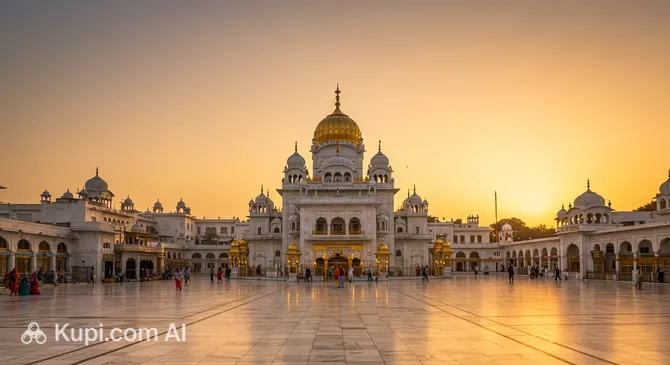
Talwandi Sabo. Illustration.
Source: Kupi.com AI

The main attraction and the heart of the city is Takht Sri Damdama Sahib—one of the five sacred Sikh seats of authority (Takhts). This majestic structure and the associated history of Talwandi Sabo attract thousands of pilgrims and tourists every year who wish to touch the spiritual heritage of Sikhism. The city is literally permeated with an atmosphere of piety, and its streets are filled with the local flavor and friendliness of the residents.

A visit to Talwandi Sabo will be an unforgettable experience for those seeking more than just tourist views, but a deep cultural immersion. Stroll through its lively streets, peek into craft shops, and feel the special warmth of this place. It is an ideal destination for travelers seeking to find inner harmony and get acquainted with the rich traditions of Punjab.

Weather Overview

When planning your trip, it is important to consider that the weather in Talwandi Sabo has a distinct seasonal character. The climate here varies from quite cool winters to truly hot summer months, so your choice of clothing will directly depend on the dates of your trip.

Summer in the region comes into its own from April, reaching its peak heat in June with an average temperature of about 33.6°C and maximums approaching 40°C. July brings the rainy season: this is the wettest month of the year, when up to 18 days of precipitation are recorded, although its intensity can be moderate. Winter, on the other hand, is dry and fresh: in January, the average temperature drops to 12.8°C, and nights can be quite cold—around 7°C.

Expect a hot summer followed by a humid season, and cool, mostly dry winters. Spring months, such as March, or October are best for comfortable walks and sightseeing, when the heat subsides and rain is unlikely.

Average monthly temperature

Average monthly precipitation

Interesting Facts

In addition to its main attractions, Talwandi Sabo holds many fascinating secrets and deep historical meanings that make it a unique place on the map of India. Here are some amazing facts that will help you better understand the soul of this city:

  • Birthplace of the Sacred Scripture. It was here that work was completed on the final version of the "Sri Guru Granth Sahib"—the main sacred book of the Sikhs. Legend has it that the tenth Guru, Gobind Singh, dictated the full text of the scripture from memory to his companion Bhai Mani Singh. This event forever established the city's status as a major literary and spiritual center.

  • "Guru Kashi"—The City of Knowledge. Talwandi Sabo is often called "Guru Kashi," comparing it to the holy city of Varanasi (Kashi). In 1705, the Guru blessed this place, predicting that it would become a beacon of enlightenment where "knowledge will be born." The prophecy came true: today the city is famous for its schools and academies, where ancient texts and philosophy are studied in depth.

  • Place of "Deep Breath." The name of the main shrine, Takht Sri Damdama Sahib, is etymologically linked to the word "dam," which means "breath" or "respite." Historically, this is the place where the Guru stopped to rest and regain his strength after long travels and battles, symbolically untying his waist belt in a sign of finding peace.

  • Large-Scale Hospitality. The tradition of langar (community kitchen) is observed here on an incredible scale, especially during the Baisakhi festival. Thousands of portions of food are prepared daily and distributed free of charge to everyone, regardless of their faith. Local residents believe that participating in the preparation of this food is the highest form of service to society.

How to Get There

Getting to this spiritual center of Punjab can be done in various ways, but travelers most often choose a combined route that includes a flight to one of the state's major transport hubs followed by a car journey. To plan your logistics in maximum detail, we recommend studying all the ways to reach the city, where useful information about routes is collected.

There is no airport in Talwandi Sabo itself, so the air gates of neighboring cities are the primary choice for tourists. The closest option is Ludhiana (Halwara) (IATA: HWR), located in the city of Ludhiana, about 99 km from Talwandi Sabo. A taxi ride from here will take about 2–2.5 hours, making this route quite convenient for domestic flights.

For international travelers, Chandigarh Airport (IATA: IXC) is an excellent choice. It is located in the city of Chandigarh, at a distance of about 180 km. It is a major transport hub with developed infrastructure. The journey by taxi or bus to Talwandi Sabo will take approximately 4–5 hours. You should also consider Sri Guru Ram Dass Jee International Airport (IATA: ATQ) in Amritsar (about 193 km away). This is especially convenient if you plan to combine a visit to the Golden Temple with a trip to Talwandi Sabo; the travel time will be about 4.5 hours.

For clarity, here is summary information on the main airports in the region:

AirportPassenger trafficDistance
Bhatinda Airport31 00445 km
Ludhiana (Halwara)99 km
Chandigarh Airport3.6 mln180 km
Allama Iqbal International Airport5.4 mln182 km
Sri Guru Ram Dass Jee International Airport3.5 mln193 km

Regarding land transport, although Talwandi Sabo itself may not have a major railway station serving long-distance destinations, the region has good road connections. Travelers often take trains to the neighboring major station in the city of Bathinda, which is only 30 kilometers away, and cover the remaining part of the journey by local buses or taxis. Roads connect the city with the main highways of the state of Punjab, providing comfortable passage by private or rented transport.

Main Attractions

Talwandi Sabo is a city where history and spirituality intertwine at every step. Most of the attractions here are associated with the life of the tenth Sikh Guru, Guru Gobind Singh, and his stay in these lands. Travelers interested in Punjabi culture and Sikh heritage should visit the following iconic sites, each of which holds its own unique legend.

Takht Sri Damdama Sahib is the undisputed landmark of the city and a place of incredible power. It is one of the five supreme seats of Sikhism, and its architecture is striking in its grandeur: snow-white marble walls, golden domes, and spacious prayer halls create an atmosphere of solemnity and peace. The complex includes a sacred pool (sarovar) where pilgrims perform ablutions. For tourists, it is interesting not only to see the architecture but also to visit the museum, which houses historical relics, including weapons and personal belongings of the Guru.

Nearby is Gurudwara Jand Sahib, associated with an amazing story. The temple's name comes from the Jand tree, which still grows on the grounds of the complex. According to legend, it was to this tree that Guru Gobind Singh tied his horse. Believers consider this tree sacred, and many come here to tie a thread and make a wish. This quiet and cozy place allows you to touch the living history of the region.

Special attention should be paid to Gurudwara Likhansar Sahib. This place holds special significance for students and people seeking knowledge. Historically, it was here that the Guru blessed pens and reed pens, predicting that Talwandi Sabo would become a center of enlightenment ("Guru Kashi"). Today, there is an interesting tradition: pilgrims bring pens and pencils here to have them blessed and to ask for success in their studies or literary work. This is a unique cultural experience rarely found in other cities.

Another important point on the city map is Gurudwara Tibbi Sahib. It is located on a small sandy hill (tibbi), offering a view of the surroundings. This place is known for being where the Guru taught his followers martial arts and conducted training battles. The temple's architecture is distinguished by its simplicity and harmony with the surrounding landscape, and visiting this site helps to better understand the warrior spirit and discipline that are an important part of Sikh history.

Local Cuisine

The gastronomy of Talwandi Sabo is a real feast for lovers of rich flavors and spicy aromas for which the state of Punjab is so famous. Local cuisine is based on simple but incredibly hearty dishes prepared from the freshest farm products. A cult of natural food reigns here: an abundance of clarified butter (ghee), fresh herbs, and homemade spices make every meal unforgettable.

The main gastronomic symbol of the region, which is a must-try, is the classic duo of sarson da saag (spiced mustard leaf puree) and makki di roti (coarse cornmeal flatbread). This dish is especially popular on cool evenings and is considered the soul of the Punjabi table. No less popular are the thick and creamy dal makhani—black lentils simmered over low heat with butter and spices—and chole bhature—spicy chickpeas served with a fluffy fried flatbread.

Street food in Talwandi Sabo occupies a special place. Walking through the markets, it's impossible to pass by stalls with hot samosas filled with spiced potatoes or fresh sweets. Local desserts, such as crunchy jalebi spirals or sweet laddu balls, are the perfect end to a meal. It is customary to wash down this magnificence with traditional lassi—a thick whipped yogurt-based drink that is perfectly refreshing and helps cope with the spiciness of the dishes.

The food culture here is closely linked to hospitality and community traditions. Tourists can grab a bite at small family cafes where recipes are passed down from generation to generation, or right on the street, enjoying the lively atmosphere of the city. A special experience is the festive meals during religious festivals, when food becomes a symbol of unity and joy available to every guest of the city.

Travel Tips

Welcome to Talwandi Sabo! To ensure your pilgrimage or tourist trip to this holy city is as comfortable as possible and leaves only bright memories, we have prepared a list of useful recommendations for you. These tips will help you easily navigate local traditions and avoid common traveler mistakes.

  1. Clothing and Dress Code. Since Talwandi Sabo is an important religious center, modesty in clothing is mandatory here. Shoulders and knees must be covered for both men and women. The most important accessory is a head covering (scarf or bandana), which is required to enter any temple (Gurudwara). In summer, choose light natural fabrics as the heat can be grueling, and in winter (December-January), be sure to bring a warm jacket, as evenings can be quite cool.
  2. Transport within the city. The city is quite compact, and many distances can be covered on foot, especially in the center. For trips further afield, the main means of transport are auto-rickshaws and cycle-rickshaws. Taxi apps like Uber may not be available or there will be very few cars, so it is better to negotiate with rickshaw drivers on the spot. Always agree on the fare in advance to avoid misunderstandings at the end of the trip.
  3. Finances and Cash. The official currency is the Indian Rupee. In Talwandi Sabo, it is crucial to have a sufficient supply of cash with you, preferably in small denominations. Bank cards are not accepted everywhere, mostly only in major hotels. Cash will be needed for donations at temples, purchases at local markets, and paying for transport. There are ATMs in the city, but they may not always work or accept foreign cards.
  4. Health and Hygiene. Strictly follow the rule: drink only bottled water and avoid ice in drinks at street cafes. There are pharmacies in the city, especially near the Takht Sri Damdama Sahib complex, but it is better to bring specific medications with you. In summer, be sure to use sunscreen and carry water with you to avoid dehydration.
  5. Communication and Connection. The main language is Punjabi, and many also understand Hindi. English is less common than in major tourist centers, so learn a few phrases, such as "Sat Sri Akal" (greeting). It's better to purchase a SIM card in advance in a large city (Delhi or Chandigarh), as the registration process for a foreigner in a small town can take longer. Wi-Fi is usually available in hotels, but its speed may be unstable.
  6. Local Etiquette. When entering any religious complex, be sure to remove your shoes and leave them in special storage lockers (Jora Ghar). Before entering the shrine, it is customary to wash your hands and feet in designated areas. Inside the temple, be quiet, do not sit with your feet facing the holy book, and do not take photos inside prayer halls without explicit permission.
  7. What to Avoid. India respects its traditions, and in the holy cities of the Sikhs, strict prohibitions apply. It is strictly forbidden to consume alcohol and smoke (including vapes) near religious sites, and often throughout the entire city. Appearing intoxicated or with tobacco products can deeply offend the feelings of believers and lead to serious conflict.
  8. Participation in Seva (Service). Do not miss the opportunity to participate in the life of the community. You can help in the kitchen (langar)—rolling flatbreads or distributing food. This is a unique experience that will allow you to feel the true unity and hospitality of the locals, and it is always welcome, regardless of your faith.

Talwandi Sabo is a place where openness of heart is valued above all else. By following these simple rules and showing respect for the local culture, you will encounter incredible hospitality here and be able to touch the deep spirituality of this amazing region.

Entertainment & Nightlife

Nightlife in Talwandi Sabo is fundamentally different from the usual understanding of the word in the Western world or major metropolises. Since it is a sacred Sikh city, strict religious prohibitions apply here: the sale and consumption of alcohol and tobacco, as well as the presence of nightclubs or discos, are completely excluded. "Nightlife" here is a time for spiritual union, evening prayers, and quiet walks in a calming atmosphere.

The center of evening attraction remains Takht Sri Damdama Sahib. With the onset of darkness, the majestic complex is illuminated by thousands of lights reflected in the waters of the sacred sarovar, creating an incredibly beautiful and mystical sight. In the evening, the Rehras Sahib ceremony (evening prayer) is held here, gathering hundreds of believers. Tourists can simply sit on the marble steps, enjoying the coolness and listening to the melodic singing of Kirtan (religious hymns) that drifts over the complex.

Instead of bars and pubs, the evening's gastronomic entertainment is visiting local dhabas (traditional eateries) and family restaurants. Most of the life hums on the streets adjacent to the main entrance of the Gurudwara. Here you can find establishments offering hot masala tea, sweets, and hearty vegetarian dishes. The atmosphere in these places is very friendly and lively: locals gather with their families to have dinner and discuss the news. The dress code everywhere is modest and conservative.

For shopping enthusiasts, the evening markets located around the temple complex are of interest. Shops here stay open late, offering religious paraphernalia, books, traditional clothing, and souvenirs. A stroll through the Main Bazaar is an excellent way to feel the flavor of the city: it is safe, crowded, and well-lit. Prices for goods are very affordable, and moderate bargaining is welcome.

In terms of safety, Talwandi Sabo is one of the calmest places in the region. Night walks around the temple and central markets are absolutely safe even for solo travelers, as the streets are patrolled and there are always many pilgrims around. However, wandering into the outskirts or dark alleys after 9:00 PM is not recommended. Public transport is rare at night, so if your hotel is far from the center, it's better to arrange an auto-rickshaw ride in advance.

Daytime entertainment in the city also has a cultural and educational character. Travelers should visit the local museums at the gurdwaras, where historical weapons and manuscripts are displayed, or stroll through the well-kept park areas around the religious sites. This time is best devoted to studying the rich history of Sikhism and admiring the architectural details, which look particularly impressive in the daylight.

Parks & Museums

The cultural and natural landscape of Talwandi Sabo is inextricably linked to its spiritual status. Unlike metropolises with their massive entertainment parks and modern art galleries, this city offers travelers something else—peaceful green zones at temple complexes and museums housing priceless relics of Sikh history. Here, nature and history serve as a backdrop for deep inner contemplation.

Although the city does not have typical botanical gardens, the areas around religious shrines serve as the main recreational zones. The Sacred Sarovar at the Takht Sri Damdama Sahib complex is the heart of the city, attracting not only pilgrims but also lovers of silence. The huge man-made reservoir is surrounded by marble promenades and well-kept alleys. It is an ideal place to rest by the water, watching the play of light on the surface and enjoying the coolness even on a hot Punjabi afternoon.

Another important natural landmark is the historical trees scattered throughout the city and its surroundings. Many of them, such as the old Jand trees, have the status of sacred natural monuments. Small gardens are often laid out around such places, where you can sit in the shade of sprawling branches. In addition, a walk to the outskirts of the city will open up picturesque views of the endless agricultural fields of Punjab—the "breadbasket of India." Golden wheat crops or bright yellow mustard flowers create a stunning backdrop for photos and fresh-air strolls.

As for museums, the main repository of history here is the Museum of Relics at Takht Sri Damdama Sahib. This is a must-visit for everyone who wants to understand the warrior and spiritual culture of the region. The exhibition features personal belongings of the Tenth Guru, Guru Gobind Singh, including historical weapons (shastras), armor, and household items from the 17th–18th centuries. Visitors are particularly moved by the ancient manuscripts and musical instruments that allow you to touch the era of the formation of Sikhism.

Since Talwandi Sabo is known as the "City of Knowledge" (Guru Kashi), the local libraries of ancient manuscripts are also of cultural interest. Although these are not museums in the classical sense, rare copies of sacred texts are stored in some halls at educational institutions and Gurdwaras. Tourists can be shown how calligraphic art and the traditions of copying books, which originated in this place centuries ago, are carefully preserved.

For those looking for hidden gems, pay attention to the architectural details of the small shrines (Burjs) located along the perimeter of the main complex. These small towers often serve as mini open-air museums, marking the sites of historical events. Local guides or temple attendants can tell amazing legends associated with each such corner, turning a simple walk into a fascinating history lesson.

Getting Around

The transport system in Talwandi Sabo is characterized by simplicity and the absence of complex infrastructure typical of metropolises. Since the city is small and compact, there are no subways, trams, or an extensive network of city buses. Movement around the city is geared toward short trips between residential areas, markets, and the main temple complex, so tourists rarely encounter logistical difficulties.

The primary and most popular types of transport are auto-rickshaws (tuk-tuks) and increasingly popular eco-friendly e-rickshaws. They ply all the main streets and often wait for passengers at the bus station and Gurudwara entrances. E-rickshaws run quieter and cost slightly less, making them an ideal option for short-distance trips. For very short routes, you can use the services of cycle-rickshaws, allowing you to leisurely explore the surroundings.

City buses as such are practically not used for local moves within Talwandi Sabo. However, the local bus station (Bus Stand) plays a key role, connecting the city with the neighboring major transport hub—Bathinda. State and private buses run between these cities with high frequency (literally every 15–20 minutes), performing the function of suburban transport. This is the most budget-friendly way to reach the railway station or major shopping centers of the neighboring city.

The fare payment system here is extremely conservative: cash only. There are no transport cards, passes, or validators in the city transport. Payment is made personally to the driver at the end of the trip. In recent years, some drivers have started accepting payment via mobile QR codes (UPI), but for a tourist, it is safer to always have small bills with you, as change from large notes is not always available.

An important tip for travelers: auto-rickshaws and cycle-rickshaws do not have taximeters. The cost of the trip is negotiable, and the price must be discussed and fixed before boarding. Don't be afraid to bargain—it's part of the local culture. As a guide, you can ask your hotel staff or locals for the approximate fare in advance.

Usual taxi-hailing apps (like Uber or Ola) in Talwandi Sabo itself may work inconsistently or not find cars at all due to the small size of the city. If you need a comfortable car with air conditioning, it is better to order a private taxi through the hotel reception or at local travel agencies. Car rental without a driver is not common here; the standard is renting a car with a local driver for the whole day.

The best way to get around the historical center, especially around Takht Sri Damdama Sahib, remains walking. The streets here can be narrow and crowded, so transport often moves slower than pedestrians. In addition, many areas around the shrines are pedestrianized, allowing you to quietly enjoy the atmosphere of the spiritual center without the noise of engines.

Accommodation

The choice of accommodation in Talwandi Sabo directly reflects the city's status as an important religious center. Here you will not find luxury five-star resorts or global hotel chain giants. The bulk of the offerings consist of places to stay geared toward pilgrims: from simple and ascetic rooms to comfortable mid-range guesthouses. The atmosphere in most accommodations is quiet and family-oriented, allowing guests to fully immerse themselves in the spiritual rhythm of the city's life.

The most popular and authentic accommodation option is Sarais or Niwases—hospice houses managed by the Gurudwara administration. The most famous of these is the "Mata Sahib Kaur Niwas" complex. These establishments offer basic amenities: a clean bed, shared or, less commonly, private bathrooms, and air conditioning. Staying here costs a symbolic amount, and the atmosphere is permeated with the spirit of service and community. This is the best choice for those who want to be in the center of events and closer to the shrines.

For those seeking more privacy and amenities, there are several private hotels and guesthouses operating in the city. They fall into the budget and economy categories. In such places, rooms with air conditioning, TV, and hot water are usually available. If your comfort requires a 4–5 star level, experienced travelers recommend staying in the city of Bathinda, located just 30–40 minutes away, and coming to Talwandi Sabo for the day.

In terms of location, the most convenient area to stay is the city center, in close proximity to the Takht Sri Damdama Sahib complex. By staying here, you will be able to reach the main attractions on foot, which is especially valuable during morning and evening prayers. In addition, the main infrastructure is concentrated in the center: cafes, shops, and transport stands.

Booking Tips:

  • Seasonality: On regular days, finding a free room is not difficult even upon arrival. However, during major Sikh holidays, especially Baisakhi (usually in April), the city is overcrowded with hundreds of thousands of pilgrims. During this period, accommodation must be booked several months in advance, or you should be prepared to stay in the communal halls of the Gurudwara.
  • Payment Methods: Talwandi Sabo is a cash-oriented city. Most budget hotels and guesthouses do not accept bank cards, so always carry a sufficient supply of rupees with you.
  • Online Booking: Many local accommodation facilities are poorly represented on international booking platforms. Often, the most reliable way is to find the hotel's contact details via maps and call directly, or use the services of local travel agents upon arrival in the region.

Nearby Cities

For those who want to explore the surrounding area, Talwandi Sabo serves as an excellent starting point for day trips to several interesting nearby places. The Malwa region is rich in history and culture, and a short trip to neighboring towns will allow you to see another side of the state of Punjab.

One of the most attractive destinations is Bathinda, located just 28 km away. It is one of the oldest cities in the region, known for its majestic Qila Mubarak fort, which has a history spanning nearly two thousand years. Here you can walk by picturesque lakes, visit local bazaars, and see the combination of ancient architecture with the modern energy industry.

Lovers of rural flavor will find it interesting to visit the city of Mansa. This area is often called the "land of white gold" because of the extensive cotton fields surrounding the city. A trip here is a chance to see the agrarian heart of Punjab and get acquainted with the traditional lifestyle of farmers. Also worth noting is Mandi Dabwali, located on the border with the state of Haryana. It is a busy trading town known for its production of jeeps and agricultural machinery, where life is always humming.

CityPopulationDistance
Raman25 80713 km
Kot Fatah8 58514 km
Kot Shamir12 29416 km
Maur36 35616 km
Pakka Kalan10 01323 km

These nearby destinations provide an insight into the diverse culture and landscapes of the region, from historical outposts to endless fields, making your stay in Talwandi Sabo even more fulfilling.

Shopping & Souvenirs

General Overview. Shopping in Talwandi Sabo is not a pursuit of fashion brands but an opportunity to touch the authentic culture of the state of Punjab. Since the city is a significant religious center, local trade is primarily oriented toward pilgrims and residents. You won't find luxury boutiques and glass windows here, but you can immerse yourself in the atmosphere of a real Indian bazaar, where goods are sold with heart and prices remain affordable for every traveler.

Main Shopping Areas. The main shopping rows are concentrated around the heart of the city—the Takht Sri Damdama Sahib complex. The narrow streets adjacent to the Gurudwara form the bustling Main Bazaar, where life hums from morning until late evening. This is the best place for leisurely strolls: here you can find everything you need, from basic necessities to unique local products, enjoying the color, noise, and smells of street food.

Shopping Centers. There are no large shopping centers or Western-style malls in the city. All trade is conducted in small family shops and stores. If your goal is large-scale shopping with visits to chain clothing stores, electronics, and entertainment areas, it is worth planning a trip to the neighboring major city of Bathinda. In Talwandi Sabo, the value of purchases lies in their tradition and local origin.

Markets. The city's markets offer a rich selection of goods interesting to tourists. Special attention should be paid to the stalls with textiles, spices, and religious paraphernalia. During major festivals like Baisakhi, temporary fairs spring up around the shrines. At these fairs, artisans from surrounding villages offer their goods: from hand-woven carpets and ceramics to handmade jewelry that cannot be found in regular stores.

Souvenirs. Travelers most often bring home items related to Sikh spirituality from a trip to Talwandi Sabo: karas (steel bracelets), wooden combs, and high-quality religious literature. The city is also famous for traditional footwear—Punjabi Juttis, which are made of leather and often decorated with bright gold embroidery. Women should look out for fabrics and shawls with Phulkari embroidery, which is a signature of the region.

Opening Hours and Payment. Most shops open around 10:00 AM and work until 8:00 or 9:00 PM. On holidays, outlets may stay open longer. As for payment, cash is king here. Bank cards are rarely accepted, so be sure to withdraw enough cash in rupees before going shopping. Some shops may accept payment through local mobile apps, but this should not be relied upon.

Tax Free. The Tax Free refund system does not operate in the shops of Talwandi Sabo. Trade here is mostly conducted by small entrepreneurs who are not connected to international VAT refund systems. Prices are generally final, but polite and friendly bargaining is appropriate in the bazaars.

Nearby cities

Reached the end of the page?

That means the route is fully explored