Support

Velankanni

About

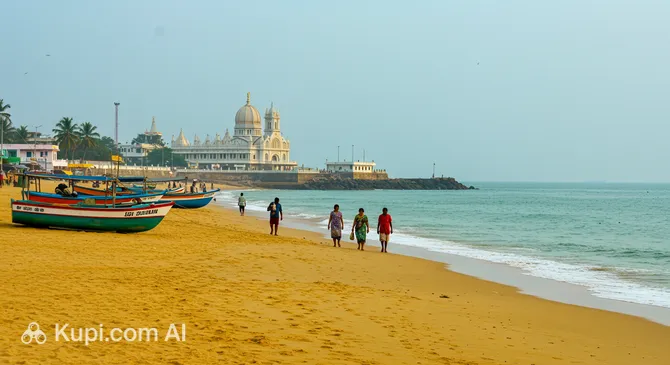
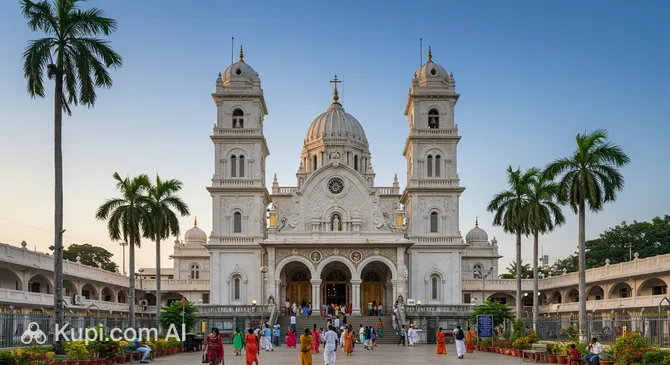
Velankanni is a small but world-renowned pilgrimage center located on the southeastern coast of India, in the state of Tamil Nadu, on the shores of the Bay of Bengal. This town is often referred to as the "Lourdes of the East" due to its main shrine and the spiritual atmosphere that attracts millions of believers and tourists from across the globe.

Velankanni. Illustration.
Source: Kupi.com AI

The main gem of Velankanni is undoubtedly the Basilica of Our Lady of Good Health, a majestic structure famous for its miracles and healings. Beyond the basilica, the town offers visitors a peaceful retreat at Velankanni Beach, where they can enjoy the sea breeze and calming views. It is also worth visiting the museum at the basilica, which houses numerous testimonies of faith and gratitude from pilgrims.

The climate in Velankanni is tropical, with warm weather for most of the year. This town is not just a point on the map, but a place where one can find peace of mind, touch deep faith, and experience the unique culture of Southern India. A trip to Velankanni promises to be an unforgettable experience for those seeking spiritual enrichment or simply wanting to discover something new.

You can find more interesting facts on the history of Velankanni page.

Weather Overview

The weather in Velankanni is typical of a tropical climate: it is warm or hot year-round. Average monthly temperatures range from 25.7°C in January to 30.7°C in June. The hottest months are from April to June, when maximum temperatures can reach 32-33°C. The coolest period, relatively speaking, is in December-January, with average temperatures around 26°C.

Expect high humidity and warm temperatures throughout the year in Velankanni. Precipitation patterns change noticeably: the driest months are February and March (with minimal rainfall, and almost none in March), while the rainy season falls in October and November, when the highest amount of rainfall occurs (up to 14 mm in November) and the maximum number of rainy days is observed (up to 25 days in November). To learn more about weather conditions by month, visit the Velankanni climate page.

Average monthly temperature

Average monthly precipitation

Interesting Facts

Beyond its fame as a spiritual center, Velankanni holds many fascinating secrets and amazing stories that make it a truly unique place. Here are just a few interesting facts to help you better understand the soul of this town:

Basilica of Our Lady of Good Health. Illustration.
Source: Kupi.com AI

Traveler photos:

  • Miraculous Survival during the Tsunami: During the devastating 2004 Indian Ocean tsunami, the Basilica of Our Lady of Good Health became a sanctuary for thousands of people. Although the water flooded the surrounding town, the basilica building itself miraculously remained standing, which many believers consider a direct divine intervention.

  • Unusual Offerings: One of the most striking traditions for pilgrims in Velankanni is offering miniature silver or gold images to the Virgin Mary. These may be figurines of healed body parts (heart, hand, leg), infants (in gratitude for the birth of a child), or even houses and boats. These touching gifts are displayed in a special museum at the basilica.

  • The Sacred Pond and the First Miracle: According to local legends, the history of miracles in Velankanni began in the 16th century with the appearance of the Virgin Mary to a simple Hindu boy who was carrying milk. The Mother of God asked him for milk for her infant, and after that, the milk in the boy's pot did not diminish until he reached home. The site of this first miracle, known as "Mata Kulam" (Our Lady's Tank/Pond), is still revered by pilgrims today.

How to Get There

When planning a pilgrimage or a tourist trip, it is important to think about your route in advance. You can find all ways to get to the city to choose the most convenient option. Velankanni has good transport links with major cities in Tamil Nadu and neighboring regions.

There is no airport in Velankanni itself. The nearest and most convenient for travelers is Tiruchirappalli International Airport (IATA: TRZ), located in the city of Tiruchirappalli. It is approximately 150-160 km from Velankanni by road (about 125 km in a straight line). A taxi ride from this airport will take about 3.5–4 hours. This is the optimal choice for those who want to reduce ground transfer time.

For international travelers arriving on long-haul flights, the main hub is Chennai Airport (IATA: MAA), located in the state capital, Chennai. The distance to Velankanni is over 300 km by highway. From Chennai Airport, Velankanni can be reached by train, bus, or taxi, but the journey will take significantly longer—about 6–7 hours. You can also consider flying into Madurai Airport (IATA: IXM) in the city of Madurai, which is approximately 214 km away.

For clarity, here is summary information on the main airports:

AirportPassenger trafficDistance
Kankesanturai40 000101 km
Tiruchirapalli International Airport1.8 mln125 km
Pondicherry Airport85 000142 km
Madurai Airport1.4 mln214 km
Salem130 132230 km

Railway connection is one of the most popular ways to reach the shrine. The town has its own railway station, Velankanni (station code: VLNK), which is the terminal point of the branch line. Direct trains arrive here from Chennai, Vasco da Gama (Goa), and other major cities. However, the number of direct trains may be limited. As an alternative, you can travel to the major junction station in Nagapattinam, located just 10-12 km from Velankanni. From there, the destination is easily reachable by auto-rickshaw or local bus in 20-30 minutes.

Bus service is also well-developed. TNSTC state buses and private operators run regular services to Velankanni from Chennai, Bangalore, Tiruchirappalli, and other cities in South India. The roads leading to the town are in acceptable condition, making travel by bus or rented car a fairly comfortable option.

Main Attractions

Velankanni, a famous pilgrimage center, offers its guests more than just a visit to its main shrine; it also provides an opportunity to explore other remarkable sites that reveal the rich cultural and spiritual heritage of this region of India. Here are several key attractions worth your attention:

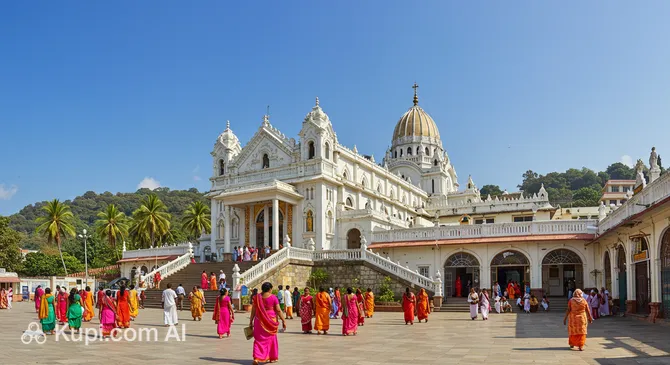
The central place in the spiritual life of Velankanni is occupied by the Basilica of Our Lady of Good Health. This impressive Gothic-style structure, built at the end of the 16th century, is recognized as one of the most important Christian pilgrimage centers in India. The Basilica is renowned for its history of miracles and attracts many pilgrims and tourists who come here seeking healing, consolation, and a spiritual experience. Its majestic architecture and special atmosphere of reverence make visiting the basilica an essential part of any trip to Velankanni.

Basilica of Our Lady of Good Health. Illustration.
Source: Kupi.com AI

Traveler photos:

Located near the basilica is Velankanni Beach. It is a wonderful spot for peaceful relaxation and contemplating the Bay of Bengal. After visiting the shrines, many pilgrims and tourists come here to enjoy the sea breeze, walk along the sandy shore, or simply rest. The beach is especially picturesque at sunrise and sunset, offering tranquil views and opportunities for meditation.

Velankanni Beach. Illustration.
Source: Kupi.com AI

Traveler photos:

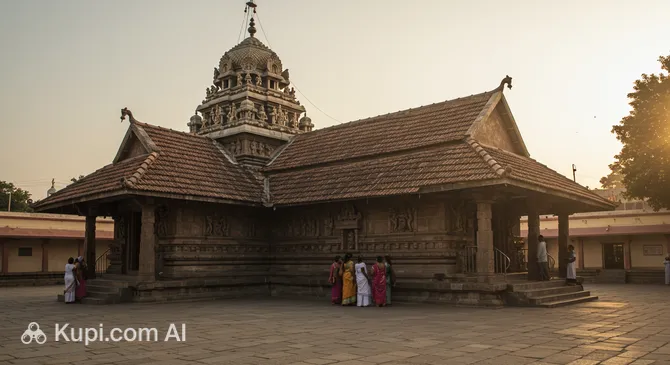
In addition to Christian shrines, significant Hindu temples are located in the vicinity of Velankanni. One such site is the Sri Agneeswarar Temple in Kanjanoor, dedicated to the god Sukra (Venus) and Lord Shiva in the form of Agneeswarar. This ancient temple attracts pilgrims interested in Vedic astrology and Hindu mythology and serves as an important center of worship.

Sri Agneeswarar Temple. Illustration.
Source: Kupi.com AI

Traveler photos:

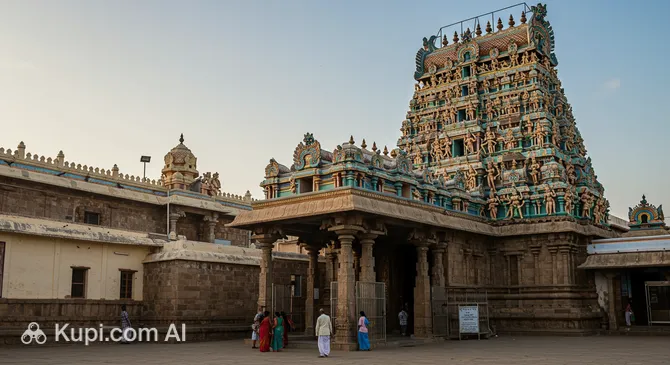
Another notable Hindu temple is the Sri Navaneethaswarar Temple (Sikkal), located in the village of Sikkal. The temple is dedicated to Lord Shiva and is particularly famous because, according to legend, it was here that Lord Murugan received the spear (Vel) from his mother Parvati to defeat the demon Surapadman. This event is celebrated annually with a grand festival that attracts many believers.

Sri Navaneetheswarar Temple (Sikkal). Illustration.
Source: Kupi.com AI

Traveler photos:

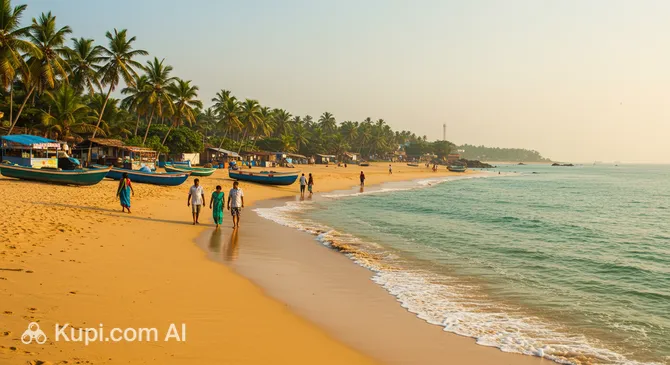
It is also worth noting Karaikal Beach, situated in the neighboring town of Karaikal. It offers a more developed infrastructure for recreation, including Karaikal Beach Park, and can be a good option for a day trip from Velankanni if you wish to change scenery and enjoy different coastal landscapes.

Karaikal Beach. Illustration.
Source: Kupi.com AI

Traveler photos:

Local Cuisine

The culinary scene of Velankanni will delight travelers with authentic flavors of Southern India, with a special emphasis on seafood thanks to its coastal location in Tamil Nadu. Here you can enjoy fresh and fragrant dishes prepared according to traditional recipes passed down through generations.

Be sure to try the fresh seafood dishes—they are the hallmark of Velankanni's cuisine. Fish curry (meen kuzhambu), fried fish (meen varuval), and various shrimp dishes will not leave seafood lovers indifferent. Of course, classic South Indian dishes such as dosa (crispy rice and lentil crepes), idli (steamed rice cakes), and vada (savory lentil donuts) are widely available, served with aromatic sambar (vegetable lentil stew) and chutneys. Various types of rice, like lemon rice, coconut rice, and flavorful biryani, are also popular.

As for drinks, you should definitely try refreshing tender coconut water, which is sold everywhere. Traditional South Indian filter coffee (kaapi) with its rich taste and aroma is a great way to start or end the day. Lassi (yogurt drink) and mooru (salted buttermilk) are also popular. Regarding alcoholic beverages, due to the town's status as a pilgrimage site, the selection may be limited; however, standard Indian and imported beer brands and other drinks can be found in licensed establishments.

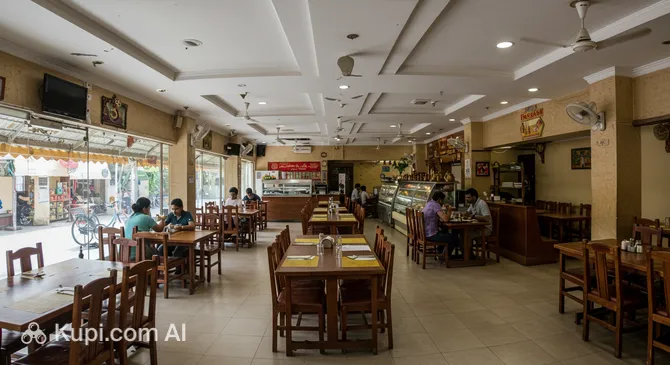
The dining culture in Velankanni is diverse. Locals and tourists can choose between small family-run eateries serving home-cooked food and larger restaurants. Street food is also present, offering quick and tasty snacks. One of the places where you can get acquainted with the local cuisine is Royal Mandi Restaurant, which offers a variety of dishes. Overall, Velankanni's gastronomic scene focuses on the freshness of ingredients and authenticity of flavors, offering many vegetarian options typical of South Indian culinary tradition.

Royal Mandi Restaurant. Illustration.
Source: Kupi.com AI

Traveler photos:

The gastronomic features of Velankanni will attract tourists with their simplicity, freshness, and vibrant flavors. The main focus is on quality local products, especially the freshest seafood, and traditional Tamil recipes. By trying a fragrant fish curry or a crispy dosa, you will feel the true spirit of this coastal town.

Travel Tips

Welcome to Velankanni, a spiritual center and a place of pilgrimage! To ensure your trip to this unique corner of India goes smoothly and leaves only pleasant impressions, we have prepared some practical tips.

  1. Clothing and Essentials: A tropical climate prevails in Velankanni, so choose light, breathable clothing made from natural fabrics. Since this is an important pilgrimage site, especially when visiting the Basilica of Our Lady of Good Health and other religious objects, modest clothing that covers the shoulders and knees is mandatory. Do not forget comfortable walking shoes, a hat, sunglasses, and sunscreen. Mosquito repellent and a universal power adapter for electronics will also come in handy.

  2. Transport in the Town: Velankanni is a relatively small town, and many parts of it can be explored on foot. For longer trips, auto-rickshaws are widely used—they are the most common form of transport. Be sure to agree on the price before the ride. Local buses connecting Velankanni with nearby settlements are also available. Taxis can be found or ordered through the hotel. A rental car is unlikely to be needed for moving within the town itself.

  3. Finance: The official currency is the Indian Rupee (INR). You can exchange currency at banks or authorized exchange offices. Credit cards are accepted in large hotels and some shops, but for small purchases, paying rickshaws, and in small establishments, it is better to always have cash. ATMs are available, but check with your bank before the trip regarding the terms of using cards abroad. Tips are appreciated for good service in restaurants and hotels but are usually not strictly mandatory.

  4. Health and Safety: It is recommended to drink only bottled water. Pharmacies (called "chemist shops") are available, but for serious medical assistance, you may need to go to clinics in larger cities. It is strongly recommended to take out travel medical insurance. Velankanni is considered quite a safe place, especially as a pilgrimage center. However, follow usual precautions: keep an eye on your belongings in crowded places and avoid walking in poorly lit areas after dark.

  5. Communication: The primary language in the state of Tamil Nadu, where Velankanni is located, is Tamil. English is common in tourist areas, hotels, and among the educated population, but not everywhere. Learning a few simple phrases in Tamil (for example, "Vanakkam" – hello, "Nandri" – thank you) will show respect for the local culture. A local SIM card can be purchased with the necessary documents. Wi-Fi is available in many hotels and some cafes.

  6. Local Etiquette: Show respect for local traditions and customs. It is customary to remove your shoes when entering temples and homes. When photographing people, especially in religious places, always ask for permission. Avoid public displays of affection. When communicating with locals, be polite and patient; Indians are generally very hospitable.

  7. What to Avoid: It is categorically not recommended to wear clothing that is too revealing or provocative, especially on the grounds of temple complexes. You should also refrain from consuming alcohol in public places outside specifically designated establishments and from loud, provocative behavior that might offend the feelings of believers or locals.

  8. Special Advice: Velankanni is primarily a place for spiritual enrichment. Its main shrine is the Basilica of Our Lady of Good Health. If you plan to attend mass, check the schedule in advance. The town can be very crowded during major religious festivals, such as the Feast of the Nativity of Mary in August-September. During this period, book your accommodation and transport well in advance.

We hope these tips help you better prepare for your trip and enjoy every moment of your stay in amazing Velankanni. We wish you an unforgettable and spiritually uplifting journey!

Entertainment & Nightlife

Velankanni, primarily known as a world-class pilgrimage destination, offers its guests an atmosphere of tranquility and spirituality that extends into the evening hours. If you are looking for vibrant nightlife with a multitude of clubs, bars, and concert venues, Velankanni may not meet those expectations. However, the town offers its own, more serene options for evening leisure, focused around leisurely dinners and walks.

The core of evening entertainment in Velankanni consists of restaurants and cafes serving local and Indian cuisine. Many of these stay open until late evening, allowing pilgrims and tourists to refuel after a busy day. Some hotels may also feature their own restaurants or lounge areas where you can spend time in a more relaxed setting. The atmosphere in most establishments is family-friendly and calm, without strict dress codes. There are no specific nightlife districts here; most venues are concentrated along the main streets or near hotels.

Among the places where you can enjoy a pleasant evening over dinner are the Royal Mandi Restaurant, which offers a diverse menu, and Mint Max Restaurant, where you can also enjoy delicious food. Prices in Velankanni restaurants are generally moderate. It is best to arrive for dinner between 7:00 PM and 9:00 PM, as some establishments may close relatively early.

Royal Mandi Restaurant. Illustration.
Source: Kupi.com AI

Traveler photos:

For getting around the town in the evening, auto-rickshaws remain available. It is recommended to agree on the fare in advance. Velankanni is considered a fairly safe town, especially in the areas adjacent to the Basilica and major hotels. However, as with everywhere, basic precautions should be taken, particularly if walking alone late at night. To call a taxi, you can contact the reception of your hotel.

Regarding daytime entertainment, in addition to visiting the main shrine, the Basilica of Our Lady of Good Health, and other significant temples like the Sri Agneeswarar Temple or Sri Navaneethaswarar Temple (Sikkal), you can spend time at Velankanni Beach. You might also consider visiting Karaikal Beach Park if it is within easy reach. The town is not famous for a large number of museums or theaters; the primary focus here is spirituality and peaceful rest.

Parks & Museums

Velankanni, being primarily known as a spiritual center, offers its guests not only places for prayer and solitude but also the chance to enjoy natural beauty and immerse themselves in the rich culture and history of the region. Although the town does not abound with traditional parks and museums in the classical sense, its unique attractions and coastal areas more than compensate for this.

For those seeking outdoor relaxation and fresh sea air, Velankanni and its surroundings offer several notable spots. Velankanni Beach is a popular place for walks, especially at sunrise and sunset, where you can watch fishing boats and enjoy the serenity of the Bay of Bengal. Nearby is Karaikal Beach, which attracts visitors with its wider sandy strip and is an excellent place for family vacations. If you prefer a more organized space, Karaikal Beach Park offers a well-maintained area for relaxation and play, combining proximity to the sea with park elements.

Karaikal Beach. Illustration.
Source: Kupi.com AI

Traveler photos:

Regarding museums, Velankanni does not have many in the traditional format. However, the main cultural and historical "open-air museum" and the heart of the city is undoubtedly the Basilica of Our Lady of Good Health. It is not just a place of worship but a living testimony of faith, history, and unique architecture that attracts millions of pilgrims. Inside and around the basilica, you can see many artifacts, offerings, and elements telling the story of miracles and the history of this holy site. Some pilgrimage centers of this scale also have small exhibitions dedicated to the shrine's history.

Basilica of Our Lady of Good Health. Illustration.
Source: Kupi.com AI

Traveler photos:

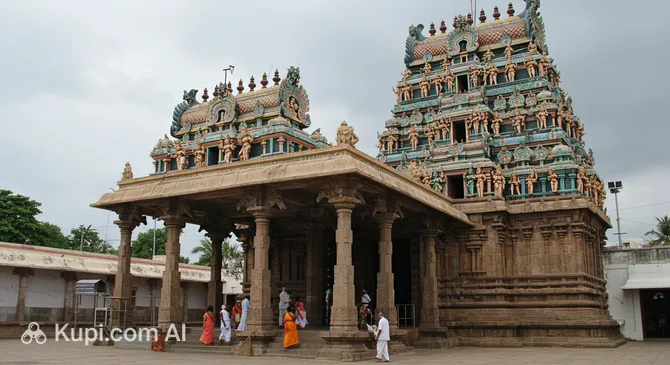
The rich historical and architectural heritage of Velankanni and its surroundings is also represented by numerous temples. For example, the Arulmigu Thyagaraja Swamy Temple in Tiruvarur (near Velankanni) is one of the most important Shaivite temples, with impressive architecture and a rich history. Another significant site is the Murugan Temple in Ettukudi, dedicated to the god Murugan, which also attracts pilgrims and admirers of temple architecture. These places allow for a deeper understanding of the cultural and religious traditions of the region.

Arulmigu Thyagaraja Swamy Temple. Illustration.
Source: Kupi.com AI

Traveler photos:

For a more authentic immersion into the culture of Velankanni, we recommend paying attention to the lesser-known but equally colorful local shrines often found in residential neighborhoods. Observing the daily life and rituals of locals, especially on the coast, can also be a unique cultural experience. Visiting local markets will introduce you to the crafts and everyday life of this amazing corner of India.

Getting Around

Velankanni is a small town, so the public transport system here is quite simple and oriented toward the basic needs of residents and numerous pilgrims. The main ways to get around are buses and auto-rickshaws. There are no subways, trams, or trolleybuses in the town, which is typical for settlements of this size in India.

Buses are the most budget-friendly way to travel between Velankanni and neighboring towns such as Nagapattinam or Karaikal, as well as for trips to nearby villages. These can be both state-run and private carriers. Within the town itself, the bus network is not very extensive, as many distances can be covered by other means. Fares are usually paid in cash to the conductor directly on the bus upon boarding or during the journey; they will issue you a ticket. Schedules may not be strictly fixed, but buses generally run with sufficient frequency during daylight hours.

Auto-rickshaws (often called tuk-tuks) are undoubtedly the most common and flexible mode of transport for moving directly within Velankanni. They are ideal for short trips to the Basilica of Our Lady of Good Health, the beach, hotels, or local markets. A key point when using an auto-rickshaw is to always agree on the fare before starting the ride. Meters, if present, are rarely used, especially with tourists. The price will depend on the distance, time of day, and your bargaining skills. Sometimes you can find "shared autos"—auto-rickshaws that pick up several passengers along a specific route, which can be slightly cheaper.

Among alternative ways of getting around, taxis are worth mentioning. They are less common than auto-rickshaws and cost more but can be convenient for more comfortable trips, especially if you are traveling with luggage or over longer distances in the surroundings. Taxis can be ordered through your hotel or found at specialized stands. Given the compactness of Velankanni, many attractions, especially in the central part around the Basilica, are within walking distance. Renting bicycles or scooters is not a widespread service, but if you manage to find such an opportunity, it can be a pleasant way to explore the town and its outskirts. There are no car-sharing systems in Velankanni.

A few practical tips for tourists: for paying in buses and auto-rickshaws, always try to have small Indian Rupee notes with you, as drivers and conductors may not always have change for large banknotes. Public transport usually starts operating early in the morning and ends in the evening. Auto-rickshaws are available almost around the clock; however, their numbers may decrease at night, and the cost of the trip may increase. Be prepared for the fact that drivers do not always speak English; it is helpful to have your destination name written on paper or show it on a map on your phone. Keep in mind that during major religious festivals and holidays, the transport system in Velankanni experiences significant strain, which can lead to higher prices and difficulties in finding available transport.

Accommodation

In Velankanni, as a popular pilgrimage center, there is a wide range of accommodation options to suit the needs of various travelers. You can find everything from budget guesthouses and lodges geared toward pilgrims to comfortable mid-range hotels. For those seeking a higher level of service, resort hotels are available. In recent years, more offers for renting apartments and rooms have appeared, which can be a convenient option for families or long stays.

Most accommodation options are conveniently located in close proximity to the main shrine—the Basilica of Our Lady of Good Health—and along the main streets leading to it and to Velankanni Beach. Staying in these areas provides easy access not only to religious sites but also to local shops and restaurants. You can also find lodging slightly away from the busy center, which may offer a calmer and more secluded atmosphere.

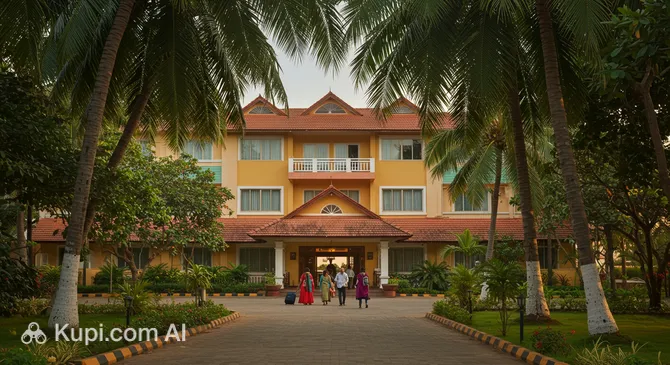
Among specific accommodation options, you might consider, for example, RK Resorts or Seagate Church View Resort. These establishments offer various room categories and often feature additional amenities like on-site restaurants or assistance with organizing tours, making your stay in Velankanni more comfortable.

RK Resorts. Illustration.
Source: Kupi.com AI

Traveler photos:

The price range for housing in Velankanni varies from very affordable in simple guesthouses to mid-range and above in more prestigious hotels and resorts. It is highly recommended to book your accommodation in advance, especially if your trip coincides with major religious holidays (such as the annual feast for the Nativity of Mary in August-September) or falls on a weekend when the flow of pilgrims to Velankanni increases manifold. The most common booking methods are popular international and Indian online platforms, as well as contacting hotels directly via their websites or by phone.

Nearby Cities

For those who wish to explore the surroundings, Velankanni serves as an excellent starting point for day trips to several interesting nearby locations:

For instance, Nagapattinam, located just 10 km away, attracts visitors with its ancient history as a port city and the presence of significant temples. A trip to Tharangambadi (formerly known as Tranquebar), about 38 km away, allows you to dive into the colonial past by exploring the well-preserved Danish fort, Dansborg. For nature and bird-watching enthusiasts, Vedaranyam (about 34 km away) is an interesting destination, known for its salt lagoons and proximity to the Point Calimere Wildlife and Bird Sanctuary.

CityPopulationDistance
Andanappettai8 5199 km
Nagapattinam102 90510 km
Vettaikkaraniruppu9 86112 km
Talainayar Agraharam15 35816 km
Adiyakkamangalam8 77621 km

These nearby destinations provide a more complete picture of the diverse culture, history, and natural landscapes of this region of India, complementing the experience of staying in Velankanni.

Shopping & Souvenirs

Shopping in Velankanni has its own unique character, closely linked to its status as one of India's major pilgrimage centers. You are unlikely to find luxury shopping galleries or boutiques of world-famous brands here. Instead, the town offers a rich selection of religious items, unique souvenirs, and products by local artisans that will serve as wonderful reminders of your trip.

The main retail outlets and street stalls are concentrated on the streets immediately adjacent to the town's main shrine—the Basilica of Our Lady of Good Health. Bustling trade also takes place along the road leading to Velankanni Beach. This is where you can find the greatest variety of goods offered to pilgrims and tourists. There are no specialized shopping streets with specific names; shopping here is more spontaneous and very colorful.

There are no large modern shopping centers in Velankanni. All trade is concentrated in numerous small shops, stalls, and tents. This creates a special atmosphere where you can leisurely stroll, picking out mementos and chatting with sellers.

While Velankanni may not have one large centralized market in the classical sense, many small vendors and street stalls, especially near the Basilica, create the atmosphere of a vibrant eastern bazaar. Here you can buy fresh flowers for offerings, fruit, local sweets, as well as a wide range of souvenirs and religious goods. It is a great place to feel the local color.

As souvenirs from Velankanni, people most often bring home items related to its spiritual significance. These can be statues of the Virgin Mary, crosses, rosaries, icons, blessed candles, and oil. Hand-crafted items are also popular: jewelry and crafts made from sea shells, products from palm leaves, traditional Indian fabrics, shawls, and small home decor items. Sometimes you can find interesting local spices or Ayurvedic products.

Most shops and stalls in Velankanni, especially those geared toward pilgrims, are open daily. Usually, they open around 9:00-10:00 AM and close by 8:00-9:00 PM. During major religious festivals and holidays, working hours may be extended. The primary method of payment is cash (Indian Rupees). Credit cards may be accepted in some larger shops within hotels, but in small stalls and street outlets, it is better to always have a sufficient amount of cash on hand.

The possibility of Tax Free shopping (VAT refund) for tourists in Velankanni stores is generally not provided. This service is more common in major international airports, large shopping malls, and authorized stores in India's megacities.
Nearby cities

Reached the end of the page?

That means the route is fully explored