Support

Haliwen Airport

About the Airport

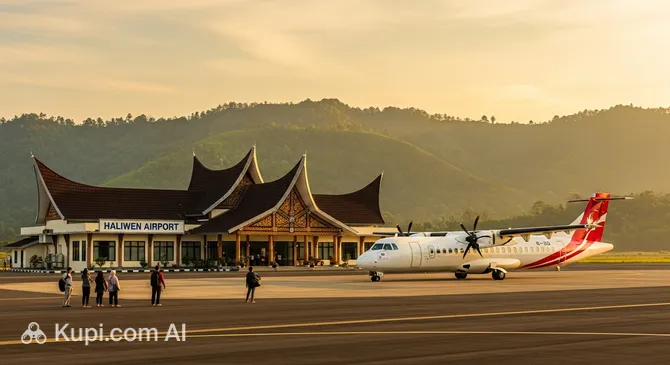
Haliwen Airport. Source: Kupi.com Binoculars

A. A. Bere Tallo Airport, formerly known as Haliwen, is not merely a transport hub but a true aerial gateway to the border region of Indonesia. Located just a few kilometers from the city center of Atambua, this compact airport welcomes travelers with views of the picturesque green hills of Timor Island. For many tourists, this is where their introduction to the unique culture of the Belu Regency and their exciting journey to the border with East Timor begins.

IATA Code ABU
ICAO Code WATA
City Atambua
Distance to center ~4 km
Status Domestic
Annual Passengers ~11,000 (2024)
Schedule -

Despite its modest size, Atambua Airport plays a crucial role in the life of the region and offers guests a number of advantages:

  • Strategic Location: The airport is located in close proximity to the main Motaain border crossing, making it an ideal starting point for those planning to visit neighboring East Timor by land.
  • Scenic Approach: Flying into Atambua offers unforgettable impressions—planes descend over the rugged terrain and savannas of West Timor, allowing you to see the beauty of the island from a bird's-eye view.
  • Comfort and Tranquility: Thanks to low passenger traffic, a calm atmosphere reigns here. The absence of hustle and long queues allows you to go through all pre-flight formalities as quickly and comfortably as possible.
  • Renovated Terminal: After reconstruction, the passenger terminal has become more convenient and modern while preserving elements of local flavor, creating a pleasant first impression of the city.

Contact Information

Finding direct contacts for a small regional airport, such as Haliwen in the city of Atambua, can be challenging. Most issues are resolved through airlines or on-site. Below is the most up-to-date information gathered.

  • Official Airport Website: Haliwen Airport (ABU) does not have its own official website. To check flight status and obtain flight information, it is recommended to use the websites of airlines operating flights to Atambua.
  • Information Desk Phone: A direct public telephone number for the airport is not published. For all questions related to booking, schedules, and tickets, please contact your airline directly.
  • Airport Address: Manumutin, Kota Atambua, Kabupaten Belu, Nusa Tenggara Timur, Indonesia.
  • Email: A dedicated email address for passenger communication is not provided.
  • Airport Social Media: The airport does not maintain official social media accounts. News and updates related to flights are best tracked on the pages of air carriers.
  • Lost Baggage Information: If your luggage has been lost or damaged, you must immediately contact the Lost and Found service of your airline. Airline representative counters are usually located in the arrival hall.
  • Passenger Support Contacts: Primary support for passengers (check-in, help with tickets, assistance) is provided by airline staff. For general questions related to being in the terminal, you can approach any airport employee.

How to Get to the Airport

Haliwen Airport (ABU) is located very close to the center of Atambua, so getting there is easy and does not take much time. A trip by car from central districts usually takes just 10-15 minutes, depending on traffic conditions.

The most common and convenient way to get to the airport is by taxi or a more exotic option for tourists—motorcycle taxi (ojek). A car can be ordered via hotel reception, which is the most reliable method, or hailed on the street. Important tip: always agree on the trip cost with the driver in advance, as not all cars are equipped with meters. A taxi ride will cost approximately 50,000 – 100,000 Indonesian Rupiah, while an ojek will be significantly cheaper.

Regarding public transport, there are no regular city buses, trains, or metro lines in Atambua going to the airport. However, local minivans known as "bemo" operate around the city. This is the most budget-friendly way to travel, but it can be inconvenient for travelers with large luggage and requires knowledge of the routes. This option is more suitable for those seeking an authentic experience and ready for an adventure.

For maximum comfort, especially if you are traveling as a group or with family, you can rent a car. In Indonesia, and specifically in Atambua, car rentals often come with driver services, which eliminates the need to navigate unfamiliar roads. Additionally, many hotels offer an organized transfer service to the airport. This is slightly more expensive than a taxi but guarantees a fixed price and timely car arrival.

If you are driving to the airport in a rental car, parking is available on the premises. Given the compact size of Haliwen Airport, the parking zone is located in immediate proximity to the terminal. The cost of parking is generally low, making this option quite affordable.

Terminals and Map

Haliwen Airport (ABU) is a small regional airport, so its structure is very simple and intuitive. It consists of one passenger terminal that handles all domestic flights—both departures and arrivals. Thanks to its compact size, navigating it causes no difficulties even for those visiting for the first time.

The terminal building is a single-story structure where all key zones are arranged in a logical sequence. Upon entering, you immediately find yourself in the general hall with check-in counters. After receiving a boarding pass and checking in luggage, passengers proceed to pre-flight security screening, followed by a small waiting room with a boarding gate. The arrival zone is located in the same part of the building and includes a baggage claim belt and an exit to the general hall for greeters.

Since there is only one terminal, there is no need for transfers between terminals. All operations are performed within a single building. The airport's equipment is basic and corresponds to its size: there are airline counters, a waiting hall, restrooms, and usually a few small kiosks with beverages and snacks. Do not expect large shops or a variety of cafes here.

Check-in and security procedures at Atambua airport usually go very quickly due to low passenger traffic. Nevertheless, it is recommended to arrive at the airport generally 1.5–2 hours before your flight's departure to complete all formalities calmly and without rushing. It is practically impossible to get lost in Haliwen Airport; simply follow the signs or the flow of other passengers.

Airport History

Haliwen Airport (ABU), officially known as A. A. Bere Tallo Airport, is a key transport hub for the city of Atambua and the border region of Indonesia. Its history is closely tied to the development of this strategically important territory located near the border with East Timor. Although the exact founding date of the original airfield may be hard to determine, its modern history as a civil facility begins in the second half of the 20th century.

One of the most significant periods in the airport's history occurred in the late 1990s. Due to events in neighboring East Timor, Haliwen Airport became a crucial logistics center for humanitarian missions and international organizations. It received aircraft with humanitarian aid and provided transport support, underscoring its strategic importance not only for the region but also internationally.

In recent decades, the airport has undergone significant modernization to meet the growing needs of the region. A key stage was the reconstruction in the 2010s, during which a new, more spacious and modern passenger terminal was built, and the runway was extended. These improvements allowed for the accommodation of larger turboprop aircraft, such as the ATR 72, which significantly improved transport accessibility to Atambua and contributed to the development of local tourism and the economy.

Interesting fact: the airport was renamed in honor of Colonel A. A. Bere Tallo, a local hero and figure, as a tribute to his contribution to the development of the region. Today, Haliwen Airport is not just an aerial gateway but also a symbol of growth and a vital link connecting an isolated border district with the rest of Indonesia, playing an indispensable role in the social and economic life of its residents.

Services and Facilities

Haliwen Airport (ABU) is a compact regional air terminal offering passengers basic amenities necessary for a comfortable wait for their flight. Despite its modest size, you can find all the essentials here.

The terminal features several small cafes and eateries where you can try dishes of Indonesian cuisine, have coffee, or enjoy refreshing beverages. There are also a few kiosks selling souvenirs, local crafts, and daily necessities. The selection of shops is limited, so it is better to go into the city for major purchases.

A general waiting hall is equipped for passengers. Specialized VIP halls or lounges for premium cardholders are generally absent. Access to free Wi-Fi may be unstable or limited, so it is better to use mobile data for a reliable connection. There are not many power outlets for charging gadgets, so we recommend bringing a portable power bank.

Among other useful services, the airport has a first aid station. There are no bank branches or currency exchange points on the premises, so you should take care of cash in advance. Passengers with reduced mobility can count on staff assistance when moving through the terminal and boarding—you need to notify your airline in advance for this. There are no special playrooms provided for families with children.

There are no hotels directly at the airport, but various accommodation options can be found in the city of Atambua, located nearby. Business centers and conference rooms are absent at Haliwen Airport, as it is primarily oriented toward serving tourist and regional flights.

Where to Eat

Haliwen Airport (ABU) in Atambua is a small regional airport, so the choice of dining establishments here is modest but allows you to experience local cuisine. Do not expect large food courts with international chains; however, you will be able to have a tasty and inexpensive snack before departure.

The main dining points are located in the main and only terminal, usually in the public zone (landside) before passing security control. These are a few small cafes or kiosks, which locals call "warung". A simple and friendly atmosphere reigns here, and service is usually quick.

Be sure to try classic Indonesian cuisine. Most often, the menu features Nasi Goreng (fried rice with vegetables and chicken or egg) or Mie Goreng (fried noodles). These are hearty and delicious dishes, ideal for a full lunch. For a quick snack, you can grab local pastries, snacks, or drink a cup of aromatic Indonesian coffee.

Regarding special dietary needs, finding specialized vegan, gluten-free, or certified Halal menus here is unlikely. However, most Indonesian dishes are easily adaptable: for example, you can ask for Nasi Goreng without meat. Since Indonesia is a predominantly Muslim country, most establishments prepare food in accordance with Halal principles, even if they do not display an official certificate.

Prices in the cafes at Haliwen Airport are very affordable and comparable to city prices. Opening hours are usually tied to the flight schedule: they open in the morning before the first departures and close after the last plane leaves. If you are in a hurry, coffee with pastries will be the best choice. If you have time, a full lunch of local dishes will be a great conclusion to your journey through Atambua.

Travel Tips

When planning a trip through Haliwen Airport (ABU) in the city of Atambua, use these tips to make your journey as comfortable as possible. This small regional airport is the gateway to unique corners of West Timor in Indonesia, and proper preparation will help avoid unnecessary stress.

Arrival Time at the Airport: For domestic flights, it is recommended to arrive at Haliwen Airport at least 1.5–2 hours before departure. Although the airport is small and queues are rare, extra time will allow you to check in, drop off luggage, and pass pre-flight screening without rushing.

Check-in and Security: The check-in and screening process usually goes quickly here. To speed it up, have your passport and boarding pass ready. If you are traveling light and have checked in online (if available for your airline), you can proceed directly to the security checkpoint.

Seat Selection: When flying from or to Atambua, a window seat will offer you unforgettable views of the coast and hilly landscapes of Timor Island. If freedom of movement around the cabin is more important to you, choose an aisle seat.

Hand Luggage: Standard security rules apply here as well. Liquids can be carried in containers of no more than 100 ml, packed in a single transparent bag. Ensure there are no sharp objects in your hand luggage. Keep all valuables, documents, gadgets, and necessary medications with you at all times.

Connecting Passengers: Haliwen Airport primarily serves domestic flights. If you have a connecting flight in another city in Indonesia, you will likely need to collect your luggage and check in again for the next flight. carefully plan the time between connecting flights, allowing at least 2-3 hours.

Customs Control: Customs formalities take place at the first airport of arrival in the country. Since Atambua handles mainly domestic flights, upon arrival here, you will most likely just need to collect your luggage from the claim belt.

Saving Time and Money: To save money, book tickets in advance and monitor baggage weight to avoid excess fees. Bring an empty water bottle that can be filled with drinking water after passing security control; this will save you from spending on drinks at the airport.

In Case of Flight Delay: In the event of a flight delay or cancellation, contact your airline counter for the latest information. In small airports like Haliwen, information on the screens may be updated with a delay. Ensure your phone is charged, and have a book or other entertainment in your hand luggage to pass the wait.

Reached the end of the page?

That means the route is fully explored