Support

Naha

About the Airport

Naha Airport (NAH) is not just a runway, but the starting point for exploring the unique Sangihe Archipelago. Located on the island of the same name, it serves as a key transport hub connecting these remote yet incredibly picturesque corners with the rest of Indonesia. For travellers craving adventure off the beaten path, the acquaintance with volcanoes, a rich underwater world, and the distinctive culture of the islands begins right here.

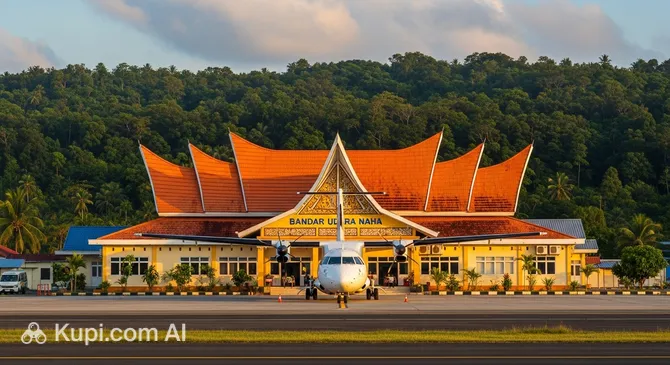
Naha. Illustration.
Source: Kupi.com AI

Below is the essential information about the airport to help you plan your trip.

PropertyValue
IATA CodeNAH
ICAO CodeWAMH
CityTahuna
CountryIndonesia
TimezoneAsia/Makassar
ScheduleOnline Timetable

Features of Naha Airport

Naha Airport is a small regional airport, and this is its main advantage. There is no hustle and bustle or queues typical of large international hubs here. The check-in and boarding process is fast and calm, allowing you to start or end your journey without unnecessary stress.

The main value of the airport lies in its role as a connecting link. It provides regular air service, primarily with the city of Manado on Sulawesi Island, which is the only fast alternative to multi-hour ferry crossings. For locals and the few tourists, this is a vital artery supporting the economy and accessibility of the Sangihe Islands. The landing or take-off here is an experience in itself, as the window offers breathtaking views of the ocean and the green hills of the island.

Contact Information

Below you will find contact information for Naha Airport (NAH). Please note that this is a small regional airport, so some direct contacts may be unavailable, and most issues are resolved through the airlines.

  • Official Website: Currently, Naha Airport does not have a separate official website. We recommend checking flight status and other information on the websites of airlines operating flights to this region.
  • Inquiry Service Phone: There is no direct public telephone number for the airport. For all questions related to flights, schedules, or tickets, please contact your airline directly.
  • Address: The airport is located at: Naha, Kecamatan Tabukan Utara, Kabupaten Kepulauan Sangihe, Sulawesi Utara, Indonesia.
  • Email and Social Media: There are no official social media accounts or a public email address for contacting the airport administration.
  • Lost Luggage Information: If your luggage has been lost or damaged, you must immediately contact the Lost & Found service of your airline. Airport staff do not handle these issues directly.
  • Passenger Support Service: Assistance to passengers regarding check-in, boarding, and other service aspects is provided by airline representatives at the airport.

How to Get to the Airport

Getting to the airport from the city centre of Naha is not difficult, as there are several convenient options suitable for any budget and travel style. The trip from the central part of the city usually takes from 20 to 40 minutes depending on the chosen transport and traffic situation.

The most budget-friendly way to get to the terminal is public transport. Local buses or route taxis (known as "bemo") run along the main roads and can drop you off in the airport area. This is an excellent option for those travelling light and looking to save money. The fare is minimal, but you should allow extra time for waiting and possible stops along the way.

For those who value comfort and speed, the optimal choice would be a taxi or the popular motorcycle taxi (ojek) in Indonesia. This is one of the fastest and most direct ways to get to the airport, although for a trip with large luggage, it is better to choose a car taxi. The trip will cost more than by bus but ensures maximum comfort. You can also book a private transfer in advance so that the driver meets you at the specified location at the appointed time.

If you plan to actively move around the island and explore its surroundings, it is worth considering renting a car or scooter. Many rental companies offer a vehicle return service right at the airport, which is very convenient before departure. For those arriving at the airport in their own or rented car, there is parking where you can leave the car for both short and long periods.

Terminals and Map

Naha Airport (NAH) is a small air harbour serving the city of Tahuna and the Sangihe Islands in Indonesia. Unlike its large Japanese namesake, this airport is a Class III regional hub and is distinguished by an intimate atmosphere, simplicity, and lack of bustle.

Number of Terminals and Their Purpose

The airport has only one compact passenger terminal. This small building serves all arriving and departing flights. The terminal is oriented exclusively towards domestic regional transport, linking the islands with the major hub in Manado (North Sulawesi) and neighbouring islands (Miangas, Siau). Small turboprop aircraft, such as the ATR-72 of Wings Air, are serviced here.

Airport Map and Navigation

The terminal is designed as simply and functionally as possible; getting lost here is impossible:

  • Public Zone: A small hall with check-in counters located immediately at the entrance.
  • Departure Zone: Located immediately after the security checkpoint. This is a common waiting room with seats and an exit to the apron.
  • Arrival Zone: A separate room where passengers enter immediately after disembarking from the aircraft.

Transfers Between Terminals

Since the complex consists of a single small building, there is no need for transfers or long walks. The path from the airport entrance to the boarding gate is only a few dozen metres. Boarding and disembarking of passengers are carried out on foot: from the terminal building to the aircraft, you need to walk across the airfield apron accompanied by staff.

Departure and Arrival Zones

The Departure Zone is equipped with a basic set of amenities. There are several Check-in counters and a security control point. The waiting room is modest but clean, often with natural ventilation or air conditioning.

The Arrival Zone is designed for quick baggage claim. Due to the small size of the airport, there are usually no complex baggage carousels here — luggage is often delivered manually or on a short belt a few minutes after the aircraft lands.

Terminal Features

The main feature of Naha Airport is its picturesque location. The terminal is surrounded by tropical greenery and mountains, and during take-off and landing, breathtaking views of the sea and volcanic landscapes of the Sangihe Archipelago open up. The infrastructure is minimalist: inside there may be a small kiosk with water and snacks, as well as restrooms, but do not expect full-fledged shops or restaurants.

Time for Check-in and Security Procedures

Thanks to low passenger traffic, all formalities take a minimum of time:

  • Check-in: Usually passes without long queues and takes 5–10 minutes.
  • Security Check: Security screening is carried out quickly directly before entering the "sterile" waiting area.

Nevertheless, airlines recommend arriving at the airport 1–1.5 hours before departure. Check-in usually closes 30–45 minutes before departure, and late passengers may not be allowed on the flight.

Navigation Recommendations

The airport is intuitive. Upon arrival, simply follow other passengers to the baggage claim area. On departure, keep your boarding pass handy. Note that there is no Wi-Fi or charging stations in the terminal, so it is better to take care of communication and gadget battery levels in advance.
Airport History

The history of Naha Airport (NAH) is inextricably linked with the development of transport accessibility in remote regions of Indonesia. Unlike large international hubs, this air harbour was created not for world records, but as a vital artery connecting the Sangihe Archipelago with the "mainland" — Sulawesi Island.

Establishment and Development

The airport was founded in the second half of the 20th century as part of Indonesia's state programme for the development of so-called "pioneer aviation" (perintis). This initiative was intended to ensure communication with remote and border territories of the country. Initially, the infrastructure consisted of a simple runway capable of receiving only light aircraft, such as the DHC-6 Twin Otter and C-212. The opening of the airport was a real breakthrough for local residents, reducing the journey to the provincial capital, Manado, from long hours of sea travel to a short flight.

Modernisation Stages

A major milestone in the airport's history was the capital renovation and extension of the runway. These works allowed the airport's class to be upgraded and prepared it to receive more modern and spacious turboprop liners, such as the ATR-72. The transition to new types of aircraft significantly increased passenger traffic and the reliability of air services, making flights more regular and less dependent on minor weather troubles.

Natural Challenges and Historical Events

In the chronicle of Naha Airport, a special place is occupied by events dictated by the forces of nature. The airport is located in close proximity to the active volcano Awu (Gunung Awu). In the history of the harbour's operation, there have repeatedly been periods of temporary closure due to volcanic activity and ash emissions, which posed a threat to aircraft engines. These events taught local services to react promptly to changes in the situation, making the airport an example of resilience in the face of the elements.

Significance and Interesting Facts

Naha Airport (NAH) is one of the northernmost airports in Indonesia, playing a strategic role in the border zone near the Philippines. An interesting fact is that due to the coincidence of names, tourists often confuse it with the huge Naha Airport in Japan. However, for the residents of the Sangihe Islands, this small airfield is much more important than any global giant, as it remains the only way for fast delivery of urgent cargo and medical evacuation.

Services and Facilities

Naha Airport (NAH) is a small regional airport serving as the air gateway to the city of Naha and its surrounding territories in Indonesia. Being a compact transport hub, it provides passengers with a basic set of services necessary for a comfortable wait for departure on local routes. The infrastructure here is simple and functional, created to ensure the key needs of travellers.

The airport terminal houses a general waiting hall where you can sit before boarding. Dining and shopping opportunities are modest: usually, this is a small café or kiosk where you can purchase drinks and light snacks. Passengers should note that there are no large shops or Duty-Free zones here, so it is better to purchase all necessary goods in advance.

Among the main amenities are restrooms. Specialized services, such as currency exchange points, ATMs, or branches of major banks, are generally absent on the territory of such a small airport. It is recommended to resolve all financial matters in the city before the trip. Wi-Fi access and the availability of stations for charging electronics are not guaranteed, so it is better to have a portable charger with you.

Passengers with children or travellers with limited mobility should contact their airline in advance to clarify details of possible assistance at the airport. Overall, Naha Airport effectively fulfils its main task — linking the region with other parts of the country, offering simple and understandable service for transit.

Where to Eat

The gastronomic infrastructure of Naha Airport (NAH) fully corresponds to its status as a small regional hub. Here you will not find chain coffee shops, branded restaurants, or extensive food courts. Instead, passengers are offered a modest but authentic experience typical of remote corners of Indonesia. Dining here is organised simply and functionally, with an emphasis on a quick snack before departure.

Main Establishments and Their Location

Most food outlets are located in the public zone (landside), before passing security screening. Usually, these are small kiosks or family cafés, which locals call "warungs". They are located near the terminal entrance or in the parking lot. Here you can find simple plastic furniture and a homely atmosphere.

In the sterile departure zone (airside), the choice is extremely limited. As a rule, only one small counter operates there, selling bottled water, sweet drinks, chips, and packaged biscuits. Therefore, if you plan to have a snack, it is better to do so before passing security control.

Local Cuisine and Specialities

Since the airport serves the North Sulawesi region, the assortment of local kiosks often includes dishes with a characteristic local flavour. If you are lucky enough to be here in the morning hours, it is worth trying:

  • Nasi Kuning: Yellow rice with turmeric, often served for breakfast in portions wrapped in banana leaves or paper cones.
  • Local Pastries: Popular items include panada (fried pies with spicy fish filling) and lalampa (glutinous rice rolled with fish, grilled).
  • Fried Bananas (Pisang Goreng): A traditional Indonesian dessert, which may be served here with spicy sambal sauce — an unusual but popular combination in this region.

Dietary Features

Due to the limited menu, there are few specialised options for strict diets:

  • Halal: Indonesia is a country with a predominantly Muslim population, so the majority of offered dishes (rice, chicken, pastries) comply with Halal standards. However, North Sulawesi is a region with a mixed religious composition, so clarifying ingredients (especially regarding non-halal meat) is always appropriate.
  • Vegetarians and Vegans: The choice will be limited to fried tofu, tempeh, or fruit if available. Packaged snacks are the most reliable option.
  • Gluten-Free: Finding guaranteed gluten-free dishes is difficult. It is recommended to carry your own supply of food, as local snacks often contain flour or soy sauce.

Prices and Opening Hours

The pricing policy at Naha Airport is very democratic. The cost of food and drinks is practically no different from prices in the city of Tahuna.
Average Bill: A full snack with coffee will cost approximately 20,000 – 50,000 Indonesian Rupiah (very budget-friendly by international standards).
Opening Hours: Establishments open shortly before the first flight (usually early in the morning) and close immediately after the departure of the last plane, often by noon or early evening.

Recommendations for Passengers

For a quick snack, a cup of hot Indonesian coffee (kopi) and fresh pastries in the check-in area are perfect. If you want to have a substantial lunch, it is strongly recommended to do so in the city of Tahuna before leaving for the airport. The choice of dishes in the city is much wider, and the quality of food is higher. It is also important to remember that small airport kiosks only accept cash, so take care of small change in advance.

Tips for Travellers

To ensure your journey through Naha Airport goes smoothly and without unnecessary stress, we have prepared several practical tips. This small regional airport serving domestic flights within Indonesia has its own peculiarities; knowing them will make your trip more comfortable.

Arrival Time and Check-in. For domestic flights, arriving at the airport 1.5-2 hours before departure is sufficient. The terminal here is very compact, so navigation will not take much time. You can check in online, but for local airlines like Wings Air, it is often easier and faster to check in at the counter, especially when checking in luggage.

Special Attention — Luggage! Many routes from Naha are served by small turboprop aircraft (ATR type). This means that baggage allowances are significantly stricter than on large liners. The free allowance may be as low as 10 kg. Be sure to check your airline's rules in advance to avoid unpleasant surprises and extra charges at the airport.

Passing Security. The security control procedure here is standard but usually goes faster than in large airports. Prepare liquids in advance (in containers up to 100 ml, placed in a transparent bag) and be ready to take out your laptop and other electronics from your bag. Thanks to the small size of the terminal, the path from the entrance to the boarding gate takes mere minutes.

Tips for Transit Passengers. If you have a connection in Naha, do not worry — getting lost here is impossible. After disembarking from the aircraft, follow simple "Transit/Transfer" signs. Clarify at the first check-in whether you need to collect and re-check your luggage. Usually, one hour is sufficient for a transfer in such an airport.

Economy and Comfort. The choice of cafés and shops in the departure zone may be limited, and prices high. It is a great idea to bring an empty reusable bottle and fill it with water after security. We also recommend booking a transfer from the airport online — this is almost always cheaper than using taxi services on the spot.

What to Do in Case of Flight Delay? The main thing is not to panic. Carefully watch the information on the board and listen to announcements. Representatives of your airline at the information desk are obliged to provide you with current details. Remember that during long delays, passengers are entitled to drinks and meals from the carrier.

Reached the end of the page?

That means the route is fully explored