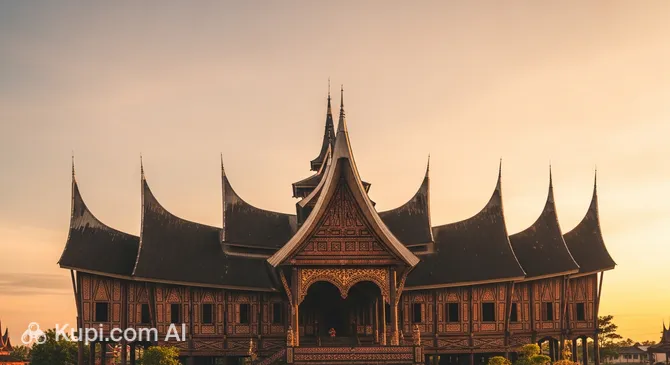
You can immerse yourself in the royal past of Sulawesi Island by visiting the majestic Sou Raja Palace. This historic building, also known as Banua Oge (meaning "Great House"), is located in the city of Palu, in the exotic country of Indonesia. Built in the 19th century by King Jojokodi, the palace long served as a residence for monarchs and remains the primary cultural stronghold of the Kaili people today.
Sou Raja Palace. Illustration.
Source: Kupi.com AI
Traveler photos:
The architecture of Sou Raja is a true embodiment of local philosophy and craftsmanship. The building is constructed entirely of wood, supported by dozens of massive teak and jackfruit pillars that symbolize the strength of society. The design of the facades and interiors reflects a subtle influence of Bugis and Islamic traditions, expressed through elegant carvings, geometric patterns, and floral ornaments.
Today, this traditional complex functions as a living museum and cultural center. Visitors come here to see authentic relics, learn about the daily life of the royal family, and experience the unique energy of a place that has united the residents of the Palu Valley for centuries.
Contacts
To plan your visit to Sou Raja, it is helpful to know its exact location. Although the palace does not have an official website or active social media presence, it is an active cultural site that is always happy to welcome guests.
A visit to Sou Raja is not just a walk through its halls, but a full immersion into the traditions of Central Sulawesi. One of the most vibrant opportunities for a guest is to witness the ancient ritual dance Tari Raego. This mesmerizing performance combines rhythmic movements and vocal chanting that encodes the ancient prayers and legends of the Kaili people. Local studios often hold their rehearsals here, and spectators can see firsthand how this intangible heritage is preserved.
For those interested in crafts, the palace offers a chance to discover the art of Tenun Buya Sabe weaving. You can observe masters at work creating complex Subi and Bomba patterns, and learn the secrets of natural dyeing using the roots and leaves of forest trees. If you prefer culinary discoveries, workshops are organized here for preparing local delicacies such as the rich Kaledo soup, which is cooked on traditional wood-fired stoves.
History buffs should check out the mini-library, which houses Lontara—ancient manuscripts and records of the Kingdom of Palu. And if your visit coincides with the Vunja thanksgiving festival, you will witness a colorful ceremony where locals bring offerings of the harvest, turning the palace square into a vibrant center for a lively folk festival.
Getting There
Sou Raja Palace is located in the village of Lere, which is part of the city's West District. The exact address for your navigator is: Jl. Pangeran Hidayat, 4V64+C98, Palu. Since Palu is situated in a picturesque bay surrounded by mountains, the journey to the palace can be a pleasant trip in itself, with views of the river and the coast.
Reaching the attraction from the city center is easiest by taxi or a rental car—the trip won't take long. You can also use local public transport that runs along the city's main streets, but for international tourists, a taxi is often the more convenient and faster option.
Nearest city: Palu
History & Facts
The history of Sou Raja began in the 19th century when King Jojokodi decided to build a residence worthy of the rulers of the Kingdom of Palu. Since then, the building has become more than just a monarch's home; it is the epicenter of political life and a symbol of the unity of the Kaili people. The palace's architecture is a unique blend of local traditions with elements of Islamic and Bugis cultures, recalling the era of active trade and cultural exchange in Sulawesi.
One of the most striking facts in the palace's modern history is its incredible resilience. During the devastating 2018 earthquake and tsunami, when many modern concrete structures were reduced to ruins, the flexible wooden structure of Banua Oge stood firm. Centuries-old traditional building methods proved more reliable than modern technology.
Following the natural disaster, the palace underwent a restoration process. Today, it is not just a restored building, but a site with advanced digital documentation of all its artifacts. It serves as a living reminder of how deep knowledge of the region's natural characteristics helped ancestors build homes capable of withstanding the elements.
Time Needed
Usually, 2–3 hours are enough to leisurely explore the palace's architecture, visit the library, and see the exhibits. This is sufficient time to feel the atmosphere of the ancient royal home and take memorable photos against the backdrop of the massive teak columns.
However, if you plan to attend one of the cultural events, workshops, or festivals, we recommend setting aside 4 to 5 hours for your visit. Engaging with local artisans or watching ritual dances requires a more thoughtful and unhurried approach.
Working Hours
The Sou Raja Palace welcomes visitors daily. The complex doors are open from 06:00 to 18:00 throughout the week, including weekends and public holidays. This allows you to plan your visit for either the early morning, when the light falls softly on the wooden facades, or the pre-sunset hours.
As the palace is an active cultural center and may host private events or restoration work, it is recommended to check for the latest information with local guides or official regional tourism resources before your trip.
06:00–18:00
Nearby
Exploring the surroundings of Sou Raja Palace will allow you to better feel the rhythm of life in modern-day Palu and see its landmarks. Nearby, you will find both modern art objects and places that hold the memory of recent changes in the city's landscape.