Support

Putussibau Airport

About the Airport

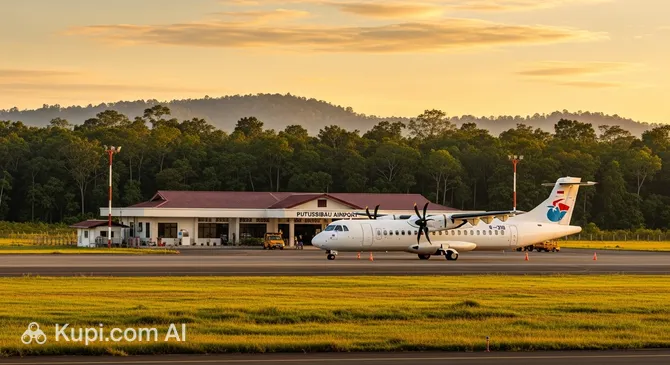
Putussibau Airport. Source: Kupi.com Binoculars

Putussibau Airport, also known as Pangsuma Airport, is not just a transport hub but a true aerial gateway to the "Heart of Borneo". It serves as a key starting point for adventurers seeking to explore the dense tropical rainforests and unique ecosystems of West Kalimantan. The renovated airport terminal combines modern amenities with elements of traditional culture, creating a special atmosphere from your very first minutes. Here begins the journey to the most protected corners of the island, where nature has been preserved in its pristine form.

IATA Code PSU
ICAO Code WIOP
City Putussibau
Distance to City Centre ~4 km
Status Domestic
Annual Passengers ~70,000 – 100,000
Schedule Check on official carrier websites

Features and Advantages of the Airport

The small regional Pangsuma Airport possesses its own unique charm and a number of advantages that favorably distinguish it from bustling capital hubs:

  • Gateway to the Wild. This is the nearest and most convenient access point to two of Indonesia's famous national parks: Betung Kerihun and Danau Sentarum. It is from here that many ecological expeditions deep into the island begin.
  • Colorful Architecture. The design of the passenger terminal incorporates traditional patterns and motifs of the Dayak people, the indigenous inhabitants of Borneo. This allows you to immerse yourself in the local culture without even leaving the airport building.
  • Comfort and Coolness. Following recent renovations, the airport features a modern waiting hall equipped with air conditioning systems, which is a true lifesaver in the region's hot and humid climate.
  • Speed of Service. Thanks to its compact size and the absence of huge tourist crowds, all pre-flight formalities here are completed as quickly as possible. You will forget about long queues for check-in or security screening.

Contact Information

  • Official Website: As a rule, small regional airports in Indonesia, including Putussibau Airport (also known as Pangsuma Airport), do not have a separate official website. It is recommended to check the most up-to-date flight information on airline websites.
  • Information Desk Phone: There is no single information hotline for passengers. For all questions related to schedules, booking, and flight status, please contact your airline directly.
  • Airport Address: Putussibau Kota, Kecamatan Putussibau Utara, Kabupaten Kapuas Hulu, Kalimantan Barat, Indonesia.
  • Email: A public email address for contacting the airport administration is not provided.
  • Social Media: The airport does not have official social media accounts. News and updates should be sought on air carrier resources.
  • Lost Luggage Information: In case of loss or damage to luggage, you must immediately contact the representative of the airline on whose flight you arrived. It is the carrier that is responsible for tracing luggage.
  • Passenger Support Contacts: Assistance and support for passengers regarding flight matters are provided by the staff of your airline at the airport.

How to Get to the Airport

Putussibau Airport (PSU), also known as Pangsuma, is located very close to the city centre of Putussibau, making the journey there quick and convenient. You can reach the terminal in several ways typical for small cities in Indonesia. Travel time from the city centre usually does not exceed 15–20 minutes.

Taxi and Local Transport. The most common way to get to the airport is to use a motorcycle taxi (ojek) or a local taxi. There are no major taxi companies in the city, so a car or motorcycle is usually found on the street or ordered through a hotel. The cost of a trip on an ojek will be the lowest, while a car taxi will cost more. Key tip: always agree on the price with the driver in advance, before the trip begins, as meters are rarely used.

Transfers and Car Rental. For greater convenience, especially if you have a lot of luggage, it is recommended to book a private transfer. This service is often provided by local hotels or travel agencies. You can also rent a car in Putussibau, but a more popular option is renting a car with a driver. This eliminates the need to navigate local roads and search for parking.

Airport Parking. For those arriving by their own or rented transport, Putussibau Airport provides a small parking area. Typically, this is a simple open-air lot located in immediate proximity to the terminal. Parking costs are usually low, which is convenient for those dropping off or picking up passengers.

Alternative Airports. If you are planning a trip around the island of Borneo, it is worth considering other air hubs in the region. The nearest international and local airports are located in both the Indonesian and Malaysian parts of the island. Among them are Sibu Airport (SBW) in Malaysia, located approximately 190 km away, and Kuala Kurun Airport (GXM) in Indonesia. Other options in Malaysia include Tanjung Manis Airport (TGC) and Bintulu Airport (BTU).

Terminals and Map

Putussibau Airport (PSU) is a small regional airport serving domestic flights. Its structure is extremely simple and intuitive, making the experience comfortable even for those travelling around Indonesia for the first time.

The airport consists of one compact terminal, which is simultaneously used to serve both departing and arriving passengers. Due to its small size, it is practically impossible to get lost here. All main zones—check-in counters, security screening, the waiting hall, and the baggage claim belt—are located in one building a short distance from each other.

Since there is only one terminal, you do not have to worry about transferring between different buildings. Departure and arrival zones are clearly demarcated but located in close proximity. Immediately after entering the building, you will see the check-in counters, and after passing security control, you will find yourself in a small waiting hall before the boarding gate.

Check-in and screening procedures at Putussibau Airport usually proceed very quickly due to the low passenger flow. Nevertheless, it is recommended to arrive at the airport approximately 1–1.5 hours before your flight's departure to complete all formalities without rushing. Navigation through the terminal will not cause difficulties: follow the signs or simply ask any airport staff member for assistance.

Airport History

Putussibau Airport (PSU), officially known as Pangsuma Airport, plays a key role in the transport system of the remote Kapuas Hulu region in the province of West Kalimantan. Its history is a story of gradual development aimed at connecting the so-called "Heart of Borneo" with the rest of Indonesia.

The airport's history began in the 1940s with the construction of a simple runway, which initially served military and logistical purposes. For many decades, this modest air harbour was a vital artery for one of the most isolated regions of the island, ensuring the delivery of goods, medical aid, and connection with the outside world.

As the importance of the region grew, the airport gradually developed. A key stage in its modernisation was the construction of a new, more modern terminal, which was officially opened in 2018. This event significantly increased the level of comfort for passengers and increased the airport's capacity, preparing it for the growth of tourist flow.

One of the airport's main achievements is its status as the "Gateway to National Parks". It is from here that expeditions to the famous Betung Kerihun and Danau Sentarum parks begin, making it indispensable for the development of ecotourism. Interestingly, the airport is named after Pangsuma, a local hero, highlighting its close connection with the culture and history of the Dayak people. Today, Pangsuma Airport is not just a transport hub, but a symbol of development and accessibility for one of the wildest and most beautiful corners of the planet.

Services and Facilities

Putussibau Airport (PSU), serving domestic flights, is a small regional air hub with a basic set of amenities designed to meet the essential needs of passengers before departure. It is important to consider that the airport's infrastructure corresponds to its size, and many services familiar in large international hubs may be absent here.

Dining and Shopping: The selection of dining establishments and retail outlets within the terminal is limited. Typically, you can find small kiosks or simple cafes selling light snacks, packaged treats, and drinks. There are no full-service restaurants or duty-free shops at the airport, so it is better to have a substantial meal or do your shopping in the city before arriving for your flight.

Waiting Halls and Connectivity: A general waiting hall is available to passengers. Specialized VIP lounges or business lounges are absent. Free Wi-Fi is generally not provided, and the number of power outlets for charging electronic devices may be extremely limited. It is recommended to bring a portable charger (power bank) with you.

Financial and Medical Services: There are no bank branches, ATMs, or currency exchange points within the airport building. All financial transactions, including cash withdrawals, should be done in advance in the city of Putussibau. A specialized medical centre is also absent, although airport staff can provide basic first aid.

Services for Passengers with Special Needs: Special nursing rooms or play areas for children are not provided at the airport. Passengers with reduced mobility and those requiring additional assistance during boarding must contact representatives of their airline in advance to organize support.

Accommodation and Business Services: There are no hotels within the airport complex, but various accommodation options can be found in the city of Putussibau itself, located nearby. Conference rooms and business centres are also not provided at the airport.

Dining

Putussibau Airport (PSU) is a small regional airport, and the choice of dining establishments here corresponds to its size. Do not expect a wide variety of restaurants and cafes as found in large international hubs. Nevertheless, passengers can find basic options for a snack or a full meal before departure.

All dining points are located in the main and only terminal, in the general public area before the security check (landside). After passing through security control, opportunities to grab a bite are usually absent. The selection mainly consists of small local cafes or "warungs" offering simple but hearty Indonesian cuisine.

What should you try? Look out for classic dishes such as Nasi Campur (rice with various side dishes like chicken, vegetables, tempeh), Mie Goreng (fried noodles), or Bakso (meatball soup). For a quick snack, you can pick up some local pastries (kue) and have a cup of coffee or tea. Prices here are very affordable and match the local level.

Specialized menus (vegetarian, gluten-free) are unlikely to be presented, but you can always ask for a dish based on rice and vegetables. Most dishes are Halal by default. The opening hours of cafes depend directly on the flight schedule—they open a few hours before the first departure and close after the last aircraft leaves.

Travel Tips

Travelling through the airport of Putussibau, located in the very heart of Borneo, can be an easy and pleasant start or finish to your adventure in Indonesia. To ensure everything goes smoothly, use our tips to help save time, stress, and money.

Arrival Time and Check-in. Putussibau Airport (PSU) is a small regional air hub. Despite this, it is recommended to arrive at the airport at least 1.5-2 hours before the departure of a domestic flight. This will give you enough time to calmly go through check-in and security screening without unnecessary haste. If possible, check in for your flight online—this is the simplest way to save time.

Security Control and Seat Selection. Screening procedures here are standard but usually proceed faster than at major airports. Keep your boarding pass and ID ready. When choosing a seat on the plane, consider this: a window seat will offer you unforgettable views of the endless jungles of Borneo, while an aisle seat provides more legroom and the freedom to stand up easily.

Hand Luggage. Rules for carrying hand luggage are standard: liquids with a volume of no more than 100 ml each must be packed in a transparent bag. Sharp objects, weapons, and flammable substances are prohibited. Always check baggage and hand luggage allowances on your airline's website, as they may differ slightly.

Transfers and Customs. Since this is a domestic airport, international transit passengers are rare here. If you have a transfer to another flight within the country, ensure your luggage is checked through to your final destination. There is no customs control as such for domestic flights, which significantly simplifies the arrival and departure process.

Saving Time and Money. To save money, book tickets in advance and travel light to avoid paying for excess baggage. The airport may have a limited selection of food and drinks, so you can bring a small snack with you. You can bring an empty water bottle, but bear in mind that the ability to refill it after security screening is not guaranteed. It is more reliable to buy water once in the departure area.

In Case of Flight Delay. Delays sometimes happen, especially during the rainy season. In such a situation, remain calm. Contact your airline representative for the latest information. Depending on the length of the delay, the airline may provide vouchers for food or drinks. Check the terms of your travel insurance—it is possible it covers such cases.

Reached the end of the page?

That means the route is fully explored