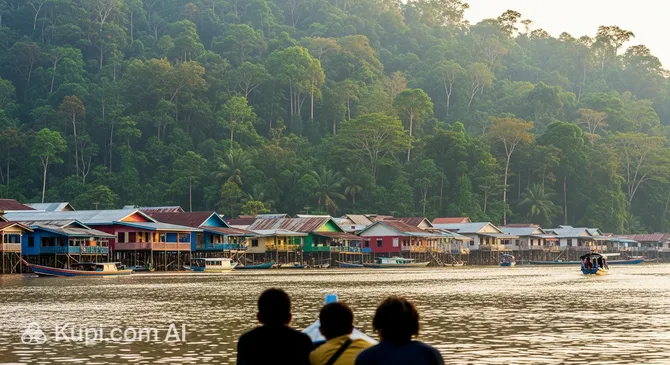
Putussibau may not be a metropolis filled with glass-walled galleries, but it offers a different kind of cultural immersion where the entire town and its surroundings act as a living museum. The "green spaces" here are defined by the untamed beauty of the tropical landscape, while the repositories of history are found in the communal homes and craft centers that preserve the age-old traditions of the Dayak and Malay communities.
Taman Alun Putussibau
Located in the heart of the town, Taman Alun Putussibau serves as the central gathering point for locals and visitors alike. This town square is a vibrant public space, especially in the late afternoon when the heat subsides. It features open green areas, walking paths, and often hosts local events or small festivals. It is an excellent spot to observe the daily rhythm of the city, watch children playing, and enjoy local snacks from nearby vendors. The park acts as a communal living room where the friendly nature of the residents is on full display.
Pantai Teluk Barak
For a unique natural experience within the city limits, Pantai Teluk Barak offers a sandy retreat right on the banks of the Kapuas River. While not a coastal beach, this riverbank area reveals a stretch of sand during the dry season, creating a popular recreational spot. Locals flock here to swim in the refreshing river waters, play sports, or simply relax by the water's edge. It provides a scenic view of the mighty river and is a perfect location for a picnic while watching the traditional boats navigate the current.
Kapuas Hulu Craft Center (Balai Sentra Kerajinan)
Since Putussibau is famous for its intricate textiles, the Kapuas Hulu Craft Center acts as an essential gallery for those interested in local arts. This facility showcases the region's renowned Tenun Ikat (woven fabric), particularly the distinct patterns created by the Dayak Iban and Dayak Sintang tribes. Visitors can admire the skill required to produce these masterpieces, which use natural dyes and complex motifs symbolizing nature and spirituality. It is more than just a gallery; it is a hub where the artistic heritage of West Kalimantan is preserved and celebrated.
Rumah Betang Melapi
While technically a residence, the Rumah Betang Melapi functions as a living museum of Dayak culture. Located in the southern part of the district, this traditional longhouse is open to visitors who wish to understand the communal lifestyle of the Dayak Tamambaloh people. Unlike a static museum exhibit, here you can witness history in motion—from the architecture of the massive wooden structure on stilts to the daily rituals of the families who live there. It offers an authentic glimpse into a way of life that has sustained these communities for centuries.
Jembatan Kapuas (Kapuas Bridge)
A significant architectural landmark, the Jembatan Kapuas spans the width of Indonesia's longest river, connecting the two sides of the town. It is not just a vital transport link but also a popular vantage point. Standing on the bridge offers a panoramic view of the river winding through the jungle and the settlements lining the banks. It is particularly striking at sunset when the sky reflects off the water, and the silhouettes of fishermen in their canoes create a picturesque scene.
Masjid Agung Darunnajah
Reflecting the Islamic heritage of the Malay population in Putussibau, the Masjid Agung Darunnajah stands as a prominent religious landmark. Its grand architecture features a large dome and towering minarets that are visible from various parts of the city. The mosque is a center of spiritual life and community activities, showcasing the harmonious blend of cultures that characterizes the region.
For a truly authentic experience, wake up early and visit the Pasar Pagi (Morning Market) near the river. It is a sensory overload of sights and smells, where you can see unique jungle produce, fresh river fish, and local fruits that you won't find in supermarkets. It is a photographer's delight and the best place to interact with the smiling locals as they go about their morning trade.