Support

Andrau Airpark

Airports in the city

About the Airport

Aji Pangeran Tumenggung Pranoto Airport, better known as APT Pranoto, is the modern air gateway of East Kalimantan, opening the way for travellers to the beauties of Indonesian Borneo. Nestled amidst the picturesque tropical rainforests of the Sungai Siring district, this new aviation hub replaced the old Temindung Airport, offering passengers a completely different level of comfort and safety. Thanks to its strategic location, the airport plays a vital role in the region's development and serves as a key access point to Indonesia's future capital, Nusantara. The terminal's architecture harmoniously blends modern technology with elements of local culture, creating a pleasant atmosphere from your very first minutes of arrival.

IATA Code AAP
ICAO Code WALS
City Samarinda
Distance to Centre ~25 km
Status International
Annual Passengers approx. 850,000
Schedule Online board

Features and Advantages of the Airport

APT Pranoto stands out favourably from its predecessor with its spacious grounds and a modern runway capable of accommodating narrow-body liners such as the Boeing 737 and Airbus A320. This has opened up new direct flight opportunities for Samarinda to major Indonesian cities like Jakarta and Surabaya.

Travellers will appreciate the following advantages of the terminal:

  • Flight Safety: Located away from dense urban development, the airport eliminates the restrictions pilots faced at the old airfield, making take-offs and landings significantly safer.
  • Comfortable Terminal: The passenger terminal is designed to modern standards: it features spacious waiting lounges, cafes, and shops where you can purchase souvenirs before departure.
  • Development Prospects: The airport is actively being modernised, with plans to expand the route network and improve infrastructure to serve the growing flow of tourists heading to the country's new capital.

Contact Information

To contact APT Pranoto Airport (AAP) in Samarinda, which is currently the region's main aviation hub (utilising the code formerly associated with Andrau Airpark), you may use the following details. Please note that communication with staff is most often conducted in Indonesian or English.

  • Official Airport Website: aptpranoto.id (recommended for checking news, though the site may experience intermittent downtime; social media is an alternative source)
  • Information Desk Phone: +62 541 2831593 (administration landline) or +62 811-551-944 (mobile/WhatsApp for urgent queries)
  • Airport Address: Jl. Poros Samarinda – Bontang, Kel. Sungai Siring, Kec. Samarinda Utara, Kota Samarinda, Kalimantan Timur 75119, Indonesia
  • Email: humas@aptpranotoairport.id or aptpranoto.airport@kemenhub.go.id
  • Airport Social Media: The most up-to-date information is often published on official Instagram and Facebook pages (search for "Bandara APT Pranoto")
  • Lost and Found Information: First, contact the office of the airline you flew with. You can also check with the general airport department at +62 811-551-944
  • Customer Support Contacts: For general terminal service inquiries, use the main number +62 541 2831593 (calls accepted during working hours, usually 09:00 to 15:00)

How to Get to the Airport

There are several ways to get to Samarinda's main airport, APT Pranoto (which navigation systems sometimes still associate with old regional airport codes like Andrau). The air harbour is located in the Sungai Siring district, approximately 25 kilometres north of the city centre. The road is quite scenic, but due to traffic conditions and the terrain, the journey from the centre usually takes 45 to 60 minutes, and you should allow even more time during peak hours.

Public Transport: DAMRI Buses

The most budget-friendly and reliable way to reach the airport is by using the state-operated DAMRI buses. This is the optimal choice for those travelling light and wishing to save money. Buses run from Samarinda's main bus terminal (Terminal Sungai Kunjang) and other key points in the city.

  • Cost: Tickets are very reasonably priced, starting from approximately 60,000 Indonesian Rupiah (IDR).
  • Schedule: Trips are usually linked to flight schedules, but it is recommended to confirm departure times in advance.
  • Features: There is no metro or rail link to the airport in Samarinda, so the bus remains the only form of strictly public transport.

Taxis and Transfers

For most tourists, a taxi remains the most comfortable option. Mobile apps work excellently in Indonesia, eliminating the need to haggle with drivers.

  • Online Services: Apps like Grab and Gojek (the local equivalent of Uber/Careem) are very popular. You can order a car or a motorbike taxi (ojek) directly to your hotel. A car trip from the centre will cost approximately 150,000 – 200,000 IDR, depending on demand and time of day.
  • Official Airport Taxi: In the arrival area, there are counters for official carriers. Prices here are fixed (by city zones), which is convenient if you do not have internet access upon arrival.
  • Transfer: Many hotels in Samarinda offer transfer services. This is the most stress-free, albeit more expensive method (often starting from 250,000 IDR).

Car Rental and Parking

Self-drive car rental in this part of Kalimantan is less common among tourists due to the specific local driving style, but it is possible. Travellers more often rent a car with a driver for the whole day. If you are driving your own or a rented vehicle, the airport has a spacious car park.

Airport Parking: The terminal is equipped with zones for short-term and long-term parking. Rates start from small amounts for the first hour (about 5,000 – 10,000 IDR) and increase for daily vehicle storage.

Alternative Routes and Neighbouring Airports

It is important to remember that if direct tickets to Samarinda are sold out or unavailable, many tourists fly into the neighbouring major hub — Sultan Aji Muhammad Sulaiman Airport in Balikpapan. Thanks to the new toll road (Balikpapan-Samarinda Toll Road), you can get to Samarinda from there by car or bus in about 1.5–2 hours.

The region is also connected by air to other interesting locations. For example, for diving in the Derawan Islands, travellers often choose Kalimarau Airport in Berau. There are flights connecting Kalimantan and Sulawesi, for instance, via Mutiara Airport (Palu) or Tampa Padang Airport (Mamuju), allowing for a complex but fascinating itinerary across Indonesia.

Terminals and Map

Terminal Structure and Navigation

APT Pranoto Airport (AAP) features one modern passenger terminal that serves all domestic flights — both departures and arrivals. Thanks to the building's compactness and smart layout, navigating here is very simple. Navigation is intuitive: passenger flows are separated, and signs are duplicated in English, making it impossible to get lost even on your first visit.

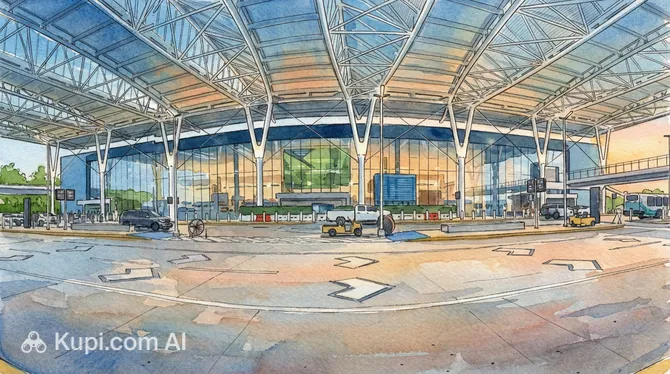
The terminal building is designed in a modern style with unique architectural elements referencing the culture of the Dayak tribes. High ceilings and panoramic glazing create a sense of space, filling the halls with natural light.

Passenger Service Zones

The interior space is organised for maximum traveller convenience:

  • Check-in Zone: Located at the terminal entrance after the initial luggage security check. Here you will find airline counters (Batik Air, Lion Air, Super Air Jet, Citilink, etc.). Queues usually move quickly, but during holidays, it is recommended to allow extra time.
  • Boarding Lounge: After passing pre-flight security, passengers enter the "airside" zone. There is ample seating, cafes with local snacks, souvenir shops, as well as prayer rooms (Musholla) and restrooms.
  • Arrival Zone: Located on the ground level. The route from the aircraft to the city exit is short. The baggage belt works efficiently, so retrieving luggage rarely takes much time.

Boarding Features: Aerobridges and Buses

An important infrastructure update was the commissioning of aerobridges. Since early 2024, the airport has actively used boarding via aerobridge (garbarata), which has significantly increased passenger comfort, especially during rainy weather.

However, the boarding method depends on the aircraft type:

  • Jet Aircraft (Boeing 737, Airbus A320): Most often serviced via aerobridge, allowing you to walk from the terminal directly onto the plane.
  • Turboprop Aircraft (ATR-72) and Small Aviation: For these flights, walking across the apron or transfer by bus is still used.
  • High Traffic: During peak hours, if all aerobridges are occupied, even large liners may board using buses or by walking.

Procedures and Time Recommendations

The airport administration recommends adhering to standard timeframes for domestic flights within Indonesia to avoid rushing.

  • You should arrive at the airport 1.5–2 hours before your flight time.
  • Check-in usually closes 30–45 minutes before departure.
  • Security checks take from 5 to 15 minutes, but passenger traffic is denser in the morning.

Tips for Travellers

Since all services are under one roof, transfers between terminals are not required. The building has air conditioning — even if it is tropical heat outside, the waiting hall can be cool, so it is worth bringing a light jacket or shawl. Wi-Fi is available in the terminal, but the signal can be unstable; it is recommended to save e-tickets and boarding passes to your phone's memory in advance.

Airport History

From Dangerous Airfield to Modern Hub

The history of aviation in Samarinda is a fascinating journey from extreme landings in the city centre to the creation of a modern international terminal. The current APT Pranoto Airport (AAP), now the main air gateway of East Kalimantan, emerged as a vital necessity for the region's development.

For a long time, Samarinda was served by the old Temindung airfield, located in a densely populated area. It was famous for its difficulty: pilots practically had to manoeuvre between rooftops, and the short runway could only accept small propeller planes. Building a new, safe airport became a priority task for the provincial authorities.

Key Dates and Opening

The project to move the airport to the Sungai Siring district had been discussed since the 1990s, but actual construction began much later and proceeded with varying success due to financial and technical difficulties.

  • 2011–2013: Active phase of infrastructure construction, which was suspended several times.
  • 24 May 2018: A historic day for the city — the airport began operations. The first commercial flight to land was an Xpress Air aircraft. On the same day, the old Temindung airfield was officially closed.
  • 25 October 2018: The grand inauguration ceremony took place, led by Indonesian President Joko Widodo. This event cemented the airport's status as a strategically important facility on a national scale.

Name and Legacy

The airport was named in honour of Aji Pangeran Tumenggung Pranoto. He is a significant figure in Indonesian history — he was the first governor of the East Kalimantan province (1957–1959) and actively participated in the country's struggle for independence. Bestowing his name upon the airport was a tribute to local traditions and regional history.

Engineering Challenges and Modernisation

One of the most difficult chapters in the construction history was the soil conditions. The airport is built on swampy terrain, which required unique engineering solutions. However, nature intervened:

In 2019, shortly after opening, the airport faced issues with soil subsidence on the taxiways. This required urgent and large-scale reconstruction and reinforcement works. The drainage system was also significantly modernised to prevent flooding during the tropical monsoon season. Thanks to these efforts, the runway is now capable of accepting medium-haul liners like the Boeing 737-900ER and Airbus A320, which was impossible at the old airport.

Interesting Facts

  • Code AAP: Interestingly, the IATA code AAP previously belonged to Andrau Airpark in Houston, Texas, which closed back in 1998. Decades later, this code found a "second life" on the other side of the world, in the Indonesian jungles.
  • Record Growth: In its very first year of operation, passenger traffic exceeded the boldest forecasts, reaching the 1 million passenger mark much earlier than planned.
  • Gateway to the Capital: Following the announcement of moving Indonesia's capital to Kalimantan (the Nusantara project), the airport's significance grew manifold. It is viewed as one of the key nodes for ensuring logistics for the future capital.

Services and Facilities

Although the terminal of APT Pranoto Airport (AAP) is quite compact compared to the giant hubs of Jakarta or Bali, it offers passengers the necessary set of services for a comfortable wait. Infrastructure continues to develop, but travellers can already count on a modern standard of basic service.

Dining and Shopping

There are no huge duty-free zones in the airport, but passengers will not go hungry. Food and retail outlets are located both in the public area and in the departure lounge after security.

  • Cafes and Eateries: You will find popular Indonesian coffee chains and bakeries here (for example, Roti’O, famous for its aromatic coffee buns). You can find cafes serving local cuisine, offering rice, noodles, and traditional snacks.
  • Shops: Mini-markets (Indomaret/Point) are available where you can buy water, snacks, and daily necessities at standard city prices.
  • Souvenirs: Pay special attention to stalls selling East Kalimantan products. This is a great chance to buy famous amplang crackers, traditional batik fabrics, or items with ethnic Dayak patterns as gifts if you didn't manage to do so in the city.

Business Lounges and Comfort

For those who value privacy and enhanced comfort, the airport operates an Executive Lounge (VIP lounge). This is an air-conditioned space with comfortable soft seating, where guests are offered a buffet with light snacks and drinks, as well as access to newspapers and Wi-Fi. Access to the lounge can be paid for on the spot or obtained for free if you hold premium cards from certain Indonesian banks.

Connectivity and Finance

  • Wi-Fi and Charging: A free Wi-Fi network operates in the terminal, however, as in many regional airports, speed and connection stability may vary. For reliability, it is recommended to have a local SIM card. Charging stations for mobile devices (sockets and USB ports) are installed in the departure waiting hall, usually near the rows of seats.
  • Banking Services: There may not be full-service Money Changers with a wide selection of currencies here, as the airport primarily serves domestic flights. However, there is an ATM Center in the public zone where you can withdraw cash Rupiah (IDR) using cards from international payment systems. It is recommended to stock up on cash in advance if you plan to travel to remote areas of the island.

Family, Health, and Accessibility

The airport administration pays attention to the needs of various categories of passengers:

  • For Passengers with Children: The terminal is equipped with a Nursery Room (Ruang Menyusui), where you can change or feed your baby in a quiet environment.
  • Medical Assistance: A first aid point (Health Quarantine Office) is available should you feel unwell.
  • Passengers with Reduced Mobility: The terminal is equipped with ramps and special restrooms. Wheelchair assistance is available. Important: requests for assistance should be sent to the airline in advance when booking your ticket so that staff can prepare everything necessary for your arrival.

Accommodation: Hotels

It is important to consider that the airport is located in the Sungai Siring district, a significant distance from the centre of Samarinda (about 25 km).

  • At the Airport: There is no transit hotel directly inside the terminal.
  • Near the Airport: In the immediate vicinity (1–3 km), you can only find simple guesthouses (homestays) with basic amenities, suitable for emergency overnight stays.
  • In the City: The majority of tourists prefer to stay in central Samarinda, where major chain hotels (Mercure, Ibis, Aston, and others) are represented. The taxi journey to them takes 45 to 60 minutes, so leave for the airport with plenty of time.

Business Services

There is no specialised business centre or conference rooms for meetings in the general terminal area. For work with documents or a laptop, it is best to use tables in cafes or the services of the VIP lounge, where the atmosphere is quieter and more conducive to business.

Where to Eat

Gastronomy Overview: Compact and Tasty

The dining infrastructure at APT Pranoto Airport (AAP) befits its status as a regional hub: you won't find fine dining restaurants or huge food courts typical of metropolises here. However, passengers can count on a decent selection of places to have coffee, a snack before departure, or a full meal. All establishments are concentrated in the single terminal, making them easily accessible.

Main Establishments and Locations

Food outlets are divided between the public area (Landside) and the "clean" departure zone (Airside). Most establishments open early in the morning, around 06:00, and operate until the last flight departs (approximately 17:00–18:00).

  • Public Zone (Before Security): The selection here is the widest. It is an ideal place for those who arrived early or are seeing off loved ones. Here you can find small cafeterias and kiosks with local food. The chain bakery Roti’O is popular, with its aroma greeting travellers right at the entrance. Their signature coffee buns with butter inside are a favourite snack for many tourists in Indonesia.
  • Departure Zone (After Security): In the waiting lounge, the selection is more limited but sufficient for a comfortable wait. Small cafe-bars and "grab-and-go" shops are located here, offering bottled drinks, sandwiches, and instant hot meals (such as cup noodles).
  • VIP Lounge (Concordia Lounge or similar): For those seeking maximum comfort, a business lounge operates in the sterile zone. Guests are offered a buffet with hot dishes, snacks, fruits, and unlimited drinks.

Menu: What to Try

The range of dishes at the airport allows you to get acquainted with Indonesian cuisine, even if you are in a rush.

  • For a Quick Snack: Besides the mentioned buns, look out for traditional Indonesian snacks: risoles (filled pancakes), fried tofu, or lemper (sticky rice with chicken in a banana leaf).
  • Full Meal: Cafeterias serve classic dishes: Nasi Goreng (fried rice), Mie Goreng (fried noodles), or soups. We recommend trying Soto Banjar — an aromatic chicken soup popular in Kalimantan, often served with rice cakes.
  • Drinks: Be sure to order local iced tea (Es Teh Manis) or Indonesian coffee (Kopi). Alcohol is practically not found in open sale in the general areas of the terminal due to the cultural norms of the region.

Dietary Features and Prices

Travellers with specific food preferences should consider local specifics:

  • Halal: Indonesia is a country with a predominantly Muslim population, so practically all food at APT Pranoto Airport is Halal by default. You do not need to search for special signs — pork is absent from public catering menus.
  • Vegetarians and Vegans: Choices may be limited. A reliable option is dishes made from tofu or tempeh (fermented soy), as well as vegetable Gado-gado (salad with peanut sauce), if available. Check if shrimp paste (terasi) is added to the dish.
  • Gluten-Free: Specialised gluten-free items are usually not on the menu. Due to the widespread use of soy sauce, people with coeliac disease should be cautious and choose simple dishes, for example, plain boiled rice with chicken without sauce, or rely on their own supplies.

Price Range: Prices at Samarinda airport are very democratic. A light snack with coffee will cost 25,000 – 40,000 IDR, and a hearty lunch will cost about 50,000 – 75,000 IDR. This is slightly more expensive than in street cafes in the city, but significantly cheaper than in international airports.

Tips for Travellers

Practical Tips for Departing from Samarinda

Travelling through APT Pranoto Airport (AAP), often called the main gateway to East Kalimantan (and sometimes confused with the old Andrau code), is generally quite calm due to the terminal's compactness. However, the specifics of the region, including the climate and distance from the city, require some preparation from tourists. Here is a list of recommendations to make your flight as comfortable as possible.

Arrival Time and Travel

The main factor to consider when planning a trip to the airport is the traffic situation. The road from central Samarinda, while scenic, has only one lane in each direction and passes through hilly terrain.

  • Allow Extra Time: It is recommended to arrive at the terminal at least 2 hours before departure. If your flight is in the morning or falls on a Friday (a day of prayer and high traffic), add another 30 minutes.
  • Consider Traffic: The taxi journey takes about an hour, but in the event of an accident on the single highway or heavy rain, traffic can come to a standstill. It is better to arrive early and have a coffee at the airport than to stress in a traffic jam.

Check-in and Security

Procedures in Indonesian airports have their nuances that are useful to know in advance:

  • Documents: Keep your passport (for foreigners) or ID card handy. Your tickets may be checked upon entering the terminal.
  • SatuSehat App: Although strict COVID restrictions have been lifted, having the Indonesian health app (formerly PeduliLindungi) installed on your phone can be useful as rules sometimes change.
  • Electronics: At security control, you will be asked to remove laptops and tablets. Special attention is paid to Power Banks: their capacity must be clearly marked on the casing. Devices with a capacity over 20,000 mAh may raise questions, and those over 32,000 mAh (160 Wh) are prohibited for transport.

Choosing a Seat on the Plane

Flying over Kalimantan is a unique opportunity to see the "lungs of the planet" from a bird's eye view. When checking in online, try to choose a Window Seat.

During take-off or landing in Samarinda, breathtaking views open up of winding riverbeds, dense tropical jungles, and coal mines, creating a surreal landscape. In clear weather, the sight is truly mesmerising.

Hand Luggage: Do's and Don'ts

Besides standard international rules (ban on sharp objects, liquids over 100ml for international flights), Indonesia has specific prohibitions:

  • Durian: This "King of Fruits" is strictly forbidden in the aircraft cabin (and often even in checked luggage) due to its specific pungent smell. Even if it is hermetically sealed, you may be denied boarding.
  • Corals and Shells: The export of natural resources is strictly controlled. Do not attempt to carry corals found on the beach in your hand luggage.
  • Lighters: Usually, one standard lighter is allowed on your person, but "turbo lighters" (blue flame) will be confiscated.

Tips for Transit Passengers

Samarinda Airport is not a major transit hub, and most flights here are point-to-point. If you plan a connection (for example, flying from Berau to Jakarta via Samarinda):

  • Self-Transfer: Most often, you will have to collect your luggage and check in again. The terminal is small, and the procedure is quick, but the risk of the first flight being delayed is high. Allow at least 3–4 hours for the transfer.
  • Luggage: If you have a single ticket with one airline group (e.g., Lion Air Group), check at the first registration counter if your luggage can be checked through to the final destination.

Customs and Laws

Although most flights are domestic, remember Indonesia's strict laws:

  • Drugs: Indonesia applies the death penalty for drug trafficking. Never agree to carry anyone else's parcels or bags.
  • Alcohol: If you are flying domestically, there are fewer restrictions on carrying alcohol in checked luggage (bought previously in Duty Free or the city), but do not overindulge — a passenger in a state of severe intoxication may be denied boarding.

How to Save Time and Money

  • Transport: The cheapest way to get to the city or back is via DAMRI buses. They are comfortable and cost significantly less than a taxi.
  • Food and Water: Prices in the "sterile" departure zone are higher than in the public area. If you want to save money, have a snack or buy water and snacks at mini-markets (like Indomaret) in the check-in zone before passing pre-flight security. You can bring an empty water bottle through, but drinking fountains may not be available inside, so you might have to purchase water.
  • Luggage Wrapping: In the departure hall, there is a paid service for wrapping suitcases in plastic film. This is recommended if you have a bag with unreliable locks, as baggage handlers are not always delicate.

Actions in Case of Flight Delay

Flight delays in Kalimantan are not uncommon, especially during the rainy season or periods of haze from forest fires.

If your flight is delayed:

  • Do not wander far from your boarding Gate, as announcements may be indistinct, and display screens may update with a delay.
  • For long delays (more than 2 hours), airlines are obliged to provide drinks or snacks (snack box). Do not hesitate to politely remind staff at the counter about this.
  • Have a charged phone with downloaded movies or books — entertainment in the airport is limited, and Wi-Fi may work intermittently with large crowds.

Reached the end of the page?

That means the route is fully explored