Support

Kawasan Konservasi Mangrove Dan Bekantan

About

In the very heart of the city of Tarakan lies a wonderful natural corner — the Mangrove and Proboscis Monkey Conservation Area (KKMB). This unique 22-hectare reserve is a rare combination of untouched wilderness and a research center located right amidst urban development. Here, a fragile ecosystem of mangrove forests is preserved, which protects the coast from erosion and strong winds.
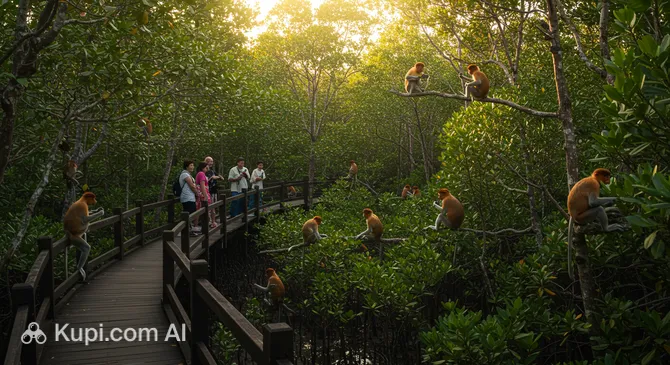
Mangrove and Proboscis Monkey Conservation Area
Mangrove and Proboscis Monkey Conservation Area. Иллюстрация. Источник: Kupi.com AI

The main treasure of the reserve in the country of Indonesia is its inhabitants — the Bekantan monkeys (Nasalis larvatus), also known as proboscis monkeys. Locals humorously call them "Dutch monkeys" because of their characteristic long noses. These primates are endemic to the island of Kalimantan (Borneo), and observing them in their natural habitat is a truly rare and exciting experience.

Strolling through the reserve, you will see trees that are hundreds of years old. At least 11 species of protected animals live on the territory, making this place an important living laboratory for scientists and a true paradise for ecotourism enthusiasts. It is not just a park, but a symbol of nature conservation within a modern city.

Contacts

To ensure your trip is as comfortable as possible, we recommend checking the exact location of this nature zone in advance. Below are the official contact details to help you navigate the city quickly and plan a convenient route.

How to contactContact
AddressKarang Rejo, Tarakan Barat, Karang Rejo, Kec. Tarakan Bar., Kota Tarakan, Kalimantan Utara, Indonesia

What to Do

The main reason to visit the reserve is the opportunity to observe the Bekantan monkeys. Visitors can watch these amazing creatures skillfully jumping through the branches and swinging in the trees in their natural environment. It is best to bring binoculars or a camera with a good zoom to get a closer look at their funny habits and unusual appearance.

For the convenience of tourists, comfortable wooden boardwalks have been laid throughout the territory. Walking along them, you will find yourself right in the center of the mangrove jungle without disturbing its inhabitants. Along the paths, there are observation towers and cozy gazebos where you can rest and enjoy the silence, interrupted only by bird calls and the rustle of leaves.

In addition to observing the fauna, you can engage in self-education here. There is a library on the premises and information stands that explain the biodiversity of the region and the importance of mangrove forests for the planet. This is an excellent place for a family visit, where children and adults can learn about ecology and the protection of rare animal species in an accessible way.

Getting There

Finding this amazing corner of wildlife is quite easy, as it is located on Jl. Gajah Mada right in the central part of the city. Thanks to such a convenient location, the reserve has become one of the most accessible natural attractions in the region.

If you are in the center, the easiest way to get there is to use a local taxi or the online ride-hailing services popular in Indonesia. A trip from the THM Simpang Tiga shopping and entertainment complex will take only about 5 minutes, which is very convenient for those who want to combine a nature walk with city errands.

For those who prefer public transport, shuttle taxis regularly pass by the reserve. You just need to tell the driver the name Kawasan Konservasi Mangrove dan Bekantan, and you will be dropped off almost at the very entrance to this green zone.

Ближайший город: Tarakan

History & Facts

The history of this unique place began in 2001, when the city government officially established the Kawasan Konservasi Mangrove dan Bekantan (KKMB). The main goal of creating the reserve was to protect the rapidly disappearing mangrove forests and preserve the population of rare proboscis monkeys, for whom this territory is home.

Interestingly, the reserve originally occupied a very small area — only 3 hectares. However, the realization of the ecological importance of this project led to the fact that in 2006, with the support of the city authorities, the territory was expanded to an impressive 22 hectares, which allowed for the creation of a full-fledged ecosystem within the city limits.

Starting from 2007, programs for planting new mangrove trees have been actively implemented here. These efforts are aimed not only at preserving biodiversity but also at performing an important engineering function: dense mangrove thickets serve as a natural shield, protecting the coastline from erosion, strong waves, and winds.

Over the years of its existence, the reserve has transformed from a closed scientific zone into a popular educational center. Today, the management of the site is coordinated by the Department of Culture, Tourism, Youth, and Sports, which has turned it into a true living laboratory, attracting researchers from all over the world.

Time Needed

To fully enjoy the atmosphere of this place and see its main inhabitants, it is recommended to set aside 2 to 3 hours for your visit. This time is quite sufficient for a leisurely walk along all the boardwalks and observing animal activity in the treetops.

It is worth considering that proboscis monkeys are most active at certain times, so patient waiting at the observation platforms is often rewarded with the most interesting sightings. If you also plan to visit the local library or study the information stands about the mangrove ecosystem in detail, budget a bit more time into your schedule.

Working Hours

The Mangrove and Proboscis Monkey Conservation Area welcomes guests daily, making it easy to include in your travel schedule on any day of the week. The official opening hours are from 07:00 to 17:00.

This schedule applies to all days, from Monday to Sunday inclusive. It is recommended to visit in the first half of the day or closer to closing time, when the heat subsides and animal activity noticeably increases, which improves the chances of getting great photos of the park's inhabitants.

7:00 – 17:00

Nearby

Exploring the surrounding area after visiting the reserve can significantly enrich your travel experience. The city offers many interesting locations, ranging from modern leisure spots to historical monuments that allow for a deeper understanding of the region's culture.

A walk through the nearby streets will reveal a variety of local entertainment and cozy places where you can relax after active nature observation. Below is a list of interesting sites located within a radius of a few kilometers.

NameDistance
Lemakan Samudra0.5 km
MR Fuji Karaoke & Cafe0.8 km
Pizza Hut0.8 km
Oval Park2.8 km
Baloy Mayo Tidung Traditional House3.9 km

Reached the end of the page?

That means the route is fully explored