Support

Kraton Jogja

About

The majestic Kraton is more than just a monarch's residence; it is the true cultural heart that Yogyakarta takes great pride in. This palace complex, located in Indonesia, serves as a living embodiment of Javanese traditions and philosophy. The entire ensemble of buildings is designed in strict accordance with ancient cosmological beliefs: its facade faces the sacred Mount Merapi volcano, while its back "looks" toward the Indian Ocean.
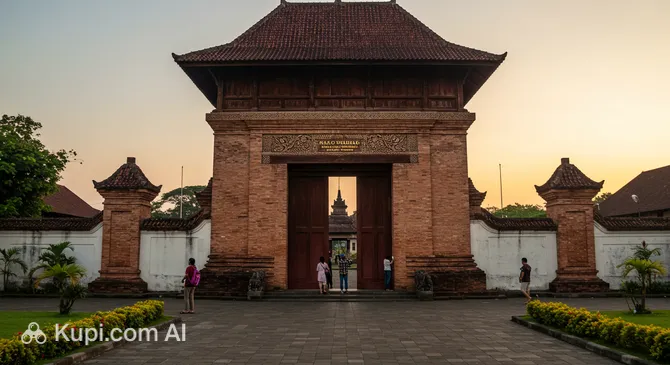
Yogyakarta Palace
Yogyakarta Palace. Иллюстрация. Источник: Kupi.com AI

Within the vast grounds of the Yogyakarta Palace, you can see elegant pavilions decorated with intricate carvings, ancient mosques, and spacious courtyards. The official symbol of the complex—Praja Cihna, rendered in red and gold—emphasizes the grandeur and vigilance of the ruling dynasty. This is a place where Islamic tenets harmoniously intertwine with Hindu heritage and local mysticism.

Today, the Kraton remains the active residence of Sultan Hamengkubuwono X, but most of its premises are open to travelers as a museum. Inside the walls of this "city within a city," a special atmosphere of tranquility reigns, filled with the scent of incense and the sounds of a traditional gamelan orchestra.

Contacts

To plan your visit to the Yogyakarta Palace, it's helpful to have up-to-date contact information at hand. The primary contact details and the exact address of the complex are provided below:

How to contactContact
Address59V7+6H7, Panembahan, Kraton, Yogyakarta City, Special Region of Yogyakarta 55131, Индонезия
Websitekratonjogja.id

What to Do

A stroll through the Kraton grounds is a fascinating immersion into the world of Javanese aristocracy. Visitors can explore the architecture of the open pavilions in detail and look into museums housing royal regalia, antique carriages, ceremonial weapons, and unique batik collections. Special attention should be paid to the ethnographic exhibitions and the personal belongings of the rulers in the Hamengkubuwono IX Museum.

If you find yourself here on a weekend, be sure to stop by the Siti Hinggil Kidul pavilion. Classical dance performances and musical concerts are often held here. Observing the court servants in traditional costumes as they perform daily rituals of purifying the palace with flowers and incense allows you to feel the living history of this place.

Towards evening, head to the Alun-alun Kidul square. Here you can watch the masangin ritual: locals and tourists, blindfolded, try to walk between two giant sacred banyan trees. It is believed that a pure heart will help grant a cherished wish. This area is also famous for its vibrant atmosphere and the chance to see the Great Mosque of the Kraton with its unique multi-tiered architecture.

Getting There

The palace is located in the very heart of the city, so getting there is quite easy. If you are arriving from Yogyakarta International Airport (YIA), the most convenient option is to use a taxi or the Grab service; the trip will take between 30 and 45 minutes. You can also take a train to the Tugu central station and then switch to traditional transport or walk from there.

For those already in the city center, a ride on a becak (traditional cycle rickshaw) or a bicycle is an excellent choice. From the famous Malioboro shopping street, the main gates of the Kraton are just a 15–20 minute walk away, heading straight south.

Additionally, the city has a well-developed Trans Jogja bus network. Routes 1A and 2A stop in the immediate vicinity of the attraction. If you prefer to travel independently on a rented scooter, parking areas are available near the entrance, though keep in mind the heavy city traffic. Entry is through the north or south gates, where entrance tickets can be purchased.

Ближайший город: Yogyakarta

History & Facts

The history of this majestic structure began in 1755. The palace was founded by Sultan Hamengkubuwono I, who began construction following the signing of the Treaty of Giyanti. This historic document officially divided the powerful Mataram Sultanate into two parts, and the new residence became the political and spiritual center of the newly formed Yogyakarta Sultanate.

The architecture and layout of the Kraton are steeped in deep symbolism. Every building and courtyard reflects the continuity of the traditions of ancient states on the island of Java. Over the centuries, the successors of the first Sultan expanded the complex, adding new structures such as the Great Mosque of the Kraton, built in the 18th century with its characteristic multi-tiered roof resembling a pagoda.

Today, the Yogyakarta Palace retains its status as a sacred site and an active residence. It still hosts solemn coronations and the most important ritual ceremonies. Despite the influence of the modern world, the Kraton remains a bastion of Javanese mysticism, where customs dating back centuries are carefully preserved.

Time Needed

To leisurely explore the main pavilions, browse the museum exhibits, and enjoy the architectural details, most tourists need about 2–3 hours. If you plan to visit both parts of the complex, which have separate entrances, it's better to budget a bit more time for your visit.

For those who want to fully immerse themselves in the atmosphere of the area, including a visit to the Great Mosque and participating in traditional activities at Alun-alun Kidul square, it is recommended to set aside about 4 hours. It's best to arrive at opening time to avoid the midday heat and catch the morning cultural programs.

Working Hours

Please note that the Yogyakarta Palace is typically open to visitors from Tuesday to Sunday, from 08:30 to 14:30. The complex is closed to tours on Mondays, which should be taken into account when planning your trip.

On weekends, the festive atmosphere in the surrounding area and at Alun-alun Kidul square can last until late evening. Since the operating schedule may change due to official state ceremonies or religious holidays, it is recommended to check for up-to-date information on the official website before your visit.

DayWorking hours
понедельникЗакрыто
вторник08:30–14:30
среда08:30–14:30
четверг08:30–14:30
пятница08:30–14:30
суббота08:30–14:30
воскресенье08:30–14:30

Nearby

Visiting the Sultan's main residence is just the beginning of your journey through this amazing region. Exploring the surrounding streets and nearby sites will allow you to feel the local flavor of the island even more deeply and find entertainment for every taste, from cultural centers to modern amusement parks.

There are many interesting locations around the palace complex that are convenient to visit on the same day. Some of them are listed in the table below:

NameDistance
Yogyakarta Palace0.2 km
Sonobudoyo Museum Unit I0.5 km
Sonobudoyo Museum New Building0.5 km
Taman Sari Water Castle0.6 km
Happy Puppy0.6 km
Taman Pintar Yogyakarta0.8 km
Vredeburg Museum0.8 km

Reached the end of the page?

That means the route is fully explored