Support

Bam Citadel

About

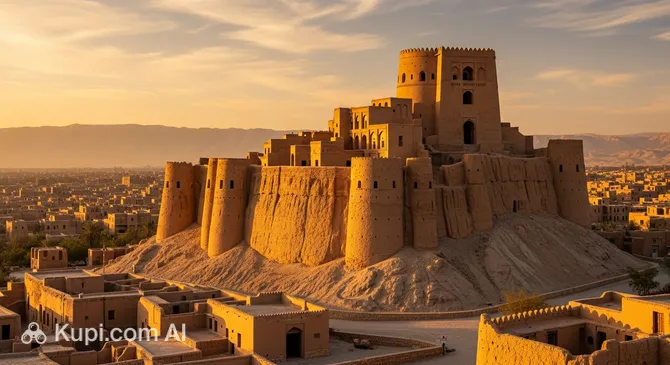
Imagine a colossal sandcastle rising right in the middle of the desert. Arg-e Bam is the world's largest adobe fortress, recognized as a masterpiece of Persian architecture. This unique structure is located in the city of Bam, which graces the southeastern part of Iran. The citadel is built entirely of adobe—sun-dried bricks made of clay and straw—giving it a fairy-tale, almost surreal appearance.
\n\n
Arg-e Bam
Arg-e Bam. Иллюстрация. Источник: Kupi.com AI
\n\n

Occupying an impressive area of about 200,000 square meters, this historical complex is surrounded by massive walls up to 18 meters high. Within the perimeter, stretching nearly 2 kilometers, lies a true labyrinth of hundreds of houses, mosques, and barracks. Dominating all this splendor is the Four Seasons Palace and seventy watchtowers that have guarded the peace of this desert oasis for centuries.

\n\n

Today, Arg-e Bam is listed as a UNESCO World Heritage site. Its significance is hard to overstate: in ancient times, the fortress was a vital trade center on the famous Great Silk Road. Thanks to its unique construction and eco-friendly materials, the fortress is perfectly adapted to the harsh climate, remaining one of the most impressive monuments to human genius in managing natural resources.

Contacts

For up-to-date information before your visit, you can use the following contact details:

\n\n
How to contactContact
Address4979+XPX, Бам, Керман, Иран
Phone+98 34 4431 4520

What to Do

A stroll through Arg-e Bam is a true journey through time. You can explore the inner citadel in detail, visiting ancient living quarters, the throne hall, and mosques. A particular highlight is climbing the massive watchtowers, which offer a breathtaking 360-degree panorama of the vast desert and the modern city of Bam.

\n\n

While wandering the labyrinth of adobe walls and fortifications, be sure to notice the details of the ancient qanats—unique underground channels that have supplied this arid region with water for centuries. Photographers will find endless inspiration in the interplay of light and shadow on the domed vaults and curved arches, which create unique geometric patterns.

\n\n

During your visit, you can observe the painstaking work of restorers who are manually rebuilding this architectural masterpiece. After exploring the fortress, experience local hospitality: be sure to try the famous Bam dates and pomegranates, considered some of the best in the region. This will complement your visual impressions with the taste of the true Iranian East.

Getting There

The majestic Arg-e Bam fortress is located in the city of Bam, in the Kerman Province in the southeast of the country. Travelers most often start their journey from the city of Kerman, which has the nearest major airport (approximately 190 km away). From there, Bam can be reached by intercity bus or taxi; the trip along Highway 84 takes about 2–3 hours. If you are coming from Tehran or Shiraz, it is convenient to take a train or bus to Kerman and then transfer.

\n\n

Once in Bam itself, finding the citadel is easy—it rises on a hill on the southern edge of the city. From the central districts, you can walk to the main entrance in 20–30 minutes or take a local taxi in just a few minutes. For precise navigation, you can use the coordinates 58.3693555° E, 29.1149827° N. It is recommended to plan your trip for the morning hours to avoid the midday heat typical of this desert region.

Ближайший город: Bam

History & Facts

The history of this adobe giant dates back to antiquity, to the Achaemenid era (6th–4th centuries BC). It was then that a settlement emerged here, becoming a vital trade and defensive hub on the legendary Great Silk Road and the Spice Route. Later, during the Parthian and Sassanid periods, the fortress expanded significantly, gaining massive walls and new fortifications, and in the 7th century, the famous Maiden's Fortress was founded.

\n\n

For centuries, Bam flourished as a center for crafts and the silk and cotton trade. Controlling caravan routes between India, Central Asia, and the West, the city accumulated immense wealth. During the Islamic period starting in the 10th century, the citadel's architectural appearance was enhanced with mosques, often built on the foundations of ancient Zoroastrian temples. Life in this arid land was sustained by qanats—unique underground irrigation systems considered an engineering masterpiece of antiquity.

\n\n

Despite periods of decline due to invasions in the 12th century, the fortress invariably revived, including during the time of Tamerlane. Arg-e Bam is not just a fortification; it is a living legend celebrated in the Persian epic "Shahnameh". Today, extensive restoration work is underway to preserve this unique heritage for future generations, showcasing the power and elegance of ancient Persian civilization to the world.

Time Needed

To fully appreciate the scale and grandeur of the world's largest adobe fortress, an average visitor will need 3 to 4 hours. This is enough time for a leisurely stroll through the residential quarters of the inner citadel, climbing the watchtowers, and a detailed study of the architecture of the Four Seasons Palace.

\n\n

If you plan not only to see the walls but also to explore the cultural landscape around the city of Bam, including the ancient irrigation systems and nearby historical structures, we recommend setting aside half a day (about 5–6 hours). It is best to arrive at opening time to catch the best photos in the soft morning light.

Working Hours

The gates of the ancient citadel are open to travelers daily. You can visit Arg-e Bam any day of the week, from Monday to Sunday. The official working hours of the fortress are from 07:00 to 17:30.

\n\n

Given that the schedule may change slightly depending on the season or public holidays, tourists are advised to check current information on official travel resources or with local guides before their trip.

07:00–17:30

Nearby

Exploring the surroundings of Arg-e Bam allows for a deeper immersion into the atmosphere of this historical region. Near the main citadel, many interesting sites have been preserved, vividly demonstrating the lifestyle and architectural traditions of the past.

\n\n

Special attention should be given to the old buildings, squares, and traditional ice houses (yakhchals) that helped desert dwellers keep cool. Below is a list of nearby attractions:

\n\n\n \n \n \n \n \n \n \n \n \n \n \n \n \n \n \n \n \n \n \n \n \n \n \n \n \n \n \n \n \n \n \n \n \n \n \n \n \n \n \n \n \n \n \n \n \n \n \n \n
NameDistance (km)
Mirza Naeem School (مدرسه‌ی میرزا نعیم)0.1
Tekiyeh Square0.2
Kolah Farangi0.2
Chahar Fasl Building0.2
Arg-e Bam Entrance (ورودی ارگ بم)0.3
Bam Ice House (یخچال بم)0.3
Vakil Bazaar (بازار وکیل)1
Zoroastrian Qeysarieh (قیصریه زرتشتیان)1
Atlas Amusement Park (شهربازی اطلс)1.5
City Amusement Park (شهر بازی)4.6

What to see in nearby cities

Reached the end of the page?

That means the route is fully explored