Support

Birjand Airport

About the Airport

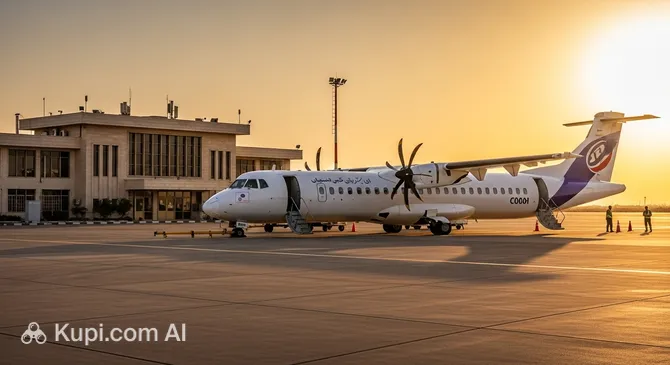
Birjand Airport. Source: Kupi.com Binoculars

Birjand International Airport is not merely a regional transport hub, but a true living history of Iranian aviation, as it is considered the third oldest airport in the country, established back in 1933. Located in the heart of the South Khorasan province, this air terminal serves as the main aerial gateway to the "land of saffron and barberry," welcoming travellers with a cosiness and tranquillity not found in capital city hubs. Despite its modest size, the airport holds international status and plays a key role in pilgrimage routes, connecting the region with the spiritual centres of the Islamic world.

IATA Code XBJ
ICAO Code OIMB
City Birjand
Distance to centre ~5–10 km
Status International
Passengers per year ~250,000 (estimated)
Schedule

Airport Features and Advantages:

Birjand Airport stands out favourably due to its compactness and convenience: thanks to the low passenger flow, all pre-flight formalities here are completed as quickly as possible, without exhausting queues. Its historical significance is a source of special pride — being one of the pioneers of civil aviation in Iran, it harmoniously combines tradition with modern updates, including an extended runway to accommodate larger liners. Travellers appreciate the airport for its proximity to the city — the drive to the centre takes mere minutes, allowing you to save time and immediately immerse yourself in the atmosphere of South Khorasan.

Contact Information

Contact the representatives of Birjand Airport (XBJ) using the following contact information. It is recommended to check the validity of the data on the official website before your trip.

  • Official Website: Generally, the most accurate and updated information can be found on the airport's official website: birjand.airport.ir. The site is available in Persian.
  • Information Desk Phone: To obtain information about flights and airport services, you can call the number: +98 56 32389201. For calls within Iran, the short code 199 is also active.
  • Airport Address: Birjand International Airport, Moallem Blvd, Birjand, South Khorasan Province, Iran.
  • Email: A direct email address for general inquiries is usually not published. For communication, it is recommended to use the feedback form on the official website, if available.
  • Social Media: At this moment, official pages for Birjand Airport are not maintained on international social media platforms.
  • Lost Luggage Information: In case of luggage loss during a flight, you should first contact your airline's representative office. regarding items left or lost within the terminal building, you can contact the airport's lost and found service by phone: +98 56 32389360.
  • Passenger Support Contacts: For general questions and passenger support, it is recommended to use the main airport information desk phone number.

How to Get to the Airport

Getting to Birjand Airport (XBJ) from the city centre is quite simple, as it is located in close proximity to the main districts. Travellers can choose one of several methods depending on their budget, time, and comfort preferences.

Taxi and Transfer — the most popular and convenient way to get to the airport. The trip from the centre of Birjand takes on average 15–20 minutes depending on traffic conditions. Although this is the most expensive option compared to public transport, the cost of the trip remains quite affordable. It is highly recommended to agree on the price with the driver before setting off, but tentatively it will be the equivalent of a few US dollars. You can use official city taxis or book a private transfer in advance, which is especially convenient if you have a lot of luggage.

Public Transport in the form of city buses is the most budget-friendly option. The fare will be minimal, significantly cheaper than a taxi. However, this method is less predictable: routes and schedules may not always be convenient for tourists, especially those with bulky luggage. There is no direct railway or metro connection to the airport. If you decide to save money and take the bus, it is worth checking its route and schedule on-site in advance.

For those who prefer to manage their own time, car rental is a good solution. This provides freedom not only for the trip to the airport but also for exploring the surroundings of Birjand and the South Khorasan province in Iran. Local rental agencies operate in the city. If you arrive at the airport in your own or a rented vehicle, a car park is available on its territory, offering both short-term and long-term parking options.

Terminals and Map

Birjand Airport (XBJ) is a small regional airport, so its structure is very simple and intuitive for passengers. You will not have to worry about complex navigation as you would in major international hubs.

The airport operates one passenger terminal, which serves both domestic and international flights. Thanks to its compact dimensions, all zones are within walking distance of each other, and there is no need for transfers between terminals. The airport layout is extremely clear: a single building divided into functional zones.

The departure zone includes check-in counters, a security screening point, and a small waiting lounge for passengers. The arrival zone consists of a baggage claim hall and the exit to the city. All signs are in Farsi and English, which facilitates orientation. Due to the low passenger flow, getting lost here is practically impossible.

Completing all pre-flight procedures, such as flight check-in and security screening, usually takes significantly less time than in large airports. Nevertheless, it is recommended to arrive at the airport in advance: 1.5–2 hours before a domestic flight and 2.5–3 hours before an international one, to avoid any unforeseen delays.

The main recommendation for navigation is simply to follow the signs. After entering the building, you will immediately see the check-in counters. After checking in and dropping off your luggage, head to the security screening zone, after which you will enter the departure lounge. All navigation is linear and will not cause difficulties even for those travelling for the first time.

Airport History

Birjand Airport (XBJ) is not just an aerial gateway, but a living page in the history of aviation in Iran. Its story began back in 1933, making it the third oldest airport in the country. Initially, it was built as a small landing strip for military and administrative needs, which laid the foundation for its future development.

The airport played a special role during World War II. Thanks to its strategic location, it was used by Allied forces as an important refuelling point for aircraft. After the war, a new stage began: in 1947, the first passenger flights were launched, connecting Birjand with Mashhad and Tehran. This was a key moment in transforming the airfield into a fully-fledged civil airport.

With the growth in demand for air travel, the airport has been modernised multiple times. New runways and terminals were built. A landmark event was 2008, when Birjand Airport received international status. Already in 2009, the first international flight to Medina was operated, opening direct routes for pilgrimage and travel for the region's residents.

Today, Birjand Airport is a modern transport hub that continues to develop. Over its nearly century-long history, it has journeyed from a modest airfield to an important international airport, whilst retaining its status as one of the oldest and most significant aviation facilities in Iran. This fact makes it not only a functional facility but also a true historical asset.

Services and Facilities

Birjand Airport (XBJ) is a small regional airport, so the range of services here corresponds to its size. Nevertheless, passengers can count on basic amenities necessary for a comfortable wait for their flight.

For a snack before departure, there is a small café or buffet in the airport where you can order drinks, snacks, and light meals. There are also several kiosks selling necessities and local souvenirs. The selection of shops is limited, so do not count on serious shopping.

Passengers can spend time in the general waiting hall. For those who prefer enhanced comfort, a CIP Lounge (Commercial Important Person) is usually available, offering more comfortable seating, refreshments, and a quiet atmosphere. Wi-Fi access in the terminal may be limited, however, you can usually find charging stations for mobile devices in the waiting halls.

Basic banking services may be available on the airport premises, for example, an ATM for cash withdrawals. Currency exchange points are rare in small regional airports. A medical point operates to provide emergency assistance. Families with small children can use the mother and child room.

The airport is equipped to serve passengers with reduced mobility: ramps are available, and staff are ready to provide necessary assistance during boarding and disembarking. There are no hotels within the airport grounds, but travellers can easily find accommodation options in the city of Birjand, which is a few minutes' drive away. Specialised business centres or conference rooms are absent in the terminal.

Where to Eat

When planning a departure from Birjand Airport (XBJ), it is worth considering that this is a small regional air terminal, and the choice of dining establishments here is appropriate to its size. Snack options are quite modest but allow you to comfortably spend time waiting for a flight with a cup of tea or coffee.

As a rule, in the main hall of the airport accessible to all visitors (landside), as well as in the departure zone after passing security control (airside), a small café or buffet operates. Here you can purchase drinks, sandwiches, pastries, and light snacks. This is an ideal option for a quick bite, but not for a full lunch or dinner. The opening hours of such establishments are usually tied to the flight schedule.

Although there are no specialised restaurants with extensive menus here, you will be able to experience some elements of local gastronomy. Look out for traditional Iranian pastries or sweets that may be in the assortment. Since Birjand is the capital of saffron, sometimes you can find drinks or desserts featuring this famous spice in local cafés.

All food products at the airport, as in all of Iran, comply with Halal standards. Finding vegetarian options is possible — usually, these are simple snacks like cheese sandwiches or meat-free pastries. However, special vegan or gluten-free dishes are unlikely to be available. Prices in the café are generally moderate and designed for local passengers.

Recommendation: If you need a hearty lunch or dinner, it is better to eat at one of the city's restaurants before travelling to the airport. Establishments at Birjand Airport are more suitable for having a coffee and eating a light snack immediately before departure.

Traveller Tips

To ensure your journey through the airport of Birjand goes smoothly and without unnecessary stress, use these helpful tips. These recommendations will help you save time, money, and nerves, making the start or end of your trip as comfortable as possible.

Arrival Time and Check-in. Arrive at the airport well in advance. For domestic flights, it is recommended to allow at least 2 hours, and for international flights — about 3 hours. This time will be enough to calmly complete flight check-in and pre-flight screening. If your airline offers online check-in, be sure to use it — this will save you time in queues.

Passing Security Control. Be prepared for standard screening procedures. All electronics, such as laptops and tablets, as well as liquids, will need to be removed from your hand luggage. Procedures in airports in Iran can be quite thorough, so follow the instructions of the security staff.

Hand Luggage and Seat Selection. When packing hand luggage, remember the generally accepted restrictions: liquids in containers up to 100 ml packed in a transparent bag, and no sharp objects. As for seat selection on the plane, a window seat is ideal for those who love to admire the views, while an aisle seat is for those who value the freedom to move around the cabin.

Customs and Transit. When arriving on an international flight, be prepared to pass customs control. Be sure to familiarise yourself with the rules for importing and exporting currency and personal items to avoid misunderstandings. If you have a transfer in Birjand, find information about your next flight and the boarding gate number on the display board immediately upon arrival.

How to Save Money. To avoid overpaying, book a transfer from the airport in advance. Prices for food and water in the departure zone are usually higher than in the city, so you can take an empty bottle with you and fill it with water from a drinking fountain after screening. Exchanging currency at the airport is often less favourable than at city exchange bureaus.

In Case of Flight Delay. If your flight is delayed, first contact the airline representative or monitor the information on the departure boards. Ensure you have access to a phone charger, and that your hand luggage contains all necessary items in case of a long wait. Find out about your passenger rights — for long delays, airlines are obliged to provide drinks, meals, or even hotel accommodation.

Airports in nearby cities

Reached the end of the page?

That means the route is fully explored