Support

Erbil International Airport

About the Airport

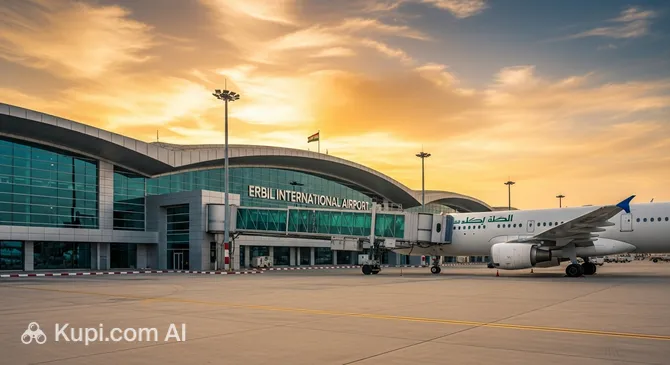
Erbil International Airport. Source: Kupi.com Binoculars

Erbil International Airport (IATA: EBL) is the main aerial gateway to the Kurdistan Region of Iraq and one of the key airports in Iraq. Opened in 2010, it has become a symbol of the region's modern development, offering travellers a safe and comfortable way to reach the ancient city of Erbil. The airport boasts one of the longest runways in the world, measuring 4,800 metres, allowing it to accommodate all types of aircraft. Today, it is one of the busiest airports in the country, playing a vital role in the development of tourism and business ties.

IATA Code EBL
ICAO Code ORER
City Erbil
Distance to centre About 10 km
Status International
Annual Passengers About 1.9 million (2022)
Popular Airlines Turkish Airlines, Pegasus Airlines, Qatar Airways
Schedule "Erbil International Airport" Online Board

Erbil Airport is designed according to international standards and offers passengers all necessary amenities for a pleasant journey. Inside the spacious terminal, you will find duty-free shops, currency exchange bureaus, cafes, and restaurants. For comfortable waiting, there are VIP lounges, and for worshippers, there are dedicated prayer rooms. Transport connections to the city are provided by official taxi services, which offer rides at fixed prices, ensuring safety and convenience upon arrival.

Contact Information

For your convenience, we have compiled the main contact information for Erbil International Airport (EBL). We recommend always checking for the most up-to-date data on official resources before your trip.

  • Official Website: For the latest information on flights, services, and airport regulations, visit the official website: erbilairport.com.
  • Help Desk Phone: For general enquiries, you can call: +964 66 281 0000.
  • Airport Address: Airport Road, Erbil, Kurdistan Region, Iraq.
  • Email: A direct email address for general enquiries is not published. It is recommended to use the contact form on the airport's official website for communication.
  • Social Media: You can follow news and updates on the airport's official social media pages, such as Facebook.
  • Lost Luggage Information: In case of lost or damaged luggage, you must contact your airline's baggage tracing service or their ground handling agent at the airport directly.
  • Passenger Support Contacts: For general support and consultation, you can use the help desk phone number listed above.

How to Get to the Airport

Getting to Erbil International Airport (EBL) from the city centre is straightforward, as it is located just ~7 kilometres from the key districts of Erbil. The most convenient and common way to reach the terminal is by taxi or pre-booked transfer. The journey from the central part of this city in Iraq usually takes 10–20 minutes, although travel time may increase during peak hours. To ensure a fair price, it is strongly recommended to use official taxi services or book a car through your hotel.

If you prefer independence and plan your route yourself, car rental is a good choice. Several international and local rental companies operate offices in the city. The road to the airport is well-marked with signs. The airport complex features convenient zones for short-term and long-term parking, allowing you to leave your personal or rented vehicle without issues for the duration of your trip.

It is important to note that direct public transport connections, such as specialised shuttle buses or trains, between the city centre and the airport are currently poorly developed or absent. Therefore, most tourists should not rely on this option. Almost all travellers and locals prefer taxis due to their availability, speed, and comfort.

Thus, when planning your departure, allow budget and time for a taxi ride or rental car. These are the most predictable and convenient ways to arrive at Erbil Airport on time and without hassle to check in for your flight.

Terminals and Map

International Airport Erbil (EBL) features one modern passenger terminal that handles all domestic and international flights. This makes navigating the airport simple and intuitive, as all key zones—check-in, security, departures, and arrivals—are located under one roof.

The terminal structure is logical and well-thought-out. Departure and arrival zones are separated by levels for passenger convenience. The Departure Level houses check-in counters, passport control, and pre-flight security screening. After passing all formalities, passengers enter a spacious waiting area with Duty Free shops, cafes, restaurants, and boarding gates. The Arrival Level is located on a different floor and includes immigration control counters, baggage claim belts, and customs inspection.

Since there is only one terminal, transfers between zones are not required—everything is within a single building. The airport map is simple, and signs in Kurdish, Arabic, and English are placed everywhere, making it easy to orient yourself. On average, passing through check-in and security takes from 45 to 90 minutes, though this time may increase during peak hours. It is recommended to arrive at the airport at least 3 hours before departure for international flights and 2 hours before domestic ones to go through all procedures without rushing.

For comfortable waiting, the terminal provides all necessary amenities: from currency exchange bureaus and ATMs to VIP lounges and prayer rooms. The main tip for navigation is simply to follow the signs. Thanks to the compact and thoughtful layout, getting lost in Erbil Airport is practically impossible, even if it is your first time here.

Airport History

The history of International Airport Erbil (EBL) is a story of rapid development and transformation from a regional airfield into a modern international hub. Although a military airfield existed on this site previously, built in the 1970s, the history of the modern civil airport began in the new millennium. The decision to build a new world-class facility was made with the aim of opening the Kurdistan Region of Iraq to the world.

Construction of the new airport began in 2003, and as early as December 15, 2003, it received its first charter flight. However, the official opening for international flights took place in 2005. This became a key moment for the economic and social development of the region. Soon, it became obvious that the initial infrastructure was insufficient for the growing flow of passengers and cargo.

The most significant modernisation in the airport's history was completed in 2010 with the opening of a new, ultra-modern terminal. This complex, designed by the British company Scott Wilson Group, became one of the longest in the world and was equipped with state-of-the-art technology, including a 4,800-metre runway capable of accommodating the largest aircraft. This reconstruction radically changed the appearance and capabilities of the airport.

The airport has played an important role in many events in the region, serving as a humanitarian and diplomatic hub. One of the challenging periods in its history was the temporary suspension of international flights in 2017-2018 by the decision of the central government, which was a serious test. However, after the resumption of flights, the airport quickly regained its position and continued to grow.

Among interesting facts is that the airport is built on the site of an old Iraqi military base. Today, it is not only one of the busiest airports in the country but also an important cargo hub for the entire region. Its history is a vivid example of how modern infrastructure can become a catalyst for change and a symbol of openness and progress.

Services and Amenities

International Airport Erbil (EBL) offers passengers a wide range of services to make waiting for a flight as comfortable as possible. In the terminal, you will find various dining spots: from cosy coffee shops where you can have a quick snack, to restaurants offering full meals. For those who want to spend time shopping, stores are open, including Duty Free, where a standard assortment of perfumes, cosmetics, confectionery, and local souvenirs is presented.

For a more comfortable wait, the airport provides VIP and Business Lounges. This is the ideal place to rest in silence, work, or simply enjoy complimentary snacks and beverages. Free Wi-Fi is available throughout the terminal, and numerous charging stations for gadgets will allow you to always stay connected. Business travellers can utilise conference rooms for meetings.

Erbil Airport has also taken care of the practical needs of travellers. Here, banks, ATMs, and currency exchange bureaus operate, which is especially convenient for those arriving in Iraq. In case of illness, there is a medical centre ready to provide first aid. Families with small children can use mother and child rooms equipped with everything necessary for baby care.

The airport is fully adapted to serve passengers with reduced mobility: special assistance services are provided, and equipped restrooms are available. Although there are no hotels directly within the terminal building, several hotels of various levels are located in the immediate vicinity, which can be easily reached by taxi. This is a convenient option for those with an early departure or a long layover.

Where to Eat

At Erbil International Airport (EBL), passengers will find several options for a snack or a full meal, located both in the public area and after passport control. The choice of establishments caters to different tastes and budgets, from a quick coffee to a leisurely meal before departure.

The majority of cafes and restaurants are concentrated in the departure zone (airside). Here you can find establishments offering both international cuisine dishes and local delicacies. This is a great opportunity to try something from Iraqi or Kurdish cuisine, for example, various types of kebab or mezze. For those in a rush, coffee shops are open where you can order sandwiches, pastries, and beverages. In the arrival zone, the selection is usually more modest and limited to small cafes.

Regarding special dietary needs, Halal dishes are widely available in most establishments. Vegetarians are typically offered salads, vegetable side dishes, and some appetisers. The availability of gluten-free or vegan options should be checked directly with the cafe or restaurant staff, as their assortment may be limited.

Prices at the airport are traditionally higher than in the city but remain at an acceptable level for a transit hub. Most establishments, especially in the departure zone, operate 24/7 or adjust their schedule to flight times, so you can refresh yourself even with a night or early morning departure. For a quick snack, coffee shops are ideal, while for a full lunch or dinner, it is better to choose one of the à la carte restaurants where you can comfortably spend time waiting for boarding.

Travel Tips

To ensure your journey through Erbil International Airport goes smoothly, make use of these practical tips. Planning ahead will help avoid unnecessary stress and make your experience more comfortable.

Arrival time at the airport: For international flights, it is recommended to arrive at the airport at least 3 hours before departure. For domestic flights, 1.5-2 hours is usually sufficient. This time will be enough to calmly go through all pre-flight formalities, including check-in, baggage drop, and security control, even during busy periods.

Check-in and security control: Procedures at Erbil airport are standard but can be quite thorough. Keep your passport, visa (if required), and boarding pass handy. To speed up passing through control, remove all metal items from your pockets in advance, and take laptops and other large electronics out of your hand luggage.

Choosing a seat on the plane: If the airline allows you to choose a seat in advance, consider your preferences. A seat by the window will offer beautiful views during takeoff and landing, whilst a seat by the aisle provides more freedom to move around the cabin and the ability to stretch your legs.

Hand luggage: It is prohibited to take liquids in containers larger than 100 ml, sharp objects, weapons, and flammable substances in hand luggage. Be sure to put all your most valuable items in your hand luggage: documents, money, prescription medication, portable chargers, and fragile electronics. A small set of change of clothes is also useful.

Passengers with transfers: If you have a connecting flight, check at registration whether your luggage will be transferred automatically to the final destination. In the transit zone, follow the "Transit" or "Connections" signs. If you need to check in again for the next flight, you will likely have to go through passport and customs control.

Customs control: Upon arrival in Iraq, you will first have to pass passport control, and then customs. If you are carrying large sums of cash or goods subject to declaration, be sure to inform customs officers. Honest answers to questions and documents prepared in advance will help pass this procedure quickly.

Saving time and money: Check in for your flight online to save time at the airport. Book a transfer from the airport in advance—this is often cheaper than taking a taxi on the spot. Prices for food and drinks at airports are traditionally high, so you can take a light snack and an empty water bottle with you, which can be filled after passing security control.

In case of flight delay: If your flight is delayed, first contact your airline representative for information on the reasons and estimated departure time. Depending on the length of the delay, the carrier is obliged to provide drinks, meals, and in some cases—accommodation in a hotel. Watch for updates on information boards and in your airline's app.
Reached the end of the page?

That means the route is fully explored