Support

Brindisi Railway Station

About the Station

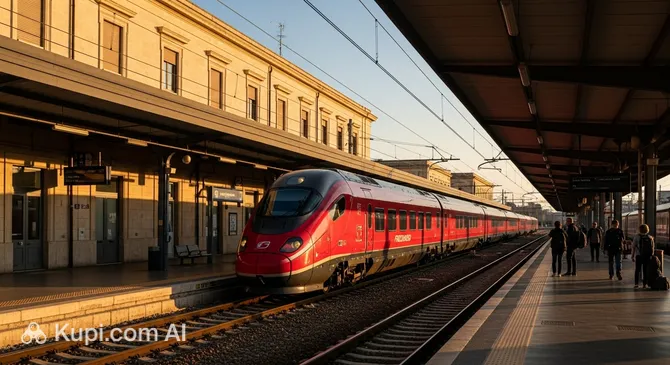
Brindisi Railway Station. Source: Kupi.com Binoculars

Brindisi Railway Station is a key transport hub for the Puglia region, connecting the "heel" of the Italian boot with the north of the country and other major cities. Located on the bustling Piazza Francesco Crispi, the station serves as an important transfer point for those heading to the port area or exploring the beauties of the Salento peninsula. The station building is notable for its functionality and offers travellers comfortable conditions to begin their journey through southern Italy.

CityBrindisi
CountryItaly
TypeRailway Station

The station features an intuitive layout, making navigation simple even for first-time visitors. The platforms are connected by a convenient underpass equipped with lifts, which is particularly valuable for tourists with heavy luggage. Inside the building, passengers will find ticket counters, self-service machines, a waiting room, and a café where you can have a snack.

An important advantage of the station is its strategic location: from here, it is easy to reach the seaport by bus or on foot to continue your journey by ferry to Greece or Albania. Additionally, buses running to Brindisi-Salento Airport stop right at the exit, ensuring excellent connections between rail and air transport.

Contact Information

  • Official Website: www.rfi.it (infrastructure), www.trenitalia.com (tickets and schedules).
  • Information Phone: 89 20 21 (Trenitalia unified contact centre, toll number). There is no direct telephone number for the station for inquiries.
  • Address: Piazza Francesco Crispi, 72100 Brindisi BR, Italy.
  • Opening Hours: The station is open to passengers daily from 05:00 to 01:00. Ticket counters operate from 06:00 to 22:00; at other times, tickets can be purchased from self-service machines.
  • Luggage Storage Information: There is no luggage storage within the station building. Tourists can leave luggage at paid storage points (for example, via services like Radical Storage or Bounce), which are located within walking distance in neighbouring cafés and souvenir shops on Piazza Crispi.
  • Accessibility Information: The station is equipped with lifts and dedicated restrooms for people with reduced mobility. Assistance with boarding and alighting is provided by the Sala Blu service (managed by the office in Bari). A request for assistance must be submitted in advance, at least 24 hours before the journey, via the official RFI website or the national support hotline.

How to Get There

Thanks to the compact size of the city, getting to Brindisi Railway Station is easy from almost any point. The station is located on the edge of the historic centre, so many tourists prefer a walk. The journey from main attractions, such as the Regina Margherita waterfront or the Roman Columns, will take just 10–15 minutes. Simply follow the straight, lively street Corso Umberto I, which transitions into Corso Garibaldi and will lead you directly to Piazza Crispi.

For those in outlying areas or travelling with heavy luggage, the city bus is a convenient option. The station serves as a key hub for the local transport company STP Brindisi. Routes from all over the city arrive here, with stops located directly on the station square. If you are coming from the seaport (Costa Morena terminal), look for the bus connecting the port and the centre; the trip will take about 15–20 minutes.

Particular attention should be paid to the route from Salento Airport. A dedicated shuttle (the Circular Airport Bus line) runs between the airport and the station. This is the fastest and most economical way to get to the train: buses depart every half hour, and the travel time is approximately 10–15 minutes.

City taxis are also always available to travellers. A trip from most hotels in the city centre to the station entrance will be short—about 5–7 minutes—though the cost may vary depending on the time of day and the amount of luggage. A taxi rank is located right in front of the station exit, ensuring convenient drop-off for passengers.

Services and Amenities

Although Brindisi Railway Station is not a massive transport hub, it offers passengers the necessary range of services for a comfortable wait for their train. The station's infrastructure is focused on functionality, providing travellers with basic amenities before departing to other regions of Italy or transferring to a ferry.

To purchase travel documents, traditional ticket counters operate in the main hall, where staff can assist with route selection. If you are in a hurry or the counters are closed, you can use the 24-hour self-service machines (Biglietteria self-service). They support multiple languages and accept both cash and bank cards, allowing you to quickly print a ticket bought online or purchase a new one.

The rest area features a small but clean waiting room. Here, passengers can take shelter from bad weather or the summer heat. Wi-Fi is available inside the station and on the platforms (network registration required), though the signal may be unstable depending on the zone. Finding electrical outlets to charge gadgets is more difficult—they are usually located in the waiting room, but their number is limited. For a quick snack or a cup of coffee, there is a café-bar in the building, which also sells newspapers and magazines.

Special attention should be paid to the matter of luggage. It is important for travellers to know that there is no left luggage facility at the station itself. Suitcases can only be left at private luggage storage points in the city located nearby. Restrooms are located on Platform 1; entry is usually paid, so it is recommended to have small coins with you. The facilities are kept clean and are cleaned regularly.

Brindisi Station is adapted for passengers with reduced mobility. The station is equipped with tactile guides for visually impaired people, and platforms are connected by lifts. The Sala Blu (Blue Room) assistance service operates here, with staff providing accompaniment during boarding and alighting from the train, as well as providing wheelchairs. To receive this service, a preliminary request must be made.

Where to Eat

The gastronomic scene in the area of Brindisi Railway Station is primarily oriented towards transit passengers who need to eat quickly and inexpensively. A classic station café (bar-caffetteria) operates right inside the terminal building. This is an ideal place for those who have only a few minutes before their train departs. Here you can drink a cup of strong espresso right at the counter, buy fresh pastries, or take a packed sandwich (panino) with you. The assortment here is basic, but the quality of the coffee is traditionally high, as it is everywhere in Puglia.

If you have at least half an hour to spare, we recommend going out to the station square, Piazza Francesco Crispi. Around the perimeter of the square and at the beginning of Corso Umberto I street, there are several cafés and eateries offering a wider selection of local food. Pay special attention to signs with the word Rosticceria. These places serve hot local specialities that are convenient to eat on the go.

Be sure to try panzerotti—fried crescent-shaped pastries filled with tomatoes and mozzarella, or rustico—puff pastry with béchamel, tomatoes, and cheese. These are filling, delicious, and budget-friendly snack options that are a hallmark of the Salento region. Also near the station, you can find establishments serving kebab and pizza by the slice (pizza al taglio), which is convenient for a substantial lunch without a long wait.

Practical Information and Prices:

  • Average Bill: Breakfast (coffee and croissant) will cost approximately 2.50–3.50 EUR. A substantial snack (sandwich/pizza + drink) will cost about 7–10 EUR.
  • Opening Hours: Most cafés on the square open early, around 06:00, and work until late in the evening (22:00–23:00).
  • Night Time: There are no full-service 24-hour restaurants directly at the station. If you arrive late at night, the only option remains the vending machines inside the station, where you can buy water, snacks, and packed sandwiches.

Station History

The history of railway communication in Brindisi began in the second half of the 19th century, when the city sought to strengthen its status as the main port of the Adriatic. The station was inaugurated in 1865, becoming an important link in the Adriatic Line (Ferrovia Adriatica). This event not only connected Puglia with Ancona and the northern regions of the country but also marked the end of the transport isolation of the Italian "heel", giving a powerful impulse to the economic development of the city.

The golden era of the station is inextricably linked with the legendary "Indian Mail" route (Valigia delle Indie). Between 1870 and 1914, Brindisi served as the rail terminus for the prestigious Peninsular Express travelling from London. It was here that trains carrying mail and passengers of the British Empire arrived, who then transferred to steamships sailing through the Suez Canal to Bombay. During these years, Brindisi station was truly the Gateway to the East, welcoming diplomats, merchants, and aristocrats from all over Europe.

The original station building, designed in the classical style of the 19th century, eventually ceased to meet the demands of growing passenger traffic and modern standards. In the mid-20th century, as part of the post-war reconstruction and modernisation of southern Italy, a decision was made to radically rebuild the complex. The station acquired its current appearance in 1957. The new building, designed by architect Corrado Camilli, was executed in the style of Rationalism: strict geometric forms, an abundance of glass, and spacious halls replaced the old architecture, placing the emphasis on functionality.

Nowadays, Brindisi Station has transformed into a strategic node for intermodal transport. Having lost its function as a transit point for British mail, it has acquired a new role—a key hub for tourists discovering the Salento peninsula. Today, the station ensures a seamless connection between the national railway network, the seaport, and the airport, continuing to remain a vital transport artery of the region.

Passenger Tips

To ensure your journey through Brindisi goes smoothly and without unnecessary stress, we recommend passengers consider a few important practical nuances. Italian railways have their own specifics, and knowing local rules will help avoid fines and delays.

  • Arrival Time: Although the station is small and navigation is simple, try to arrive at the station at least 20–30 minutes before your train departs. This time will be needed to orient yourself, find the correct track (Binario) on the board, and proceed to the platform via the underpass, especially if you are travelling with suitcases.
  • Tickets and Boarding: A critically important rule for all regional trains (Regionale) and paper tickets without a specified seat is that they must be validated before boarding. Look for small green or yellow machines on the station walls and at the beginning of the platforms. If the ticket is not stamped, the conductor may issue a substantial fine. For electronic tickets (PDF on a smartphone) on high-speed Frecce and Intercity trains, this action is not required.
  • Luggage and Logistics: Since there are no luggage lockers at the station, plan your itinerary in advance. If you have a few hours before your train and want to walk around the city, book a spot in private luggage storage facilities via online services. Moving around the station with luggage is convenient: there are lifts everywhere, but during peak hours there may be a queue for them.
  • Safety: Brindisi is a calm city, but the station always remains a place with a high concentration of people. Do not leave your belongings unattended even for a minute, especially in the café area and near ticket machines. Be attentive on the station square where buses stop: it is often bustling there.
  • Night Waits: It is important to remember that the station building closes at night (from 01:00 to 05:00). This is not a place where you can wait out the night in the waiting room. If you have a night transfer or a very early flight, be sure to book a hotel nearby—there are several convenient options on Corso Umberto I street.
  • Transfers: If you plan to transfer from a train to a ferry to Greece or to a plane, allow a time buffer of at least 1.5–2 hours. Although buses to the port and airport run frequently, road traffic or a train delay can affect the schedule.

Pay close attention to information on electronic boards and listen to voice announcements. Sometimes the platform number may change a few minutes before the train arrives, so it is better to wait directly in the main hall or near the monitors.

Reached the end of the page?

That means the route is fully explored