Support

Loreto

About

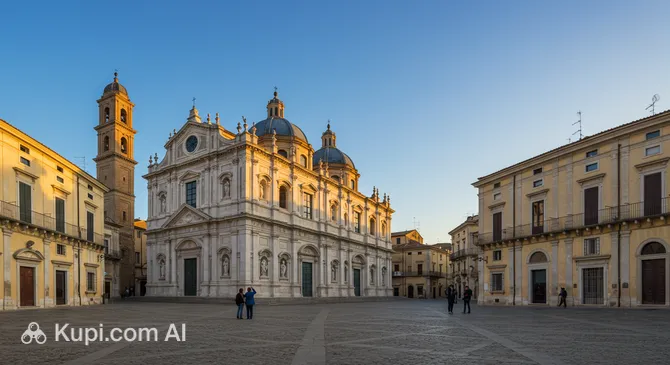
Loreto is a charming Italian town nestled on the scenic hills of the Marche region, just a few kilometers from the azure shores of the Adriatic Sea. It is a place where the solemnity of ancient shrines, the slow pace of the Italian province, and the sincere hospitality of local residents combine in a wonderful way. The city seems to have absorbed the best features of Italy: here, the sea breeze mixes with the scents of blooming hills, and the high points offer breathtaking panoramas of the surroundings, including vineyards and sea vistas on clear days.
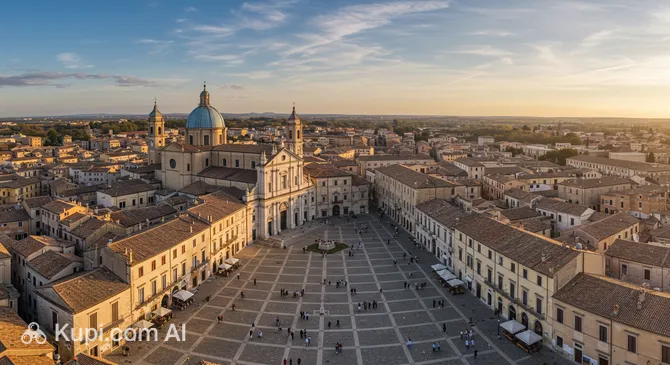
Loreto. Illustration.
Source: Kupi.com AI

Despite its relative compactness — Loreto has a population of about 12,800 people — the city holds immense cultural and spiritual significance. It is recognized as one of the most important centers of Catholic pilgrimage in the world, attracting believers from every corner of the planet. The main jewel and heart of the city is the majestic Basilica of the Holy House (Basilica della Santa Casa), which, according to tradition, houses the home of the Virgin Mary, transported by angels from Nazareth. The historical center of Loreto is also full of architectural masterpieces and preserves a medieval atmosphere.

Loreto attracts not only pilgrims but also tourists wishing to immerse themselves in authentic Italian culture, enjoy local cuisine, and admire unique monuments of antiquity. A walk through its narrow, flower-lined cobbled streets will provide unforgettable impressions. If you are looking for a place where history and spirituality intertwine with natural beauty and warmth, Loreto will be a true discovery for you.

You can find more interesting facts on the history of Loreto page.
Weather Overview

The weather in Loreto is characterized by warm and occasionally hot summers and mild winters. The average temperature in the hottest months, July and August, stays at around 26°C, with maximum values reaching 30°C. These summer months also see the least amount of precipitation, only about 1 mm, and the fewest rainy days. In winter, for example in January, the average temperature is about 7.5°C, with minimum temperatures around 4°C. Precipitation in winter and the shoulder seasons is slightly higher but generally remains at a low level, around 2-3 mm per month, while the number of rainy days can reach 9-11. Thus, expect warm, sunny summers with rare rain and cool, wetter winters in Loreto. For more detailed information, you can visit the Loreto Climate page.

Average monthly temperature

Average monthly precipitation

Interesting Facts

Loreto, known worldwide as a center of pilgrimage, holds within its walls not only great shrines but also many fascinating stories and little-known details. Discover some of them:

Sanctuary of the Holy House of Loreto. Illustration.
Source: Kupi.com AI

Traveler photos:

  • According to centuries-old legend, the city's main relic — the Holy House — is the authentic home of the Virgin Mary from Nazareth. Tradition says that in the 13th century, angels carried it through the air first to Illyria (modern-day Croatia) and then to a hill in Loreto to save it from destruction.

  • Due to the miracle of the translation of the Holy House, Our Lady of Loreto (Madonna di Loreto) is venerated as the patroness of aviators and all who travel by air. This status was officially granted by Pope Benedict XV in 1920, making this tradition unique.

  • Beyond its spiritual heart, the Basilica of the Holy House, Loreto is surrounded by impressive medieval bastions and walkways along the fortress walls (Camminamenti di Ronda). These fortifications were built to protect the sacred site and today offer breathtaking panoramic views of the Adriatic coast and the picturesque countryside.

  • Outstanding Renaissance masters worked on the marble cladding of the Holy House itself inside the basilica and on the architectural complex of the sanctuary, including Donato Bramante, one of the key architects of St. Peter's Basilica in Rome, as well as Andrea Sansovino and Giuliano da Sangallo. Their contributions turned Loreto into a jewel of Renaissance art.

How to Get There

You can reach the picturesque town of Loreto, located in the Marche region of Italy, in several ways, mainly through the nearest airports and then by land transport. It is also possible to travel by train to major hubs with a subsequent transfer to regional lines or buses.

The primary and most convenient option for flying is Ancona Falconara Airport (IATA: AOI). This international airport is located in the city of Ancona, approximately 28.5 km north of Loreto. From the airport to Loreto, you can get by taxi or rental car in about 30-40 minutes. Bus routes connecting the airport with Ancona are also available, where you can transfer to transport to Loreto. Ancona Airport serves both international and domestic flights, being an important transport hub for the region.

Another airport to consider is Abruzzo Airport (IATA: PSR), located in the city of Pescara. It is about 121 km south of Loreto. A trip by car or taxi from Pescara to Loreto will take approximately 1.5-2 hours. This airport also handles international and domestic flights and can be convenient if you plan to visit the southern part of the Marche or Abruzzo regions.

For convenience, here is summary information on the main airports from which you can reach Loreto:

AirportPassenger trafficDistance
Ancona Falconara Airport600 06528 km
Sant Egidio Airport532 47497 km
Miramare Airport321 552104 km
Abruzzo Airport872 701121 km
Luigi Ridolfi134 000150 km

Traveling by train to Loreto is also possible, although the town itself does not have a large railway station directly connected to the main lines. The nearest major railway hubs are in cities like Rome and Florence. For example, from Roma Termini Station (IATA: XRJ) in Rome, which is one of the largest in Italy and located about 194 km from Loreto, you can take a high-speed train to Ancona (travel time about 3-4 hours). From Ancona railway station to Loreto, you can take a regional train (to Loreto station, if suitable services are available) or a bus in about 30-45 minutes. Similarly, you can consider a route through Florence, reaching Ancona and then Loreto.

For a general overview, below is information on some major railway stations in the region, although they are located at a significant distance from Loreto:

StationPassenger trafficDistance
Ancona railway station921 km
Perugia railway station9107 km
Rimini railway station9109 km
Pescara railway station10118 km
Cesena railway station8135 km

If you are traveling by car, Loreto is conveniently located near the A14 motorway (Adriatica), making it easily accessible from various parts of Italy. Upon arrival in the region, it is recommended to check the current schedules of local buses and trains to plan your movements to Loreto and its surroundings.

Main Attractions

Loreto, a charming town in the Italian region of Marche, is known primarily as one of the most important centers of Christian pilgrimage. However, besides its main shrine, it offers other interesting places to visit.

Undoubtedly, the main attraction and heart of the city is the Sanctuary of the Holy House of Loreto. This majestic basilica, according to tradition, houses the Holy House from Nazareth — the home of the Virgin Mary. Millions of pilgrims and tourists come here every year to touch the shrine and admire the masterpieces of architecture and art that decorate the complex. Inside the basilica, you can see works by famous Italian masters, making it not only a religious site but also an important cultural landmark.

Sanctuary of the Holy House of Loreto. Illustration.
Source: Kupi.com AI

Traveler photos:

For those who appreciate active recreation and natural beauty, the Pista del Conero is an interesting option. This route likely runs through the picturesque surroundings of the Conero Regional Park, offering magnificent views of the Adriatic coast and green hills. It is a wonderful opportunity for hiking or cycling, allowing you to enjoy the fresh air and the peaceful atmosphere of the Italian countryside.

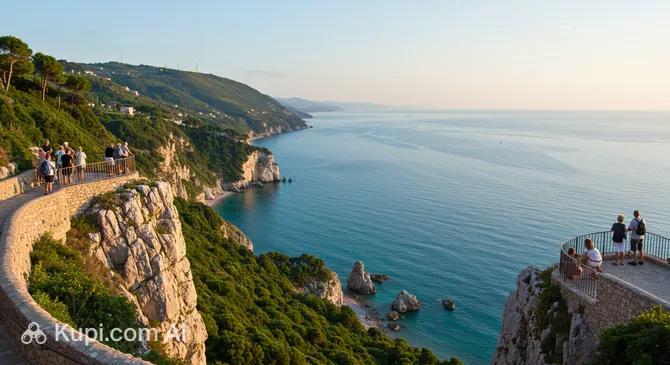
Pista del Conero. Illustration.
Source: Kupi.com AI

Traveler photos:

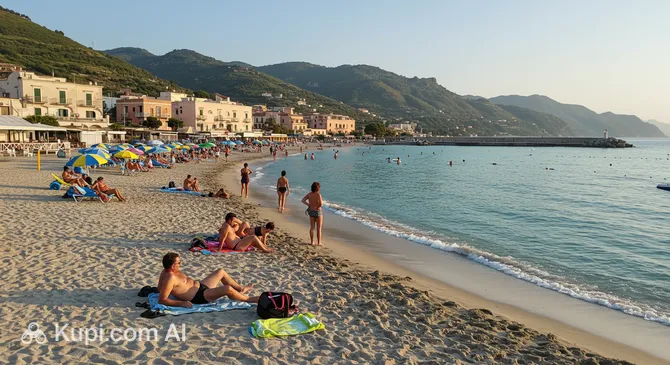
Travelers who do not want to leave their four-legged friends behind even on vacation will appreciate the availability of the Dog-friendly beach. This is a specially equipped area by the sea where you can comfortably spend time with your pet. Such an option makes Loreto even more welcoming for all categories of tourists.

Dog-Friendly Beach. Illustration.
Source: Kupi.com AI

Traveler photos:

Local Cuisine

The gastronomy of Loreto is a true immersion into the flavors of the Marche region, where simplicity, richness, and the freshness of farm products are valued. The city's cuisine will delight you with authentic dishes prepared with love using excellent extra virgin olive oil, fragrant local cheeses, and the freshest gifts of the Adriatic Sea. This culinary journey will leave the warmest memories for every gourmet.

Be sure to try "vincisgrassi" – a local variation of lasagna with a rich meat sauce and cheese, which is a signature dish of the region. Another iconic dish is "broetto", a thick and aromatic fish soup that harmoniously combines various types of fish and seafood. Don't miss the chance to enjoy homemade pasta, dishes with truffles, or game, which are often found on local menus. For a quick and satisfying snack, a "piadina" — a thin flatbread with various fillings, a popular street food — is perfect.

Accompany your meal with the excellent wines of the Marche region, which are famous for their quality. After dinner, you can enjoy local liqueurs with unique flavors. Among non-alcoholic drinks, traditional Italian coffee, freshly squeezed juices, and mineral water are always available. Locals and tourists usually enjoy these drinks in both restaurants and small cafes.

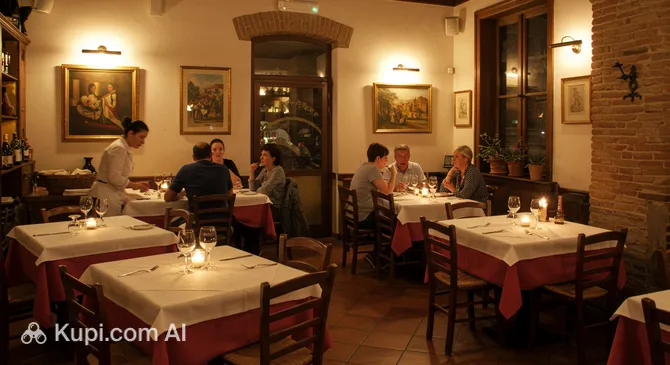
The dining culture in Loreto centers around family-run restaurants, trattorias, and osterias serving traditional dishes in a cozy atmosphere. Many establishments, such as Andreina Restaurant, take pride in using local products and old recipes, offering guests an authentic taste of Marche.

Ristorante Andreina. Illustration.
Source: Kupi.com AI

Traveler photos:

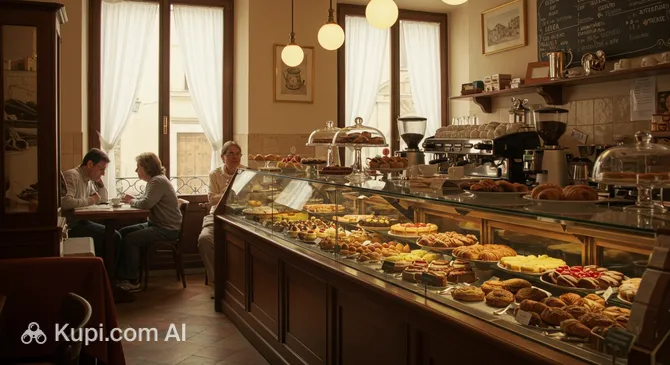
Besides restaurants, it is worth looking into local farmers' markets, where you can find fresh vegetables, fruits, homemade sausages, cheeses, and, of course, sweets. This is a wonderful opportunity not only to buy quality products but also to feel the authentic atmosphere of the city. And for lovers of sweets and aromatic pastries, it is recommended to visit places like Pasticceria Picchio, where you can try traditional desserts and have a cup of coffee.

Picchio Pasticceria. Illustration.
Source: Kupi.com AI

Traveler photos:

Loreto's gastronomic scene attracts with its sincerity and commitment to tradition. Various gastronomic festivals and wine celebrations are often held here, where you can get a deeper look at the culinary heritage of the region. Every meal in Loreto is not just satisfying hunger, but a small celebration of taste, filled with Italian hospitality and the joy of life.

Travel Tips

Welcome to Loreto! This small but spiritually rich city in Italy attracts many pilgrims and tourists every year. To ensure your trip is as comfortable as possible and leaves only pleasant impressions, we have prepared some practical tips.

  1. Clothing and Essentials: The climate in Loreto is Mediterranean. In summer, choose light, breathable clothing, a hat, and sunscreen. In winter, warmer items including a jacket and sweater will be useful. A key point is comfortable shoes for walking through the city's hilly terrain. When visiting the Basilica of the Holy House (Basilica della Santa Casa) and other religious sites, modest clothing covering shoulders and knees is mandatory. Don't forget a European adapter for electrical appliances (type F/L).
  2. Transport: The historical center of Loreto is best explored on foot. The town is quite compact. For trips to neighboring cities or to/from the airport, you can use regional buses or taxi services. Renting a car may be justified if you plan to travel extensively around the Marche region, but note that parking in Loreto itself, especially near the Sanctuary, can be limited.
  3. Finance: The official currency is the Euro (EUR). Credit and debit cards (Visa, Mastercard) are widely accepted in hotels, restaurants, and most shops. However, it is recommended to always have some cash with you for small purchases, payments at markets, or in small souvenir shops. ATMs (Bancomat) are easy to find in the city. Tipping in Italy is not strictly mandatory but is usually welcomed: you can round up the bill or leave 5-10% of the amount for good service in a restaurant.
  4. Health and Safety: Loreto is a peaceful and safe city. Pharmacies (Farmacia) are marked with a green cross; information about duty pharmacies working at night and on weekends can be found on the doors of the nearest pharmacy or online. In case of emergency medical assistance, call the pan-European number 112. As in any tourist spot, follow basic precautions: keep an eye on your belongings in crowded places, especially near the main attractions.
  5. Communication: The official language is Italian. In tourist areas, hotels, and restaurants, staff often speak English, but knowing a few basic phrases in Italian (for example, "Buongiorno" – good day, "Grazie" – thank you, "Prego" – you're welcome/please, "Scusi" – excuse me) will significantly facilitate communication and will be warmly received by the locals. A local operator's SIM card can be purchased in specialized shops. Wi-Fi is available in most hotels, cafes, and restaurants.
  6. Local Etiquette: Italians are hospitable and sociable. When entering shops, cafes, or small establishments, it is customary to say hello ("Buongiorno" in the morning and afternoon, "Buonasera" in the evening). Show respect for religious traditions, especially when visiting the Sanctuary. Silence should be maintained in churches so as not to disturb those praying.
  7. What to Avoid: Try not to photograph people without their explicit consent, especially during religious services or personal prayer. When visiting the Basilica and other holy places, avoid overly revealing or beach clothing (short shorts, tank tops, crop tops) — this may be seen as disrespectful.
  8. Additional Tip: Loreto is one of the most important pilgrimage centers. To fully experience the special atmosphere of the Sanctuary of the Holy House, try to visit it early in the morning or later in the evening when there are fewer tour groups. Also, look for the work of local artisans, especially religious art and rosaries — these can be unique and memorable souvenirs.

We hope these tips help you plan an unforgettable trip to Loreto. We wish you to discover the full depth of its spiritual heritage, enjoy the beauty of local architecture, and the hospitality of its people!

Entertainment & Nightlife

In the evening, Loreto offers its guests an atmosphere of tranquility and comfort, far removed from the noise of large metropolises. Although the city is not famous for boisterous nightclubs, you can spend a pleasant time here after a busy day, enjoying local hospitality and the charm of old streets.

Nightlife in Loreto is mainly centered around restaurants, cozy bars, and cafes where you can taste local cuisine or enjoy a glass of wine. The main activity is observed in the central part of the city, especially during the warmer months when tables are set out on the street. There are no noisy districts with neon signs; the atmosphere is more conducive to heartfelt conversations and relaxed rest.

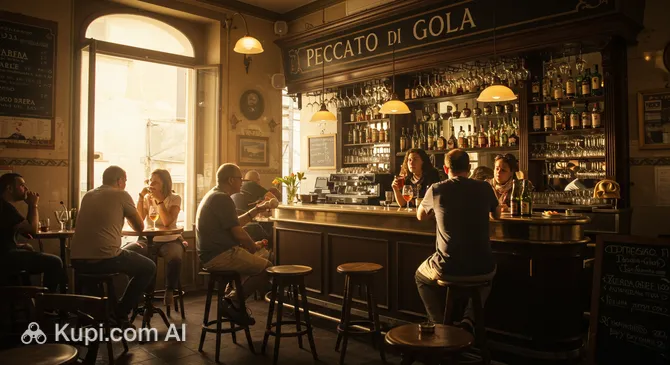
Among the establishments where you can enjoy a pleasant evening, it is worth noting Bahari Café Restaurant, which offers both dinners and drinks in a pleasant setting. For those looking for a classic Italian bar to enjoy an aperitif or a cup of coffee in the evening, Peccato Di Gola is a great choice. Many establishments stay open until late in the evening, especially on weekends.

Bahari Café Restaurant. Illustration.
Source: Kupi.com AI

Traveler photos:

The atmosphere in local establishments is generally informal and friendly. No special dress code is usually required; neat casual clothing is sufficient. The best time for evening walks and visiting bars is after 7:00 PM or 8:00 PM. Prices in most places are moderate, allowing you to enjoy the evening without significant expense. Many venues offer local wines and traditional snacks.

Peccato Di Gola. Illustration.
Source: Kupi.com AI

Traveler photos:

Loreto is a fairly safe city for evening walks, especially in the central districts. However, as elsewhere, it is worth following basic precautions. It is convenient to move around the city center on foot. If you need a taxi late at night, it is better to ask your hotel or restaurant to call one for you, as finding a free car on the street can be difficult.

During the day, Loreto offers its guests a rich cultural program. The main point of attraction is certainly the Sanctuary of the Holy House of Loreto, a world-famous pilgrimage center. You can also visit city museums, stroll through the picturesque surroundings, or simply enjoy the slow rhythm of the Italian province.

Parks & Museums

Loreto, known primarily as one of the most important centers of pilgrimage, offers its guests not only spiritual enrichment but also opportunities for outdoor recreation and getting to know the cultural heritage of the Marche region. Although the city is not famous for extensive park zones in the classic sense, its surroundings and historical center hold their own treasures.

For nature lovers and active recreation enthusiasts, the surroundings of Loreto offer several interesting options. Not far from the city, on the Adriatic coast, you can find picturesque beaches. One such place is the Dog-friendly beach, where you can enjoy the sun and sea with your pet. For those who prefer walking or cycling against a backdrop of beautiful landscapes, the Pista del Conero, offering views of the Conero Regional Park, can be an interesting route.

Dog-Friendly Beach. Illustration.
Source: Kupi.com AI

Traveler photos:

The main cultural and historical site of Loreto is undoubtedly the Sanctuary of the Holy House. This majestic complex represents not only a place of pilgrimage but also a treasure trove of art and history. Inside the Apostolic Palace, which is part of the sanctuary, is the Museum-Pinacotheca of the Holy House (Museo Pinacoteca della Santa Casa). here, visitors can see a rich collection of artworks, including paintings by Lorenzo Lotto, antique tapestries, ceramics, and other valuable exhibits telling the story of this holy place. Thus, the Sanctuary itself functions as the city's main museum, offering a deep dive into its spiritual and cultural heritage.

Sanctuary of the Holy House of Loreto. Illustration.
Source: Kupi.com AI

Traveler photos:

Beyond the main attractions, for a more authentic impression, it is worth strolling through the narrow streets of the old town branching off from the main square, Piazza della Madonna. Here you can discover cozy corners, small craft shops, and enjoy the views opening from the city walls. Sometimes the brightest impressions are hidden away from the busy tourist routes.

Getting Around

Public transport in Loreto, given its compact size and historical character, has its own peculiarities. Getting around the city itself, especially within the historical center surrounding the Basilica, is best done on foot. However, for connections with the surrounding areas and the railway station located below the town, bus routes are available.

The main type of public transport in Loreto and its surroundings are buses. They connect the town with neighboring settlements, the coast, and Loreto Railway Station (Stazione di Loreto), which is located at the foot of the hill. Bus routes are managed by regional transport companies. Schedules can vary depending on the season and the day of the week, so it is recommended to check them in advance at stops or on carrier websites.

The fare payment system in buses is generally standard for Italy. Tickets must be purchased before boarding the vehicle. They can be bought at newsstands (edicola), tobacco shops (tabaccheria), or sometimes in bars with the appropriate sign. Upon entering the bus, the ticket must be validated in a special validation machine. There are single tickets, and multi-trip tickets or day passes may also be available, which can be beneficial if you plan to use transport frequently.

For convenience in ascending the hill where the historical center and the main shrine are located, public lifts (ascensori pubblici) operate in Loreto. This is a very convenient way to overcome the steep climb, especially for pilgrims and tourists with luggage. The use of the lifts is usually free or costs a symbolic amount.

As alternative ways to get around, you can consider taxis. Taxi stands are usually found at the railway station and at key points in the city. This is a more expensive but comfortable option, especially for trips with luggage or at night when buses run less frequently. Renting a car may be worthwhile if you plan to actively explore the Marche region; however, parking in the historical center of Loreto itself can be difficult.

Tourists are advised to always have small cash on hand for buying bus tickets, as card payment is not possible everywhere. It is also worth studying the routes and schedules in advance, especially if your trip falls on a weekend or public holiday.

Accommodation

In Loreto, travelers will find a variety of accommodation options to suit different preferences and budgets. The city offers cozy mid-range hotels and guesthouses, as well as more luxurious options, including resort complexes. Apartments and rental housing are also available, which can be convenient for families or those who prefer more independence.

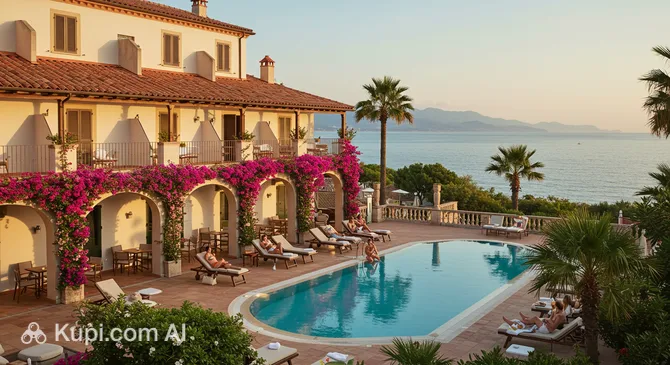
Many tourists prefer to stay near the city's main attraction – the Sanctuary of the Holy House, as this provides easy access to the historical center. Accommodation options located in quieter areas, from which it is easy to reach the main tourist points, are also popular. For those seeking a full-service holiday, there are resort hotels in the Loreto area offering comfortable accommodation and additional amenities. Among them are, for example, Numana Blu Resort and Adamo Ed Eva Resort.

Numana Blu Resort. Illustration.
Source: Kupi.com AI

Traveler photos:

The price range varies from budget to more expensive options. You can book accommodation through popular online platforms or by contacting hotels directly. It is recommended to book your stay in advance, especially if your trip coincides with the peak tourist season or during major religious holidays, when the demand for housing in Loreto increases significantly.

Nearby Cities

For those who want to explore the surroundings, Loreto serves as an excellent starting point for day trips to several interesting nearby locations:

Among them stands out Ancona, the capital of the Marche region, a lively port city with a rich history where you can visit the Cathedral of San Ciriaco and the Arch of Trajan. No less attractive is Macerata, known for its ancient university and the magnificent Sferisterio arena, the venue for famous opera festivals. Meanwhile, Civitanova Marche offers a seaside retreat on the Adriatic coast with its sandy beaches and well-developed tourist infrastructure.

CityPopulationDistance
Porto Recanati12 6094 km
Castelfidardo18 6016 km
Recanati21 1866 km
Potenza Picena15 8278 km
Osimo35 07112 km

These nearby destinations allow for a deeper acquaintance with the diverse culture, history, and picturesque landscapes of the Marche region in Italy.

Shopping & Souvenirs

Loreto, as one of the most important pilgrimage centers in Italy and the entire Christian world, offers its guests a special shopping experience. The main focus here is on religious goods, souvenirs related to the shrine, and products from local artisans. This is not the place to look for global brand boutiques, but you can find unique and memorable items here.

The main shopping arteries of Loreto are naturally concentrated around its heart — the Sanctuary of the Holy House. On the streets radiating from Piazza della Madonna and adjacent to the basilica, you will find many shops and stalls. They sell icons, rosaries, figurines, books, and other religious items, as well as postcards and souvenirs with views of the city.

In Loreto, you will not find large modern shopping centers. Shopping here is more intimate. These are small family-owned shops where you can often chat with the owners and learn more about the products. This approach allows you to immerse yourself deeper into the city's atmosphere and find truly authentic things.

Specialized large markets, like those found in big cities, may not be a permanent fixture in Loreto. However, as in many Italian towns, weekly markets or seasonal fairs may be held where local farmers and artisans offer their products. It is best to check information about such events locally or at the tourist office.

As for souvenirs, people traditionally bring items from Loreto related to its religious significance: blessed rosaries, medallions with the image of the Madonna of Loreto, small replicas of the Holy House, icons, and religious literature. It is also worth paying attention to the work of local craftsmen — this could be ceramics, embroidery, or small works of art. Don't forget the gastronomic souvenirs of the Marche region: local wine, olive oil, cheeses, and sweets will be a great reminder of your trip.

Shops in Loreto typically follow a standard Italian schedule: in the morning (roughly from 9:00-10:00 AM to 1:00 PM) and after a lunch break, known as "riposo" or siesta (roughly from 4:00-5:00 PM to 7:30-8:00 PM). On Sundays and public holidays, many shops may be closed, except for those catering to tourists located in the immediate vicinity of the shrine. Most places accept both cash (Euros) and credit cards. However, in small stalls or at markets, cash may be preferred.

For tourists from non-European Union countries, there is the possibility of a VAT refund (known as IVA in Italy) through the Tax Free system. If you make purchases over a certain amount (usually over 154.94 Euros in one shop), ask the seller if they provide this service. You will need to fill out a special form (fattura), which is then presented together with the unused goods at customs when leaving the EU to receive a refund.

Nearby cities

Have you reached the end of the page?

So the route has been studied inside and out