Support

Matera

About

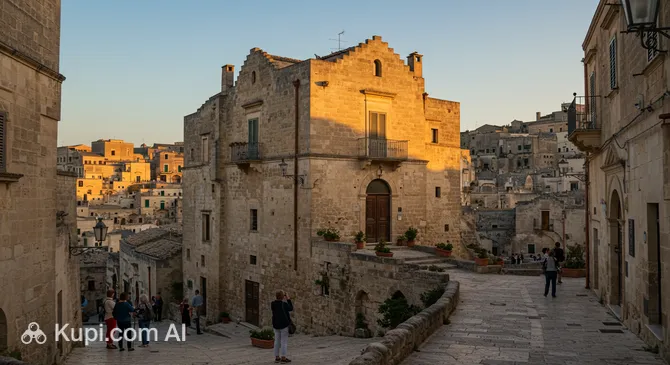
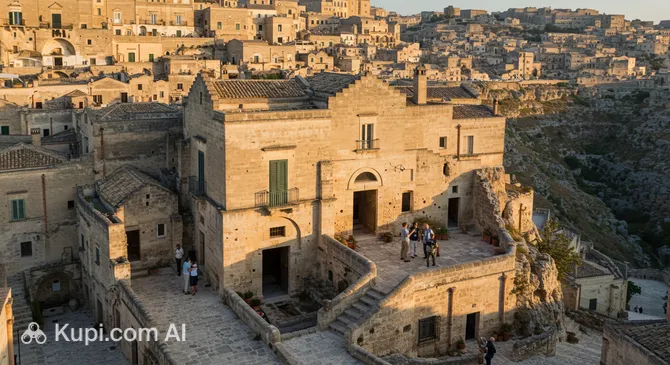
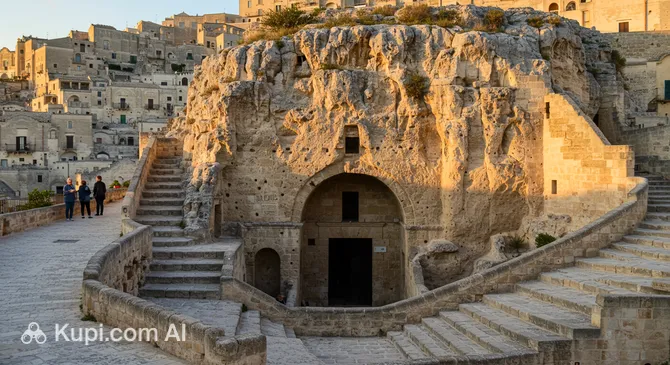
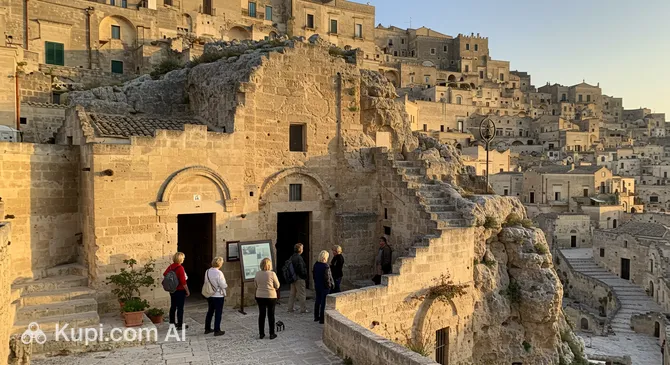
Matera is an extraordinary labyrinth city tucked away in southern Italy, in the picturesque region of Basilicata. It is nestled on the steep slopes of the Murgia highlands, where the rugged ravines of the Gravina River create a breathtaking natural amphitheater. Imagine a place where every turn reveals new, almost surreal views: ancient grottos, rock formations, and neighborhoods that seem frozen in time, holding the secrets of millennia.
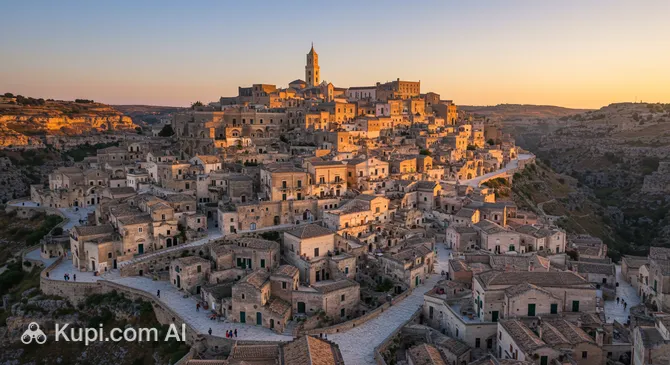
Matera. Illustration.
Source: Kupi.com AI

With a population of about 60,000 people, Matera is the administrative center of the province of the same name. Despite its relatively small size, the city has incredible energy and a completely unique atmosphere. Its historical heart, the famous Sassi di Matera—ancient quarters carved directly into the rocks—is recognized as a UNESCO World Heritage site. In 2019, Matera proudly held the title of European Capital of Culture, further highlighting its unique significance.

Walking through Matera is a true journey into the past. Here, ancient cave houses (sassi), where people lived for centuries, sit alongside cozy cafes and craft shops. Medieval churches, also often carved into the rocks, add a special mystery to this place. Time here seems to slow down, allowing every guest to feel like a discoverer of unexplored corners.

If you are looking for authentic Italy, dream of diving into an atmosphere of mystery, and finding inspiration, Matera will undoubtedly become one of the most vivid impressions in your travel collection. This city is waiting to share its stories and its inimitable beauty with you.

You can find more interesting facts on the Matera city history page
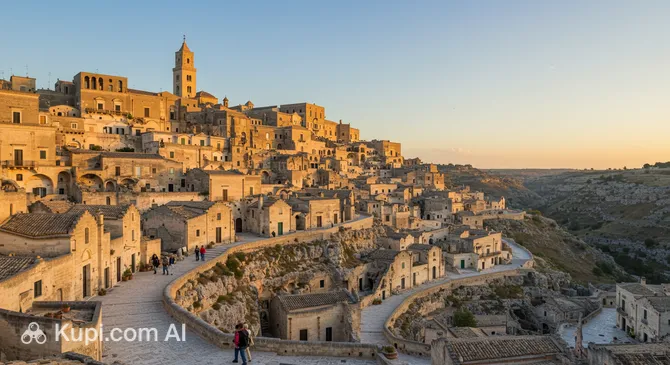
Weather Overview

The weather in Matera is typical for a Mediterranean climate. Summers here are hot and mostly dry: in July and August, the average maximum air temperature reaches 32-33°C (for example, in July the maximum temperature is 33.0°C), while precipitation is minimal (about 1 mm per month). Winters in Matera are mild but with more rainy days compared to summer. For example, in January, the coldest month, the average temperature is about 7.5°C (minimum 3.5°C, maximum 11.5°C), and the number of rainy days can reach 9-10, although the total amount of precipitation remains moderate (1-3 mm).

Overall, Matera is characterized by hot summers with temperatures sometimes exceeding 30°C and low rainfall, and cool, wetter winters with average temperatures around 7-9°C. Spring and autumn offer comfortable temperatures for visiting, although precipitation amounts can vary. To learn more about weather conditions and plan your trip, visit the Climate in Matera page.

Average monthly temperature

Average monthly precipitation

Interesting Facts

In addition to its world-famous cave quarters, Matera hides many amazing stories and facts that make this ancient city even more alluring. Here are just a few of them:

Sasso Caveoso. Illustration.
Source: Kupi.com AI

Traveler photos:

  • Matera is considered one of the oldest continuously inhabited cities in the world—people have lived here since the Paleolithic era. The unique cave dwellings, known as Sassi, were inhabited for millennia. Until the mid-20th century, entire families lived in these rock houses, often alongside livestock. Today, many of these grottos have been transformed into atmospheric hotels, restaurants, and museums, such as the Casa Grotta di Vico Solitario or the Casalnuovo Cave House, allowing you to touch history.

  • The city is literally dotted with rock churches—there are about 130 of them! Many of these "chiese rupestri" (rock churches) were hollowed out directly into the tuff slopes and decorated with ancient Byzantine frescoes. Some of them, such as the Church of Santa Maria de Idris or the Church of Santa Lucia alle Malve, are true masterpieces where spirituality and art merge with the natural landscape.

  • Thanks to its unique landscapes resembling ancient biblical lands, Matera has become a favorite location for filmmakers. The city "played the role" of Jerusalem in Mel Gibson's famous film "The Passion of the Christ." But that's not its only star role: thrilling scenes for the James Bond film "No Time to Die" (2021) were also filmed here, making Matera even more famous worldwide.

  • A unique and spectacular tradition lives on in Matera—the annual Festa della Bruna, dedicated to the Madonna della Bruna, the city's patron saint. Celebrated on July 2nd, its climax is a procession with a huge triumphal chariot made of papier-mâché, carefully created over the course of a year. At the end of the festival, this magnificent chariot is... ceremoniously destroyed "for good luck"!

How to Get There

There are several ways to get to Matera, a unique city in southern Italy, though the most common is to fly into the nearest airports followed by a ground transfer.

Matera does not have its own airport. The closest and most convenient option for international travelers is Bari Palese Airport (BRI), located in the city of Bari, about 54 km north of Matera. This is a major international airport from which you can reach Matera by car or taxi in about 1 hour 40 minutes – 2 hours. Another significant airport is Brindisi – Salento Airport (BDS), located in the city of Brindisi, about 114 km to the southeast. A trip from there to Matera takes approximately 3 hours 15 minutes – 3 hours 45 minutes.

For clarity, here is a summary of the main airports from which you can reach Matera:

AirportPassenger trafficDistance
Palese Airport6.5 mln54 km
Brindisi - Salento Airport3.0 mln114 km
Gino Lisa60 447124 km
Pontecagnano400 000143 km
Crotone310 000190 km

Railway connections to Matera are also made through stations in neighboring cities, as Matera itself does not have a major hub for long-distance trains. One of the nearest stations is Brindisi Railway Station (BQD), located in the city of the same name about 113 km from Matera. From there, you can reach Matera by bus or taxi; the trip takes about 3 hours 15 minutes – 3 hours 45 minutes. Another option is Salerno Railway Station (ISR) in the city of Salerno, located about 155 km away. This is an important transport hub, but the journey to Matera from there will take about 3 hours 30 minutes – 4 hours 15 minutes.

For planning convenience, here is information on some railway stations in the region:

StationPassenger trafficDistance
Bari Centrale Station14 mln55 km
Brindisi Railway Station2.5 mln113 km
Salerno Railway Station6 mln155 km
Napoli Afragola High-Speed Railway Station12 mln194 km
Lamezia Terme Centrale Railway Station1 mln196 km

Regional buses run regularly to Matera from the mentioned airports and railway stations. You can also use taxi services, book a transfer, or rent a car, which provides greater flexibility for exploring the picturesque surroundings of the Basilicata region and neighboring Puglia.

Main Attractions

Matera is a city with a thousand-year history where every stone breathes the past. Its unique cave quarters, known as the Sassi, are recognized as a UNESCO World Heritage site and attract travelers from all over the world. Here, you can find many amazing places reflecting the rich culture and history of this region of Italy.

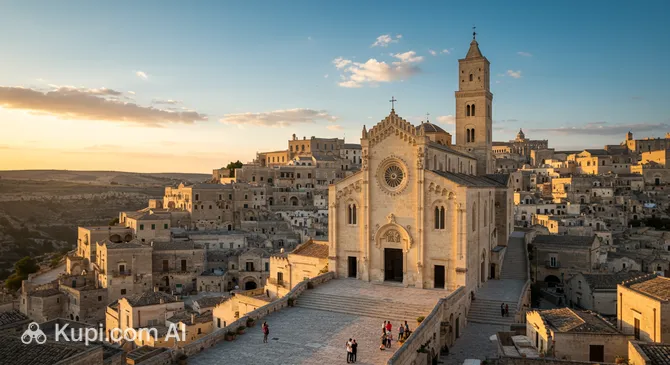
One of the most impressive and iconic areas is Sasso Caveoso. This ancient quarter, carved directly into the rock, is a labyrinth of narrow streets, staircases, and cave houses where people lived for centuries. Walking through Sasso Caveoso is a true immersion into the atmosphere of a medieval city, where you can see what the dwellings and churches of that time looked like. This place is striking for its authenticity and unique architecture, which seems almost surreal.

Sasso Caveoso. Illustration.
Source: Kupi.com AI

Traveler photos:

Majestically overlooking the city is the Matera Cathedral, dedicated to the Madonna della Bruna and Saint Eustace. Built in the 13th century in the Apulian Romanesque style, the cathedral impresses with its austere facade decorated with an elegant rose window and a high bell tower visible from many points in the city. Inside are valuable works of art, including frescoes and sculptures that tell of Matera's rich religious history. The cathedral is not only a spiritual center but also an important architectural monument.

Matera Cathedral. Illustration.
Source: Kupi.com AI

Traveler photos:

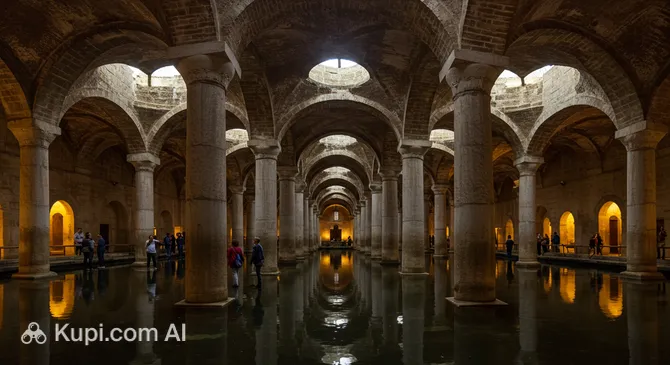
An equally amazing and unique site is Palombaro Lungo—a massive underground cistern for collecting rainwater located under the main square, Piazza Vittorio Veneto. This is a true engineering marvel of its time, which provided the city with water for centuries. A tour of this giant reservoir, which resembles a flooded cathedral, allows you to appreciate the scale and ingenuity of Matera's ancient builders. Its vaulted ceilings and massive columns create an almost mystical atmosphere.

Palombaro Lungo. Illustration.
Source: Kupi.com AI

Traveler photos:

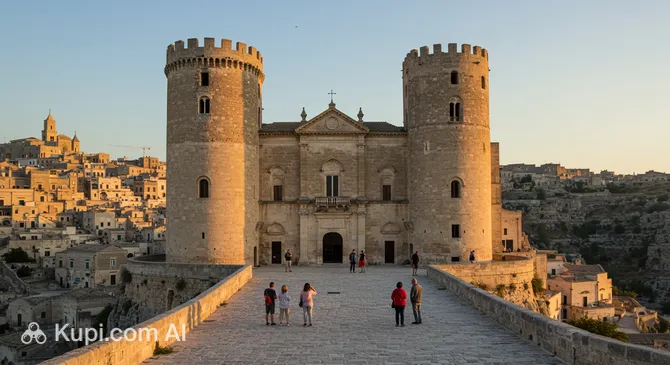
For those interested in history and fortifications, Tramontano Castle is a must-visit. Construction of this imposing Aragonese fortress began in the early 16th century by Count Gian Carlo Tramontano but was never completed due to a popular uprising in which the count was killed. The castle's massive round towers dominate the city and stand as silent witnesses to its turbulent history. Although the castle was never finished, it remains an important historical monument and offers beautiful views of the surroundings.

Tramontano Castle. Illustration.
Source: Kupi.com AI

Traveler photos:

To better understand the life of Matera's ancient residents, it is worth visiting the Casa Grotta di Vico Solitario in the Sassi di Matera. This is a typical cave house where the atmosphere and living conditions of a family that inhabited the Sassi until the mid-20th century have been recreated. Here, you can see everyday objects, modest furniture, tools, and even the area for domestic animals, which was often in the same room. A visit to this place offers a unique opportunity to touch the daily life and culture of the city that was shaped over millennia.

Local Cuisine

The cuisine of Matera is a true treasure for foodies, deeply rooted in the traditions of the Basilicata region. Here, an authentic taste of southern Italy awaits you, where simple, high-quality ingredients are transformed into unforgettable dishes. The city's gastronomic scene is distinguished by its commitment to local products and ancient recipes passed down through generations.

The star of local gastronomy is undoubtedly Matera bread (Pane di Matera). Baked in wood-fired ovens using ancient techniques, this bread is protected by a Geographical Indication (IGP) and is famous for its characteristic shape, crispy golden crust, and unique aroma. It is so important to local culture that the city even hosts festivals dedicated to bread. Another iconic dish that is definitely worth trying is "peperoni cruschi". These are crunchy dried red peppers served as a snack or used to add zest to pasta and meat dishes.

Pasta lovers will appreciate local varieties such as orecchiette and ferrazzuoli, traditionally served with thick meat ragouts or rich vegetable sauces. Matera's cuisine is also rich in lamb and goat dishes, the freshest cheeses—especially sheep's pecorino—and a variety of smoked sausages. You can always find seasonal vegetables and fruits grown on the fertile lands of Basilicata at local markets.

As for drinks, in Matera, you should pay attention to the local house wines, both red and white, which perfectly complement the hearty dishes of the region. Various liqueurs infused with local herbs and fruits are also popular. Non-alcoholic options always include fresh juices and, of course, high-quality mineral water.

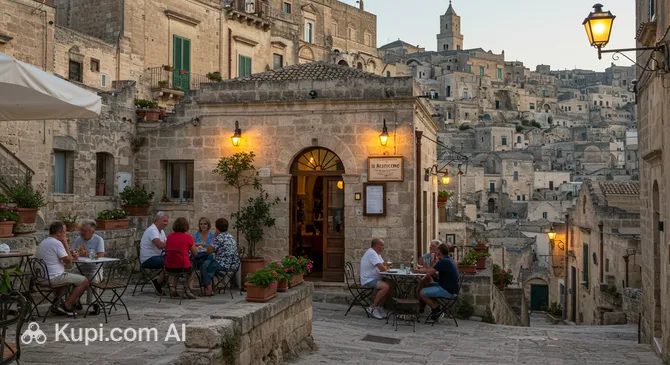
Il Rusticone. Illustration.
Source: Kupi.com AI

Traveler photos:

The food culture in Matera is very diverse. Locals and tourists enjoy meals in traditional trattorias and osterias tucked away in the ancient caves of the Sassi, as well as in more modern restaurants. A great example of a place where you can taste local cuisine is the restaurant Il Rusticone. Don't overlook the street food, especially at the markets, where you can sample fresh products and local delicacies. In the summer, the city comes alive with gastronomic festivals, when tables are set right on the streets, creating a unique atmosphere of celebration and hospitality.

Travel Tips

Planning a trip to amazing Matera? Wonderful! To ensure your journey through this ancient city carved in stone goes smoothly and leaves only the warmest memories, we've prepared a few practical tips.

  1. Clothing and Essentials:

    The climate in Matera is Mediterranean. In summer (June-August), it is hot, so bring light, breathable clothing, a hat, sunglasses, and sunscreen. In winter (December-February), it can be cool and rainy, so warm clothes, a jacket, and waterproof shoes will come in handy. Spring and autumn are the ideal times to visit; dress in layers. The key point for Matera is comfortable shoes with non-slip soles! You will be walking a lot on the stone streets and staircases of the Sassi. For visiting churches (such as the rock churches or the Cathedral), it is customary to cover shoulders and knees. Don't forget a power adapter (Type L, sometimes Type C is found).

  2. City Transport:

    The historical center of Matera, the famous Sassi, is best explored on foot. Most of this area is a ZTL (Zona a Traffico Limitato—restricted traffic zone), so entry by car is limited. Public transport consists of city buses that connect different districts, but they are not very useful for seeing the Sassi. Taxis are available and can be called by phone or found at taxi stands. Renting a car makes sense if you plan to travel around the Basilicata region, but keep in mind that parking in Matera can be difficult and expensive.

  3. Finances:

    The local currency is the Euro (EUR). You can exchange money at banks or post offices; the rate at exchange offices may be less favorable. Credit and debit cards (Visa, Mastercard) are widely accepted in hotels, most restaurants, and shops. However, smaller shops or markets may prefer cash. ATMs (bancomat) are easy to find. International cards usually work without problems, but just in case, notify your bank of your trip. An approximate daily budget (excluding accommodation) could be €70-150 per person. Tipping in Italy is not mandatory but always welcome for good service; often a "coperto" (service charge/table setting fee) is already included in the bill. You can round up the amount or leave a few euros.

  4. Health and Safety:

    Matera is a very safe city. Pharmacies (Farmacia) are easily recognized by a green cross; information on pharmacies on duty is usually posted on the doors. For emergency medical assistance, call 112. EU citizens are recommended to have a European Health Insurance Card (EHIC). All tourists are strongly advised to take out travel insurance. Basic precautions are standard: keep an eye on your belongings in crowded places and be careful on uneven stone steps, especially after rain.

  5. Communication:

    The official language is Italian. In tourist areas, hotels, restaurants, and popular attractions, many people speak English. Learn a few basic Italian phrases: "Ciao" (Hello/Goodbye—informal), "Buongiorno" (Good day), "Buonasera" (Good evening), "Grazie" (Thank you), "Prego" (You're welcome/Please), "Parla inglese?" (Do you speak English?). A local SIM card can be bought at mobile shops (passport required). Wi-Fi is available in most hotels, many cafes and restaurants, as well as some public areas.

  6. Local Etiquette:

    It's customary to say hello: "Buongiorno" before lunch, "Buonasera" after. "Ciao" is used in informal settings. Italians are hospitable and communicative. In public places, behave respectfully, especially in the residential quarters of the Sassi and during "riposo" (afternoon rest, roughly from 1:00 PM to 4:00 PM), when many establishments are closed. Treat the ancient Sassi structures with respect—they are a unique heritage.

  7. What to Avoid:

    It is categorically discouraged to try and drive into ZTL zones in the Sassi without a special permit—fines are very high. Also, avoid disrespectful behavior and overly revealing clothing when visiting churches. Do not expect shops to be open during "riposo."

  8. Special Tip for Matera:

    Be sure to walk through the Sassi in the evening or at night. When the lights come on, the ancient city is transformed and looks truly magical—it's an unforgettable sight. And, of course, don't miss the chance to try the famous local bread—"Pane di Matera" IGP, it is truly special!

We hope these tips help you better prepare for your trip and get the most enjoyment out of getting to know the unique Matera. We wish you an unforgettable journey!

Entertainment & Nightlife

Matera, with its ancient Sassi cave districts, offers a unique experience not only by day but also after dark. The nightlife here has its own special, enchanting atmosphere, far from the noise of major metropolises. Most evening entertainment is concentrated in the historical districts of Sassi di Matera (Sasso Barisano and Sasso Caveoso) and in the more modern part of the city, known as the "Piano."

Evenings in Matera often begin with an aperitivo—the tradition of enjoying drinks and light snacks before dinner. Many bars and enotecas, cozily tucked into restored caves, offer local wines and cocktails. The atmosphere here is more relaxed and conducive to conversation than a club scene. The crowd is mixed: tourists, locals, youth, and older people. The dress code in most establishments is casual, but for some more refined bars or restaurants, smart casual is appropriate. Bars are usually open until midnight or 1:00 AM, especially during the tourist season.

Zipa Café. Illustration.
Source: Kupi.com AI

Traveler photos:

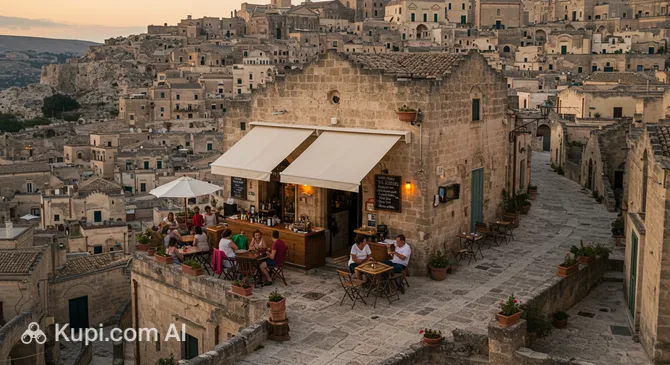
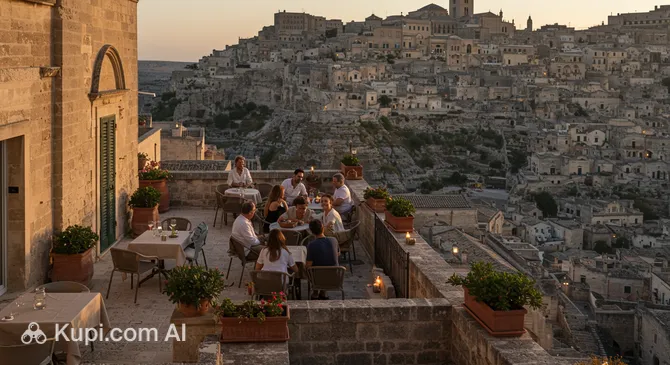
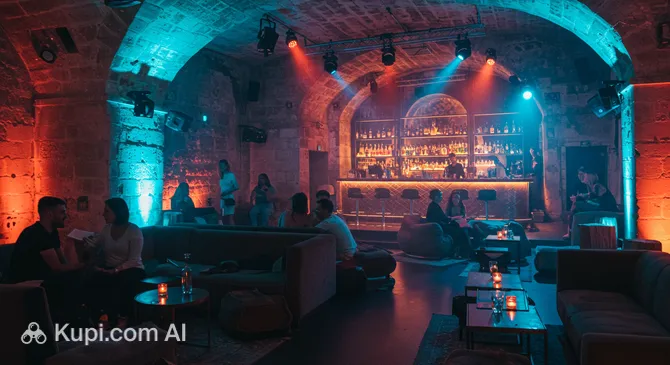
Among the popular spots for evening relaxation is Caffè Zipa, known for its cozy atmosphere and good selection of drinks. Another noteworthy place is the bar Giù a Sud, where you can enjoy local specialties in an authentic setting. For those looking for more of a club atmosphere, Dedalo — Sensi Sommersi offers music and dancing in a unique underground space.

Giù a Sud. Illustration.
Source: Kupi.com AI

Traveler photos:

Practical tips: The best time to start an evening walk is after 7:00–8:00 PM, when the daytime heat subsides and the city is transformed by the evening lights. Average drink prices in bars are comparable to other tourist cities in Italy. It is best to get around the Sassi at night on foot, as many streets are narrow and winding. For longer distances or returning to your hotel late at night, you can use taxi services; it is better to book them in advance through your hotel or restaurant, as catching a car on the street late in the evening can be difficult.

Dedalo - Sensi Sommersi. Illustration.
Source: Kupi.com AI

Traveler photos:

Safety: Matera is generally considered a safe city. However, when walking through the Sassi at night, it is advisable to stick to well-lit routes and be careful, as some paths can be uneven and poorly lit. Avoid completely deserted and dark alleys, especially if you are alone.

During the day, Matera also offers plenty of entertainment. You can visit numerous museums, such as Palazzo Lanfranchi with its art collections, or explore ancient cave churches like the Church of Santa Maria de Idris. Historic cave houses, such as the Casa Grotta di Vico Solitario, provide insight into the lives of past generations. Although there are no large amusement parks in Matera, the city itself, with its maze of streets and viewpoints, is one big open-air attraction.

Parks & Museums

Matera, a city with a thousand-year history, offers its guests a unique combination of the ancient Sassi cave quarters and the rugged beauty of the surrounding Murgia plateau. There are no traditional city parks in the usual sense here, but nature and culture are so closely intertwined that they create unique spaces for exploration and contemplation.

The main natural and historical area is the Murgia Materana Park (Parco della Murgia Materana). This vast regional park surrounding Matera is a true treasure for nature and history lovers. Here, you can find ancient cave churches (chiese rupestri) with frescoes, Neolithic settlements, enjoy breathtaking views of the Sassi, and walk along numerous hiking trails. It is not just a park but a living open-air museum that allows for a deeper understanding of Matera's unique context. The Sassi di Matera districts themselves, such as Sasso Caveoso, can be considered a massive historical and architectural park where every corner tells its own story.

Sasso Caveoso. Illustration.
Source: Kupi.com AI

Traveler photos:

An immersion into the culture and history of Matera would be incomplete without visiting its museums:

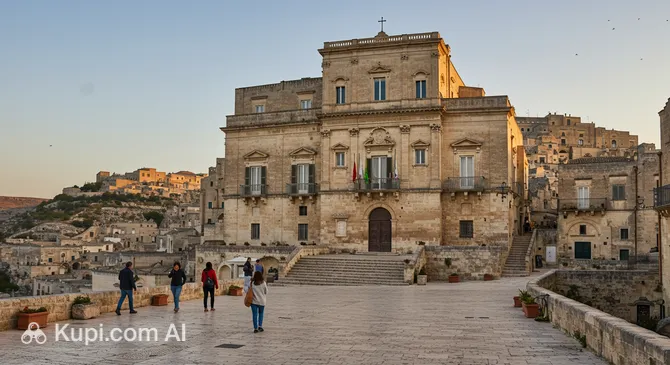
One of the key cultural centers is Palazzo Lanfranchi. Located in a magnificent 17th-century building, this museum houses the collections of the National Museum of Medieval and Modern Art of Basilicata, as well as ethnographic exhibits telling of the region's traditions. It is a wonderful opportunity to get to know the artistic heritage of Matera and its surroundings.

Palazzo Lanfranchi. Illustration.
Source: Kupi.com AI

Traveler photos:

To truly understand the soul of Matera, visit Casa Noha. This is not just a museum, but a restored cave dwelling where multimedia technology is used to tell the fascinating history of the city—from ancient times to its recognition as a UNESCO World Heritage site. It is the perfect place to begin your acquaintance with Matera.

Casa Noha. Illustration.
Source: Kupi.com AI

Traveler photos:

Be sure to stop by one of the typical cave dwellings converted into a museum, such as the Casa Grotta di Vico Solitario or the Casalnuovo Cave House. These house-museums with authentic settings clearly demonstrate how people lived in the Sassi until the mid-20th century, allowing you to feel the atmosphere of the past.

Casa Grotta in the Sassi of Matera. Illustration.
Source: Kupi.com AI

Traveler photos:

Among other significant historical sites, Tramontano Castle stands out. This imposing, though unfinished, Aragonese-style fortress towers on a hill overlooking the city and serves as a reminder of Matera's medieval past.

Tramontano Castle. Illustration.
Source: Kupi.com AI

Traveler photos:

For an authentic cultural experience, we recommend checking the schedule at Casa Cava—a modern concert hall and cultural center set in a former tuff quarry right in the heart of the Sassi. Concerts, exhibitions, and other events are often held here. Alternatively, simply stroll through the maze of Sassi streets in the early morning or late evening to enjoy their magical atmosphere in silence, without the daytime bustle.

Casa Cava. Illustration.
Source: Kupi.com AI

Traveler photos:

Getting Around

When planning your travel around Matera, it's worth keeping in mind that this is a city with a unique historical center, a significant part of which is best explored on foot. Nevertheless, a public transport system exists and helps you reach various city districts and its surroundings.

The main form of public transport in Matera is buses. The local bus network connects central areas with the periphery and also provides access to the railway station. Routes and schedules can be checked at stops or on the transport company's website. Buses are generally quite convenient for traveling between the Sassi (ancient districts) and the modern part of the city, as well as for trips to panoramic viewpoints.

The fare payment system in Matera is standard for many Italian cities. Bus tickets (biglietti) are usually purchased in advance at tobacco shops (tabaccherie), newsstands (edicole), or sometimes in authorized bars. In some cases, a ticket can be bought from the driver, but it may cost more and is not always an option. The cost of a single trip is usually low; there are also multi-trip tickets or day passes, which can be advantageous if you use transport frequently. Be sure to validate your ticket in the special machine on the bus immediately after boarding—without this, it is considered invalid, and you risk a fine.

Practical tips for tourists:

  • Always carry a few tickets with you, especially if you plan to travel on weekends or in the evening when kiosks may be closed.
  • Keep in mind that the historical center of Matera, the famous Sassi, is largely a pedestrian zone. Buses run along the perimeter or deliver you to the main entrances of the Sassi.
  • Public transport operating hours can vary, especially on weekends and holidays. The number of trips usually decreases in the evening.

Among the alternative ways to get around Matera are:

  • Taxis: Available in the city, with stands usually located at the station and key points. This is a more expensive but comfortable way to reach your destination, especially with luggage.
  • Walking: The best way to explore the Sassi di Matera is on foot. Narrow streets, staircases, and hidden courtyards reveal themselves only to slow travelers.
  • Ape Calessino (tuk-tuks): In tourist zones, you can find small three-wheeled scooters converted for carrying tourists. This is an interesting and authentic way to take a sightseeing tour of the historical quarters.
  • Bicycle Rentals: Bicycle rental points are available in Matera, including electric bikes, which are particularly convenient for navigating the city's hilly terrain and its surroundings. This is an eco-friendly and pleasant way to explore the city at your own pace.
  • Car Rentals: Can be convenient for exploring the surroundings of Matera and the Basilicata region. However, be aware that the historical center of Matera has restricted traffic zones (ZTL), and parking can be difficult.

While there is no metro or tram in Matera, the existing bus network combined with walking and alternative options allows for comfortable exploration of this amazing city.

Accommodation

Matera offers tourists a unique choice of accommodation options to suit a variety of tastes and budgets. The city is famous for its renowned Sassi—ancient cave dwellings, many of which have been converted into atmospheric hotels, guesthouses, and apartments. In addition to these authentic options, you can find more traditional hotels, cozy B&Bs (Bed and Breakfasts), and rental apartments in Matera, located in both the historical part and more modern districts.

The most popular areas for travelers are the Sassi di Matera, specifically Sasso Caveoso and Sasso Barisano. Staying here allows you to fully immerse yourself in the unique atmosphere of the ancient city and stay within walking distance of the main attractions. These areas offer a wide range of accommodation—from luxurious "cave" suites to more modest but no less charming rooms. There are also comfortable options in the newer part of the city, which can be convenient for transport accessibility and a quieter environment.

Casalnuovo Cave House. Illustration.
Source: Kupi.com AI

Traveler photos:

While specific hotels are not always easy to single out due to the uniqueness of each cave dwelling, many travelers specifically seek the experience of staying in the Sassi. These can range from small family-run inns to larger complexes offering modern amenities within a historical shell. The choice is vast, and everyone can find something to their liking, whether it's a romantic getaway or a family adventure.

When planning a trip to Matera, especially during the peak tourist seasons (spring and autumn), it is highly recommended to book accommodation in advance. The unique staying options in the Sassi are in high demand and can sell out quickly. This will allow you not only to guarantee your stay but also to choose the most suitable option in terms of location and price.

The price range for accommodation in Matera varies: you can find budget options (hostels or rooms in apartments in the newer part of town), mid-range hotels, and luxury offerings, especially among the hotels in the Sassi. Booking is convenient through popular online platforms or directly on the websites of hotels and guesthouses. Many locals also offer their apartments for short-term rental.

Nearby Cities

For those looking to explore the surroundings, Matera serves as an excellent starting point for day trips to several interesting nearby locations.

For instance, just 16 kilometers away is Ginosa. This town is attractive for its impressive ravine gorges, which partly resemble the landscapes of Matera itself, and its ancient cave churches. Ginosa offers a quieter atmosphere for exploring similar natural and historical formations.

Altamura, located about 18 kilometers away, is famous throughout Italy for its traditional bread (Pane di Altamura DOP), which is a must-try. The city also prides itself on its majestic 13th-century cathedral, built by order of Frederick II, and its Paleontology Museum, where you can learn about the Altamura Man—an ancient Neanderthal discovery.

Another city worth noting is Gravina in Puglia, about 23 kilometers from Matera. It impresses with its location on the edge of a deep karst ravine, crossed by a picturesque aqueduct bridge. The historical center of the city is rich in rock-cut churches and ancient buildings that create a unique atmosphere.

Here is a list of some nearby cities with key information for planning your trip (including those mentioned above, as they are among the closest):

CityPopulationDistance
Montescaglioso9 87714 km
Ginosa22 43016 km
Laterza15 17117 km
Altamura70 51418 km
Santeramo in Colle26 59219 km

These nearby destinations allow for a deeper dive into the diverse culture, history, and landscapes of this unique region of Italy, complementing the experience of visiting Matera.

Shopping & Souvenirs

Matera, known for its ancient Sassi cave districts, offers a unique shopping experience that is more focused on local crafts and authentic products than on major retail chains. You won't find huge malls here, but you can purchase truly special items that reflect the spirit of this ancient city in Italy. The city is famous for its handmade goods, ceramics, and gastronomic delicacies from the Basilicata region.

Main shopping areas in Matera are concentrated in both the historical part and the more modern center. In the Sasso Caveoso and Sasso Barisano districts, you will find many small shops and workshops where local artisans sell their creations. The main shopping arteries in the newer part of town are Via del Corso and its adjacent streets, such as Via Roma and Piazza Vittorio Veneto. Here you will find clothing, footwear, accessory, and souvenir shops.

As mentioned, Matera is not a city of large shopping centers. Instead, small boutiques and specialized shops thrive here. The charm of shopping in Matera lies exactly in searching for unique goods in atmospheric shops, often located directly within ancient cave structures.

If you want to dive into local life and buy fresh products, be sure to visit the city market. Typically, these markets offer seasonal vegetables, fruits, local cheeses, sausages, and, of course, the famous Matera bread (Pane di Matera). The central market (Mercato Coperto) is often conveniently located and is a great opportunity to get acquainted with the gastronomic traditions of the region.

You should bring back unique souvenirs from Matera. Look for ceramic items, especially the traditional "cucù" whistle, a symbol of luck and fertility. Items made from tuff—the stone the Sassi are built from—are also popular. Don't forget gastronomic souvenirs: olive oil, local wine (such as Aglianico del Vulture), handmade pasta, and, of course, the famous Matera bread, which stays fresh for a long time. In historical districts like Sasso Caveoso, you can find many shops selling these items.

Shops in Matera usually operate from the morning (around 9:00–10:00 AM) until lunch (1:00–1:30 PM), followed by a long break—"riposo" or "siesta"—until 4:30–5:00 PM. In the evening, shops are open until about 8:00–8:30 PM. On Sunday, many shops may be closed, especially smaller ones. Major tourist shops may stay open through the weekend. Both cash and bank cards are accepted, particularly in larger stores. However, in small shops or at markets, it's better to have some cash with you.

For tourists from non-EU countries, a Tax-Free refund system is available in Italy. If you make purchases over a certain amount in stores participating in this system (look for the corresponding logo), you can complete the documents for a VAT refund when leaving the EU. Check the minimum purchase amount and conditions directly in the store.

Reached the end of the page?

That means the route is fully explored