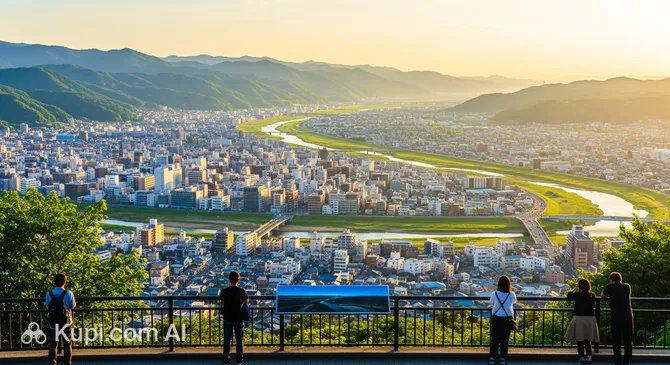
Kakogawa is a dynamic city located in Hyogo Prefecture on the southern coast of Japan’s main island, Honshu. The city stretches along the picturesque lower reaches of the Kako River, which flows into the Seto Inland Sea. Despite its status as an important industrial hub, Kakogawa maintains a calm atmosphere characteristic of traditional Japanese settlements, where modern industry harmoniously coexists with residential neighborhoods and historical heritage.
Kakogawa. Illustration.
Source: Kupi.com AI
With a population of about 260,000, the city is a significant center for the production of woolen goods, chemicals, and machinery. Kakogawa's history is closely tied to its role as a flourishing river port during the Edo period. Today, the historical past of the region is reflected in preserved temples and sections of ancient roads once traveled by pilgrims and merchants.
Its geographical location between major cultural centers like Kobe and Himeji makes the city a convenient base for those who want to experience the authentic, non-touristy Japan. Here, you can feel the steady rhythm of local life, stroll along the banks of the Kako River, or visit ancient Buddhist shrines while avoiding the noise of massive metropolises. We invite you to discover this welcoming corner of Hyogo Prefecture.
Weather Overview
Kakogawa features a humid subtropical climate, typical of the southern part of Honshu Island. This means the city greets guests with hot and rather humid summers, as well as mild, relatively dry winters. Thanks to its location on the plains and proximity to the sea, there is good air circulation, which helps make the summer heat more bearable.
If you are planning a trip, look for the following temperature ranges: in summer, especially in July and August, the average maximum reaches +30°C...+31°C, and high humidity makes the air feel even heavier. Winter in the city is cool but rarely truly harsh—in January and February, daytime temperatures hover around +8°C...+9°C, and at night they can drop to +1°C. Snowfall is extremely rare here.
The highest amount of rainfall occurs in June and July—during the traditional rainy season (tsuyu). To better plan your wardrobe and activities, it's worth checking the weather in the city for the specific dates of your visit. The most comfortable time for walking is considered to be spring (April–May) and autumn (October–November), when the air temperature is most pleasant and nature delights with vibrant colors.
Average monthly temperature
Average monthly precipitation
Interesting Facts
Edo Period River Port: Kakogawa emerged and flourished as an important logistics hub thanks to its location on the Kako River and the ancient Nishikuni Kaido road.
National Treasures: The local Kakurin-ji Temple houses objects recognized as National Treasures of Japan, including the magnificent Taisho-do main hall.
Industrial Heritage: Industrial history enthusiasts often visit Kakogawa to see the remains of the abandoned JR Takasago railway line, which was once the city's artery.
Fireworks Festival: The Kakogawa Matsuri summer festival is considered one of the most vibrant in Hyogo Prefecture, drawing thousands of spectators to the riverbanks for a pyrotechnic show.
Satellite City: Despite its own powerful industry, Kakogawa is considered a comfortable "bedroom" community for those working in the nearby metropolises of Kobe and Osaka.
How to Get There
Kakogawa's transport accessibility makes it a convenient stop when traveling through the Kansai region. The city is integrated into an extensive railway network, making it easy to reach from Japan's largest metropolises. Most travelers arrive through major transport hubs before transferring to regional lines heading into Hyogo Prefecture.
The nearest international hub is Kansai International Airport (KIX), which accepts flights from all over the world. The journey from the airport to the city takes about 1.5–2 hours by train. Alternatively, you can use Kobe Airport (UKB) for domestic flights; it is significantly closer, about 40 kilometers away. Information on how to get to specific locations is often available at information desks in the terminals.
The city's central transport hub is Kakogawa Station, located on the JR Kobe Line. Special Rapid trains arrive here regularly from Osaka (travel time approx. 50–60 minutes) and Kobe (approx. 30–40 minutes). If you are coming from Tokyo, the most efficient route is to take the Shinkansen to Shin-Osaka Station and then transfer to a local JR line.
Station
Passenger traffic
Distance
Himeji Station
18
16 km
Ōsaka Station
22
60 km
Ōsaka Station
22
60 km
Tennōji Station
22
63 km
Tokushima Station
9
80 km
For travelers who prefer driving, important highways pass through the city, connecting it with Himeji and Kobe. However, it is worth noting that heavy traffic congestion is possible during peak hours, so rail transport remains the most predictable and fastest way to get around.
Main Attractions
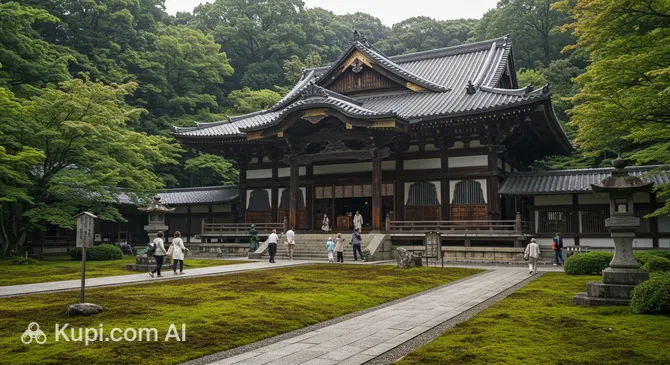
Despite its industrial character, Kakogawa boasts several outstanding architectural and cultural monuments. One of the city's main gems is Kakurin-ji Temple. This sanctuary is often called the "Horyu-ji Temple of the Harima region" due to its antiquity and excellent preservation. Founded over a thousand years ago, the temple features several buildings designated as National Treasures of Japan and offers guests an atmosphere of deep tranquility and spirituality.
Kakurin-ji Temple. Illustration.
Source: Kupi.com AI
Traveler photos:
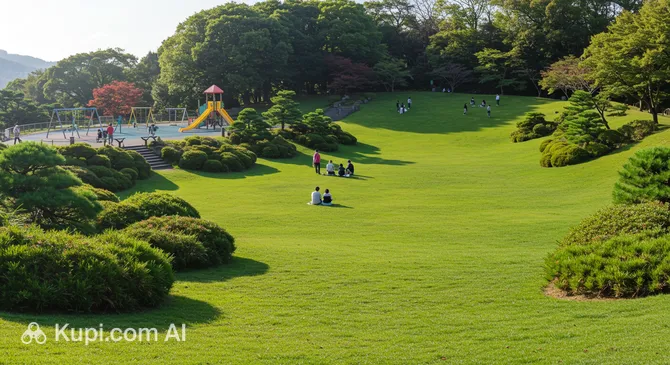
Another iconic spot is Hiokayama Park, located on the hill of the same name. It is a favorite recreation spot for locals, especially beautiful during the cherry blossom season. The park grounds contain ancient burial mounds—kofun—and its peaks offer panoramic views of the surroundings and the river. It is an ideal space for leisurely walks in the fresh air and for learning about the ancient burial history of the Japanese nobility.
Hiokayama Park. Illustration.
Source: Kupi.com AI
Traveler photos:
The city's spiritual heritage is complemented by Hioka Shrine, which is traditionally visited to pray for safe childbirth and the health of children. For those interested in transport history, the remains of the abandoned Takasago railway line, which have become a unique monument to the industrial era, are an intriguing site. Visiting these attractions allows you to see Kakogawa not just as an industrial center, but as a place with a rich cultural layer.
Local Cuisine
Kakogawa's gastronomic scene features honest and hearty Japanese cuisine that reflects the character of a working city. The main local specialty that is a must-try is Katsumeshi. This dish consists of a deep-fried beef cutlet (katsu), sliced into pieces and served on a bed of rice, generously topped with a thick demi-glace sauce and accompanied by a side of boiled cabbage. It is a true symbol of the city, served in dozens of local establishments.
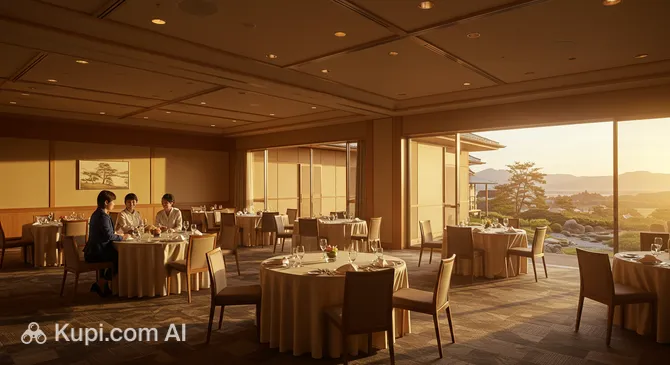
To taste the quintessential Katsumeshi, it is worth visiting the specialized restaurant Katsumeshitei. This place is incredibly popular with locals thanks to its secret sauce recipes and consistently high-quality meat. The dish is traditionally eaten with a fork rather than chopsticks, highlighting the Western culinary influence that was adapted to Japanese tastes in the mid-20th century.
Katsumeshitei. Illustration.
Source: Kupi.com AI
Traveler photos:
In addition to the signature dish, Kakogawa has a wide range of izakayas near the station and shopping streets like Teraya-machi. Here you can try fresh fish and seafood from the Seto Inland Sea, as well as classic Japanese dishes like ramen, udon, and sushi. For drinks, look for local sake from Hyogo Prefecture, which is considered one of the best sake-producing regions in the country. The overall character of the gastronomy here is down-to-earth, and portions are usually quite generous.
Travel Tips
Before heading to Kakogawa, check out these practical tips to help make your trip through Hyogo Prefecture as comfortable and enjoyable as possible.
Seasonal Clothing: Summers in the region are very humid and hot, so choose light natural fabrics and don't forget an umbrella. In winter, it can be chilly, so a warm jacket is necessary. When visiting temples like Kakurin-ji, modest clothing is appreciated, and comfortable shoes are essential for walking through parks.
Transport Cards: Be sure to purchase an ICOCA card or use an equivalent (Suica). This will save you from having to buy paper tickets every time and simplify transfers between JR trains and Shinki Buses.
Finances: While cards are accepted in shopping malls and large restaurants, cash yen may be required in small shops in Teraya-machi and old izakayas. Look for international ATMs in 7-Eleven stores or post offices.
Communication and Internet: Free Wi-Fi is available at the station and in large malls, but for navigation, it is better to buy a Travel SIM or rent a pocket router at the airport.
Language Barrier: English is less common here than in Tokyo. Learn basic phrases ("arigato," "sumimasen") and use offline translators—locals are very polite and will try to help you.
Local Etiquette: In Japan, it is not customary to leave tips—this can even confuse the staff. On public transport, set your phone to silent mode and avoid loud conversations.
What to Avoid: Do not try to enter industrial zones by the river without special permission—they are strictly guarded. Also, remember that smoking while walking is prohibited on many central streets and is punishable by a fine.
Best Time to Visit: Try to visit the city during the cherry blossom season (late March to early April) to see Hiokayama Park in all its glory.
We hope these tips help you feel confident and enjoy the hospitality of this Japanese city!
Entertainment & Nightlife
Nightlife in Kakogawa is quiet and local, focusing primarily on the comfort of residents. Unlike the bustling districts of Osaka, the city is dominated by cozy izakayas—traditional Japanese pubs—where evenings are typically spent over conversation and appetizers. The main concentration of establishments is located near the central station, where workers and office employees gather after the workday.
For those seeking active entertainment, popular choices include karaoke centers and bowling alleys located in large shopping complexes like Verde Mall. The atmosphere in the city is very safe, allowing for evening walks without any worries. However, keep in mind that most establishments close before midnight, and street life quiets down quite early.
The main event of the year and the center of entertainment is the annual Kakogawa Matsuri festival. During the festival, the city is transformed: streets fill with food stalls, traditional performances are held, and the culmination is a large-scale firework display over the Kako River. If you crave a more vibrant club scene or sophisticated evening shows, convenient transport links allow you to quickly reach Kobe or Himeji.
Parks & Museums
Kakogawa's green spaces provide residents and guests with a much-needed break from the city's industrial rhythm. The most significant place for nature walks is Hiokayama Park. This is a vast area on the hills where ancient kofun burial mounds are hidden among lush greenery. In spring, the park turns into a pink cloud due to hundreds of blooming cherry trees, attracting hanami lovers from all over. There are convenient walking paths, sports fields, and picnic areas.
For those who prefer walking by the water, the banks of the Kako River offer developed trails that are part of the Kinki Nature Trail. This is a great spot for running or cycling, offering peaceful views of the river surface and bridges. While there are no major art museums in the city itself, history buffs will find plenty of interest within the temple complexes.
Special attention should be paid to Kakurin-ji Temple, which is an open-air museum in its own right. Its treasury houses unique Buddhist statues and scrolls dating back centuries. The combination of religious architecture and well-maintained garden areas on the temple grounds creates an atmosphere of harmony, serving as an alternative to traditional galleries and exhibition halls.
Getting Around
Kakogawa's transport system is simple and efficient, based on a combination of railways and bus routes. The city's main artery is the JR Kobe Line, which provides fast connections not only between city districts but also with neighboring metropolises. Within the city, Shinki Bus also operates, with routes covering residential neighborhoods, industrial zones, and taking passengers to major attractions.
For fare payment, it is most convenient to use contactless IC cards such as Suica, Pasmo, or the local ICOCA. The card can be topped up at station terminals and used not only on trains and buses but also for payments at vending machines or convenience stores. Bus fares are usually fixed or distance-based; tickets can also be purchased from the driver upon boarding.
Taxis are available in the city, with stands usually located at the exits of Kakogawa Station. This is a convenient but expensive way to get around, especially at night when public transport stops running. Many locals and tourists prefer bicycles—the city's terrain is mostly flat, and picturesque paths along the Kako River make cycling a great alternative to motorized transport.
Accommodation
Accommodation in Kakogawa is primarily geared towards business travelers and those visiting for industry-related reasons. The most convenient option for tourists is business-class hotels located in the immediate vicinity of Kakogawa Station. Here, you can find branches of well-known chains like Toyoko Inn, offering a standard range of services, cleanliness, and compact but functional rooms at a reasonable price.
If you are planning a longer stay, apartments and so-called "mansions" are available for short-term rent. This is a great way to save money, especially if you are traveling as a family or group. The cost of living here is generally lower than in neighboring Kobe or tourist-heavy Himeji, making Kakogawa a budget-friendly base for exploring the Harima region.
During peak seasons, such as the cherry blossom period or the summer fireworks festival, it is recommended to book accommodation in advance, as the number of hotel rooms in the city is limited. For luxury options or traditional ryokans with hot springs, travelers often choose neighboring cities or resort areas in the prefecture, returning to Kakogawa for day trips to its historical sites.
Nearby Cities
Kakogawa serves as an excellent starting point for exploring the surroundings of Hyogo Prefecture, allowing you to reach some of the country's most famous attractions in a short time. Excellent rail links make day trips from the city easy and fulfilling.
Just 16 kilometers away is the city of Himeji, home to the famous "White Heron Castle"—one of Japan's few remaining original castles. The train ride takes less than 20 minutes. Also worth visiting are neighboring Takasago, known for its ancient temples and industrial history, and the coastal town of Harima, which offers quiet walks by the sea.
We recommend not limiting yourself to city walks alone and making sure to explore the nearby centers. Each of these destinations will give you new impressions—from the grandeur of medieval architecture to the modern port romance of major Japanese cities.
Shopping & Souvenirs
Shopping in Kakogawa is a mix of modern malls and atmospheric historic streets. The main draw for shoppers is Verde Mall (Berde Mall), conveniently located right by the railway station. Here, under one roof, you will find clothing stores, electronics, bookstores, and supermarkets, making it an ideal place for everyday goods and gifts.
For those looking for a more traditional Japanese flavor, it's worth taking a stroll down Teraya-machi (Shoten Gai)—a covered shopping street with a rich history. Here you can find small family-run shops selling traditional sweets, tea, and local handicrafts. Walking down this street allows you to feel the spirit of the old town and find unique items not available in large chain stores.
Popular souvenirs from Kakogawa often include local confectionery or products associated with Hyogo Prefecture. As the city is an industrial center, you can also find high-quality locally produced textiles. Most shops are open from 10:00 to 20:00 and accept both cash and credit cards, while large centers often provide Tax-Free services for foreign tourists.