Support

Matsuyama Airport

About the Airport

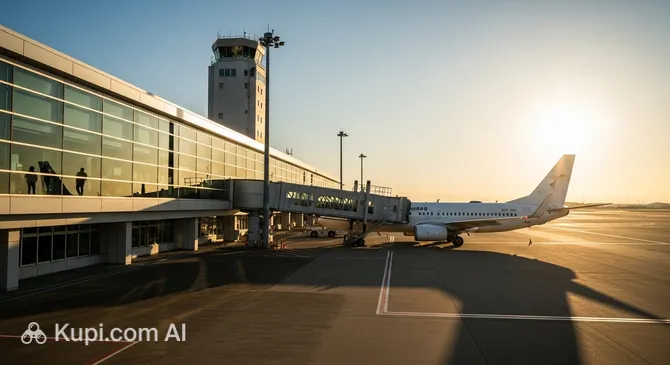
Matsuyama Airport. Source: Kupi.com Binoculars

Matsuyama Airport (MYJ) is not merely the air gateway to Ehime Prefecture, but the largest and busiest aviation hub on the entire island of Shikoku. Located on the scenic coast of the Seto Inland Sea, it welcomes travellers with beautiful views right during landing. This airport is known for its hospitable atmosphere and a unique local feature: once a month, an event is held where you can try the famous mandarin orange juice, for which the region is renowned, directly from a special tap. For many travellers, their introduction to Matsuyama and the country of Japan begins precisely at this cosy and modern terminal.

IATA Code MYJ
ICAO Code RJOM
City Matsuyama
Distance to centre About 6 km
Status International
Passengers per year About 3.2 million (2018)
Popular Airlines All Nippon Airways, Japan Airlines, Jetstar Japan
Schedule online board "Matsuyama Airport"

Despite its status as the largest airport in Shikoku, Matsuyama retains the convenience and efficiency of a regional hub, where check-in and baggage claim processes are quick and fuss-free. All conditions have been created for passengers to wait for their flights in comfort: there is free Wi-Fi, numerous shops with exclusive souvenirs, and restaurants where you can taste local cuisine. One of the airport's highlights is a lounge where guests are offered a tasting of sake from Ehime Prefecture. And for those who love watching planes, an observation deck is equipped on the roof with special openings in the fencing for photographers.

Transport connections to the city are excellently developed. Limousine buses depart regularly from the terminal, allowing you to easily reach the JR Matsuyama central railway station and the famous hot spring resort Dogo Onsen. This makes Matsuyama Airport a convenient starting point for exploring both the city itself and its picturesque surroundings.

Contact Information

For the most accurate and up-to-date information regarding flights, services, and regulations at Matsuyama Airport (MYJ), it is recommended to contact its services directly. Below are the main contact details.

  • Official Website: The most complete information can be found on the airport's official website: www.matsuyama-airport.co.jp. The site is available in several languages, including English.
  • Information Desk Phone: For consultations and answers to questions, you can call the main phone number: +81 89-972-5600.
  • Airport Address: 2731 Minamiyoshidamachi, Matsuyama, Ehime 791-8042, Japan.
  • Email: The airport does not provide a public email address for general inquiries. It is recommended to use the phone or contact forms on the official website for communication.
  • Social Media: The airport does not maintain active pages on popular social networks for passenger information. The main source of news and updates is the official website.
  • Lost Luggage Information: If your luggage has been lost or damaged, you should contact the representative office of your airline at the airport directly. Airport staff do not handle luggage tracing.
  • Passenger Support Contacts: For general questions related to your stay at the airport, you can contact the information desk at +81 89-972-5600.

How to Get to the Airport

The airport of Matsuyama is conveniently located just a few kilometres from the city centre, making the journey there quick and simple. Regardless of your budget and preferences, you will easily find a suitable way to get to the terminal to catch your flight. The city's main transport hubs are directly connected to the airport by bus services.

Public Transport: Limousine Buses

The most popular and economical way to get to the airport is to use the special Limousine Buses. They operate on several key routes, connecting the airport with major points in the city.

  • From JR Matsuyama Station: The trip will take approximately 15-20 minutes. This is the fastest route.
  • From Matsuyama City Station (Matsuyama-shi): Travel time is about 20-25 minutes.
  • From Dogo Onsen hot spring area: The journey will take about 40 minutes.
The fare depends on the stop but averages between 600-800 yen. This is a reliable and convenient option, especially if you are travelling light.

Taxi and Transfers

A taxi is an ideal choice for those who value comfort, are travelling with a lot of luggage, or are in a small group. A trip from the centre of Matsuyama to the airport will take about 15-20 minutes depending on traffic conditions. The cost of the trip usually varies from 3000 to 4000 yen. You can hail a car on the street or order one via an app, as well as book a transfer in advance if you want complete predictability.

Car Rental and Parking

If you plan to actively explore Ehime Prefecture and other corners of Shikoku Island, renting a car will be an excellent solution. Offices of several major rental companies are represented at Matsuyama Airport. Having your own transport gives you complete freedom of movement. For those arriving at the airport in their own or a rented car, convenient parking is provided. There are both short-term and long-term car parks located in the immediate vicinity of the terminal.

When travelling through this region of Japan, it is worth keeping other transport hubs in mind. Depending on your itinerary, a convenient alternative might be Hiroshima Airport or Oita Airport, which also serve a large number of flights and have good transport connections with neighbouring prefectures.

Terminals and Map

Matsuyama Airport (MYJ) is distinguished by its compactness and thoughtful organisation, making it very convenient for travellers. The airport operates one passenger terminal, which serves both domestic and international flights. This structure eliminates the need for long transfers and makes navigation intuitively clear.

The terminal building has several floors, and its layout is logically divided by function:

  • First Floor — This is the arrivals area. Information desks, car rental counters, bus ticket offices, and the exit to taxi stands are located here. After collecting baggage, passengers immediately enter the main hall, from where it is easy to reach the necessary transport.
  • Second Floor is entirely dedicated to departures. Here you will find check-in counters for all airlines, the security screening area, and passport control. After completing formalities, passengers enter the secure area with waiting lounges, duty-free shops (for international flights), souvenir stalls, and cafes.
  • Third Floor offers additional amenities, including restaurants and the famous observation deck, which offers a beautiful view of the runway and the surrounding landscapes.

Thanks to the airport's small size, completing all procedures usually does not take much time. For domestic flights, it is recommended to arrive 1-1.5 hours before departure, and for international flights — 2-2.5 hours. This time is more than sufficient to check in, drop off luggage, and pass through security control without unnecessary haste. Navigation through the terminal is very simple: follow the clear signs in Japanese and English. Airport staff are always ready to help if you have any questions.

Airport History

The history of Matsuyama Airport is a journey from a military facility to an important transport hub for Shikoku Island. The airport was founded in 1943 as an airbase for the Imperial Japanese Navy and played a strategic role during wartime. After the end of World War II, its purpose changed: the facility was transferred to civilian control, and in 1958 it officially opened for commercial air transport, connecting Matsuyama with other cities in the country.

A key stage of development was the expansion in 1972, when a runway with a length of 2500 metres was built. This allowed the airport to accommodate larger jet aircraft, which significantly increased passenger traffic and the number of flights. This step was decisive in transforming the airport into a modern aviation centre.

A new era for Matsuyama Airport began in 1995 with the opening of the international terminal. The first regular international route was to Seoul (South Korea), making the airport an international one. In parallel, modernisation of the domestic terminal was carried out, improving the quality of passenger service.

The last major reconstruction took place in 2005, when a new modern passenger terminal building was put into operation. It was designed taking into account growing needs and modern standards of comfort and safety, ensuring a pleasant stay for passengers.

Services and Facilities

Matsuyama Airport (MYJ) offers passengers all necessary services for a comfortable wait for their flight. Within its premises, you will find diverse restaurants and cafes where you can try both local cuisine of Ehime Prefecture and familiar European snacks. Shops, including duty-free, feature a wide selection of souvenirs, regional delicacies, and travel goods.

Waiting lounges are equipped for comfortable rest at the airport. Passengers can use paid lounges offering a quieter atmosphere and additional amenities. Free Wi-Fi is available throughout the terminal, and numerous stations for charging gadgets will allow you to stay connected at all times. ATMs and currency exchange points are provided for handling financial matters.

The airport is well-equipped for the needs of all categories of travellers. There is a mother and child room, and a barrier-free environment has been created for passengers with reduced mobility: ramps, special toilets, and the ability to request staff assistance. In case of necessity, you can contact the medical centre for first aid. Although there are no hotels within the airport building itself, several hotels are located in the immediate vicinity, offering convenient options for an overnight stay.

Where to Eat

The airport of Matsuyama (MYJ) offers passengers an excellent opportunity to experience the gastronomic delights of Ehime Prefecture right before departure. Most catering establishments are concentrated in the main part of the terminal, before security control, allowing those seeing travellers off to also enjoy local cuisine. The choice ranges from full-service restaurants to cosy cafes for a quick bite.

The main gastronomic attraction here is undoubtedly Taimeshi — a traditional dish of rice with sea bream, cooked in this region of Japan. At the airport, you will be able to try both of its famous varieties. It is also worth paying attention to products made from local mikan citrus fruits — from freshly squeezed juices and jams to desserts and liqueurs. This is a wonderful way to taste the flavour of the region.

On the second floor of the terminal, in the departure area, there are several restaurants where you can have a full lunch or dinner. Here you will find establishments specialising in local Ehime cuisine, as well as restaurants offering popular Japanese dishes such as udon, soba, and tempura. For those in a hurry, there are cafes on the first and second floors serving good coffee, sandwiches, pastries, and light snacks. Prices in the airport establishments can be described as moderate, especially compared to large international airports.

Most restaurants and cafes operate according to the flight schedule, usually opening around 6:30 AM and closing after the departure of the last evening flight, approximately at 20:30-21:00. Regarding special dietary requirements, finding strictly vegetarian, vegan, or Halal dishes may be difficult. However, many restaurants have dishes based on vegetables and rice on their menus. It is recommended to check the ingredients with the staff before ordering.

Tips for Travellers

To ensure your journey through the airport of Matsuyama city goes smoothly, use these practical tips. Planning in advance will help avoid stress and save time, allowing you to enjoy your trip around Japan.

Arrival Time and Check-in: Matsuyama Airport is not among the gigantic ones, but arriving early is always a good idea. For international flights, it is recommended to arrive 2.5-3 hours before departure, and for domestic ones — 1.5-2 hours. This time is enough to calmly complete check-in, drop off luggage, and pass pre-flight screening. To save time, use online check-in if your airline provides such an option.

Hand Luggage and Screening: Rules for carrying liquids are standard: containers with a volume of no more than 100 ml each, packed in a transparent resealable bag. Take laptops and other large gadgets out of your hand luggage in advance to speed up the screening process. It is strictly forbidden to carry sharp objects, flammable substances, and other dangerous items in the cabin.

Seat Selection and Transfers: When choosing a seat on the plane, be guided by your preferences: a window seat will offer beautiful views during takeoff and landing, while an aisle seat offers more legroom and freedom of movement. If you have a connecting flight, check with the airline whether you need to collect and re-check your luggage in Matsuyama, especially when transferring from an international flight to a domestic one.

Customs Control: Upon arrival on an international flight, you will need to fill out a customs declaration. Answer all questions carefully and honestly. If you are unsure whether an item needs to be declared, it is better to declare it. This will help avoid misunderstandings and fines.

Saving Money and Flight Delays: To save money, bring an empty reusable bottle and fill it with water after passing through security. Prices for food and drinks at the airport may be higher than in the city. In case of a flight delay, first contact your airline's counter. Depending on the length of the delay, you may be offered vouchers for food or drinks. The airport has shops, cafes, and free Wi-Fi to help pass the waiting time.

Reached the end of the page?

That means the route is fully explored