Support

Misawa

About the Airport

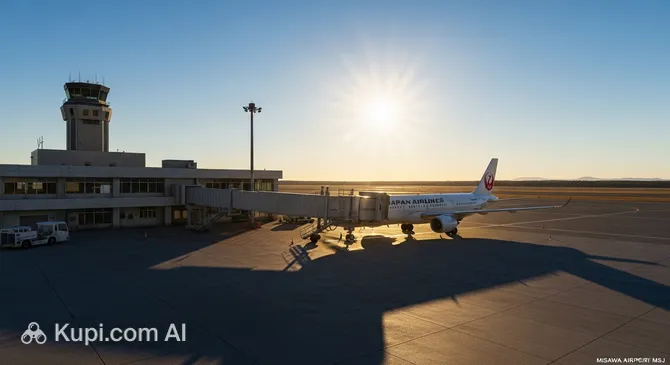
Misawa. Illustration.
Source: Kupi.com AI

Misawa Airport is not just an air gateway to Aomori Prefecture, but a unique facility where civil aviation coexists with the military. It is jointly used by the Japan Air Self-Defense Force, the US Air Force, and commercial airlines, giving it a special status. Located amidst the picturesque landscapes of the northern part of Honshu Island, the airport serves as a starting point for exploring the region's nature and culture. Despite snowy winters, it is known for high reliability and plays an important role in Aomori's transport system.

PropertyValue
IATA CodeMSJ
ICAO CodeRJSM
CityMisawa
CountryJapan
TimezoneAsia/Tokyo
Top AirlinesJapan Airlines
ScheduleOnline Timetable

The main feature of Misawa Airport is its dual purpose. Travellers can observe the take-offs and landings of not only civil airliners but also military aircraft, which is a rare spectacle. Regular civil flights, operated primarily by Japan Airlines and its partners, connect Misawa with major cities in Japan, such as Tokyo (Haneda Airport), Osaka (Itami Airport), and Sapporo. This makes the airport a convenient transport hub for travelling around the country. The airport is compact, modern, and easy to navigate, and thanks to its location, it is easy to get to the city centre of Misawa and key attractions of Aomori Prefecture.

Contact Information

If you need to contact Misawa Airport (MSJ), please use the contact details below. Please note that the airport is a dual-use facility serving both civil and military flights, so the contact information applies to the civil passenger terminal.

  • Official Website: misawa-airport.co.jp. The site is in Japanese; for convenience, you can use the automatic translation function in your browser.
  • Information Desk Phone: +81 176-53-7500. This is the number for the passenger terminal administration. Please be aware that communication will likely take place in Japanese.
  • Airport Address: Misawa Airport Terminal Building, Shimokubo, Misawa, Aomori Prefecture 033-0022, Japan.
  • Email: The airport does not publish a direct email address for communication. It is recommended to use the contact form on the official website.
  • Social Media: The civil terminal of Misawa Airport does not have active official pages on international social networks.
  • Lost and Found Information: If you have lost items within the terminal building, please contact the main phone number. In case of loss of checked baggage or items on board the aircraft, you should contact your airline directly (e.g., JAL).
  • Passenger Support Contacts: For general questions regarding terminal operations, you can call the number listed above. For issues regarding tickets, flight check-in, schedules, and special services, you must contact your airline's representative office.

How to Get to the Airport

Getting to Misawa Airport (MSJ) from the city centre of Misawa and its surroundings is quite simple, thanks to several convenient modes of transport. The airport is located in close proximity to the city, so the journey will not take much time, regardless of the method you choose.

Public Transport is the most economical option. The main means of transport are shuttle buses that run between the airport, Misawa train station, and key points in the city. The schedule is usually coordinated with flight arrivals and departures. The bus ticket cost is generally around 300-400 JPY. Taking the bus is a great way to save money, although it may require a little more time. There is no direct rail link to the airport, but you can take a train to Misawa Station and transfer to a bus or taxi to the terminal from there.

Taxi or pre-booked transfer is the most comfortable and fastest way to get to the airport. The trip from the city centre will take only about 15-20 minutes. This is an ideal choice if you are travelling with a lot of luggage, with family, or simply value convenience. Taxis can be found at designated stands in the city or called by phone. The estimated cost of a trip from central Misawa is 1500–2000 JPY, providing "door-to-door" service.

Car Rental offers maximum freedom of movement, especially if you plan to explore Aomori Prefecture and other regions of Japan. Several major rental companies have offices at the airport and in the city itself. The road to the airport is well-marked with signs. For those arriving in their own or rented car, convenient parking is available at the terminal, offering both short-term and long-term parking options.

The choice of transport depends on your priorities. For budget travel, the bus is best. If speed and comfort are important to you, choose a taxi. And for independent travellers wishing to explore the surroundings, the optimal solution is car rental.

Terminals and Map

Misawa Airport (MSJ) is a small and convenient aviation hub that serves both civil and military flights, sharing infrastructure with the airbase. Its structure is extremely simple, making your stay here comfortable and eliminating the stress typical of large airports.

The airport has just one passenger terminal, which serves all domestic flights. Thanks to its compact size, navigation is intuitive. The terminal building is two stories high, but all main passenger zones are within walking distance of each other, so it is practically impossible to get lost here. Transfers between terminals are not required, as all operations are concentrated in one place.

Terminal Layout and Zones:

  • First Floor: Here you will find airline check-in counters and the arrival area with baggage claim belts. Everything is located in one large hall, allowing you to orient yourself quickly.
  • Second Floor: You can access this floor via stairs or escalator. Here lies the security checkpoint, after which passengers enter a small departure lounge with boarding gates. Also on the second floor, there is a souvenir shop, a cafe, and an observation deck offering a view of the runway.

Passing through registration and security procedures at Misawa Airport usually takes significantly less time than at major hubs in Japan. On average, all formalities take no more than 20-30 minutes. Nevertheless, it is recommended to arrive at the airport approximately 1-1.5 hours before your domestic flight departure to check in luggage and pass security control without haste. Signs in Japanese and English help you easily find the necessary zones.

Airport History

The history of Misawa Airport (MSJ) is unique and closely linked to significant events of the 20th century. Its story began not as a civil facility, but as a military airfield for the Imperial Army of Japan. Construction started in 1938, and the first runway was commissioned in 1941. Initially, it served as a base for pilot training and military missions.

After the end of World War II, the airfield came under the control of the US Armed Forces and became a vital strategic facility in the region. However, a new chapter in its history began in 1952 with the opening of civil air services. The first commercial flights connected Misawa with other cities in the country, marking the start of its development as a dual-use airport.

With the growth of passenger traffic, the need for modern infrastructure arose. In 1985, a new civil terminal was opened, significantly improving the quality of service for travellers. The airport also played a key humanitarian role following the Great East Japan Earthquake in 2011, becoming one of the coordination centres for relief efforts to affected regions under Operation Tomodachi.

The main interesting fact about Misawa Airport is its status. It is one of the few facilities in the world where a civil airport, a Japan Air Self-Defense Force base, and a US Air Force base function simultaneously on the same territory. For tourists, this means a unique opportunity to watch the take-off and landing of not only passenger airliners but also modern military aircraft, making arrival or departure from Misawa a truly memorable experience.

Services and Facilities

Misawa Airport (MSJ), despite its compact size, offers passengers a full range of necessary services for a comfortable wait before their flight. All conditions have been created here to ensure your journey through Japan begins and ends pleasantly.

Restaurants, Cafes, and Shops: In the terminal, you will find several dining establishments where you can have a full lunch or a quick snack. The menu includes local Japanese dishes. The shops offer a good selection of Aomori Prefecture souvenirs, sweets, and travel essentials.

Comfort and Connectivity: Free Wi-Fi is available throughout the airport, allowing you to stay connected or work while waiting for departure. Power outlets are provided in waiting areas for charging electronic devices. In addition to general areas, a paid lounge is available for passengers wishing to relax in a quieter and more private atmosphere.

Services and Amenities: ATMs are installed in the airport for cash withdrawals. A nursing room is equipped for passengers with small children. If necessary, you can contact the medical station for first aid. The terminal is fully adapted for passengers with reduced mobility: there are ramps, elevators, and specially equipped toilets, and staff are ready to provide necessary assistance.

Accommodation and Business Services: There is no hotel directly on the airport grounds, however, many hotels are located in the city of Misawa itself, which can be reached in a few minutes. There are no specialised conference halls provided in the airport, which is typical for small regional aviation hubs.

Where to Eat

Misawa Airport (MSJ), being a compact regional hub, offers few but high-quality dining options located in the main terminal building. It is important to note that almost all establishments are located before security control (landside), so it is better to plan a full lunch or dinner in advance, before checking in for your flight.

The main place to eat is the restaurant, usually located on the second floor of the terminal. Here, travellers can enjoy classic Japanese dishes such as ramen, curry, or udon. Often, the menu features local specialities of Aomori Prefecture, providing a wonderful opportunity to experience regional gastronomy before departure. This is an ideal choice for those who have time for a leisurely meal. The restaurant's opening hours are generally synchronised with the flight schedule.

For a quick snack, the souvenir shop is perfect, selling not only gifts but also a variety of packaged snacks, sandwiches, and local delicacies. You can also find a coffee corner or cafeteria in the airport for a cup of coffee and light pastries. Of course, ubiquitous Japanese vending machines with a wide selection of beverages are placed throughout the terminal. After passing security (airside), the selection is typically limited to vending machines.

Travellers with specific dietary needs should note that options may be limited. Finding certified Halal or specialised vegan and gluten-free dishes in a small regional airport in Japan will be difficult. Some vegetarian options may be available, but it is best to check ingredients directly with staff. If you have strict restrictions, it is safer to bring food with you. Prices in Misawa Airport establishments can be described as moderate, typical for Japanese airports.

Travel Tips

When planning a departure from Misawa Airport, arrive in advance to avoid unnecessary haste. For domestic flights within Japan, it is recommended to arrive 1.5–2 hours before departure. This time is sufficient for check-in, baggage drop, and security control. Although Misawa Airport is not as large as the capital's airports, it is better to have a small buffer of time.

To save time, use online check-in on your airline's website. This will allow you to head straight to baggage drop or, if travelling light, to the security checkpoint. Security procedures in Japan are organised and thorough. Prepare liquids (in containers up to 100 ml, packed in a transparent bag) and electronic devices in advance to present them quickly for scanning.

Seat selection depends on your preferences. A window seat will give you the chance to enjoy views of the northern part of Honshu Island during take-off and landing. An aisle seat provides more legroom and allows you to stand up freely without disturbing neighbours. If you want to be among the first to disembark, choose seats in the front of the cabin.

Sharp objects, flammable liquids, and other dangerous substances are prohibited in hand luggage. The standard rule for liquids is containers of no more than 100 ml. Always check the current hand luggage requirements on your airline's website, as they may differ slightly. It is useful to have a portable charger with you, but remember that it can only be carried in hand luggage.

Misawa Airport mainly serves domestic flights, so for international travel, you will likely have a transfer at a larger hub, for example, in Tokyo. Ensure you have enough time between flights, especially if a change of terminal or re-screening is required. Check with the airline if your luggage will be automatically transferred to the next flight.

When entering Japan through international airports, you will undergo customs control. You must fill out a customs declaration, usually handed out on the plane. Declare honestly all goods subject to declaration. Be prepared to answer the customs officer's questions about the purpose of your visit and the contents of your luggage. This is a standard procedure that goes quickly if you do not have prohibited items.

To make your trip more economical, check in online, travel with hand luggage to save on baggage fees, and book transfers to or from the airport in advance. Bring an empty water bottle that can be filled after passing security — this will help save on drinks in the departure area.

In case of flight delay or cancellation, remain calm. First, contact your airline's counter for information on the new departure time and your rights. Depending on the length of the delay, the airline may provide vouchers for food or hotel accommodation. Keep important contacts at hand and monitor updates on information boards.
Reached the end of the page?

That means the route is fully explored