Support

Shimojishima

Airports in the city

About the Airport

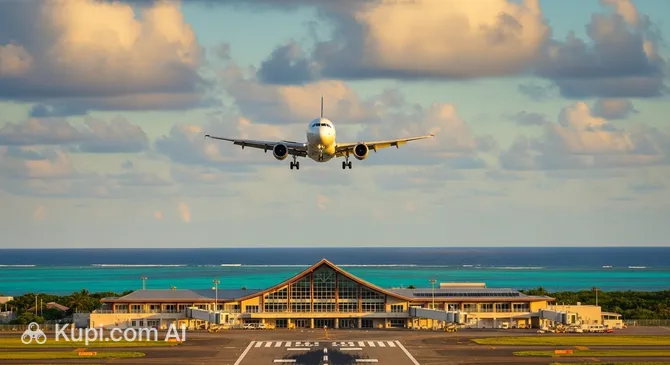
Shimojishima. Source: Kupi.com Binoculars

Shimojishima Airport is not merely a transport hub, but a true resort attraction located on the island of the same name in Okinawa Prefecture. Connected to the main island of Miyako by the picturesque Irabu Bridge, this airport is famous for its unique terminal, which resembles a luxurious villa with wooden interiors and open pools. Travelers often call it one of the most beautiful and relaxing airports in Japan, where your holiday begins the moment you step off the plane.

The air harbour gained particular popularity due to a spot known as 17 End — an area at the end of the runway that extends directly into the turquoise sea. Here, you can watch planes coming in for a landing literally overhead against the backdrop of incredibly blue water, attracting photographers and aviation enthusiasts from all over the world.

IATA Code SHI
ICAO Code RORS
City Miyakojima (Okinawa)
Distance to Centre ~16 km (to Miyakojima city centre)
Status International / Domestic
Passengers per Year Approx. 200,000 – 300,000
Schedule See official website

Airport Features and Highlights:

  • Resort Design: The new passenger terminal is designed in an "eco-luxury" style, utilising natural wood and open spaces to create the atmosphere of a tropical hotel rather than a strict transit hub.
  • Scenic Approach: Thanks to the runway's location, landing here is considered one of the most spectacular in Japan — aircraft fly over the crystal-clear waters of coral reefs.
  • Convenient Connections: The airport is connected to the neighbouring large island of Irabu and the main island of Miyako by toll-free bridges, allowing you to reach major hotels and beaches by rental car or bus in less than 30–40 minutes.
  • Legendary "17 End": The beach and pier at the northern part of the airport (Runway 17) reveal fantastic views of white sands and gradients of the blue sea during low tide, which have become the region's hallmark.

Contact Information

To ensure your journey through Shimojishima Airport goes smoothly, please save its contact details. Below is the essential information for communication.

  • Official Website: You can find the most up-to-date information on flights, services, and airport regulations on the official website: https://www.shimojishima.jp/ (available in Japanese and English).
  • Information Desk Phone: For enquiries, you can call: +81-980-78-6555. Please consider the time difference when calling from abroad.
  • Address: 1727 Irabu Sawada, Miyakojima-shi, Okinawa 906-0507, Japan. The airport is located on Shimoji Island, which administratively belongs to the city of Miyako (Miyakojima).
  • Email: A direct email address for general enquiries is not published. It is recommended to use the dedicated contact form on the airport's official website for communication.
  • Social Media: Follow the airport's activities, beautiful views, and announcements on its official Facebook and Instagram pages.
  • Lost Luggage Information: For issues related to lost or damaged luggage, please contact the representative office of the airline you flew with directly. If you left personal items in the terminal building, please contact the airport information service.
  • Passenger Support Service: For all general questions, you can approach the information desk located in the airport terminal or call the enquiry service number.

How to Get to the Airport

Shimojishima Airport (SHI) is located on the island of the same name, which is connected by bridges to Irabu and Miyako islands. You can reach it from the main tourist areas of Miyako in Japan in several ways, each having its own advantages depending on your budget and travel plans.

Public Transport: Bus

The most budget-friendly option is the bus. The dedicated Shimojishima Airport Resort Line bus operates from the airport, connecting it with major hotels and the central district of Hirara City. The journey to the centre takes approximately 30-50 minutes depending on the destination. The fare is usually around 500-700 yen. It is important to note that the bus schedule is often linked to flight arrival and departure times, so checking current information in advance is recommended.

Taxi and Transfer

A taxi is a faster and more comfortable way to reach your destination. The taxi stand is located right outside the terminal exit. A trip to the central part of Miyako Island will take about 30 minutes but will cost significantly more — approximately 4000-6000 yen. This option is convenient for small groups or travellers with a lot of luggage. You can also pre-book a private or group transfer, which may be advantageous for larger parties.

Car Rental

Car rental is an extremely popular and recommended method of transport around the Miyako islands. Counters for several rental companies are located within the Shimojishima Airport terminal. Having your own vehicle gives you complete freedom to explore not only Miyako Island but also the picturesque islands of Irabu, Ikema, and Kurima connected to it by bridges. It is recommended to book a car in advance, especially during the high tourist season, to guarantee availability and secure the best price.

Airport Parking

If you are arriving at the airport in a rental car to meet someone or to fly out, paid parking is available on the airport grounds. There are zones for both short-term and long-term parking. This is a convenient option if you plan to leave the car during your absence. Please note that there is another airport on the island, Miyako Airport (MMY), which has its own transport infrastructure.

Terminals and Map

Shimojishima Airport (SHI) features a thoughtful and modern structure focused on passenger comfort. It is one of the newest and most stylish aviation hubs in Japan, serving the Miyako archipelago.

Number and Purpose of Terminals: The airport operates one main passenger terminal, which opened in 2019. It is designed as a "resort airport" and serves both domestic and international flights, primarily for low-cost carriers (LCCs). Due to there being only one terminal, there is no need for transfers between buildings, making navigation extremely simple.

Layout and Navigation: The terminal is a single-storey building with an open-plan layout. The design, featuring natural wood, panoramic windows, and abundant greenery, creates a relaxing atmosphere. The airport layout is intuitive: all key areas — check-in, security screening, boarding gates, and the arrival zone — are within walking distance of each other. Signage is clear and easy to read.

Departure and Arrival Zones: The arrival and departure areas are located in the same building. Upon arrival, passengers enter a general hall where car rental counters and exits to buses and taxis are located. The departure zone includes check-in counters, after which passengers proceed to a cosy "airside area" with shops, cafes, and comfortable seating. Everything is arranged very compactly.

Processing Time and Recommendations: Thanks to the airport's small size and efficient organisation, check-in and security checks usually take no more than 20-30 minutes. Long queues are rare here. Nevertheless, it is recommended to arrive at the airport approximately 1.5 hours before a domestic flight. The main advice for navigation is not to rush. Enjoy the unique design of the terminal, which resembles a lounge area at a tropical resort more than a standard airport. It is practically impossible to get lost here.

Airport History

The history of Shimojishima Airport (SHI) is unique and differs from many other air harbours in Japan. It was opened in 1979 and was initially created not for commercial passenger transport, but as a specialised training airfield for pilots of Japan's largest airlines — Japan Airlines (JAL) and All Nippon Airways (ANA). Thanks to its long runway (3000 metres) and favourable weather conditions, it became an ideal site for practising take-offs and landings, particularly the "touch-and-go" manoeuvre.

For decades, Shimojishima served as a major training base. However, over time, airlines revised their pilot training programmes. JAL ceased training here in the 1990s, and ANA in 2014, after which the airport practically fell out of use. A new chapter in its history began on 30 March 2019, when a modern passenger terminal was opened. This event marked the airport's revival as a commercial hub, focused primarily on low-cost carriers (LCCs) and the growing flow of tourists to the Miyako islands.

One of the most interesting facts about the airport is its location. The end of Runway 17, known as "17 End", comes right up to the sea with crystal-clear turquoise water. This spot has become iconic among aviation photography enthusiasts and tourists who come here to take impressive shots of planes coming in to land directly over the water. Today, Shimojishima Airport is not just a transport node, but a symbol of successful transformation and an important attraction for travellers discovering these paradise islands.

Services and Amenities

Shimojishima Airport (SHI) offers passengers a modern and bright terminal designed to make waiting for a flight a pleasant part of the journey. Here you will find several restaurants and cafes where you can enjoy both local Okinawan cuisine and more familiar international options. The airport shops offer a good selection of souvenirs, unique items by local artisans, and travel essentials.

Free Wi-Fi is available throughout the terminal for comfortable waiting. If you need to charge your phone or laptop, numerous power outlets and USB ports are at your service in the seating areas. Passengers who value privacy and enhanced comfort can utilise the VIP lounge services to relax in a quiet atmosphere before their flight.

Basic financial services are provided at the airport. You can use ATMs for cash withdrawals. Currency exchange counters are also available for the convenience of international travellers. In case of illness or injury, a first aid station operates in the terminal, where qualified consultation and assistance can be obtained.

Shimojishima Airport is well-equipped for passengers with special needs. For families with small children, there are convenient baby care rooms with changing tables and all necessities. The terminal is designed as a barrier-free environment: there are ramps, lifts, and specially equipped toilets for passengers with reduced mobility. If necessary, an escort service can be booked in advance.

Although there are no hotels directly within the airport building, you will easily find many accommodation options on the neighbouring Miyako Island, which is connected to Shimojishima by a bridge. Choices range from luxury resorts to cosy guest houses. Since the airport is primarily tourist-oriented, there are no specialised conference halls or business centres. The main focus is on creating a relaxing and welcoming atmosphere for holidaymakers.

Where to Eat

Despite its compact size, Shimojishima Airport (SHI) offers passengers several pleasant options for a snack or a full meal, paying special attention to the local cuisine of the Miyako islands. All dining establishments are located in the public area of the single terminal, before security control (landside), which is convenient for both departing passengers and those seeing them off.

The main place for lunch is The Kitchen food court. Here you can leisurely enjoy dishes before your flight. This is an excellent opportunity to taste authentic flavours of Okinawa. Be sure to look out for Miyako-soba — a local variety of the famous noodle soup, as well as Taco Rice — a popular dish combining Japanese and Mexican motifs. Prices here are average for an airport, allowing for a hearty meal within a reasonable budget.

For those looking for a quick bite or something to take on board, the Grab & Go kiosk is perfect. Here you will find sandwiches, pastries, salads, and various drinks. If you have time for a cup of coffee, visit the Coral Port Cafe & Bar. In addition to quality coffee, they serve desserts and light snacks in a cosy atmosphere.

Regarding special dietary needs, choices may be limited. Vegetarians and vegans should choose soups and sauces with caution, as fish broth (dashi) is often used as a base. It is recommended to clarify the ingredients of dishes directly with the staff. Opening hours of establishments are usually linked to the flight schedule: they open in the morning before the first departures and close after the last plane leaves.

Travel Tips

To ensure your journey through Shimojishima Airport in Miyako city goes as smoothly as possible, make use of these tips. A thoughtful approach will help save time, reduce stress, and even save money, leaving more pleasant impressions from your trip to Japan.

Arrival Time at the Airport: Shimojishima Airport (SHI) is not very large, but it is better not to take risks. We recommend arriving 2 hours before domestic flights and 2.5-3 hours before international ones. This time will be sufficient to calmly go through all procedures, even if there are small queues.

Check-in and Security Control: To save time, complete online check-in for your flight if your airline provides this option. Security control in Japanese airports is organised very efficiently, but be prepared in advance: take out all electronics, remove outerwear, and remember the rule for carrying liquids (no more than 100 ml in one container).

Seat Selection on the Plane: When flying to the Okinawa islands, including Miyako, the view from the window can be stunning. Choose a window seat to enjoy the panorama of the turquoise ocean and coral reefs during take-off and landing. If comfort and the ability to leave the cabin quickly are more important to you, it is better to choose an aisle seat.

Hand Luggage Rules: Standard international rules apply here too: no sharp objects or liquids in volumes greater than 100 ml. Be sure to check the weight and dimension limits for hand luggage on your airline's website, as they may differ, especially with low-cost carriers.

For Transfer Passengers: Shimojishima is a compact airport, so transfers here usually proceed quickly. The main thing is to clarify in advance whether you will need to collect and re-check your luggage. This is especially important when transferring from an international flight to a domestic one.

Customs Control: When arriving on an international flight, you will have to pass through customs control. Fill out the customs declaration (usually handed out on the plane). Remember that it is strictly forbidden to bring many products into Japan, including meat, fresh fruit, and vegetables. To avoid problems, it is better not to carry such food items.

Saving Time and Money: Book a transfer from the airport to your hotel in advance to avoid overpaying taxi drivers on the spot. Bring an empty reusable water bottle with you — there are drinking fountains in the airport. Souvenirs and local delicacies are often cheaper to buy in the city rather than at the airport.

What to Do in Case of Flight Delay: In the event of a delay or cancellation, first approach your airline's counter for information and instructions. Find out about your rights regarding the provision of drinks, meals, or even a hotel if the delay is lengthy. The airport offers basic amenities, including cafes and shops, where you can pass the time while waiting for departure.

Reached the end of the page?

That means the route is fully explored