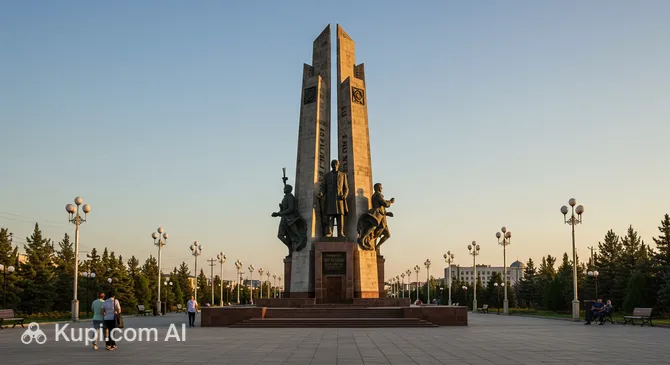
In the very heart of Aktobe rises a majestic monument that has become one of the main symbols of this part of the country. The Abulkhair Khan Monument is an impressive embodiment of historical memory, dedicated to the outstanding 18th-century commander, diplomat, and ruler of the Junior Juz, whose contribution to the formation of statehood is hard to overstate.
Abul Khair Khan Monument. Illustration.
Source: Kupi.com AI
Traveler photos:
The monumental composition is a bronze equestrian statue 6.5 meters high, set on a massive granite pedestal. Determination and strength are felt in the khan's appearance; the sculpture masterfully conveys the spirit of an era when the unity of the people was the key to survival. Thanks to its scale and artistic execution, the monument is recognized as one of the most significant attractions decorating modern Kazakhstan.
Located on the main square in front of the regional akimat, the monument fits seamlessly into the urban landscape. A spacious walking area is laid out around it, where both locals and tourists enjoy spending time. For guests of the city, this place often becomes the first point on an excursion route, allowing them to immediately touch the heroic past of the region.
Contacts
To clarify information about official events or wreath-laying ceremonies at the monument, you can contact the city services. The Abulkhair Khan Monument is an open cultural heritage site.
When visiting this location, you should first of all take the time to study the equestrian statue itself. Viewing the monument from different angles, you can appreciate the fine work of the sculptors who conveyed the energy of the horse's movement and the rider's authoritative gesture. This is an ideal place for memorable photos, especially in the rays of the setting sun when the bronze takes on a particularly noble hue.
A well-maintained area suitable for leisurely walks stretches around the monument. You can walk along the central boulevard, which is a favorite meeting place for citizens. Observing the rhythm of life in Aktobe at this point allows you to feel the atmosphere of a city where modern infrastructure exists alongside deep respect for traditions.
For those who want to combine cultural leisure with relaxation, numerous shops, cafes, and hotels are located nearby. The square in front of the monument often becomes the venue for city holidays and official celebrations, so with a bit of luck, you might witness a vibrant cultural event.
Getting There
Finding the Abulkhair Khan Monument is easy, as it is located in the heart of the city's administrative and cultural center at 40 Abulkhair Khan Avenue. The landmark is the regional akimat building, in front of which lies the spacious square with the monument.
You can get here by any public transport that runs along the city's main thoroughfares. Most bus routes stop in the immediate vicinity of the square. You can also use a city taxi, which will take you from any point in Aktobe in a matter of minutes.
It is important not to confuse this city monument with the "Khan Molasy" memorial complex, which is the actual burial site of the ruler. The latter is located in the Ayteke Bi District, several hundred kilometers from the city, and requires a separate trip out of town to visit.
Nearest city: Aktobe
History & Facts
Abulkhair Khan was one of the most significant figures in the region's 18th-century history. Becoming the khan of the Junior Juz at a young age, he became famous as a talented strategist and a fearless warrior. It was under his command that the unified Kazakh forces won key victories in the Battle of Anyrakay, defending their lands from Dzungar invaders.
The majestic monument in Aktobe was ceremoniously opened in 2000. A group of professionals led by the famous sculptor Y. Sergebayev worked on creating the image of the great commander. The masters sought to capture the khan at one of the most fateful moments in history, when the future of the Kazakh people was being decided.
Every detail of the monument is filled with deep symbolism. The khan's raised right hand personifies the call to unite the scattered clans and the common will for victory. The powerful horse beneath the rider emphasizes speed and the indomitable desire for freedom and independence, which were Abulkhair's main ideals.
The fate of the khan himself ended tragically in 1748, but the memory of him as a great diplomat and defender of the steppes lives on to this day. The monument in the center of Aktobe has become not just an architectural object, but an important link between the heroic past and the modern generation of the country's residents.
Time Needed
To leisurely inspect the monument and the surrounding area, 30 to 60 minutes is usually enough. This time will be sufficient to examine the details of the sculpture, read the information plaques, and take memorable photos against the backdrop of the majestic equestrian statue.
If you plan to continue your walk along the adjacent Abay Boulevard or visit nearby shopping centers and cafes, it is worth allocating about 2 hours for visiting this part of the city. The square in front of the akimat is an excellent starting point for exploring the central blocks of Aktobe.
Working Hours
Since the Abulkhair Khan Monument is located in a public outdoor space, access to it is open 24/7. You can visit the square at any convenient time — both in bright daylight and in the evening when the city lights come on.
There are no official operating hours for such sites; however, if you plan to visit nearby administrative buildings or information centers, we recommend checking their schedules on the official websites of Aktobe city services beforehand.
Nearby
The monument's location in the central part of the city allows tourists to easily combine viewing it with visits to other interesting locations. A stroll along Aktobe's main avenue will reveal many cozy squares and architectural sites that create the city's unique character.
Below are objects located within walking distance or a short drive from the monument: