Support

Nanyuki

About the Airport

Nanyuki Airport is not merely a runway, but an aerial gateway to the very heart of adventurous Kenya. Located right on the equator, it serves as a starting point for travellers aiming to conquer the snow-capped peaks of Mount Kenya or embark on an unforgettable safari. It is from here that many expeditions to famous reserves begin, making this small but bustling airfield a key transport hub for eco-tourism in the region.
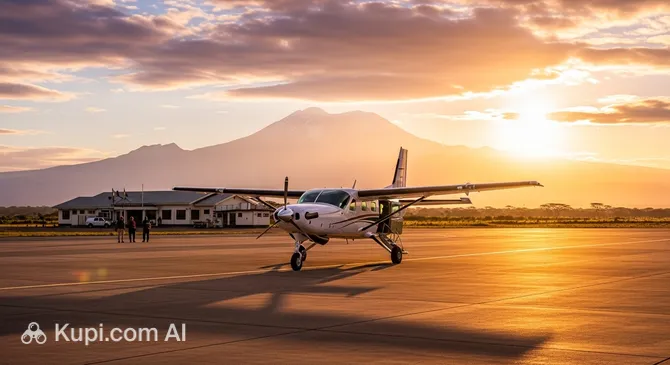
Nanyuki. Illustration.
Source: Kupi.com AI
PropertyValue
IATA CodeNYK
ICAO CodeHKNY
CityNanyuki
CountryKenya
TimezoneAfrica/Nairobi
ScheduleOnline Timetable

The main feature of Nanyuki Airport is its strategic location. It is situated in immediate proximity to world-renowned conservation areas such as the Ol Pejeta Conservancy, home to the last northern white rhinos, and the Lewa Wildlife Conservancy. For tourists, this means significant time saving: instead of a multi-hour drive from Nairobi, you can reach your safari lodge quickly and comfortably.

Despite its modest size, the airport offers everything necessary for travellers. Check-in and boarding procedures here are significantly faster than in major international hubs. The absence of hustle and long queues creates a relaxed atmosphere, setting the mood for your upcoming holiday. And in clear weather, a breathtaking view of the majestic Mount Kenya opens up right from the runway — the perfect start to your African adventure.

Contact Information

You can contact representatives of Nanyuki Airport (NYK) or obtain information in several ways. Please note that as this is a small regional airport, many issues are resolved through the central office of the Kenya Airports Authority (KAA) or directly through the airlines.

  • Official Website: Nanyuki Airport does not have its own website. Current information is published on the Kenya Airports Authority (KAA) portal: www.kaa.go.ke.
  • Information Desk Phone: A direct airport phone number may not be available. For general enquiries, you can contact the KAA head office at: +254 20 6611000.
  • Airport Address: Nanyuki Airport (NYK), Nanyuki, Laikipia County, Kenya.
  • Email: For official enquiries, it is recommended to use the Kenya Airports Authority email: talk2us@kaa.go.ke.
  • Social Media: The airport does not have its own social media pages. News and updates can be tracked on official KAA channels.
  • Lost Luggage Information: For all issues related to lost or damaged luggage, you must contact your airline directly. Airport staff do not handle lost property searches.
  • Passenger Support Contacts: The best way to get assistance regarding a specific flight is to contact the check-in counter or your airline's representative within the terminal building.

How to Get to the Airport

Getting to Nanyuki Airport (IATA: NYK) from the centre of Nanyuki city is quite simple, as it is located just a few kilometres away. The journey usually takes from 10 to 20 minutes depending on the chosen transport and traffic conditions. Here are the main options travellers should consider.

Taxi or Private Transfer — the most convenient and reliable option, especially if you have a lot of luggage. A car can be ordered through your hotel or found at stands in the city. The cost of the trip is not high, but it is always recommended to agree on the price with the driver in advance to avoid misunderstandings. This method guarantees comfort and delivery directly to the terminal.

Motorcycle Taxi (Boda-boda) — a popular method in Kenya and a very budget-friendly way to travel short distances. This is an excellent choice for solo travellers with a light backpack. A trip on a boda-boda will be quick and allow you to experience the local flair, although it is less comfortable and safe compared to a taxi.

Car Rental — an ideal option for those who plan not only to get to the airport but also to explore the surroundings independently, for example, Mount Kenya National Park or Ol Pejeta Conservancy. There are several local and international rental agencies in Nanyuki. The airport provides parking where you can leave the car while waiting for a flight, making this method even more convenient.

As for public transport, there may not be direct bus routes to the airport terminal itself. The main mode of public transport here is matatu minivans. They ply the main roads, and you can ask the driver to drop you off at the turn nearest to the airport, from where you will have to walk some distance. This is the cheapest, but also the least convenient method, which is not recommended for tourists with luggage or those who value their time.

Terminals and Map

Nanyuki Airport (NYK) is a small regional aviation hub with one passenger terminal. This compact and functional building serves both arriving and departing flights, predominantly domestic ones. Its main task is to provide quick access to the famous reserves and national parks of central Kenya, so its entire structure is aimed at maximum simplicity and convenience for tourists.

The terminal layout is extremely simple. Inside one building, you will find all the necessary zones: several check-in counters, a small waiting hall for departing passengers, and an arrival zone where luggage collection takes place. Departure and arrival zones are clearly separated but located within walking distance of each other. There are no transfers between terminals, as all operations are concentrated in one place, making navigation intuitive even for those visiting for the first time.

Thanks to the small size of the airport and moderate passenger flow, all pre-flight formalities are completed very quickly. The check-in and security screening process usually takes no more than 20-30 minutes. Nevertheless, it is recommended to arrive at the airport about an hour before departure to check in your luggage and take your seat in the waiting hall without rushing.

The main advice for navigating Nanyuki Airport is not to worry about getting lost. It is practically impossible here. There are few signs, but they are not required: all key points are in plain sight. Airport staff are always ready to help and suggest directions. Remember that this is primarily a transport hub, not an entertainment complex, so the range of services here is basic but sufficient for a comfortable wait for your flight.

Airport History

The history of Nanyuki Airport (NYK) is closely intertwined with the colonial past of Kenya. It was originally founded in the 1930s as a military airbase for the Royal Air Force (RAF) and was named RAF Nanyuki. Due to its strategic location at the foot of Mount Kenya, the airfield played an important role as a transit and training hub during World War II and afterwards, supporting the British military presence in East Africa.

After Kenya gained independence in 1963, the airport began to gradually transform. While retaining its military significance, it began to serve civil flights more actively. The main impetus for development was the growth of the tourism industry in the second half of the 20th century. Nanyuki turned into a key gateway for travellers heading on safari to the famous reserves of the Laikipia Plateau and to climb the second-highest peak in Africa.

Over the last few decades, periodic modernisations have been carried out at the airport to keep it operational. The runway and basic infrastructure have been improved to accommodate small and medium-sized turboprop aircraft, which form the backbone of local aviation. Although the airport cannot boast passenger traffic records, its main achievement is the consistent provision of access to some of the most exclusive and picturesque corners of the country.

Among the interesting facts from the airport's history is its continuing link with the British Army, whose training unit (BATUK) is still located in Nanyuki. Notably, Prince William underwent part of his military training here. Furthermore, the airport is unique due to its geographical position — it is located practically on the equator itself, which makes every takeoff and landing a special event for pilots and passengers.

Services and Facilities

Nanyuki Airport (NYK) is a small regional airfield that serves as an important gateway for tourists heading for safaris in the central part of Kenya. Given its size, the range of services here is basic but sufficient for a comfortable wait for your flight.

The airport terminal usually has a small café or kiosk where passengers can purchase drinks, light snacks, and sandwiches. A small shop with souvenirs and essential goods may also be available. A general waiting hall is equipped for passengers. Specialised VIP lounges are generally not available.

Possibilities for connecting to Wi-Fi may be limited, so it is better to have alternative internet access. The number of charging stations for gadgets is also small, so a portable power bank will be very useful. Full-service bank branches and currency exchange points are absent at the airport; it is recommended to complete all financial transactions in the city in advance.

Basic medical assistance can be provided by airport staff, but there is no specialised medical centre here. For passengers with children and travellers with reduced mobility, standard facilities and basic assistance are provided. If you require special assistance, such as a wheelchair, you must contact your airline in advance.

There are no hotels within the airport territory itself, however, in the city of Nanyuki and its surroundings, there are numerous hotels, lodges, and campsites to suit every taste. Conference rooms and business centres are not provided at the airport.

Where to Eat

When planning a flight through Nanyuki Airport (NYK), it is important to consider that this is a small regional aviation hub, serving mainly domestic flights and charters for safari tourism in Kenya. Consequently, the choice of dining establishments here is quite limited and designed to meet the basic needs of passengers waiting for their flight.

Usually, there is one small café or kiosk operating on the airport grounds, located in the general waiting area (landside), accessible to both departing and arriving passengers. Here you can purchase light snacks and beverages to satisfy your hunger before the flight. The assortment typically includes:

  • Hot drinks: tea and coffee, including famous Kenyan coffee.
  • Cold drinks: water, juices, carbonated beverages.
  • Pastries and snacks: sandwiches, biscuits, crisps, chocolate.

This establishment is ideal for a quick snack. Its opening hours are usually tied to the flight schedule, so it is open during periods of peak activity at the airport. Prices are generally affordable and correspond to the local level.

Regarding specialised nutrition, finding options for vegans, vegetarians, or people with gluten intolerance here is practically impossible. Passengers with special dietary requirements are strongly advised to carry food with them. For a full lunch or dinner, it is better to choose one of the numerous cafés or restaurants in the city of Nanyuki itself, where a wider selection of dishes is presented, including traditional Kenyan cuisine.

Travel Tips

To ensure your journey through Nanyuki Airport goes smoothly, there are several points to consider. This is a small regional airport serving as a gateway to the natural wonders of Kenya, so processes here are simpler than in major international hubs. For domestic flights, it is recommended to arrive at the airport 1.5–2 hours before departure. This time will be sufficient to go through all formalities without rushing.

Check-in and security screening at Nanyuki Airport usually proceed quickly due to the low passenger volume. Nevertheless, keep your passport or ID and boarding pass (digital or printed) ready. Procedures are standard, but the staff are friendly and always ready to help.

When choosing a seat on the plane, especially on flights to or from Nairobi, try to get a window seat. If you are lucky with the weather and the route, breathtaking views of Mount Kenya — the second-highest peak in Africa — may open up to you. This will be an excellent start or finish to your adventure.

Hand luggage regulations comply with international standards. Liquids (gels, aerosols) must be in containers of no more than 100 ml and packed in a transparent bag. It is prohibited to carry sharp objects, weapons, and other dangerous substances in the cabin. Given that many flights are operated on small aircraft, there may be strict restrictions on the weight and size of hand luggage — verify these with your airline in advance.

Nanyuki Airport mainly serves direct flights, so long layovers here are a rarity. If you have a self-transfer, allow enough time between flights, as you will likely have to collect your luggage and check in again. Customs control for domestic flight passengers is simplified as much as possible and essentially involves a document check.

To save time and money, check in online if your airline provides this option. Also, book a taxi or transfer to your hotel or lodge in advance — this is often cheaper than negotiating on the spot. Travel light to avoid excess baggage fees, which can be substantial on small charter flights.

In case of a flight delay, be prepared for limited facilities at the airport. There is a small waiting hall and basic amenities. We recommend carrying a book, a charged power bank, and downloaded films or music. Check all information regarding flight status with your airline representatives.

Reached the end of the page?

That means the route is fully explored