Support

Karakol

About

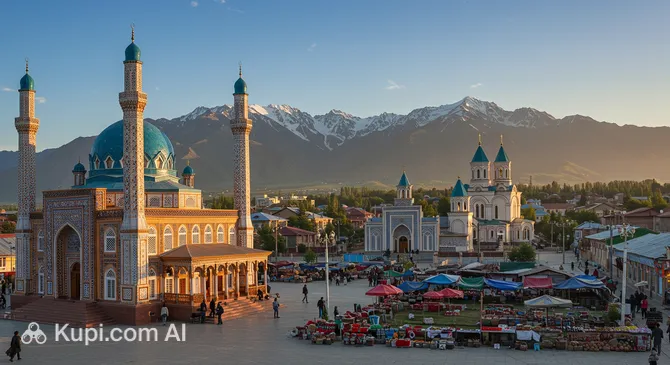
Karakol is the vibrant administrative center of the Issyk-Kul Region and a primary hub for travelers exploring the eastern part of Kyrgyzstan. Nestled at the foot of the majestic Tian Shan mountains near the eastern tip of Lake Issyk-Kul, the city combines a relaxed atmosphere with a stunning natural backdrop. With a population of approximately 85,000 people, it feels lively yet manageable, serving as a crossroads of cultures and cuisines that reflects the diverse heritage of the area.
Karakol. Source: Kupi.Binoculars

The city's unique character is deeply rooted in its past, featuring a mix of colonial-era Russian cottages and distinct local architectural styles. Visitors interested in the history of Karakol will find a fascinating narrative of how a remote military outpost grew into a multicultural city. This rich background is visible in its streets, where different traditions have coexisted for over a century, creating a welcoming environment for tourists from around the globe.

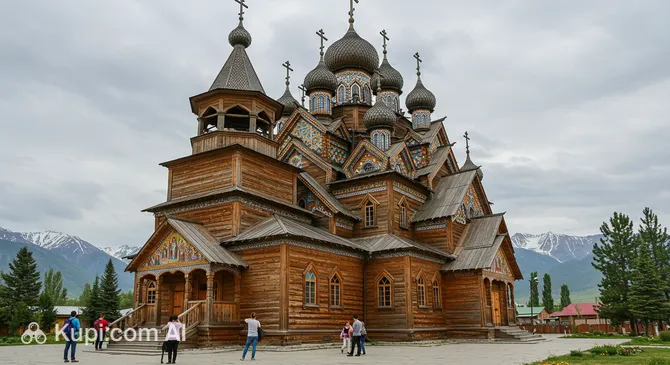
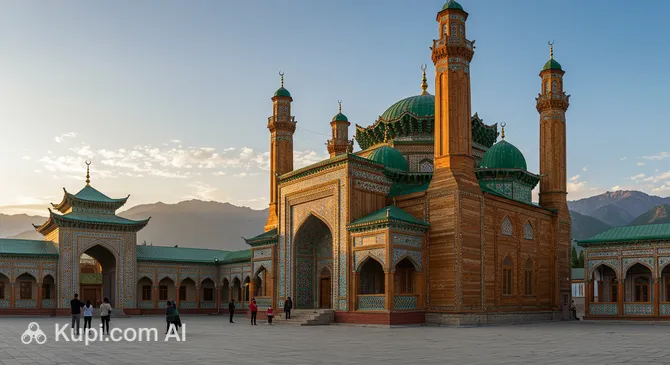
Among the city's most famous landmarks are the Holy Trinity Cathedral, a beautiful wooden Russian Orthodox church, and the Dungan Mosque, a striking colorful structure built entirely without nails. Beyond its architectural gems, Karakol is renowned as the gateway to some of the country's best outdoor activities. It is the perfect base for skiing at the nearby Karakol Ski Base in winter or embarking on treks to the stunning Altyn Arashan valley and Jeti-Oguz rocks during the warmer months.

Whether you are looking to explore unique historical sites, sample the famous local dish ashlan-fu, or start a mountain adventure, Karakol offers an unforgettable experience. Its blend of cultural depth and proximity to wild nature makes it an essential stop on any itinerary through the region.
Weather Overview

Karakol experiences a distinct climate shaped by its high altitude and location near the mountains. The weather varies significantly across the seasons, offering snowy landscapes in winter and lush greenery during the warmer months. To help plan your activities, it is helpful to review the current weather in Karakol before your trip.

Winters are undeniably cold, with January being the chilliest month, featuring an average temperature of -9.7°C and lows dipping to -14.1°C. While the precipitation volume is generally low during this time, you can still expect around 10 wet days per month, likely in the form of snow.

Summer offers a pleasant escape from extreme heat, with July averages sitting at a comfortable 14.5°C and maximums reaching 19.0°C. However, this is also the wettest period in terms of frequency; from June to August, the region sees up to 22 wet days per month, so rain gear is a must for hikers.

Expect mild summers with frequent precipitation days and cold, crisp winters.

Interesting Facts

Beyond the scenic landscapes and popular trails, Karakol holds fascinating stories that reveal its rich cultural tapestry. Dig a little deeper into the city's past and present to discover these surprising details about its history and traditions.
  • The city has a unique connection to the famous Russian explorer Nikolai Przewalski, who died here while preparing for an expedition to Tibet. To honor his legacy, the city was renamed Przewalsk not once, but twice during the 20th century, before reclaiming its original name, Karakol, after Kyrgyzstan's independence.

  • The Holy Trinity Cathedral was constructed entirely from wood as a deliberate engineering choice rather than just an aesthetic one. After an earlier stone church on the site collapsed during a massive earthquake, the builders realized that a flexible timber structure would better withstand the region's seismic activity.

  • Karakol is considered the culinary capital for ashlan-fu, a spicy cold noodle dish of Dungan origin. Locals insist that the authentic taste is impossible to replicate elsewhere, attributing the unique flavor and texture of the noodles to the specific mineral properties of the city's water.

  • Every Sunday before dawn, the city hosts one of the largest livestock markets in Central Asia. This bustling bazaar is a living remnant of the Silk Road era, where traders gather to buy and sell sheep, horses, and cattle in a tradition that has remained largely unchanged for nearly a century.

Holy Trinity Cathedral. Source: Kupi.Binoculars

How to Get There

Reaching this scenic city involves choosing between several transport hubs, depending on your point of origin and travel preferences. For a detailed breakdown of routes and transport options, read more about how to get to Karakol to find the best path for your journey.

The most direct entry point is the local Karakol Airport (IATA: IKG), situated just 3.5 km from the city center. Due to its proximity, a transfer by taxi or bus takes only about 25 minutes. It is a small facility, primarily serving specific regional connections.

A popular alternative for many tourists is the Issyk-Kul International Airport (IATA: IKU), located in the city of Tamchy. This airport is approximately 138.8 km from Karakol. Visitors arriving here can expect a transfer time of around 3 hours and 50 minutes by road. It serves as a key gateway for the Issyk-Kul region, especially during the tourist season.

For international travelers, Almaty Airport (IATA: ALA) in Almaty is a significant major hub. It is located about 147.2 km away from Karakol in a straight line. However, it is important to note that the actual journey involves navigating around the Trans-Ili Alatau mountain range and crossing the border between Kazakhstan and Kyrgyzstan. Consequently, the transfer takes significantly longer than the distance suggests, typically requiring 6 to 8 hours by road.

For clarity, here is a summary of the main airports:

Airport Name City Passenger Traffic Km from City
Almaty AirportAlmatyLarge147.2
Aksu AirportAksuMedium207.4
Issyk-Kul International AirportTamchySmall138.8
KarakolKarakolSmall3.5
TaldykorganTaldykorganSmall294.2

The city of Karakol does not have its own railway station. The nearest major rail hub is Almaty-2 Station in the city of Almaty, situated approximately 148.3 km away. Similar to the airport transfer, traveling from this station to Karakol involves a cross-border journey through mountainous terrain. You should plan for a travel time of at least 6 to 8 hours by taxi or bus.

Below is a list of the nearest railway stations:

Station City Passenger Traffic Km to Center
Almaty-2 StationAlmatyLarge148.3
Shamalgan StationShamalganMedium175.8
Kapchagay Railway StationQonayevSmall189.3
Almaty-1 StationAlmaty152.1
Burundai StationBoralday159.0

Main Attractions

Karakol is a city where history and culture converge, offering visitors a chance to explore unique architectural landmarks that reflect its diverse heritage. From wooden masterpieces to serene parks, the city's main sights are easily accessible and provide a fascinating glimpse into the region's past.

One of the most visually striking landmarks in the city is the Dungan Mosque. Completed in 1910, this architectural masterpiece was designed by a Chinese architect and built by the local Dungan community. What makes it truly unique is its resemblance to a Buddhist temple, featuring intricate wood carvings, upturned roof corners, and vibrant colors of blue, green, and yellow. Remarkably, the wooden framework was constructed using traditional joinery techniques without the use of a single metal nail, making it a fascinating stop for admirers of craftsmanship and history.

Dungan Mosque. Source: Kupi.Binoculars

Just a short walk away stands the Holy Trinity Cathedral, an iconic symbol of Karakol. This Russian Orthodox church dates back to the late 19th century and is celebrated for its classic wooden architecture, topped with golden onion domes that gleam against the backdrop of the mountains. Inside, the atmosphere is serene and spiritual, housing several venerable icons, including a copy of the Tikhvin Mother of God. It remains an active place of worship and a significant historical monument that survived the turbulent Soviet era.

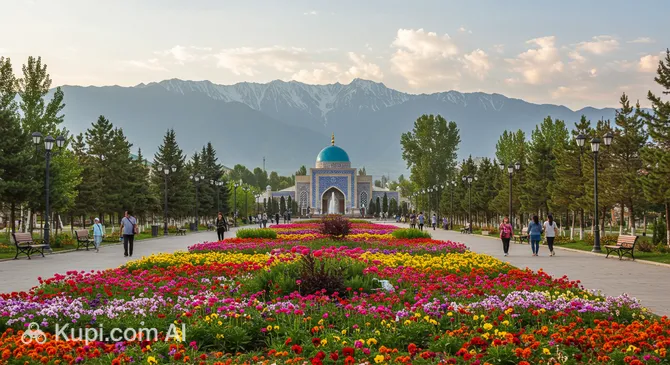
For a peaceful retreat and a touch of local history, visitors should head to Victory Park. This spacious green area is dedicated to the memory of those who perished during World War II, centered around a solemn memorial and an eternal flame. It is a quiet place for a stroll, lined with tall trees and offering a glimpse into the local community's reverence for the past. The park provides a calm atmosphere, perfect for a relaxing break after exploring the bustling city streets.

Victory Park. Source: Kupi.Binoculars

To experience the flavors of the region, a visit to Dastorkon is highly recommended. This popular establishment is known for its authentic preparation of Kyrgyz and Dungan dishes, offering a comfortable setting to try local specialties. It is an excellent spot to sample traditional beshbarmak or the famous Karakol ashlan-fu, providing a culinary insight into the diverse cultures that call this city home.

Local Cuisine

Karakol is a true paradise for food lovers, offering a unique blend of flavors that reflects its multicultural heritage. The local cuisine is a delicious mix of Kyrgyz, Dungan, Uighur, and Russian traditions, resulting in hearty and flavorful dishes. The absolute must-try specialty here is ashlan-fu, a cold, spicy noodle soup served with a side of fried potato pie. While it is traditionally a breakfast dish, you will find locals and tourists enjoying it at small bazaars and cafes throughout the day.

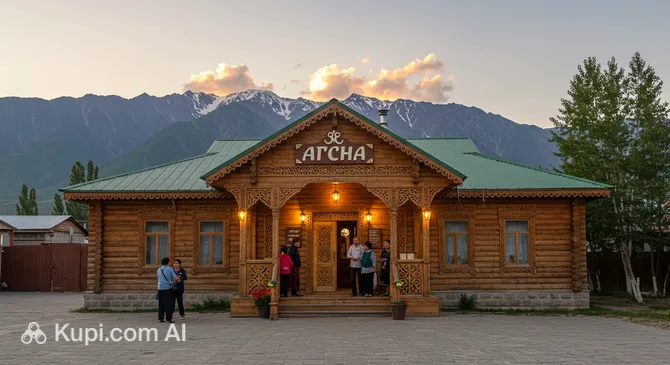
Travelers looking for a cozy ambiance with a varied menu should consider visiting Archa. This restaurant combines local hospitality with a modern touch, serving everything from traditional soups to European-style dishes. It has become a favorite gathering spot for hikers returning from the mountains, offering a warm and inviting space to refuel. The venue is appreciated not just for its food, but for its ability to bring together people from different walks of life in a comfortable setting.

Archa. Source: Kupi.Binoculars

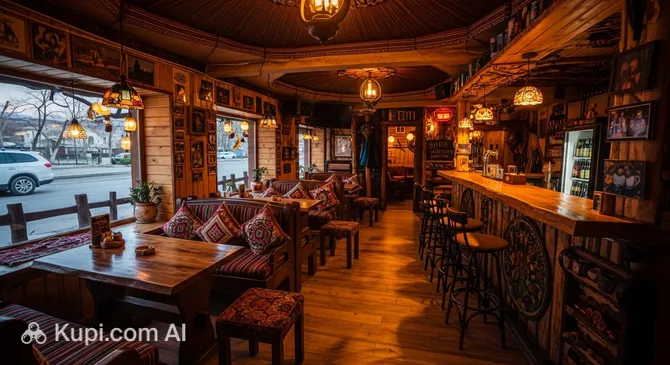
If you are in the mood for a relaxed evening with drinks, The Hut Bar is the perfect destination. Known for its friendly vibe and welcoming staff, it serves as a social hub where travelers from around the world gather to share stories and plan their next adventures. The bar offers a great selection of beverages and light bites, providing a lively atmosphere that contrasts with the city's quieter traditional teahouses.

Travel Tips

Traveling to Karakol is an adventure into the heart of Central Asian culture and nature, offering a mix of history, trekking, and culinary delights. To ensure your trip to this charming city in Kyrgyzstan is smooth and enjoyable, here are some practical tips to keep in mind.

  1. Clothing and Gear: The weather in the mountains is unpredictable, so layers are your best friend. Even in summer, evenings can be chilly, so bring a warm fleece and a waterproof jacket. Comfortable, sturdy walking shoes are essential, as sidewalks can be uneven and the city is a gateway for hikers. If you plan to visit religious sites like the Dungan Mosque or the Holy Trinity Cathedral, dress modestly; women should carry a scarf to cover their heads.
  2. Transportation: The city center is compact and quite walkable, allowing you to see most sights on foot. For longer distances, local minibuses, known as marshrutkas, are the most affordable option and offer a truly local experience. Taxis are also plentiful and inexpensive; while ride-hailing apps are gaining popularity, it is often easier to ask your hotel or guesthouse to call a trusted driver for you.
  3. Finances: The local currency is the Kyrgyz Som (KGS). While upscale restaurants and hotels increasingly accept credit cards, cash is absolute king in Karakol. You will need cash for bazaars, small shops, and transport. ATMs are available around the city center, and exchange offices are easy to find, usually offering good rates for US Dollars and Euros.
  4. Health and Safety: Karakol is generally very safe for tourists. Pharmacies (look for "Apteka") are common, but it is wise to carry a basic first-aid kit and any personal prescriptions. To avoid stomach upsets, stick to bottled or filtered water rather than drinking from the tap. Be cautious around stray dogs, especially at night or on the outskirts of the city.
  5. Communication: Russian is the primary language for communication, while Kyrgyz is the official state language. English is spoken by younger people and in tourism-related businesses, but less so by the general public. It is highly recommended to download an offline map app like 2GIS or Maps.me and a translation app. Buying a local SIM card is cheap and quick, providing reliable mobile data for your stay.
  6. Local Etiquette: Hospitality is deeply ingrained in the culture. If you are invited into a local home or a yurt, always remove your shoes at the entrance. When greeting people, a handshake is standard between men, while a polite nod is common for women. Showing respect to elders is very important; always give up your seat on public transport to older passengers.
  7. What to Avoid: Do not take photographs of local people, especially the elderly, without asking for their permission first, as this can be considered rude. Also, avoid being loud or boisterous in religious places or quiet neighborhoods, as the local culture tends to be respectful and reserved in public spaces.
  8. Sunday Market Insight: If you are in town for the famous Sunday Animal Market, the golden rule is to arrive early. The market is most active between 5:00 AM and 8:00 AM. Be prepared for mud and chaos—wear boots you do not mind getting dirty and watch your step as livestock is moved around you.

With these practical tips in hand, you are well-prepared to embrace the unique rhythm of life in Karakol. Enjoy the stunning mountain backdrops, the rich cultural tapestry, and the warm hospitality that make this city an unforgettable destination.

Entertainment & Nightlife

Nightlife in Karakol is distinctively laid-back, reflecting its status as a base camp for mountaineers and adventurers. You will not find sprawling nightclubs or raucous party districts here; instead, the evening scene revolves around cozy gatherings, shared stories from the trails, and warm hospitality. The atmosphere is casual and welcoming, with most venues concentrated in the city center, particularly around the main square and Toktogul Street.

For international travelers and locals alike, the undisputed hub of evening social life is The Hut Bar. This venue captures the essence of Karakol’s nightlife—a rustic, friendly space where hikers celebrate their summits with cold beverages and good music. It is the best place to meet fellow tourists, exchange travel tips, and enjoy a vibrant atmosphere that often lasts until late. The dress code is entirely informal; hiking boots and fleece jackets are the standard attire.

The Hut Bar. Source: Kupi.Binoculars

If you prefer a quieter evening focused on conversation and excellent food, Dastorkon offers a refined yet comfortable setting that stays open into the evening. While primarily a restaurant, its traditional decor and extensive menu make it a popular spot for long, leisurely dinners that stretch into the night. It is an ideal venue to unwind after a day of exploration without the noise of a bar.

Beyond these specific spots, the local definition of nightlife often involves karaoke. Several small karaoke bars and cafes operate in the city center, popular among the local youth. These venues offer a glimpse into modern Kyrgyz pop culture and are generally affordable, though the song selection in English may be limited.

Before the sun sets, daytime entertainment in Karakol offers a mix of culture and history. The city is home to the Issyk-Kul State Historical and Cultural Museum, which provides deep insights into the region's petroglyphs and nomadic heritage. For theater enthusiasts, the local drama theater occasionally hosts performances, though schedules can be sporadic and are usually in Russian or Kyrgyz.

Practical Advice and Safety:

Most evening venues in Karakol close relatively early compared to major capitals, with bars typically winding down around midnight or 1:00 AM. Prices are very reasonable; a night out with drinks and snacks will cost significantly less than in Europe or North America.

When moving around at night, safety is a key consideration. While the city center is generally safe, street lighting can be sparse or non-existent in residential areas. It is highly recommended to avoid walking alone in unlit streets late at night. Taxis are plentiful and inexpensive, usually costing between 100 to 150 KGS for a ride within the city. It is best to ask restaurant staff to call a taxi for you or use a local taxi app rather than hailing cars on the street.

Parks & Museums

While often viewed as a launchpad for alpine adventures, Karakol possesses a quiet charm defined by its leafy avenues and well-preserved cultural institutions. The city's layout, characterized by poplar-lined streets and historic buildings, invites travelers to slow down and explore its green spaces and rich heritage.

The most prominent green space in the city is Victory Park. Located centrally, this expansive park serves as a solemn tribute to the soldiers of World War II. It is a peaceful place shaded by mature trees, where locals come to walk and reflect. The park features a memorial complex with an eternal flame, offering a quiet atmosphere that contrasts with the bustling markets nearby. Apart from this central hub, the city itself feels like a garden, with the Karakol River providing a natural green corridor that cuts through the town, offering pleasant spots for a riverside stroll.

For a deeper dive into the region's past, the Karakol Historical Museum is an essential stop. Housed in a charming pre-revolutionary wooden cottage that was once the summer home of a wealthy merchant, the museum displays a diverse collection ranging from Scythian bronze artifacts and petroglyphs to taxidermy of local wildlife. It also features an exhibition of photography by Ella Maillart, providing a fascinating glimpse into Central Asia during the 1930s.

Just a short drive from the city center lies the Przewalski Museum, dedicated to the famous Russian explorer Nikolai Przewalski. The complex is set within a beautiful garden park that offers grand views of the surrounding mountains and Issyk-Kul Lake. Visitors can explore the museum, which maps Przewalski's expeditions across Central Asia, China, and Tibet, and visit his grave and the imposing monument topped with a golden eagle. It is a site of significant historical importance, bridging the gap between local geography and the age of exploration.

Beyond the museums, the city is an open-air gallery of Russian colonial architecture. Walking through the residential neighborhoods reveals rows of "gingerbread" cottages—wooden houses with intricate fretwork, blue-painted shutters, and carved eaves. These structures, along with the iconic Holy Trinity Cathedral and the vibrant Dungan Mosque, form the architectural backbone of the city, telling the story of its multicultural foundation.

For a truly authentic experience, take a walk down the quieter backstreets near the river in the late afternoon. Here, you can admire the best-preserved examples of the wooden colonial houses in the golden hour light, a photographer's dream that many tourists miss by sticking only to the main attractions.

Getting Around

The public transport system in Karakol is simple, practical, and relies almost entirely on a network of marshrutkas (minibuses). There are no metros, trams, or large municipal buses in the city. These ubiquitous white vans, usually Mercedes Sprinters, follow fixed numbered routes that crisscross the city center and extend to the residential outskirts. They are the primary mode of transit for locals and offer an authentic, albeit sometimes crowded, way to get around.

Payment for transport is strictly cash-only. There are no electronic travel cards, passes, or mobile payment apps for the minibus system. The fare is extremely affordable, generally costing around 15 to 20 KGS per ride regardless of the distance traveled within the city limits. You pay the driver directly, typically upon exiting the vehicle. It is highly recommended to carry small change or coins, as drivers may struggle to break large banknotes during rush hour.

For tourists, navigating the system is relatively easy, but it helps to know that marshrutkas operate on a "flag down and shout" basis. While there are designated bus stops, drivers will often stop to pick up passengers anywhere along the route if you wave your hand. To get off, you simply call out your stop to the driver. However, be aware that public transport hours are somewhat limited; marshrutkas generally run from 6:00 AM until about 8:30 PM. After 9:00 PM, they virtually disappear from the streets.

Because public transport stops running early in the evening, taxis are the most common alternative and are very reasonably priced. A standard trip anywhere within the city usually costs between 100 and 150 KGS. You can hail them on the street, but it is often easier and safer to use a taxi app like Yandex Go or have your hotel call a local dispatcher. Additionally, Karakol is quite compact and flat, making walking a pleasant option for exploring the central grid. Bike rentals are also available at various hostels and tourist agencies, catering largely to those planning to cycle towards the mountains or the lake.

Accommodation

Finding a place to stay in Karakol is generally straightforward and affordable, reflecting the city's status as a hub for outdoor enthusiasts. The accommodation landscape is dominated by family-run guesthouses and bed-and-breakfasts, which offer a warm, homelike atmosphere and a chance to experience local hospitality. For budget travelers and backpackers, there is a wide selection of hostels that serve as excellent social bases for finding trekking partners. While the city does not have large international luxury hotel chains, you can find several comfortable mid-range hotels that provide modern amenities and private facilities.

When choosing a location, the most convenient area is the city center, particularly the streets surrounding the main square and the large administrative buildings. Staying here puts you within easy walking distance of the best cafes, the central bazaar, and the main marshrutka stops for getting to the mountains. Some travelers visiting specifically for winter sports might prefer lodges located closer to the ski base outside the town, but for general exploration, the central grid is the most practical choice.

Karakol has two distinct high seasons: the summer trekking months (July and August) and the winter ski season (late December to February). During these periods, the best-rated guesthouses and hotels fill up quickly, so it is highly recommended to book your accommodation well in advance. In the shoulder seasons of spring and autumn, it is much easier to find spots upon arrival.

Prices in Karakol are generally very reasonable compared to Western standards. Budget hostels and simple guesthouses are extremely wallet-friendly, while mid-range options remain accessible for most travelers. While major booking platforms are widely used by hotels and larger guesthouses, many smaller, family-owned places still rely on direct bookings or walk-ins. It is also important to note that while larger establishments accept credit cards, many smaller guesthouses prefer or strictly require payment in cash (Kyrgyz Som).

Nearby Cities

For those looking to explore the surroundings, Karakol serves as an excellent base for day trips to several interesting nearby locations:

One of the key destinations in the wider region is Balykchy, located at the western tip of Lake Issyk-Kul. Often referred to as the gateway to the lake, it offers a different perspective on the area's history and geography compared to Karakol. Visitors can explore its industrial heritage or relax on the quieter western shores. It serves as a major transport hub connecting the Issyk-Kul region with the rest of the country.

For travelers interested in high-altitude landscapes and authentic culture, Naryn is a compelling option. Although the journey is longer and involves navigating mountain passes, the town is famous for its dramatic backdrop of red sandstone cliffs and the rushing Naryn River. It functions as a launching point for further adventures into the deep Tian Shan mountains, offering a rugged and scenic contrast to the lush greenery around Karakol.

Another historically significant city is Tokmok, situated further west in the Chuy Valley. It is best known for its proximity to the Burana Tower, an ancient minaret that remains from the Silk Road city of Balasagun. While it requires a significant drive, it is a must-visit for history enthusiasts looking to understand the medieval heritage of Kyrgyzstan.

City Population Distance (km)
Tokmok 53,231 258
Balykchy 42,380 182
Naryn 34,822 232
Novopokrovka 21,619 303
Kant 21,589 294

These nearby destinations offer a glimpse into the diverse culture and landscapes of the region.

Shopping & Souvenirs

Shopping in Karakol offers a distinctively local experience, far removed from the glitzy high-end boutiques of major global capitals. Instead of luxury fashion chains, visitors will find a vibrant mix of bustling bazaars, small independent shops, and stores catering to the city's status as a trekking hub. The retail scene is authentic and practical, focusing heavily on outdoor equipment, fresh regional produce, and traditional Kyrgyz handicrafts, making it an interesting aspect of the city to explore.

The primary commercial artery of the city is Toktogul Street. Walking along this central thoroughfare, you will encounter a variety of shops selling everything from clothing and electronics to souvenirs and groceries. It is the busiest part of town where locals run their daily errands, and it serves as a convenient place for tourists to pick up supplies before heading into the mountains. Another key area is the vicinity of the main bazaar, where the streets are lined with smaller kiosks and vendors.

While Karakol does not have massive shopping malls in the Western sense, there are several smaller trade centers and department stores, often referred to as "Tsum" or "Savda Borboru." These multi-story buildings usually house a collection of independent stalls selling imported clothing, shoes, and household goods. They are good places to visit if you need to replace a piece of travel gear or buy warm clothes for a hike, offering a warm and dry alternative to the open-air markets.

The heart and soul of shopping in the city is undoubtedly the Bugu Bazaar (Main Bazaar). Located in the city center, this sprawling market is a sensory overload of sights, smells, and sounds. Here, you can find rows of vendors selling fresh fruits, vegetables, dried nuts, and the famous Issyk-Kul honey. It is also the best place to find affordable clothing and household items. For a truly unique experience, the Sunday Animal Market on the outskirts of town is a must-visit, where livestock and traditional horse tack are traded much as they have been for centuries.

When it comes to souvenirs, Karakol is an excellent place to purchase authentic Kyrgyz handicrafts. The most popular items include shyrdaks (traditional felt carpets) and felt slippers, which are renowned for their durability and colorful patterns. Food items also make great gifts; jars of local mountain honey, sea buckthorn jam, and packets of dried spices from the Dungan community are highly sought after. You can also find handmade silver jewelry and leather goods in specialized souvenir shops near the main tourist attractions.

Most shops in Karakol open around 9:00 AM or 10:00 AM and close by 6:00 PM or 7:00 PM. The bazaars start much earlier, often buzzing with activity by 7:00 AM, but they also tend to wind down earlier in the afternoon. Cash is essential for shopping here. While a few larger supermarkets and souvenir stores in the center may accept credit cards, the vast majority of vendors in the bazaars and smaller shops deal exclusively in Kyrgyz Som. It is advisable to carry plenty of small change.

Tax-free shopping or VAT refund schemes are generally not available for tourists in Karakol. The prices are fixed in supermarkets and larger stores, but polite bargaining is common and expected when purchasing items at the bazaar or from independent market vendors.

Reached the end of the page?

That means the route is fully explored