Support

Marillac Airport

About the Airport

Marillac Airport is not just a runway on the southern tip of the island, but a true gateway to one of the most amazing regions of Madagascar. It is from here that journeys to the unique reserves, spiny forests, and picturesque beaches of the Anosy region begin. Despite its modest size, the airport plays a key role in the transport system of the south, connecting it with the capital and other cities. Landing here, you immediately feel the proximity of wild nature and the unique atmosphere of the Malagasy coast.
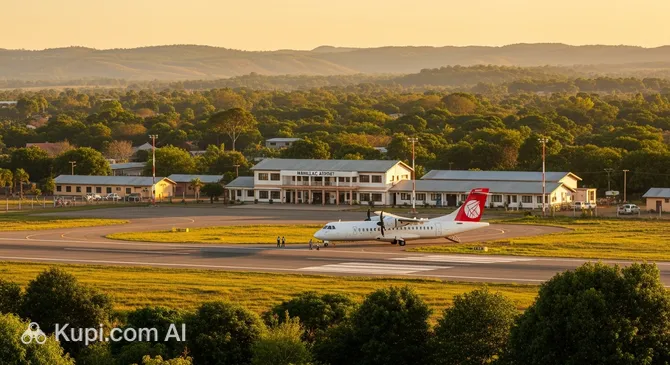
Marillac Airport. Source: Kupi.com Binoculars
IATA Code FTU
ICAO Code FMSD
City Tolagnaro
Distance to center approx. 5 km
Status International
Annual Passengers ~ 75,000 (pre-pandemic data)
Popular Airlines Tsaradia (Air Madagascar)

The main advantage of Marillac Airport is its compactness and convenient location. You will not have to wander through huge terminals: all procedures are fast, and finding the right gate or check-in counter is effortless. The airport is located just a few kilometers from the city center, making transfers quick and affordable. Despite its small size, there are basic amenities for passengers here, including a small café and car rental offices.

The airport is the main transport hub for tourists heading to famous national parks such as Andohahela and the private Berenty Reserve, known for its lemurs. Expeditions across the unique southern region of the island start from here, making it a strategically important point for anyone wishing to explore this part of Madagascar.

Contact Information

Finding accurate and centralized contact information for regional airports, such as Marillac Airport in Tolagnaro, can be challenging. Generally, direct contacts for passengers are not published, and most issues are resolved through airlines. Below are general details and recommendations:

  • Official Airport Website: Marillac Airport (FTU) does not have its own official website for passengers. General information about airports in Madagascar can be found on the national operator's resources, but they rarely contain details for travelers.
  • Inquiry Service Phone: A direct public phone number for the airport inquiry service is not available. For up-to-date flight information, it is recommended to contact your airline directly.
  • Airport Address: Marillac Airport (FTU), Tolagnaro (Fort Dauphin), Toliara Province, Madagascar.
  • Email: There is no specialized e-mail for general passenger inquiries. All communications are recommended to be conducted through the official channels of the air carriers.
  • Airport Social Media: The airport does not maintain official pages on social networks.
  • Lost Luggage Information: Issues regarding lost or damaged luggage are handled exclusively by the Lost & Found service of the airline you arrived with. You must approach your carrier's counter in the arrivals hall.
  • Passenger Support Contacts: There is no separate support service. Assistance to passengers is provided by airline representatives at check-in counters or airport staff directly in the terminal.

How to Get to the Airport

Marillac Airport (FTU) is located quite close to the city of Tolagnaro (Fort Dauphin), so getting to or from the city center is quite simple. The trip usually takes from 15 to 30 minutes depending on the chosen transport and traffic conditions. The main methods of transportation are taxis, car rentals, and local public transport.

Taxis and Transfers are the most popular and convenient option. You can find a taxi at the exit of the arrivals terminal or ask your hotel staff to organize a transfer in advance. The latter option is often the most reliable. It is extremely important to agree on the fare with the driver before starting the journey, as taximeters are practically not used here. A taxi ride offers a good balance between price, comfort, and speed.

For the most budget-conscious travelers, there are local public transport options. Instead of conventional buses, tuk-tuks (often called "pousse-pousse" in Madagascar) and taxi-brousse (shared taxis) operate here. This is the cheapest way to travel, allowing you to immerse yourself in the local atmosphere. However, be prepared for the transport to be crowded, and the trip may take longer due to frequent stops.

Car Rental provides maximum freedom for exploring the region. Several local and international rental agencies offer their services, but it is recommended to book a car in advance, especially during the high tourist season. Given the condition of roads outside the city, the best choice would be a four-wheel drive SUV (4x4). An international driving permit is typically required for rental.

There is parking available at Marillac Airport. It is a simple open lot suitable for short-term waiting, pick-ups, and drop-offs. If you plan to leave your car for a long period, it is worth clarifying the conditions and security level of the parking with the airport administration or your rental company in advance.

Terminals and Map

Marillac Airport (FTU) is a compact regional airport serving the city of Tolagnaro (formerly known as Fort Dauphin) and the surrounding areas in southern Madagascar. It is important to understand that this is a small air harbor, and its structure is significantly simpler than that of major international hubs.

The airport consists of one small terminal that handles both domestic and rare international flights. Thanks to its compact dimensions, navigation within it is extremely simple. Departure and arrival zones are located in the same building but are functionally separated. Upon entering the terminal, you will immediately see the check-in counters, followed by the security checkpoint and a small waiting area for departing passengers. The arrival zone is a separate hall where passengers enter immediately after disembarking from the aircraft.

Since there is only one terminal, the issue of transfers between them is irrelevant. All services and gates are within walking distance of each other. Passing through check-in and security screening usually takes little time due to low passenger traffic. Nevertheless, it is recommended to arrive at the airport at least 1.5–2 hours before departure to complete all formalities without haste, especially if you are flying on an international flight.

The main advice for navigation is not to worry. The entire airport infrastructure is intuitive, and signs will help you orient yourself. Getting lost here is practically impossible. Basic amenities include several check-in counters, a waiting area, restrooms, and possibly a small kiosk with beverages and snacks. Do not expect a large selection of shops or restaurants here — everything is very functional and oriented towards quick passenger service.

Airport History

The history of Marillac Airport (FTU) is closely linked to the development of the city of Tolagnaro and the entire southeastern region of Madagascar. Although the exact founding date of the airfield has not been preserved in public sources, its appearance, like many other similar facilities on the island, likely dates back to the mid-20th century, a period when it was necessary to establish air connections with remote administrative centers.

Initially, it was most likely a simple airstrip serving small aircraft for postal and administrative needs. The main stages of the airport's development were dictated by the growing need for transport accessibility in the region. With the development of tourism, particularly the interest in unique nature reserves such as Berenty and Andohahela, as well as the commencement of local mineral resource extraction, the need arose to modernize the air gateway.

In subsequent decades, Marillac Airport underwent several stages of reconstruction to meet modern safety requirements and the ability to accommodate larger turboprop aircraft, such as the ATR, which form the backbone of the regional fleet. Terminal facilities were improved to serve the growing passenger flow, consisting of both tourists and local residents and specialists working in the region.

An interesting fact is that Marillac Airport is not just a transport hub, but a true "lifeline" for Tolagnaro. Due to the poorly developed network of land roads, which often become impassable during the rainy season, air travel remains the most reliable and fastest way to reach this picturesque part of Madagascar. Thus, its history is not one of records and grandiose events, but a history of stable service to people and ensuring the region's connection with the rest of the world.

Services and Amenities

Marillac Airport (FTU) is a small regional airport serving the city of Tolagnaro (Fort Dauphin). Given its compact size, the range of services here is basic but sufficient for comfortably waiting for a domestic flight. Passengers can have a snack and drink coffee in a small café or buffet, as well as purchase local souvenirs and essential goods in a small shop.

A general hall is provided for waiting for departures. Specialized VIP lounges or business lounges are absent at the airport. Access to Wi-Fi may be limited or unavailable, so it is recommended to have alternative means of communication. The number of power outlets for charging electronic devices is also small, so it is better to bring a portable power bank.

Typically, there are no bank branches or currency exchange points within the airport building. All financial transactions are recommended to be conducted in the city in advance. In case of necessity, the airport has a first aid point for resolving urgent health issues.

Specialized services for passengers with children, such as play areas or mother-and-child rooms, are not provided. Passengers with reduced mobility are strongly advised to contact their airline in advance to request escort services and assistance upon arrival at the airport and when boarding. There are no hotels directly on the airport grounds, but the nearest hotels are located in the city of Tolagnaro, a few minutes' drive away. Conference rooms and business centers are also absent.

Dining

When planning a departure from Marillac Airport (FTU) in Tolagnaro, it is important to understand that this is a small regional air hub, so the choice of dining establishments here is quite limited. If you are counting on a full lunch or dinner, it is strongly recommended to eat beforehand in the city, as facilities at the airport are oriented mainly towards quick snacks.

In the main airport building, typically in the public area before security control (landside), a small café or snack bar operates. This is the main place where you can refresh yourself. The assortment usually includes basic options: sandwiches, pastries, chips, chocolate, as well as hot and cold beverages — coffee, tea, juices, and water. This is quite sufficient to pass the time before departure and satisfy light hunger.

Do not expect a wide selection of local Malagasy cuisine, although local snacks or drinks may be on sale. Regarding special dietary requests, such as vegetarian, vegan, Halal, or gluten-free dishes, finding them at Marillac Airport will be practically impossible. Passengers with strict dietary restrictions are best advised to arrange food in advance and bring it with them.

The opening hours of the local café depend directly on the flight schedule — it opens before departures and closes shortly after the departure of the last flight. Prices are moderate, though somewhat higher than in the city, which is typical for airports. After passing security control (airside), dining establishments are generally absent, so it is better to purchase everything necessary in advance.

Travel Tips

To ensure your journey from or to Tolagnaro goes smoothly, arrive at Marillac Airport well in advance. For domestic flights within Madagascar, it is recommended to be on-site 1.5-2 hours before departure, and for international flights — 2-3 hours. Although this is a small regional airport, extra time will allow you to pass all formalities without haste, especially during the peak tourist season.

Check-in and security control procedures here usually go faster than in major hubs. Nevertheless, always keep all necessary documents ready: passport, airline ticket, and visa if required. This will help avoid unnecessary fuss and save time for both yourself and other passengers.

When choosing a seat on the plane, consider your preferences. A window seat will give you the opportunity to enjoy stunning views of the Malagasy landscapes during takeoff and landing. An aisle seat provides more legroom and allows you to stand up easily without disturbing neighbors during the flight.

Pack the most valuable and necessary items in your carry-on luggage: documents, money, bank cards, prescription medicines, a portable charger, and a basic set of personal items. Remember standard international rules: liquids in containers of no more than 100 ml must be packed in a single transparent bag. Sharp objects and flammable substances are strictly prohibited in carry-on luggage.

If you have a connecting flight, clarify with the airline in advance whether you will need to collect and re-check your luggage in Tolagnaro. Since this is a small airport, long layovers are rare here, but it is better to be prepared for any scenario.

When passing customs control upon arrival, be ready to fill out a declaration and honestly declare all valuables and cash. Keep in mind that there are strict rules on the export of certain items, including rare species of flora and fauna, as well as products made from them. Keep receipts for souvenirs to confirm their legal origin.

To save time and money, try to check in for your flight online if your airline provides such an option. Bring an empty reusable water bottle, which can be filled after passing security control, and a light snack. It is also more cost-effective to book a transfer from the airport in advance.

In case of flight delay or cancellation, remain calm. First, contact your airline representative for up-to-date information and instructions. Clarify your rights regarding the provision of meals, beverages, or hotel accommodation. Ensure your phone is charged and you have a book or downloaded movies at hand — this will help pass the waiting time.

Reached the end of the page?

That means the route is fully explored