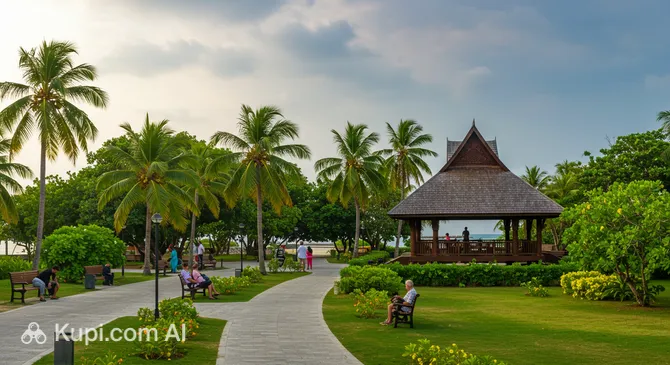
In the heart of the bustling city of Malé lies Sultan Park—the premier public garden and a true green oasis in the Maldives. It is a unique place where a corner of untouched nature and historical grandeur has been preserved amidst the dense urban landscape.
Sultan Park. Illustration.
Source: Kupi.com AI
Traveler photos:
The park is located near the Grand Friday Mosque and is the only significant area of tropical vegetation in the capital. Here, you can find exotic water lilies, fragrant wild orchids, and majestic banyan trees that provide pleasant shade even during the hottest midday sun. The entrance to this realm of tranquility is graced by massive iron gates, which many travelers poetically refer to as the "gates to paradise."
In addition to its natural beauty, the park grounds hold immense cultural value. This is where the surviving wing of the old Sultan's Palace stands, which today houses the National Museum of the Maldives. This combination of a botanical garden and historical archives makes the park a must-visit for every guest of the archipelago.
Contacts
For more information about the park's operation or to find its exact location, you can use the following contact details:
There is something for everyone at Sultan Park. It is the perfect place for those looking to escape the noise of the capital's streets for a while. You can take a leisurely stroll along the neat paved paths, passing under flower arches and listening to the songs of tropical birds. Be sure to find the famous "wishing tree"—it is over 100 years old, and according to local tradition, it's a place to make your most heartfelt wishes.
History buffs should visit the National Museum, located right within the park. Its halls house priceless royal regalia, ancient weapons, gold-embroidered robes, and unique pre-Islamic artifacts. One of the most famous exhibits is a stone head of the Buddha, found by the famous traveler Thor Heyerdahl during his expeditions through the islands.
The park grounds are also perfect for photo sessions: unusual aluminum sculptures, fountains, and exotic plants provide an excellent backdrop for your pictures. Admission to the park is free, allowing you to return several times just to relax on a bench in the shade of the spreading trees.
Getting There
Sultan Park is located in the very heart of the capital, so it is easy to find. If you are arriving in the city by ferry or speedboat, it is just a 10–20 minute walk from the pier. Your main landmark will be Chandhanee Magu and the nearby Islamic Centre with its golden dome.
Due to the small size of Malé, the best way to get around is on foot. You can cross the entire city from end to end in an hour, and the park is located in an area with the highest concentration of tourist attractions. If you prefer comfort or are staying in a remote part of the island, you can take a taxi. Trips around the city are inexpensive, and drivers know this location well.
The coordinates for navigation, POINT(73.5110075 4.1775208), will help you find your way quickly. The park fits perfectly into any walking route, allowing you to save on transport while enjoying the city scenery along the way.
Nearest city: Male
History & Facts
The history of this green sanctuary dates back to the early 20th century. Sultan Park was established in 1906 by order of Sultan Muhammad Shamsuddeen III. At that time, this area was part of a magnificent palace complex that served as the residence for the rulers of the Maldives.
The palace gardens were once hidden from the eyes of common people, remaining a privilege of the royal family. However, following political transformations and the abolition of the sultanate in the mid-20th century, most of the palace was destroyed. According to one account, the buildings were damaged during a fire in 1968; according to another, they were demolished during the country's transition to a republican form of government.
Only one three-story wing of the former palace has survived to this day, which now houses the National Museum. The remaining grounds of the former royal gardens were transformed into a public park, becoming a symbol of openness and a new chapter in the country's history. Today, you can feel the spirit of a bygone era while strolling among plants that have witnessed the changing of dynasties and regimes.
Time Needed
For a simple stroll through the park's alleys to enjoy the cool air, 30–40 minutes should be plenty. However, most tourists come here for the National Museum, which requires a more thorough visit.
If you plan to combine a walk in the garden with a visit to the museum and historical monuments on the grounds, we recommend allowing 1.5 to 2.5 hours. This will give you enough time to examine the artifacts and take beautiful photos against the backdrop of tropical greenery without rushing.
Working Hours
Sultan Park is open to visitors daily, making it easy to fit into your travel itinerary. Please note that on Fridays, the operating hours are shorter in accordance with local traditions.
Current Schedule:
Monday – Thursday: 06:00 – 21:30
Friday: 06:00 – 09:30 (morning hours only)
Saturday – Sunday: 06:00 – 21:30
Entry to the park grounds is free, though the National Museum may have its own separate operating hours and ticket prices.
Day
Opening hours
Monday
6:00 – 21:30
Tuesday
6:00 – 21:30
Wednesday
6:00 – 21:30
Thursday
6:00 – 21:30
Friday
6:00 – 9:30
Saturday
6:00 – 21:30
Sunday
6:00 – 21:30
Nearby
Exploring the area around the park is a great way to experience the culture and daily life of the capital. Since Sultan Park is in the historical center, most iconic spots are within walking distance of each other.
Nearby, you will find not only museums but also monuments symbolizing the resilience and traditions of the Maldivian people. Below is a list of interesting sites to include in your itinerary: