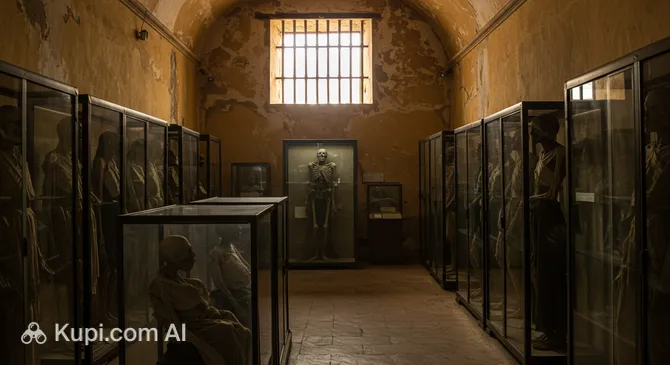
The Guanajuato Mummy Museum (Museo de las Momias de Guanajuato) is one of the most unusual and impressive attractions not only in the city of Guanajuato but in all of Mexico. This museum is famous for its unique and, for many, shocking exhibition, where the main exhibits are actual mummified human bodies. It attracts tourists from all over the world who wish to witness the mysterious phenomenon of natural remains preservation.
Traveller photos:
The museum's collection includes 111 mummies, 59 of which are on display in the exhibition halls. These individuals died between 1850 and 1950, and their bodies were exhumed from the local Panteón de Santa Paula cemetery between 1865 and 1958. The reason for the exhumation was a law requiring relatives to pay a tax for a cemetery plot. If the fee was not paid, the bodies were removed from the tombs.
The uniqueness of these mummies lies in the fact that they were preserved not through embalming, but through natural mummification. The specific mineral composition of the soil and the dry climate of Guanajuato created conditions where the bodies did not decompose but dried out, preserving even clothing and hair. Some of the oldest remains are linked to a cholera epidemic that occurred in the city in 1833. Visiting the museum leaves a strong impression and offers a new perspective on history and the relationship with life and death in Mexican culture.