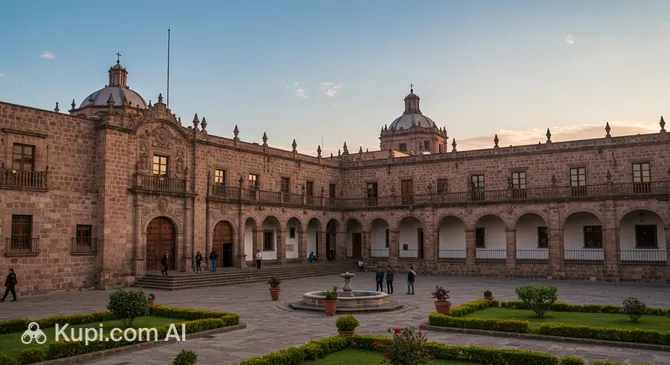
The Clavijero Cultural Center is a majestic example of Baroque architecture located in the heart of Morelia. This monumental pink stone building invites travelers to dive into the rich history for which Mexico is famous. Originally constructed in the mid-17th century as a Jesuit college, today it serves as the premier cultural space of the state of Michoacán.
Clavijero Cultural Center. Illustration.
Source: Kupi.com AI
Traveler photos:
Walking through its spacious courtyards and galleries, it is impossible not to admire the elegance of the facades decorated with intricate carvings. The Clavijero Palace harmoniously blends the atmosphere of the colonial era with the dynamics of contemporary art, offering visitors a unique aesthetic experience.
Today, the center functions as a multifaceted venue for creativity and education. It hosts large-scale exhibitions, concerts, and lectures, making it a must-see on the itinerary of any tourist wishing to truly feel the soul of the city's historic district.
Contacts
To plan your visit to the Clavijero Cultural Center, it is helpful to have current contact information on hand. While the center's official website is not always available online, you can contact the administration directly by phone or clarify details upon arrival.
A visit to the Clavijero Cultural Center offers guests a rich program of activities. Here, you can explore permanent and temporary exhibitions covering a wide range of topics — from colonial history to contemporary Mexican art. Architecture enthusiasts will appreciate the opportunity to examine the preserved elements of the ancient college in detail.
Music regularly resonates within the center's walls, hosting classical music concerts and theatrical performances. If you are lucky, you might catch one of the creative workshops or lectures often held for guests. It is a wonderful place to take memorable photos against the backdrop of monumental arches and cozy inner courtyards.
Additionally, craft fairs are sometimes organized on the center's grounds, where you can get acquainted with local traditions. The picturesque squares surrounding the building complement the walk, allowing you to experience the leisurely pace of life in the region's cultural capital.
Getting There
Finding the Clavijero Cultural Center is easy, as it is located at El Nigromante 79, right in the heart of the historical zone. If you are already in the city center, the best way to get there is on foot from the Cathedral or Plaza de Armas — the walk will take only a few minutes.
For those coming from more distant neighborhoods, it is convenient to use a taxi or local buses that run through the central streets. Taxi fares within the city are generally quite affordable, and you can be dropped off very close to the main entrance.
If you are arriving in Morelia from other regions of the country, your journey will likely begin at the central bus station. From there, it is easiest to reach the center by official taxi, ensuring a quick and comfortable start to your cultural itinerary.
Nearest city: Morelia
History & Facts
The history of this site began in the mid-17th century when the building was founded as the Jesuit College of St. Francis Xavier. For a century, it served as the intellectual hub of the region until the Jesuits were expelled from Spanish colonies in 1767. This event radically changed the building's destiny, transforming it into an administrative facility.
The palace received its modern name in honor of Francisco Javier Clavijero. This prominent 18th-century Mexican historian and philosopher was a member of the Jesuit order himself and made an enormous contribution to the study of the country's pre-Hispanic past. Commemorating his name in the center's title emphasizes the educational continuity of this location.
Over the past centuries, the building has taken on many roles but has always remained an architectural landmark of the city. Today, the Clavijero Cultural Center is recognized as an important monument, carefully preserving the Baroque spirit and the memory of the outstanding figures of the colonial era.
Time Needed
For a brief introduction to the architecture and main halls of the Clavijero Cultural Center, 1 to 2 hours is usually sufficient. This is enough time to take a leisurely stroll through the courtyards and view the current exhibitions. A more detailed study of every element of the facade and interior may take a bit longer.
If you plan to attend a specific event — such as a music concert or a lecture — we recommend setting aside about 3 hours in your schedule. The center is located near other iconic landmarks, so a visit here is easy to integrate into a busy day of sightseeing.
Working Hours
When planning your visit, be sure to take the center's operating hours into account, as it is closed to visitors on Mondays. On other days, the Clavijero Cultural Center operates on the following schedule:
Tuesday — Sunday: 10:00 AM – 6:00 PM
Monday: Closed
Please note that during special festivals or evening cultural events, the opening hours may be subject to change. We recommend arriving early to have enough time to quietly explore all the galleries before closing.
Day
Working hours
Monday
Closed
Tuesday
10:00 – 18:00
Wednesday
10:00 – 18:00
Thursday
10:00 – 18:00
Friday
10:00 – 18:00
Saturday
10:00 – 18:00
Sunday
10:00 – 18:00
Nearby
Exploring the surroundings of the Clavijero Palace allows for a deeper immersion into the atmosphere of the ancient city. Its location in the historical core makes it possible to see many interesting sites within walking distance of each other in a single day.
Below is a list of nearby attractions that will help make your trip even more rewarding and educational: