Support

Shrine Basilica of Our Lady of Guadalupe

About

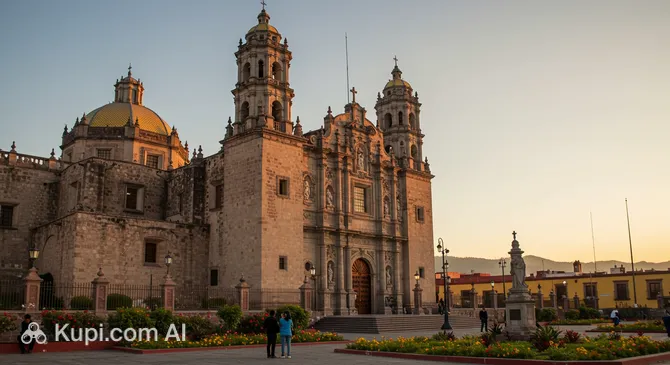
In the picturesque San Juan de Guadalupe district, which graces San Luis Potosí, stands the majestic Basilica-Shrine of Our Lady of Guadalupe. This architectural ensemble is a significant spiritual center where Mexico reveals its deep Catholic traditions and sincere devotion to its heavenly patroness.
\n
Basilica Shrine of Our Lady of Guadalupe. Source: Kupi.com AI
\n

Unlike its famous namesake in the capital, this basilica possesses a special, intimate atmosphere that attracts both pilgrims and history enthusiasts. The complex includes several religious buildings characterized by exquisite architecture and rich interior decoration reflecting the region's colonial heritage.

\n

Today, the temple is an active place of worship with regular services. This location is ideal for those seeking solitude or wanting to experience the living history of Mexican faith amidst the quiet streets of the old district.

Contacts

To inquire about special service schedules or organize group visits, you can use the sanctuary's official contact information.

Address Calz de Guadalupe 1005, San Juan de Guadalupe, Santuario, 78340 San Luis Potosí, S.L.P., Mexico
Phone +52 444 839 1617

What to Do

The highlight of your visit can be participating in the daily masses, which allow you to feel the true spirit of Mexican religious life. Be sure to descend to the area below the presbytery to see the original image of Our Lady of Guadalupe—the central object of devotion in this sanctuary.

Art and history lovers should visit the Museum of Sacred Art, which showcases rare exhibits preserved from colonial times. After touring the interiors, take a stroll through the well-kept garden to the majestic Statue of Christ the King: this bronze figure, standing over 6 meters tall, is truly impressive in its monumentality.

Don't miss a visit to the Pocito Chapel, famous for its "miraculous well." It is believed that its water has special properties, and many pilgrims come here specifically for it. It is also worth noting the Old Parish of the Indians with its sculpture of Juan Diego, which serves as a reminder of the indigenous roots of this holy site.

You can conclude your visit at the church shop, which offers a wide selection of religious items and souvenirs, and then take some memorable photos of the Baroque facades, which look particularly striking in the rays of the setting sun.

Getting There

The sanctuary is conveniently located at Calz de Guadalupe 1005, making it easily accessible for visitors. A trip by taxi or rideshare services (such as Uber) from the city center takes no more than 15–20 minutes, depending on traffic.

If you prefer public transport, look for bus routes passing through the Santuario district. The stops are within walking distance of the basilica entrance, and the walk takes about 5–10 minutes. This area is considered safe for tourists during daylight hours.

For those traveling by car, Google Maps navigation is a reliable assistant. Although it is a popular pilgrimage site, finding parking in the vicinity is usually not difficult, especially on weekdays.

History & Facts

The history of this holy site is inextricably linked to the pan-Mexican tradition of venerating Our Lady of Guadalupe. According to legend, her appearance to the humble Indian Juan Diego in 1531 on Tepeyac Hill was a turning point for Christianity in these lands. The miracle of roses blooming in the snow and the image imprinted on his tilma became the foundation for building temples across the country.

The local basilica in San Luis Potosí developed as an important regional pilgrimage center. The architectural complex includes elements reminiscent of the famous sanctuary in Mexico City, featuring separate parishes and chapels historically intended for the indigenous population to pray. This highlights the inclusivity and deep roots of the Catholic faith in the region.

The local Museum of Sacred Art is of particular value. Its halls house unique artifacts dating back to the 16th century. These exhibits allow visitors to trace how worship traditions changed and how religious art developed during the colonial period, turning the basilica into a true treasure trove of Mexican culture.

Today, the basilica remains a living monument of faith, attracting thousands of people annually. It embodies a synthesis of Spanish traditions and Mexico's unique culture, preserving an atmosphere of mysticism and spiritual tranquility established centuries ago.

Time Needed

To explore the entire complex without rushing, including the main basilica, adjacent chapels, and the garden, it is recommended to set aside about 2–3 hours. This is sufficient time for quiet contemplation of the architecture and a visit to the museum.

If you plan to participate in a Holy Mass or wish to spend more time in prayer and reflection, you should allow for a bit more time. It is best to plan your visit for the morning or on weekdays, when the flow of pilgrims is not as heavy as on major religious holidays.

Working Hours

The sanctuary is open to visitors daily, making it easy to include in any travel itinerary. The basilica's operating hours are Monday — Sunday from 08:00 to 20:00.

Please note that during masses, access to the interior for sightseeing may be restricted, so it is best to choose a time between services for a detailed study of the architecture.

Nearby

A visit to the basilica can be complemented by a walk through the surrounding area. The neighborhood offers several interesting locations that will help diversify your itinerary and give you a glimpse into local life and entertainment.

Within a few kilometers, you will find quiet park areas, specialized shops, and small entertainment centers that may be of interest if you are traveling with the whole family.

Name Distance (km)
Mechanical games \"Azteca\" 0.4
Acuarios Luna 0.6
Acuario Humahuaca 2.8
Pet Shop Aquarium 3.1
Juegos mecánicos FENAPO 3.2
Juarez Colombia Park 3.8
Aquarium Fish Care 3.8
Acuario Doris Mayoreo y Menudeo 4.1

Reached the end of the page?

That means the route is fully explored