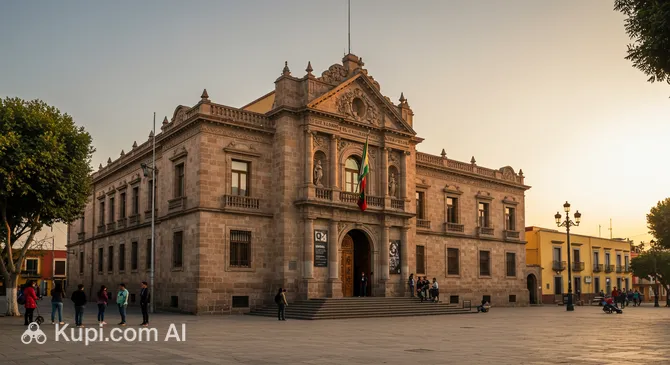
In the heart of the city of Aguascalientes lies a place that has become a true sanctuary for graphic arts lovers — the José Guadalupe Posada Museum. This unique cultural space is dedicated to the life and work of the legendary Mexican illustrator, whose influence on the visual culture of Mexico cannot be overstated.
José Guadalupe Posada Museum. Illustration.
Source: Kupi.com AI
Traveler photos:
The museum boasts an impressive collection of over 5,000 works. It houses original engravings, lithographs, and caricatures, with the world-famous "La Calavera Catrina" taking center stage. This elegant skeleton image became not only a pinnacle of Posada's artistic achievement but also the main symbol of the national holiday — the Day of the Dead.
Located in the historic Triana district next to the majestic El Encino Temple, the museum offers guests a deep dive into the history of satire and folk art. It is an essential stop for those who want to understand the true spirit of Mexican identity through the lens of great talent.
Contacts
For those planning a visit to the José Guadalupe Posada Museum, it is helpful to check the organization's contact details in advance. You can inquire about special events or ticket prices by phone. Below are the main contact details and the exact address of the cultural center.
A visit to the museum offers guests a rare opportunity to see original prints and copper plates from which Posada's famous illustrations were produced. Peering into the details of the engravings, one can trace how the artist used irony and masterful lines to depict the daily life and customs of his era, focusing on social issues and folk traditions.
In addition to the permanent exhibition, the museum often hosts temporary exhibitions by contemporary graphic artists, showcasing the continuity between generations in art. Visitors can learn a great deal about lithography techniques, as well as attend educational lectures or themed tours that delve deeper into the symbolism of Mexican calaveras (skulls).
Don't forget to check out the specialized rooms dedicated to the celebration of the Day of the Dead. Works are often displayed there explaining how 19th-century satirical graphics transformed into the modern festive rituals that have become a trademark of the country.
Getting There
The museum is located in the picturesque historical center of Aguascalientes, in the famous Triana district (Barrio del Encino). You can reach it on foot from the main city square in 10–15 minutes, enjoying the colonial architecture of Mexico along the way.
For those who prefer comfort, taxi services or popular ride-sharing apps are always available. If you are using public transport, many bus routes pass through the central part of the city, with stops located within walking distance of the museum.
If you arrive in the city via the local airport or bus station, it is most convenient to book a transfer directly to the El Encino district. For tourists with their own cars, there are parking zones in the surrounding blocks, although finding a free space can be more difficult on weekends.
Nearest city: Aguascalientes
History & Facts
The building where these graphic masterpieces are exhibited today has a rich history: it was built in the early 19th century and served as part of a monastery complex for a long time. In 1972, the government of the state of Aguascalientes purchased the estate to open a museum here, which held its grand opening on September 16 of that same year.
José Guadalupe Posada, born in this city in 1852, became a true symbol of folk art. His work in Mexico is valued for its sharp social satire. It was he who created the famous image of the "skeleton in a hat," which Diego Rivera later dubbed "La Catrina."
Cultural figures such as Víctor Sandoval and Luis Ortiz Macedo made enormous contributions to the creation of the museum. Thanks to their efforts, a unique collection was assembled, transforming the old estate into one of the most visited and respected art centers in the country.
Time Needed
For a standard introduction to the museum's exhibits, most visitors need between 1 and 2 hours. During this time, you can carefully examine the main halls featuring original engravings and read historical information about the master's life.
If you plan to visit temporary thematic exhibitions or linger in the Triana district for a walk after the museum, it is worth setting aside about half a day for this visit. This will allow you to enjoy not only the art but also the surrounding atmosphere of the old city without rushing.
Working Hours
The museum welcomes visitors from Wednesday to Sunday, operating on a convenient schedule from 11:00 AM to 6:00 PM. This makes it easy to include a visit in your plan for a daytime walk through the historic center.
Please note that the museum is closed on Mondays and Tuesdays. Plan your visit in advance so you don't miss the chance to experience Posada's great legacy.
Day
Working hours
Monday
Closed
Tuesday
Closed
Wednesday
11:00 – 18:00
Thursday
11:00 – 18:00
Friday
11:00 – 18:00
Saturday
11:00 – 18:00
Sunday
11:00 – 18:00
Nearby
A stroll through the neighborhood of El Encino will allow you to further soak up the atmosphere that Mexico is famous for. After viewing Posada's graphic works, you can visit nearby parks and entertainment centers to make your trip more diverse.