Support

Museo y Archivo Histórico Casa de Morelos

About

In the heart of the city of Morelia lies the Museum and Historical Archive of Casa de Morelos—a place where the history of the struggle for freedom comes to life. This architectural monument is a typical 18th-century colonial mansion built from the stone characteristic of the region. The house is inseparably linked to the name of the national hero José María Morelos, who purchased it in 1801 for his family. It was in honor of this prominent figure that the city, formerly known as Valladolid, received its current name.
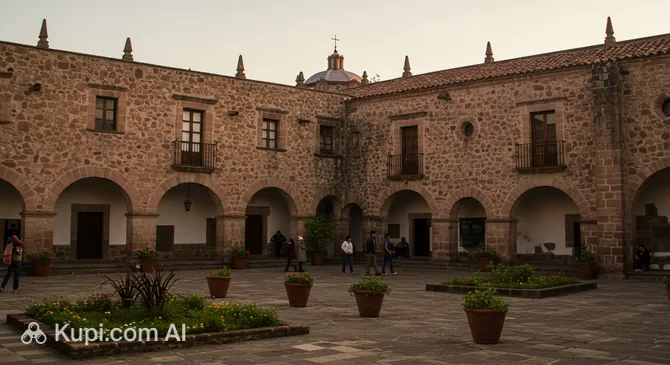
Casa de Morelos Museum and Historical Archive. Source: Kupi.com AI

Today, within the walls of Casa de Morelos in Mexico, you will find not only museum exhibits but also one of the region's most important historical archives. The museum occupies two floors: the first was built in 1758, and the second was added by Morelos himself. The modesty of the building's exterior emphasizes the gravity and significance of the events that took place here.

Visitors can see about 300 unique artifacts distributed across nine permanent halls. The pride of the museum is its archive, which houses more than two million documents dating from the 17th to the 20th century. This makes Casa de Morelos not just a tourist site, but a serious scientific center for researchers of Mexico's past.

Contacts

To confirm up-to-date information before your visit, you can use the contact details provided below. It is recommended to contact the administration in advance if you are planning a group visit or research work in the archives.

Below is the main contact information for the museum:

Address Av. Morelos Sur 323, Centro, 58000 Morelia, Mich., Mexico
Phone +52 443 313 2651
Official website inah.gob.mx

What to Do

A visit to the museum offers guests a deep immersion into the atmosphere of Valladolid at the end of the 18th century. On the first floor, you will pass through four themed rooms telling the story of the city's origins, daily life at that time, and the beginning of Morelos's journey as a priest. Particular attention should be paid to the authentic interiors of the kitchen and living room, which recreate in detail the domestic comfort of the era of the struggle for independence.

The second floor is entirely dedicated to the revolutionary period. Here, the exhibits cover events from 1808 onwards: military campaigns, the work of the famous Congress of Chilpancingo, and the final stages of the hero's life. Modern audiovisual materials clearly demonstrate the layouts of key battles, helping to better understand the strategy of the insurgent forces.

In addition to viewing the display cases, visitors can observe the work of the historical archive, where priceless episcopal documents are kept. Even if you do not plan to conduct deep research, the mere awareness that millions of pages of history are hidden behind these walls adds a special significance to the visit. You can conclude your walk through the house in the inner courtyard, which preserves the peace and majesty of the past.

Getting There

The attraction is located in the heart of the historical center of Morelia at Av. Morelos Sur 323. Due to its central location, the museum is within walking distance of most key tourist spots in the city. For example, a walk from the famous Cathedral or Plaza de Armas will take no more than 5–10 minutes.

If you are coming from Morelia International Airport (MLM), it is most convenient to use a taxi or book a ride through mobile apps such as Uber or Bolt. The trip to the city center usually takes between 20 and 30 minutes, depending on traffic.

For those who prefer public transport, buses following the Centro line are suitable. City navigation is quite simple, and for a more accurate search, you can use the geographic coordinates: 19.6999708 N and -101.1913883 W.

History & Facts

The modest stone building was erected back in 1758. Initially, it was a single-story house on the outskirts of the city of Valladolid (the former name of Morelia), in a rather poor neighborhood. In 1801, José María Morelos purchased this estate and added a second floor, giving the house the colonial appearance we see today. It is important to note that it was within these walls that the ideas of the great freedom fighter were formed.

The fate of the house was not easy: after the start of the active phase of the struggle for independence, the building was confiscated by the authorities, though it was later returned to the hero's family. Morelos's descendants carefully preserved the house and lived in it until 1910. It was then that the national hero's grandson, Francisco Díaz, sold the historical property to the government of Mexico to turn it into a public heritage site and museum.

In 1933–1934, Casa de Morelos was officially recognized as a national monument, and a few years later, it was placed under the jurisdiction of the National Institute of Anthropology and History (INAH). For the country's independence bicentennial in 2009, the museum underwent a large-scale restructuring based on the latest historical research, which allowed the exhibitions to be updated and made even more informative.

Time Needed

To leisurely explore all the halls and soak in the colonial-era atmosphere, a typical tourist will need about 1.5–2 hours. This time is sufficient to get acquainted with the main exhibition and look into the authentic living quarters of the house.

If you have a professional interest in history or plan to dedicate time to studying documents in the historical archive, the duration of your visit may increase significantly. It is also worth leaving some time to visit the gift shop, where you can find thematic literature and souvenirs.

Working Hours

The museum welcomes guests throughout the week, with the exception of Monday, which is the traditional closing day. The institution's working hours are Tuesday to Sunday from 09:00 to 16:45.

Please note that entry to the halls stops shortly before closing time. To get the most up-to-date information about possible changes to the schedule during holidays, it is recommended to visit the official website of the National Institute of Anthropology and History (INAH).

Nearby

A stroll through the museum's surroundings will allow you to dive even deeper into the atmosphere of old Mexico. The city's historical center is rich in unique architectural ensembles and green areas, which are perfect for relaxing after exploring the exhibits. Morelia is a city where history is encountered at every step.

Below are interesting sites located nearby that will help complete your itinerary and make your stay in the city even more rewarding and diverse:

Name Type Distance (km)
La Casa del Estanque Morelia Historical building 0.5
Acuario Poseídon Chedrawi Aquarium 1.0
Acuario Hábitat Aquarium 1.1
Acuario Azúl Aquarium 1.1
Bosque Cuauhtémoc Park 1.2
Parque Zoológico Benito Juárez Zoo 2.0
Fauna Acuario Aquarium 2.4
Acuario Diversidad Marina Aquarium 3.3
Tobogán Gigante Entertainment 3.7
Life Aquarium Morelia Aquarium 3.7

Reached the end of the page?

That means the route is fully explored