Support

Acueducto de Morelia

About

When you find yourself on the streets of this historic city, your attention will inevitably be drawn to the monumental stone arcade stretching along one of the main avenues. This is the Morelia Aqueduct—an outstanding historical monument and a true engineering masterpiece, rightfully considered one of the most recognizable landmarks that Morelia takes pride in.
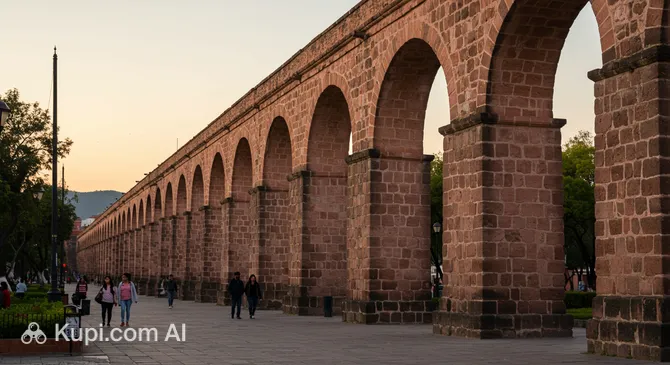
Morelia Aqueduct. Source: Kupi.com AI

This majestic structure in Mexico once served as a vital artery for transporting fresh water. Today, its numerous arches, crafted from characteristic pink stone, have become an aesthetic symbol of the city. The site is a unique example of colonial architecture, harmoniously integrated into the modern urban landscape.

The aqueduct is not just a technical relic of the past, but a genuine piece of cultural heritage that highlights the rich history of the Michoacán region. Its expressive silhouette attracts photographers and history buffs from all over the world, all eager to touch the colonial past of this amazing region.

Contacts

For your convenience, we have gathered the current contact details of this historical site in the table below.

Address Av Acueducto 1464, Chapultepec Nte., 58260 Morelia, Mich., Mexico
Google Maps Open map

What to Do

Strolling along the Morelia Aqueduct is a wonderful way to feel the rhythm of life in the historical center. You can walk beneath the vaults of its massive arches, examining the texture of the ancient stone and watching as the sunlight creates whimsical shadows on the pavement. It is an ideal spot for panoramic photography, especially if you capture the perspective of the arcade stretching into the distance.

As twilight falls, the landmark is transformed: the architectural lighting turns on, giving the structure a mysterious and truly romantic appearance. An evening walk here is a must for anyone who wants to see the city in its most flattering light.

You can often find street artists near the aqueduct or stumble upon local cultural events and fairs. Its proximity to green zones and charming streets allows you to combine your sightseeing with some relaxation in the fresh air, while the nearby historic buildings will help you fully immerse yourself in the atmosphere of the colonial era.

Getting There

Thanks to its location in the central part of the city, the Morelia Aqueduct is extremely accessible for tourists. If you are staying in the historical center, a pleasant stroll from the main square—Plaza de Armas—will allow you to reach the site quickly while admiring the colonial architecture along the way.

If walking isn't in your plans, you can use taxi services or popular ride-hailing apps. The trip from the city center will take only a few minutes. Additionally, public transport runs frequently in this area: city buses pass through the main thoroughfares near the aqueduct, making it easy to visit from any point in the city.

For those traveling by private or rental car, use Av Acueducto as your landmark. The proximity to other iconic landmarks, such as the cathedral, makes it easy to include the aqueduct in a wider walking tour of Morelia's most interesting corners.

History & Facts

The construction of this grand engineering structure took place between 1735 and 1738. During that era, Mexico was under Spanish colonial rule, and the rapidly growing population of Morelia was in dire need of a reliable source of fresh water, as the old wells could no longer handle the demand.

The erection of the aqueduct was not only a salvation for the residents but also a major milestone in the development of the city's infrastructure. The project was completed using local stone, which provided the structure with incredible durability. Remarkably, the monumental arcade has survived to this day in almost its original form, preserving the grandeur of 18th-century engineering.

Beyond its primary function of transporting water, the aqueduct has always served as a significant architectural accent. It acted as a sort of "gateway" to the city, highlighting its prosperity and status. Today, this site is recognized as an outstanding historical monument, embodying the craftsmanship of colonial-era builders.

Time Needed

A standard visit to the aqueduct usually takes about 30 to 60 minutes. This is plenty of time to leisurely walk along the impressive stone arcade, take a series of striking photos, and soak in the historical atmosphere of the place.

If you decide to combine your visit with a trip to the adjacent parks or stop by one of the cozy nearby cafes, we recommend setting aside about two hours in your schedule. A relaxed pace will allow you to better appreciate the masonry details and enjoy the architectural rhythm of the endless arches.

Working Hours

Since the Morelia Aqueduct is an open-air site and a key part of the city's architecture, it is available for viewing 24 hours a day, year-round. You can visit at any time that is convenient for you, whether it is early morning or late at night.

Despite the 24/7 access, the most comfortable time to visit is considered to be from morning until late evening. Daylight allows you to see all the details of the historical stonework, while the evening illumination creates a special, magical atmosphere for walks.

Nearby

Exploring the surroundings of the Morelia Aqueduct will allow you to dive deeper into the city's atmosphere and see many other interesting places just a few steps away. The area is rich in green spaces and themed parks, which are perfect for family outings.

Below are the nearest attractions worth visiting to make your trip through the city even more fulfilling.

Name Distance (km)
Fauna Acuario 0.3
Bosque Cuauhtémoc 1.2
Acuario Diversidad Marina 1.2
La Casa del Estanque Morelia 2
Acuario Azúl 2.1
Acuario Poseídon Chedrawi 2.7
Parque Zoológico Benito Juárez 3.1
Acuario Hábitat 3.5
Tobogán Gigante 5.3
Life Aquarium Morelia 6

Reached the end of the page?

That means the route is fully explored